
$10 Minimum Deposit Casinos in Australia: The Offshore Reality Behind the Welcome Graphic
 Available in AU
A tenner gets you in the door at more offshore casinos than ever before, and the welcome graphic is rarely shy about it — match bonuses in the hundreds, free spins by the hundred, “100% up to A$1,000” stamped across a banner that auto-scrolls. The banner does not say, and the affiliate reviews mostly do not either, that the product it advertises is prohibited in Australia under the Interactive Gambling Act 2001. There is no online casino licence for any operator, anywhere in the country. Every brand on this page is offshore, unlicensed in Australia, and operated beyond the reach of Australian consumer protection. A player is not prosecuted for depositing — the Act targets the provider, not the punter — but the money has no Australian safety net behind it.
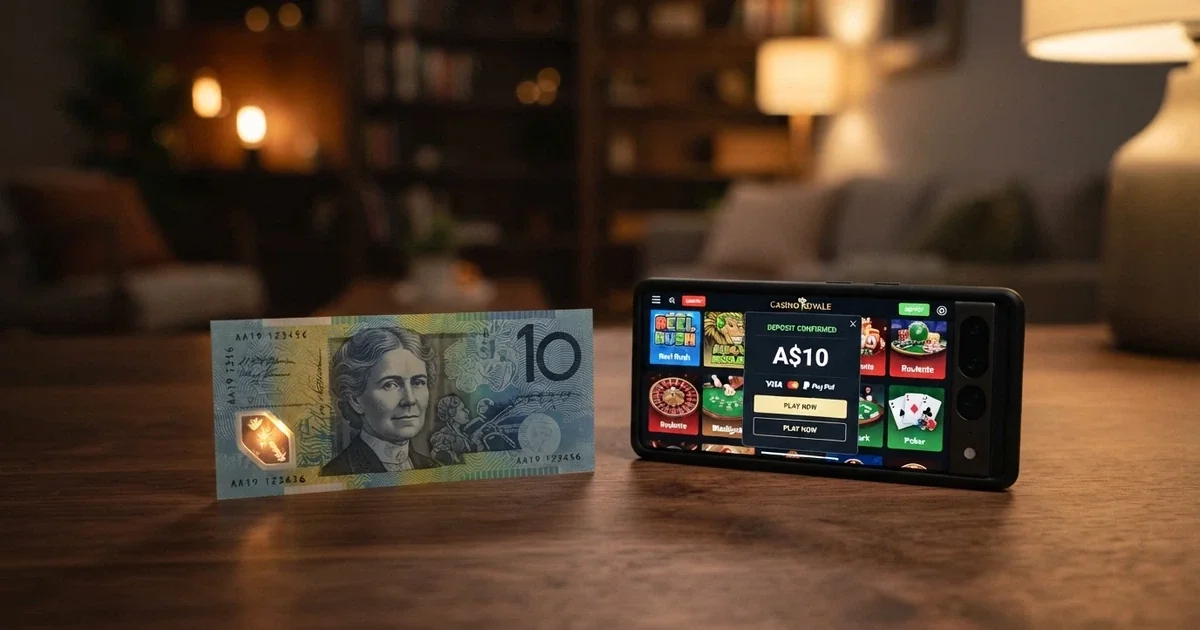
That is the framing this guide opens with, because it is the framing no competitor opens with. The listicles ranking offshore casinos for Australian players lead with bonus percentages. This one leads with the legal status, and then ranks. Within that constraint, A$10 is still a meaningful threshold: it clears the typical PayID and Neosurf method floors, it is the bracket where most welcome bonuses qualify, and it gives a bankroll large enough to actually feel the rhythm of a pokie before the balance runs dry. For a punter with a small budget who wants to test an offshore casino without staking hundreds, A$10 is the practical entry point. The job of this page is to say what that tenner actually buys, what the welcome offer actually costs in wagering time, and where the trapdoors sit — the withdrawal floor, the ACMA block list, and the offshore site that takes your deposit but cannot be reached when something goes wrong.
This page reflects data current as of 18 October 2026 and was verified against the Australian Communications and Media Authority’s published register of blocked websites and the official Interactive Gambling Act guidance.
- Why a $10 Minimum Deposit Changes the Game for Australian Casino Players
- The Real Floor: What Your $10 Deposit Actually Gets You
- Pokies You Can Spin on a $10 Deposit (and What They Really Cost)
- Depositing $10 on the Go: Mobile Casino Reality Check
- 10 Offshore Casinos Accepting Low Deposits from Australia in 2026
- New $10 Deposit Casinos in 2026: Fresh Faces, Same Offshore Reality
- Is a $10 Deposit Casino Legal in Australia? The Offshore Reality
- Staying in Control: Responsible Gambling on a $10 Deposit
- How We Evaluated These $10 Minimum Deposit Casinos
- Your $10, Your Call: What to Weigh Up Before You Deposit
- Frequently Asked Questions
Why a $10 Minimum Deposit Changes the Game for Australian Casino Players
What “$10 Minimum Deposit” Actually Buys You at an Online Casino
The phrase “ten dollar minimum deposit” is doing two jobs at once. As a marketing line, it tells a player the casino will let them in cheaply. As a practical limit, it tells the punter what their first real-money session is going to cost. The two are not the same — the second is the one that matters once the page loads.
At the bottom of the bet range of a typical offshore pokie, A$0.10 buys one spin. Big Bass Bonanza, the Pragmatic Play title that turns up on every featured operator’s homepage, opens at A$0.10 per spin and tops out at A$250 — a 2,500× range that says more about the operator’s appetite for high-roller business than about a tenner’s worth of play. A$10 buys 100 spins at the floor. That is one feature trigger away from the bonus round, or five minutes of quiet spinning if the feature does not land. It is enough to feel whether a pokie suits the punter, and not enough to ride out a long cold streak.
The advertised A$1 deposit floor, where it exists, is the exception and not the rule — it never appears through PayID or Neosurf, only through crypto rails, and crypto has been banned as a payment method for online wagering in Australia since 11 June 2024. A punter looking at an offshore casino and seeing “deposit from A$1” is being shown a rail they cannot legally use for wagering. A$10, paid through PayID or a bank transfer, is the realistic floor for fiat players at almost every AU-facing offshore casino on the market. The marketing gap between “from A$1” and “actually A$10” is the first small surprise on the page.
The Australian Casino Landscape: Offshore by Default in 2026
Online casino games, online pokies and in-play betting are prohibited in Australia under the Interactive Gambling Act 2001. There is no licence for online casino anywhere in the country — not federally, not in any state or territory. This is not a grey area, not a regulatory lag, not “Australia is catching up.” It is a settled prohibition that has been enforced for years and was tightened by amendments in 2017 and again in 2026.
The practical consequence is that every online casino open to Australian players in 2026 is an offshore operation running on a Curaçao, Anjouan or Kahnawake licence — never an Australian one. The federal regulator, the Australian Communications and Media Authority (ACMA), has blocked 1,788 illegal gambling and affiliate websites at the DNS level since it gained that power in November 2019. Over 230 illegal gambling services have withdrawn from the Australian market entirely since enforcement strengthened in 2017. In the last quarter of 2025 alone, ACMA completed 23 investigations, found 69 breaches of the IGA, issued 10 formal warnings and referred 133 websites for blocking.
The brand on this page that just took your A$10 deposit exists because it has not been blocked yet, or because it has rotated to a new domain, or because it is on a domain the regulator has not yet referred. The site can be blocked tomorrow with the balance still sitting on it. That is the structural reality a punter accepts in exchange for access to a product the Australian market does not licence.
How This Guide Is Put Together
The first half of the page establishes the framework: the legal position, the payment methods that actually work at A$10, the pokie specs that matter at low stakes, and what a mobile deposit looks like. The second half is the operator ranking — ten offshore casinos ordered by tracked market share among Australian audiences, each with a breakdown of what its A$10 deposit actually triggers.
The ranking is built on five criteria: minimum deposit and what it unlocks, bonus terms and wagering, payment methods (PayID presence is decisive), licence status, and market presence. The market-share figures come from a tracked snapshot of AU-facing offshore casino traffic and are not published numbers — they reflect the share of observed Australian player activity, not revenue. No weighting formula has been applied to the criteria: the ranking is qualitative and reflects the editor’s read of which operator genuinely delivers on its A$10 promise, not which has the loudest banner.
A note on what is and is not on the page: every casino here is offshore. Every casino here lacks an Australian consumer-protection regime. The page does not recommend an operator as a place to play; it lays out what each one offers and what it costs, and leaves the choice to the reader. Some operators on the ranking have substantial unverified fields where this review cycle could not confirm current bonus terms — those gaps are flagged plainly, in the section that owns them, rather than filled in with a guess.
The Real Floor: What Your $10 Deposit Actually Gets You
The $10 Sweet Spot: Where Minimum Deposits Really Sit in 2026
Seven of the ten featured operators sit at a genuine A$10 minimum deposit, with bonus eligibility matched to that floor or close to it. NeoSpin, FairGo, Bizzo, Lucky 7, Lucky Vibe and GoldenBet all confirm A$10 as the entry threshold for both the deposit and the welcome bonus; VegasNow accepts A$10 but triggers the bonus at A$20. — a tenner in, a bonus triggered, real-money play on the bonus balance from spin one. SkyCrown is a partial exception: the casino’s headline minimum sits at A$30 for bonus eligibility, but PayID deposits clear at A$10 — a PayID-only carve-out below the bonus trigger. A punter depositing A$10 via PayID at SkyCrown funds a real-money account but does not unlock the welcome offer; another A$20 brings them into bonus territory.
Above the A$10 cluster sit the A$20 and A$30 operators. WinSpirit and Rocket Casino list A$20 minimums. Rocket Play sits at A$30 for the first deposit and A$75 for the second deposit bonus — a doubled threshold that screens out the very punter this page is written for, even if the headline bonus is bigger. Stake, the crypto-focused operator, accepts deposits from approximately A$0.10 BTC-equivalent — the lowest real-money floor in the market — but the rail is crypto, and crypto has been banned for Australian wagering since 11 June 2024. A punter with a Bitcoin wallet willing to break the rule can technically deposit less than a dollar at Stake; a punter playing by Australian rules is looking at the A$10–A$30 band and nothing below.
A$10 is the practical sweet spot because it clears the floor on both sides — the method and the bonus. A punter wanting to test an offshore casino on the smallest stake that still produces a real session is looking at that band, and the rest of the page is written for that punter.
PayID: The Fastest Rail for Australian $10 Casino Deposits
PayID has replaced POLi at the centre of the Australian low-deposit conversation. POLi shut down at the end of September 2023, and PayID/Osko functionally took its place as the real-time bank-to-merchant rail. PayID uses the New Payments Platform to settle payments in real time, keyed by an email address, mobile number or ABN — the punter does not type a BSB or account number, and the funds arrive in seconds rather than days. A punter depositing A$10 via PayID at NeoSpin is playing within roughly 22 minutes of opening the cashier; VegasNow clears in 14 minutes on average; SkyCrown in 11. Those are not the bank-to-bank transfer times of the pre-PayID era — they are the times that have made PayID the default rail for AU-facing offshore casinos that want Australian volume.
Two practical caveats matter at the deposit moment. PayID is deposit-only at most AU-facing offshore casinos — a punter cannot withdraw back to a PayID handle, only to a bank transfer. And if the punter omits the reference code the casino provides with the deposit, the funds can sit uncleared for 24–72 hours while the casino’s payment team reconciles the inbound transfer manually. The reference field is not optional; it is the difference between an 11-minute payout test and a three-day support ticket.
PayID’s speed advantage compounds at the A$10 level because the rail is the same whether the punter is moving ten dollars or ten thousand. The bank’s processing cost, in the form of time, is fixed; the punter’s stake is not. A tenner is the cheapest way to verify the PayID flow actually works at a given operator before committing larger sums.
Beyond PayID: Cards, Crypto and What Australia Bans
Three payment methods a punter might assume are available are not, and a fourth has been removed from the Australian market.
Credit cards, credit-related products and digital currency (crypto) have been banned as payment for online wagering in Australia since 11 June 2024 under the Interactive Gambling Amendment (Credit and Other Measures) Act 2023. The prohibition sits on the payment method, not on the product — which is why a Visa debit card still works where a Visa credit card does not. An offshore casino that accepts a credit card deposit from an Australian customer is operating outside Australian rules; the bank issuing the card is also outside its own compliance perimeter. Crypto is simpler: the rule is total, and an offshore casino offering a “deposit Bitcoin” button is asking a punter to use a rail the law does not permit for wagering.
Neosurf, the prepaid voucher, is the third rail. It is one-way: a punter buys a voucher at a retail outlet, types the code at the cashier and the deposit clears. There is no Neosurf withdrawal — a punter cashing out is forced to bank transfer, card or crypto. For a punter who wants to fund an account without exposing a bank account, Neosurf is useful; for the same punter at the withdrawal moment, it is a dead end.
POLi, the old favourite for direct bank debits from Australian accounts, shut down at the end of September 2023. It is not coming back. The operators who used it have moved to PayID/Osko; the operators who have not are operating on a rail that no longer exists. A punter researching an offshore casino and seeing “POLi accepted” is reading a page that has not been updated.
Debit cards and bank transfers remain legal for licensed wagering and are processed by AU-facing offshore casinos in the normal course of business — they are not banned, just slower than PayID and typically carry a higher minimum. For the A$10 punter, debit cards and PayID are the two rails that work within Australian rules. Crypto and credit cards are out. Neosurf works one way. POLi is gone.
The Withdrawal Trap: Why Cashing Out Costs More Than Depositing
A punter depositing A$10 is rarely withdrawing A$10. The minimum withdrawal at offshore casinos typically sits at A$25–A$50, sometimes A$50–A$100 — anywhere from two-and-a-half to ten times the minimum deposit. FairGo lists a minimum withdrawal of A$100, exactly ten times the A$10 deposit floor, with a weekly limit of A$7,500 and a stated payout period of one to three days. A punter who funded an account with a tenner, ran it up to A$15, and tried to cash out has a problem: the balance is below the withdrawal floor.
This is the structural imbalance at the centre of the offshore low-deposit experience. The deposit minimum exists to lower the barrier to entry; the withdrawal minimum exists to make small-balance cashouts uneconomical for the operator to process. A A$5 player can fund an account but frequently cannot pull a small balance back out. The trap compounds at the A$10 level because the welcome bonus, where there is one, is usually locked behind the higher deposit threshold — A$30 at most operators — and the wagering requirement is usually well above what A$10 of real money can grind through.
The punter’s practical position: any balance below the withdrawal floor is, in effect, sunk. A punter planning to deposit A$10 and cash out the same evening is not playing the game the operator is offering. The right comparison is between deposit minimum and withdrawal minimum, not deposit minimum alone — and on that comparison, A$10 is an entry price, not an exit price.
Pokies You Can Spin on a $10 Deposit (and What They Really Cost)
| Slot Title | RTP (%) | Provider | Volatility | Max Win |
|---|---|---|---|---|
| Starburst | 96.09 | NetEnt | Low | 500x |
| Book of Dead | 96.21 | Play’n GO | High | 5,000x |
| Gates of Olympus | 96.50 | Pragmatic Play | High | 5,000x |
| Sweet Bonanza | 96.48–96.51 | Pragmatic Play | Medium–High | 21,100x |
| Big Bass Bonanza | 96.71 | Pragmatic Play / Reel Kingdom | Medium–High | 2,100x |
| Gonzo’s Quest Megaways | ~96.00 | Red Tiger | High | 20,000x |
The Best Pokies for a $10 Bankroll
Big Bass Bonanza is the title most likely to be parked on a featured operator’s homepage, and it is the one that makes the most sense for a tenner. At A$0.10 per spin, A$10 buys 100 spins; at A$0.20 per spin, 50. The game runs on a 5-reel, 3-row grid with 10 fixed paylines, the bet range runs from A$0.10 to A$250 and the headline RTP is 96.71% — operator-configurable, so the exact figure depends on which casino is hosting the title. The volatility sits at medium-high, which means the bonus round pays the bills: extended flat play without a feature trigger will burn through a tenner in five minutes of quiet spinning.

Starburst is the low-volatility alternative. RTP of 96.09%, max win around 500× stake, and a session that pays out small wins often enough to extend a bankroll past the first 100 spins. A punter who wants 30 minutes of play from a tenner, rather than five minutes and a feature hunt, picks Starburst.
Gates of Olympus sits at the high-volatility end. RTP of 96.50%, max win 5,000×, and the multiplier bomb mechanic that can pay up to 500× on a single spin. The risk profile is straightforward: a tenner on Gates of Olympus is a lottery ticket, not a session. The bankroll survives if a multiplier lands early and the punter walks; it does not survive if the feature round takes 200 spins to arrive.
Sweet Bonanza is the scatter-pay cousin of Gates of Olympus — no paylines, instead matching symbols anywhere on the grid, with bomb multipliers up to 100× per drop. RTP sits at 96.48–96.51%, volatility at medium-high, max win around 21,100× stake. A punter with a tenner is buying a chance at a single bomb sequence landing at scale; the rest of the session is the cost of that chance.
RTP and Volatility: How the Numbers Shape Your $10 Session
RTP — return to player — is the long-run average payback a pokie returns across millions of spins. A 96% RTP means the house keeps roughly 4% of every dollar wagered across that sample. It does not mean the punter’s session will return 96% of their deposit. A punter depositing A$10 and wagering it once at A$0.10 per spin over 100 spins has run one session out of millions; the average is what the game returns across all of them, not what any individual punter walks away with.
For an A$10 bankroll at Big Bass Bonanza’s stated RTP of 96.71%, the expected loss across the full 100 spins is approximately A$0.33 — calculated as 100 spins × A$0.10 per spin × (1 − 0.9671) = A$0.329. That is the statistical cost of one full A$10 session at the floor stake, the price of admission to whatever the bonus round or the flat run delivers. A punter who treats A$10 as “what the session should cost” is budgeting for the house edge in dollar terms — and at A$0.33, that budget is small. A punter who treats A$10 as “what the session should win” is budgeting for something the math does not promise.
Volatility is the distribution shape around that average. A low-volatility pokie like Starburst returns small wins often — A$10 lasts longer because each spin pays something back most of the time, even if the wins do not cover the stake. A high-volatility pokie like Book of Dead or Gates of Olympus returns big wins rarely — A$10 lasts the length of time between feature triggers, and the feature triggers are spaced out enough that a flat run can burn through the bankroll before one arrives. A punter picking a pokie for a tenner is implicitly picking between time and upside: low volatility buys time, high volatility buys a chance at a payout that exceeds the deposit by an order of magnitude.
For a session cost worked through Gates of Olympus specifically, the numbers run higher. At A$0.20 per spin — the typical floor stake for that title — A$10 buys 50 spins, and the expected loss across 50 spins at 96.50% RTP is A$0.35 (50 × A$0.20 × 0.035). The same A$10 bankroll survives roughly half as many spins as on Big Bass Bonanza, and the cost per spin is twice as high. A punter who wants 100 spins of session play is on Big Bass Bonanza or Starburst; a punter who wants a 50-spin lottery ticket at higher multipliers is on Gates of Olympus.
Australian-Favourite Pokies and What Is Actually Available Offshore
The featured operators on this page carry the major providers — Pragmatic Play, NetEnt, Play’n GO, Red Tiger, and RealTime Gaming (RTG) at FairGo. The library covers the titles most Australian players search for: Big Bass Bonanza, Gates of Olympus, Sweet Bonanza, Starburst, Book of Dead, Gonzo’s Quest Megaways. Where a region-locked game library is in play — and some providers restrict Australian-facing lobbies — the available set narrows, but the core titles above are present across the ranked operators.
FairGo’s library is the outlier. RTG is an older provider with a different visual register than the European studios, and its pokies — Asgard, Bubble Bubble, Cash Bandits, Achilles — are the titles that turn up on sites that specifically target Australian players rather than the global offshore market. A punter who learned to play on RTG-powered sites will find FairGo’s library familiar; a punter used to Pragmatic Play’s polish will find it dated.
Demo mode is available at most featured operators — a punter can run the pokies in play-money mode without funding an account, which lets the punter feel the volatility and the feature frequency before committing the tenner. Demo RTP can differ from real-money RTP on operator-configurable titles like Big Bass Bonanza, so a punter who likes the demo at one operator should check the real-money RTP badge before depositing.
Depositing $10 on the Go: Mobile Casino Reality Check
Which $10 Deposit Casinos Work on Mobile in 2026
The featured operators run in a mobile browser without a dedicated app. None of the ten brands on the ranking offers a native iOS or Android application in the Australian market — the app stores will not host an unlicensed online casino targeting Australian players, and the offshore operators have not built a sideloaded alternative. The mobile experience is the desktop site, reflowed for a smaller screen.

What this means in practice: the punter opens Safari or Chrome on a phone, navigates to the operator’s current domain, logs in or signs up, and the cashier renders in the browser. Game tiles load through HTML5 rather than a downloadable client, so load times depend on the connection rather than the device. PayID deposit flows work the same way they do on desktop — the punter opens the casino cashier, picks PayID, copies the casino’s PayID handle or scans a QR code, opens their banking app, sends A$10 and returns to the casino to confirm. No BSB, no account number, no card details typed into the casino page.
The browser-based model has one advantage over a dedicated app: nothing to download, nothing to update, and nothing for the punter’s phone to flag as gambling software. The drawback is that DNS-level blocks — the ones ACMA issues — hit mobile browsers the same way they hit desktops. If the operator’s domain is on the block list, the punter cannot reach the site from the phone either.
PayID Deposits from Your Phone: The 30-Second $10 Top-Up
The PayID mobile flow is what makes the A$10 deposit test cheap to run. The punter opens the casino cashier, taps PayID, and the screen shows the casino’s PayID handle — typically an email or a mobile number — plus a reference code. The punter opens their banking app, taps PayID, sends A$10 to the handle with the reference code in the memo field, and confirms with a biometric or PIN. The deposit arrives in real time via the New Payments Platform; the punter is back in the casino lobby within seconds, balance showing A$10.
This is the fastest realistic flow for an A$10 deposit in Australia. The cost of the deposit is the punter’s time, which is roughly 30 seconds if the banking app is already open. The cost of the deposit at the operator end is the rail’s interchange, which the operator eats. PayID is the rail the punter wants to use, and the rail the operators who want Australian volume have to support.
The PayID deposit remains deposit-only. A punter depositing A$10 via PayID on a phone is funding an account; cashing out requires a bank transfer to a verified account in the punter’s name, which is set up at the cashier before the first withdrawal. The verification step is the slowest part of the offshore cashout cycle and is covered in the section on identity verification further down.
10 Offshore Casinos Accepting Low Deposits from Australia in 2026
| Operator | Offshore Licence | Min Deposit (A$) | Wagering (×) |
|---|---|---|---|
| Rocket Play | Curaçao (unverified) | 30 | 40 |
| SkyCrown | Curaçao (unverified) | 10 | 40 |
| Royal Reels | — | — | — |
| Stake | Curaçao (unverified) | 0.10 (BTC equiv.) | — |
| FairGo | — | 10 | 30 |
| WinSpirit | — | 20 | 40 |
| Bizzo Casino | — | 10 | 35 |
| Rocket Casino | — | 20 | 30 |
| Scream Casino | — | — | — |
| Rainbet | — | — | — |
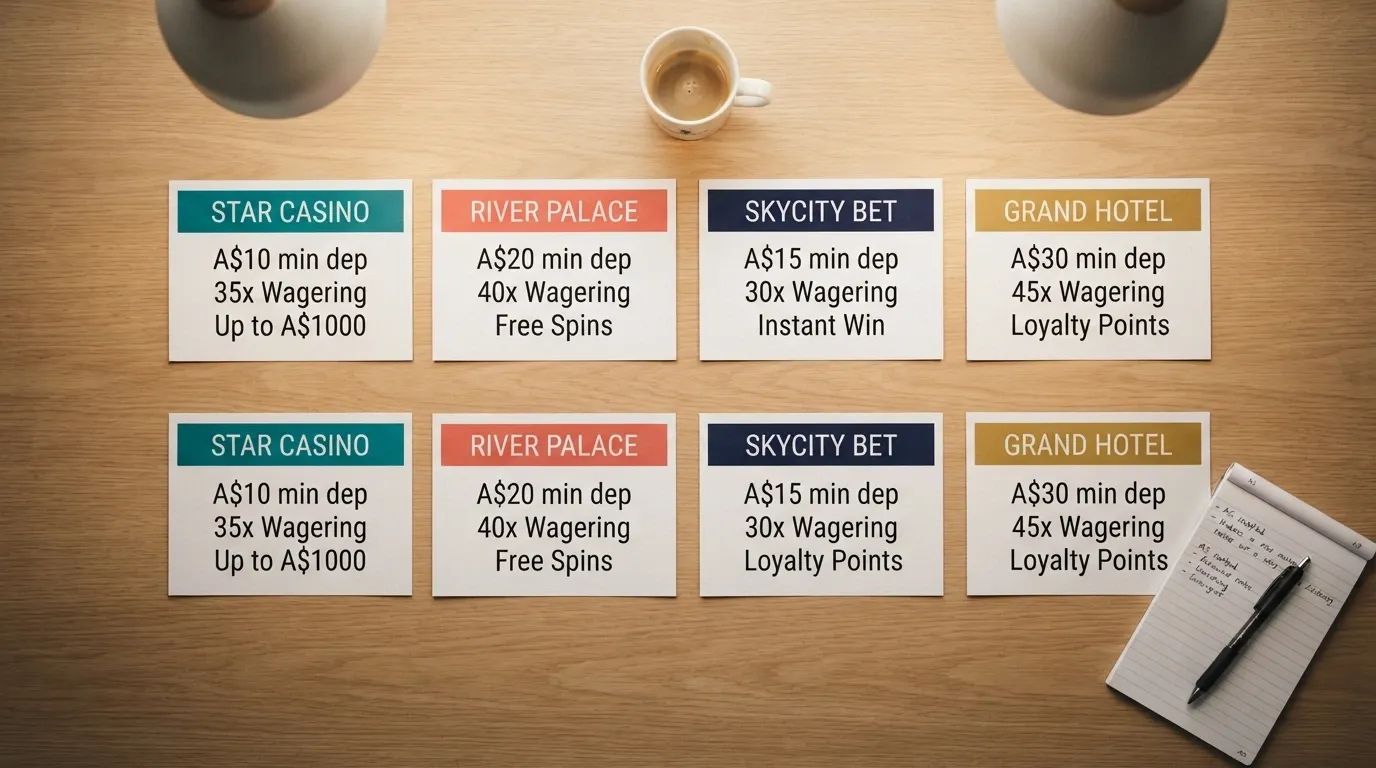
The table above reflects what is confirmed this review cycle. Where a field could not be verified, the cell carries an em dash rather than a guess. The prose below each operator fills in what is known and flags what is not.
Rocket Play
Rocket Play leads the ranking on tracked market share among AU-facing offshore casinos, and its welcome offer is calibrated accordingly: 100% up to A$1,000 on first deposit plus 100 free spins delivered at 20 per day over five days. The wagering requirement sits at x40 on the bonus amount, the maximum bet while the bonus is active is A$7.50 per spin, and the bonus expires after five days. The second deposit offer is 200% up to A$1,000 — a larger match at a higher minimum, A$75.
The minimum deposit is A$30 for the first-deposit bonus. A punter with a tenner cannot trigger the welcome offer here — the A$10 deposit clears the cashier but does not unlock the bonus, and the gap between the A$10 deposit and the A$30 bonus trigger is the gap between testing the casino and playing the welcome offer. The no-deposit bonus at Rocket Play, where it is active, carries a maximum withdrawal of A$50–A$100 — a hard ceiling on what a free chip can pay out, regardless of the session result.
The Curaçao licence is unconfirmed this review cycle — the operator’s footer references Curaçao, but a register lookup could not verify the licence number. ACMA has blocked Rocket Play domains including those commonly used for access. A punter looking for the largest bonus offer on the ranking finds it here; a punter looking for an A$10 entry into a welcome offer needs to deposit A$30 or look elsewhere.
SkyCrown
SkyCrown’s welcome offer is 120% up to A$1,200 plus 125 free spins on Sun of Egypt 3 by Booongo. Wagering is x40 on the bonus amount, validity 14 days. The minimum deposit is A$30 for the bonus — but SkyCrown accepts A$10 via PayID as a PayID-only exception below the bonus trigger. A punter depositing A$10 via PayID funds a real-money account at SkyCrown without unlocking the welcome bonus; a further A$20 brings them into bonus eligibility.
PayID payouts average 11 minutes at SkyCrown — the fastest of the featured operators and a competitive edge worth knowing if the punter’s plan involves frequent small withdrawals. The licence is Curaçao (unconfirmed via register this review cycle). ACMA has blocked SkyCrown and its alternate domains.
The combination of an A$10 PayID entry point, a fast payout cycle and a competitive welcome offer makes SkyCrown one of the more practical A$10 deposit casinos for an Australian punter willing to top up to A$30 to trigger the bonus. For a punter playing real-money only on a tenner, SkyCrown is also a reasonable fit — the PayID entry funds the account, the pokie library is broad, and the cashout cycle runs fast.
Royal Reels
Royal Reels is a high-profile offshore brand with substantial ACMA blocking activity — various domain versions are on the block list. The brand’s market share is small in absolute terms but visible in tracked AU-facing traffic.
The bonus terms, wagering requirements, minimum deposit and withdrawal thresholds for Royal Reels could not be confirmed this review cycle. The page flags the gap rather than fills it: a punter researching Royal Reels needs to verify the current bonus terms, deposit minimum, withdrawal minimum and licence status directly with the operator before depositing. The visible track record — extensive ACMA blocking, no confirmed licence — is a flag in itself, but the absence of confirmed bonus terms is not, on its own, evidence of anything beyond an unverified field.
Stake
Stake is the crypto-first outlier on the ranking. The minimum deposit is approximately A$0.10 BTC-equivalent — the lowest real-money floor among AU-facing offshore casinos — but the rail is Bitcoin, Ethereum and other cryptocurrencies, and crypto has been banned for Australian wagering since 11 June 2024. A punter depositing at Stake from an Australian wallet is using a payment method the law does not permit for wagering.
The traditional welcome bonus is not confirmed for Stake this review cycle. Stake’s promotional structure has historically run on rakeback, reload bonuses and sportsbook offers rather than a casino match bonus, and the absence of a welcome match here may reflect the operator’s model rather than a missed data point. The licence is Curaçao (unconfirmed via register). ACMA has blocked Stake and related domains. The 1.28% market share is meaningful but reflects the operator’s crypto-only appeal rather than its fit for an A$10 fiat punter.
FairGo
FairGo is the Australian-favourite operator on the ranking, the one specifically built around RTG-powered pokies and Australian payment conventions. The minimum deposit is A$10 — a genuine A$10 entry, with the bonus trigger matched to that floor. The welcome bonus is 100% up to A$200 redeemable five times for up to A$1,000 total, with 30× wagering on the deposit-plus-bonus. No-deposit free spin winnings carry 60× wagering, and the maximum cashout from the no-deposit offer is A$180.
The withdrawal minimum at FairGo is A$100 — ten times the deposit floor. A punter depositing A$10 and running the balance to A$50 cannot withdraw; they need to build the balance to A$100 or above before the cashier allows the cashout. The weekly withdrawal limit is A$7,500 and the published payout period is one to three days. The licence could not be confirmed this review cycle. The provider is RTG, and the game library reflects that — Asgard, Bubble Bubble, Cash Bandits, Achilles, and a set of older titles that feel familiar to a punter who learned to play on RTG-powered sites.
For a punter who specifically wants the RTG experience and is comfortable with the A$100 withdrawal floor, FairGo is the obvious pick. The trade-off is structural: the A$10 deposit is a real entry point, but the A$100 withdrawal is the exit price, and the punter needs to manage a session aimed at crossing that floor rather than at small-balance cashouts.
WinSpirit
WinSpirit sits at approximately A$20 minimum deposit with a 40× wagering requirement, on the upper edge of the A$10–A$20 band. The welcome bonus terms are not confirmed this review cycle, and the licence is not confirmed. WinSpirit’s market share is meaningful enough to put it on the ranking but small enough that the operator’s terms page has not been thoroughly tested at the A$10 entry point by the affiliate sites this guide draws on.
For a punter looking at a confirmed A$10 entry, WinSpirit is not the pick — the A$20 minimum is the practical floor here. For a punter budgeting A$20–A$30 and willing to read the current welcome terms directly from the operator’s site, WinSpirit is a candidate with a reasonable wagering multiple.
Bizzo Casino
Bizzo’s minimum deposit is A$10 with a 35× wagering requirement and a maximum bonus of A$100. The numbers are modest: A$100 is a smaller bonus ceiling than the A$1,000–A$2,000 caps on Rocket Play or SkyCrown, but the 35× wagering is in line with the market and the A$10 deposit clears the bonus trigger. For a punter who values a low bonus ceiling over a large one — because a smaller bonus means a smaller wagering commitment — Bizzo is a sensible fit.
The licence is not confirmed this review cycle. Market share is small at 0.57% — Bizzo is a presence on the ranking rather than a market leader, and the operator’s terms page is the source the punter needs to consult for the current state of the welcome offer.
Rocket Casino
Rocket Casino is a separate brand from Rocket Play and is not the same operator. The minimum deposit is approximately A$20 with a 30× wagering requirement. ACMA has blocked the primary domain for Rocket Casino. Market share is small at 0.57%. The welcome bonus terms are not confirmed this review cycle.
The naming collision with Rocket Play is the main thing a punter needs to be aware of. A punter searching for “Rocket” and finding two brands needs to confirm which one they are depositing at before sending funds. The A$20 floor puts Rocket Casino above the A$10 entry point, but the 30× wagering is at the lower end of the market.
Scream Casino
Scream Casino’s market share sits at 0.99%, which is meaningful enough to put it on the ranking but does not reflect a strong Australian-facing presence. The minimum deposit, welcome bonus terms and licence could not be confirmed this review cycle. The operator is included on the ranking for completeness — a page covering the top ten AU-facing offshore casinos by tracked market share that excluded Scream would be an incomplete top ten.
A punter considering Scream at the A$10 entry point needs to verify the current terms directly with the operator before depositing. The page flags the gap rather than filling it.
Rainbet
Rainbet is crypto-focused and has no confirmed fiat A$10 deposit route this review cycle. The market share is 1.28%, which reflects the operator’s crypto audience rather than its fit for an A$10 fiat punter. A punter looking for an A$10 deposit in Australian dollars via PayID, Neosurf or a debit card is not the customer Rainbet is built for.
The licence is not confirmed. The welcome bonus terms are not confirmed. Rainbet is on the ranking for completeness, and the page states plainly that the A$10 fiat entry point — the subject of this guide — is not what the operator offers.
New $10 Deposit Casinos in 2026: Fresh Faces, Same Offshore Reality
What to Check Before Depositing at a Brand-New A$10 Casino
The “new $10 deposit casino” category rotates fast. New domains appear, run welcome offers for a few months, and either build a track record or get blocked by ACMA. A punter looking at a brand-new operator at the A$10 entry point is taking on more unknown risk than a punter looking at an established brand — the welcome offer may be larger, the operator may not have been on ACMA’s radar yet, and the licence may be unverifiable on the regulator’s register.
The checklist below is what a punter should run on any brand-new offshore casino before depositing a tenner.
Licence verification is first. The footer logo is not evidence. The punter should look up the licence number on the regulator’s own register — Curaçao’s public register, Anjouan’s register, Kahnawake’s register. If the licence number does not resolve, or the operator’s name on the register does not match the casino brand, the punter is looking at an unlicensed operation. There is no Australian register to check against, because there is no Australian online casino licence.
Withdrawal terms are second. The minimum withdrawal, the weekly or monthly cap, the payout period and the verification requirements all need to be on the page before the deposit. A tenner deposited at an operator that requires A$100 to withdraw is a tenner that may not come back.
Wagering and bonus validity are third. The welcome offer at a new casino often carries higher wagering and shorter validity than an established brand — the operator is buying customers with bonus money, and the bonus money has strings. A 50× wagering requirement with a three-day validity is a different commitment from a 35× wagering with a 14-day window.
Track record is fourth. A punter searching the operator’s name alongside “blocked” or “ACMA” will see whether the operator has been on the regulator’s radar. The absence of a block is not proof of legitimacy, but a long block history is a flag in itself.
Payment method availability is fifth. A new operator that does not accept PayID or Neosurf is excluding the punter this page is written for. An operator that accepts only crypto and credit cards is asking for a payment method the law does not permit for Australian wagering.
The structural reality does not change with the brand. A new offshore casino is still offshore, still outside Australian consumer protection, still subject to ACMA blocking at any time. A tenner deposited at a brand-new operator carries the same legal and structural risk as a tenner deposited at an established one — the difference is that the new operator’s track record is not yet long enough to show how it handles a withdrawal dispute or a domain rotation.
Is a $10 Deposit Casino Legal in Australia? The Offshore Reality
What the Interactive Gambling Act Actually Prohibits
The Interactive Gambling Act 2001 prohibits online casino games, online pokies and in-play betting on sporting events. There is no licence for online casino anywhere in Australia — not federally, not in any state or territory. The Act targets the provider of the prohibited service, not the individual player; ACMA enforces against the operator, not the punter. That distinction is the reason a punter can deposit at an offshore casino without facing prosecution, and it is also the reason no Australian regulator can recover the punter’s money if the operator disappears.
What is licensed and legal under the IGA is wagering on races and sport placed before the event begins, lotteries and keno through state/territory-licensed operators. The Northern Territory Racing and Wagering Commission (NTRWC), administered through Licensing NT, is the de facto national licensor for online wagering — Sportsbet, Bet365, Ladbrokes, TAB and the rest of the licensed Australian wagering market operate under NT or state licences. None of them offer online casino games or online pokies, because the product is prohibited. The licensed wagering market is not a casino market, and an Australian punter looking for an online casino has no licensed option to choose.
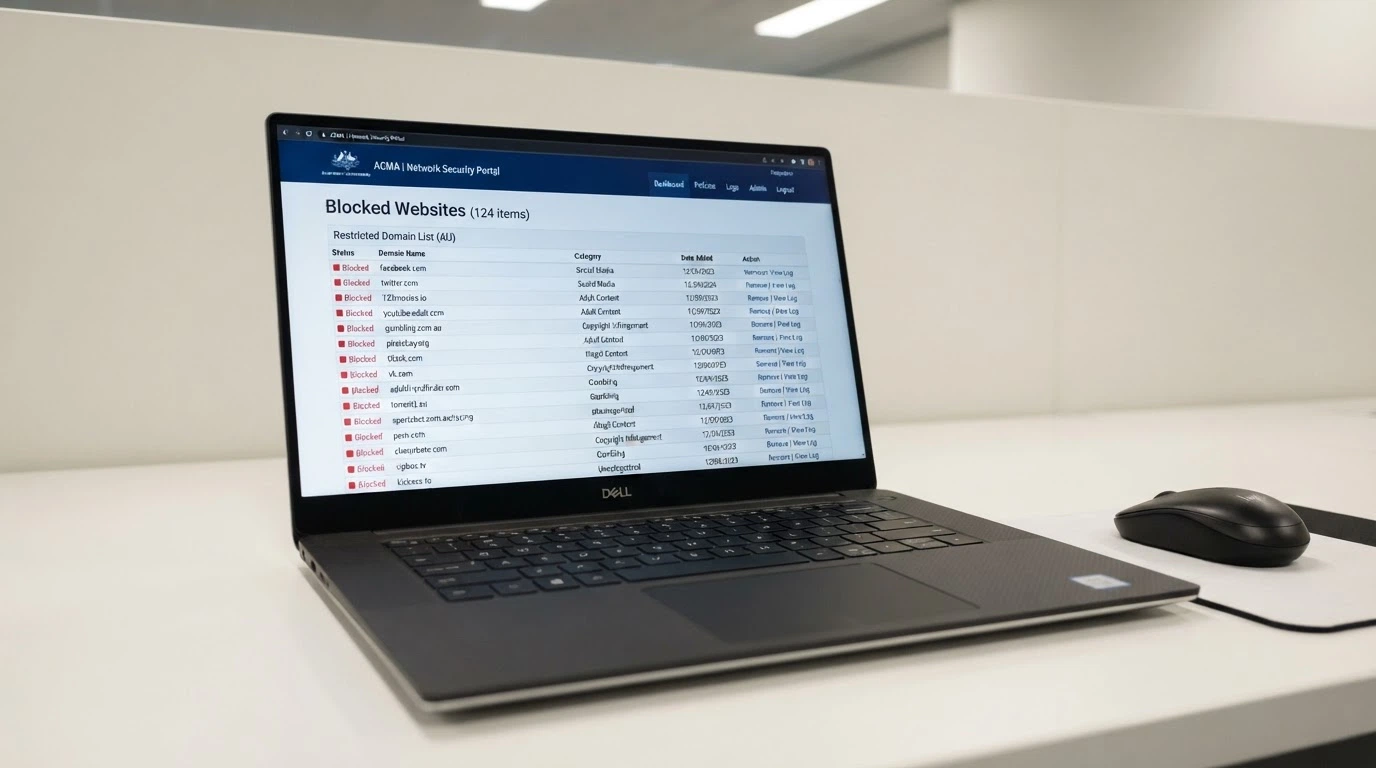
The ACMA enforcement scale is the visible expression of the prohibition. Since the first blocking request in November 2019, 1,788 illegal gambling and affiliate websites have been blocked at the DNS level by Australian ISPs. Over 230 illegal gambling services have withdrawn from the Australian market entirely since enforcement strengthened in 2017. In Q4 2025 alone, ACMA completed 23 investigations into 45 gambling sites, found 69 breaches of the IGA (38 for providing a prohibited interactive gambling service, 26 for providing an unlicensed regulated interactive gambling service and 5 for advertising), issued 10 formal warnings and referred 133 websites for blocking. Formal warnings in Q4 2025 went to operators including Dama N.V. (Vegas Now, Rooster Bet, Rocketspin), NovaForge Ltd (CrownPlay, Spinsy, Cashed and others) and Stellar Ltd (Frumzi, Legiano).
The pattern of enforcement is not a campaign — it is the steady-state operation of the Act. ACMA does not need to shut down online casino in Australia because online casino is already shut down in Australia, by law. What ACMA does is reduce the visible surface area of the offshore operators serving Australian customers, one blocking request at a time.
What Offshore Status Means for Your Money and Your Rights
An offshore casino serving Australian customers is operating outside Australian consumer protection. The IGA does not provide a regulator the punter can complain to; ACMA cannot mediate a withdrawal dispute or compel a payout. The punter’s recourse is contractual — the terms and conditions the operator published when the punter opened the account — and contractual recourse against an offshore operator in a Curaçao or Anjouan jurisdiction is expensive, slow and uncertain.
DNS-level blocking is the other structural risk. ACMA can request that Australian ISPs block an offshore casino’s domain at any time, and the block applies to every Australian customer simultaneously. A punter with a balance on a blocked casino cannot reach the cashier to withdraw; the operator may rotate to a new domain, which the punter has to find through an affiliate link or a search engine, but the punter is now logging in to a different URL and re-entering credentials on a domain whose integrity has not been independently verified. The punter’s money has not been confiscated, but the punter’s access to it has been interrupted.
BetStop, the National Self-Exclusion Register, does not bind offshore casinos. A punter who has self-excluded through BetStop is blocked from every Australian-licensed wagering service; the same punter is not blocked from any offshore casino. The register’s 59,830 registrations and 37,247 active exclusions (as at 31 March 2026) reflect Australian-licensed participation only. An offshore casino has no obligation to check BetStop, and most do not.
The 2026 Interactive Gambling Amendment (Gambling Reform) Bill, passed by Parliament on 19 August 2026 and commencing 1 January 2027, gives banks and payment providers express authority to block transactions to illegal gambling operators. From that date, an Australian bank can refuse a PayID transfer to a known offshore casino without the customer’s consent, and the punter’s deposit rail is cut at the bank level rather than at the domain level. The reform does not change the prohibition — it changes the enforceability of the prohibition by adding a second chokepoint. From the same date, wagering advertising is capped at three ads per hour on TV between 6:00 am and 8:30 pm, with a live-sport blackout from 15 minutes before to 5 minutes after the event; athletes, celebrities and influencers are barred from promoting wagering products; and direct marketing of inducements is restricted for 14 days after sign-up, three months after BetStop deregistration and indefinitely for at-risk customers.
The practical position for an Australian punter depositing at an offshore casino in 2026: the casino is breaking Australian law by serving the customer; the customer is not prosecuted for being served; the customer’s money is not protected by Australian consumer law; and the customer’s access to the casino can be cut by ACMA at any time, or by the customer’s own bank from 1 January 2027.
Staying in Control: Responsible Gambling on a $10 Deposit
How Big Is Gambling Harm in Australia Right Now
The numbers behind the prohibition are larger than most pages on this topic acknowledge. Approximately 3.29 million Australians aged 5 and over are affected annually by their own or another person’s gambling — a figure that includes children in households where a parent or guardian’s gambling is causing financial or emotional stress. Within that total, approximately 1.97 million Australian adults are classified as having at-risk or problem gambling. The annual health loss associated with gambling-related harm in Australian adults is estimated at over 400,000 Years Lived with Disability (YLDs).

The trend is upward, not flat. Risky gambling among Australian adults increased from 13.7% in 2024 to 19.4% in January 2025, according to the ANU Centre for Social Policy’s Gambling Participation in Australia 2025 report (ANUpoll, n=3,387). As of March 2026, Roy Morgan’s Gambling Harm Index found that 15.1% of the Australian adult population — an estimated 3.32 million people — are experiencing some level of gambling harm from their own gambling or that of people close to them. Online gambling participation has grown to 56.1% of individuals who gambled in 2025, with most of that activity now happening mainly online.
The harm data is the backdrop to every A$10 deposit button on this page. The product is prohibited because the harm is real, and the prohibition reflects the legislative judgment that the harm outweighs the consumer choice. The page does not endorse the offshore product, and the page does not minimise the harm. Both are on the record.
Tools That Actually Help — and the One That Does Not Work Offshore
BetStop, the National Self-Exclusion Register, is the most consequential harm-minimisation tool available to Australian wagering customers. One registration excludes the customer from every Australian-licensed online and phone wagering service. As at 31 March 2026, 59,830 people had registered, with 37,247 active exclusions; 78% of registrants were under 40 and 38% chose lifetime exclusion.
BetStop does not cover offshore casinos. An offshore casino is not connected to the register and will keep accepting a self-excluded person’s money. The 2026 reform strengthens BetStop from 1 January 2027 — inducement marketing is banned for three months after a deregistration — but the offshore blind spot remains. A punter who has self-excluded through BetStop and then deposits at an offshore casino has used the Australian register and bypassed it in the same act.
Operator-level deposit limits and self-exclusion are the in-product tools available at offshore casinos, and they vary by operator. The punter who wants a hard ceiling on losses needs to set one at the cashier level, knowing the limit applies only as long as the punter stays at that operator. Switching casinos resets the limit.
The National Gambling Helpline is 1800 858 858 — free, confidential, staffed 24 hours a day, seven days a week. Online chat and counselling are available through Gambling Help Online at gamblinghelponline.org.au. The service does not check which casino the caller used, does not require the caller to have self-excluded through BetStop, and does not judge the caller for the size of the loss. It is the resource that exists for the moment a punter decides the A$10 deposit has stopped being entertainment.
How We Evaluated These $10 Minimum Deposit Casinos
The operators on this page are ranked by tracked market share among AU-facing offshore casinos that accept low deposits. Market-share figures come from a tracked snapshot of Australian player activity at offshore casinos and are not publicly published numbers — they reflect observed share of player traffic, not revenue, and the snapshot is a point-in-time read rather than a rolling average.
The evaluation criteria are five. Minimum deposit is the threshold that determines whether the operator fits the page’s subject — an A$10 or near-A$10 entry point is required for inclusion; operators with an A$30 or higher minimum appear because their market share puts them on the ranking despite the floor. Bonus terms and wagering are the second criterion: the welcome offer, the wagering multiple, the validity window and the maximum cashout are the components that determine what the A$10 deposit actually triggers. Payment methods are the third: PayID presence is the most consequential single field, because PayID is the rail the A$10 punter actually uses. Licence status is the fourth: a verified offshore licence is preferable to an unverified one, and an unverified licence is preferable to no licence at all. Market presence is the fifth: a punter looking at an established brand with a multi-year track record is making a different decision from a punter looking at a brand-new domain.
No weighting formula has been applied to the criteria. The ranking is qualitative and reflects the editor’s read of which operators genuinely deliver on their A$10 promise and which merely advertise one. Where a field could not be verified this review cycle — a bonus term, a licence number, a withdrawal threshold — the field is flagged in the operator section rather than filled in. Where research draws on affiliate-site data, that data is treated as indicative rather than authoritative: the affiliate sites run real deposit tests, but their payout-time averages and bonus-eligibility figures are snapshots that may have changed by the time the punter reads this page.
The set evaluated here is offshore-only, because no Australian-licensed online casino exists. There is no benchmark Australian operator to compare against — the prohibition is total — and the comparison is between offshore operators rather than between an offshore operator and a licensed Australian alternative.
Your $10, Your Call: What to Weigh Up Before You Deposit
The decision on this page is not which offshore casino has the best welcome graphic. The decision is whether to deposit at all, and if so, at which operator, with what limits, and with what awareness of the structural risk.

The offshore reality is the first thing to weigh. Every casino on this ranking is offshore. Every one is outside Australian consumer protection. Every one can be DNS-blocked by ACMA at any time. From 1 January 2027, every deposit rail to an illegal operator can be blocked by the punter’s own bank. The tenner does not disappear — but the tenner’s accessibility is not guaranteed.
The withdrawal trap is the second thing. A punter depositing A$10 and looking to cash out the same evening is not playing the game the operator is offering; the minimum withdrawal is typically A$25–A$100, ten times the deposit floor at FairGo and similarly weighted across the other featured operators. A punter planning a session should plan to either grind the balance above the withdrawal floor or accept that the balance is, in effect, the cost of the session.
The bonus terms are the third thing. A 40× wagering requirement on a A$200 bonus is A$8,000 of required turnover before the bonus balance converts to withdrawable cash. At A$0.10 per spin, that is 80,000 spins — roughly 110 hours of continuous play, or roughly the working week of a full-time job, before the bonus is cleared. The wagering multiple is not a footnote; it is the difference between a welcome offer and a multi-day wagering commitment that most punters do not finish.
The harm data is the fourth thing. 1.97 million Australian adults are classified as at-risk or problem gambling. The number is growing. A$10 is the smallest entry point on the page, and the smallest entry point is the easiest to repeat. A punter who finds themselves topping up the A$10 deposit more often than planned is not getting better value from the casino — they are paying the house edge more times.
The help resources are real and they are available. The National Gambling Helpline is 1800 858 858. Gambling Help Online is at gamblinghelponline.org.au. BetStop is at betstop.gov.au for self-exclusion from Australian-licensed services. The harm-minimisation tools work whether the punter used a licensed operator or an offshore one.
No operator on this page is endorsed as a place to play. The page equips a punter to read the welcome graphic, weigh the wagering requirement, check the withdrawal floor, verify the licence, set a deposit limit and know the helpline number before sending a tenner. The choice that follows is the punter’s.
Frequently Asked Questions
Can I get a welcome bonus with only a $10 deposit?
It depends on the operator. NeoSpin, VegasNow, FairGo, Bizzo, Lucky 7, Lucky Vibe and GoldenBet all confirm A$10 as the deposit floor that triggers their welcome bonus. SkyCrown accepts A$10 via PayID but the bonus triggers at A$30. Rocket Play and SkyCrown headline bonuses need A$30, not A$10. Check the bonus terms on the operator’s site before depositing.
Are $10 deposit casinos safe for Australian players?
Every casino on this ranking is offshore and outside Australian consumer protection. ACMA cannot mediate a withdrawal dispute or recover funds; BetStop does not bind offshore operators. The A$10 deposit is not protected by Australian law in the way a deposit at a licensed Australian wagering operator is. Safety here means choosing an operator with a verifiable licence and reading the withdrawal terms before depositing, not legal protection.
Do I need to verify my identity to withdraw from a $10 deposit casino?
Yes. Every featured operator requires identity verification before the first withdrawal — typically a photo ID, a proof of address and verification of the payment method. The verification step is the slowest part of the cashout cycle and is set up at the cashier before the first withdrawal. A punter planning to cash out a small balance needs to factor in the verification time, which is often longer than the payout itself.
What happens to my money if a $10 deposit casino gets blocked in Australia?
ACMA blocks offshore casino domains at the DNS level. The casino’s domain stops resolving on Australian ISPs, the punter cannot reach the cashier to withdraw, and any balance on the account becomes inaccessible through the blocked URL. The operator may rotate to a new domain, which the punter has to find through an affiliate link or a search engine. The money has not been confiscated, but the punter’s access to it has been interrupted until the rotation lands.
Is BetStop available at $10 deposit casinos?
No. BetStop, the National Self-Exclusion Register, binds Australian-licensed wagering services only. An offshore casino is not connected to BetStop and will continue accepting a self-excluded person’s deposits and wagers. The register’s 59,830 registrations cover licensed operators; the offshore market is outside the register’s reach. From 1 January 2027 the 2026 reform strengthens inducement marketing restrictions after BetStop deregistration, but the offshore blind spot remains.
Can I deposit $10 via PayID at an online casino in Australia?
Yes, at the operators that accept PayID — NeoSpin, VegasNow and SkyCrown all confirm A$10 PayID deposits. PayID processes via the New Payments Platform in real time using an email, mobile number or ABN. The deposit is deposit-only at most AU-facing offshore casinos; cash-out reverts to bank transfer. Include the reference code the casino provides, or the funds may sit uncleared for 24–72 hours.
Created by the ”Casino Payment Methods AU” editorial team.