
What a No-Deposit Bonus Actually Costs an Australian Player
A no-deposit bonus at an Australian-facing casino is the marketing of a prohibited product, dressed in free spins. The headline says fifty dollars or a hundred free spins; the terms behind it say the player must run several hundred dollars of their own play through the casino’s games, inside a tight window, and walk away with whatever is left under a cashout cap. The casino keeps the difference. Understanding that gap, between the number on the offer card and the amount a player can actually withdraw, is the entire job of evaluating these bonuses. It is also the job most comparison pages skip.

The offer itself is straightforward to describe. A no-deposit bonus is a small credit — typically twenty to fifty free spins or A$5 to A$25 in bonus cash — that a casino gives a new account holder before the account has deposited anything. The purpose is acquisition: the casino loses money on most of these bonuses, in the same way a coffee card loses money on the first flat white, in exchange for the chance that a small share of sign-ups convert into depositing players. The mathematics that converts one into the other is the wagering requirement, and the wagering requirement is the only number that matters once the bonus is on the account.
That requirement runs from thirty to sixty times the bonus amount at Australian-facing casinos, with forty to sixty times the most common band. A A$25 chip with a 30x requirement means A$750 of turnover before any of the bonus balance becomes withdrawable; the same chip at 60x means A$1,500. On a typical pokie returning 96% to the player, the expected loss from running that turnover is between A$30 and A$60. So the “free” A$25 is, in expected value terms, a product the player pays A$30 to A$60 to use. The casino has not given anything away. It has sold the chance to play a game the player could have opened for a dollar, at a price set by the wagering requirement.
The rest of this article takes the comparison from that starting point. The first section unpacks what a no-deposit bonus is in the Australian context and what each clause of the fine print actually does. The second section ranks the ten operators in the review set. The third and fourth walk through the filtering checklist and the payment methods that tell you whether the operator is licensed. The fifth and sixth are about the games and the law. The final sections cover the harm data and the methodology behind the ranking. A no-deposit bonus from an offshore casino is a calculated risk with transparent maths, not a free gift, and the page exists to make the maths legible.
Current as of 18 October 2026. Licence claims verified against the ACMA register of blocked sites and operator terms pages.
- Why Your 2026 No-Deposit Bonus Is Smaller Than the Headline
- Every No-Deposit Bonus We Reviewed for Australian Players in 2026
- Four Things a No-Deposit Bonus Must Get Right Before You Claim It
- New Casinos With No-Deposit Offers in 2026
- PayID, Crypto and the Payment Maze at Australian-Facing Casinos
- The Pokies Your Bonus Actually Lets You Play
- The Law Australian Casino Sites Don’t Want You to Read
- When the Free Spins Stop — Gambling Harm in Australia by the Numbers
- How We Evaluated These No-Deposit Bonuses
- No-Deposit Bonuses in Australia: Claim One If You Must, but Know What You’re Giving Up
- Frequently Asked Questions
Why Your 2026 No-Deposit Bonus Is Smaller Than the Headline
What a No-Deposit Bonus Actually Delivers
A no-deposit bonus is, structurally, a small marketing credit extended to a new account before any deposit has been made. The casino’s reason for offering it is acquisition: a player who signs up and claims fifty free spins has crossed a friction threshold, and the operator’s data shows that a small share of those players will return, deposit, and play at scale. The bonus is the price of that conversion. From the player’s side, the deal is simple — claim the offer, play it through the wagering requirement, attempt to withdraw whatever survives the cashout cap, and decide whether the entertainment value of the spin was worth the statistical cost of clearing it.
Two forms dominate the Australian-facing market. The first is a free-spins package, usually a fixed number of spins on a named pokie at a fixed stake per spin, where the stake is typically A$0.10 to A$0.20. The second is a bonus cash credit, paid directly into the bonus balance, that the player can spend on eligible games. Both forms are bound by the same three terms: a wagering multiple, a maximum cashout cap, and a validity window. These three numbers decide everything about what the bonus is actually worth; the headline figure, the fifty dollars or the hundred spins, is largely cosmetic.
The legal frame around the offer is unusual and worth stating once, up front. Online casino games, including the pokies on which these bonuses are typically spent, are prohibited to people in Australia under the Interactive Gambling Act 2001. No Australian licence exists for online casino — not federally, not in any state, not in any territory. Every site offering a no-deposit bonus to an Australian player is therefore an offshore operator, unlicensed in Australia, and offering a product that cannot legally be offered here. The IGA targets the provider rather than the player, so claiming a no-deposit bonus is not illegal for the individual. But the offshore status of the operator shapes everything else about the experience: there is no Australian consumer protection, no BetStop coverage, and no local recourse if a withdrawal is refused.
Bonus Cash vs Free Spins — Two Different Promises
The two forms of no-deposit bonus — bonus cash and free spins — look interchangeable on a landing page and behave very differently in practice. Bonus cash is a credit to the account, in dollars, that the player can spread across eligible games at whatever stake the games allow. Wagering applies to the credit amount. Free spins are a fixed number of plays at a fixed stake on a named pokie, where the winnings from each spin are returned to the player as bonus funds rather than cash, and the wagering requirement is then applied to those winnings.
The practical difference is in what the player controls. A free-spins offer is locked to one game and one stake: the player cannot change the pokie, cannot adjust the bet size, and cannot redeploy the value if they do not like the game. A bonus cash offer gives the player a budget to deploy across eligible pokies, at stakes of their choice within the max-bet limit, with the freedom to leave a game that is running cold. The clearer path to a cashout is usually the one that lets the player exercise the most judgement, which is bonus cash, but the higher headline numbers tend to attach to free-spin packages because the casino is committing a fixed, capped cost.
Free-spin value at Australian no-deposit casinos is typically A$0.10 to A$0.20 per spin. A hundred free spins at A$0.10 is, in raw stake terms, A$10 of play; a hundred spins at A$0.20 is A$20. The headline “A$200 package” is achieved by attaching a large free-spin stack to a deposit match, not by the no-deposit component alone. A A$50 flat no-deposit bonus, or A$200 bundled with 200 free spins, is exceptionally rare in 2026. These high-value offers are largely marketing outliers, as typical registration bonuses are far more modest. The size of the offer is the first hint about how strict the rest of the terms will be.
The Fine Print That Decides Whether You Keep a Cent
Three numbers in the terms convert a no-deposit bonus from a marketing headline into a real economic proposition. They are the wagering multiple, the maximum cashout cap, and the expiry window. A fourth, the max bet during wagering, governs how the player clears the requirement, and a fifth, the game contribution rate, governs which games count toward it at all.
The wagering multiple is the most important. It runs from 30x to 60x the bonus amount at Australian-facing casinos, with 40x to 60x the most common band. On a A$25 bonus, that means the player must run between A$750 and A$1,500 of stake through eligible games before any withdrawal is permitted. At a 96% return-to-player, the expected cost of running that turnover is roughly A$30 to A$60, which already exceeds the bonus amount in expected-value terms. The wagering multiple is, in effect, the price the player pays for the bonus.
The maximum cashout cap sets the ceiling on what the player can withdraw from bonus-derived winnings, regardless of how much they actually win during play. Australian no-deposit bonuses typically cap withdrawals between A$50 and A$200. A bonus that pays out A$2,000 of bonus winnings from a lucky spin will, under a A$50 cap, return A$50 to the player and the rest is forfeit. The cap is the second way the operator insures itself against the bonus.
The expiry window is the third. Bonuses at Australian-facing casinos typically expire seven to thirty days from activation, and the window is tight enough that a player who does not actively clear the wagering within it loses both the bonus and any winnings derived from it. A 60x requirement on a A$25 chip, run at the max bet of A$5, is 300 spins, or about twenty-five minutes of play at five seconds per spin — easily cleared in a day. The same requirement run at A$0.10 per spin is 15,000 spins, or more than twenty hours of continuous play, and is no longer realistic inside a seven-day window. The expiry window only matters relative to the bet size the player is allowed to make.
The max bet during wagering is typically A$5 to A$7.50 per spin at Australian-facing casinos. Going over the cap voids the bonus and the winnings. The game contribution rate is the share of each stake that counts toward the wagering requirement: pokies 100%, table games 10%, live casino 0–5%. Players clearing a bonus on a pokie at A$5 per spin satisfy the turnover requirement in a fraction of the time it would take on roulette. The terms that bind the bonus are the terms that decide its real value, and every one of them can shrink the headline figure by half, by three-quarters, or to nothing at all.
Bonus Codes — the Extra Step Most Offers Need
A bonus code is a string the operator requires the player to enter at a specific point in registration or deposit, in order to trigger the no-deposit offer. The code exists for two reasons: it lets the operator track which affiliate or marketing channel delivered the sign-up, and it lets the operator gate specific offers to specific player segments. From the player’s perspective, the code is the difference between a bonus that lands in the account and an offer that is silently not honoured.
Some operators do not use codes at all. Skycrown’s no-deposit free-spins offer, for instance, activates through phone verification rather than a code entry — the player registers, verifies their phone number, and the spins are credited. The pattern is operator-specific. Royal Reels’ A$10 sign-up bonus, by contrast, sits behind a code entry; without the right code, the bonus is not credited. Where an offer is code-gated and the player does not have a working code, the practical response is to check the operator’s current promotion page, contact live chat, or move on. Codes are short-lived and often affiliate-specific, so a code that worked last week may not work today.
The deeper point is that codes are part of how these offers are tracked and paid for. Affiliate sites publish codes because they earn a commission when a player signs up through them. The player pays nothing for the code but inherits the marketing relationship it represents. None of this is a reason to avoid the bonus; it is a reason to be clear-eyed about what the offer is and where it comes from.
Every No-Deposit Bonus We Reviewed for Australian Players in 2026
The ten operators below were reviewed for this page against a single criterion: do they currently offer a no-deposit bonus to a player who has registered an account from an Australian IP address, and what are the terms attached. Every one of them is an offshore operator offering a prohibited product in Australia. None holds an Australian casino licence. The comparison table that follows is honest about that, and the operator write-ups that follow it work through what each brand is worth — to which reader, in which circumstance.
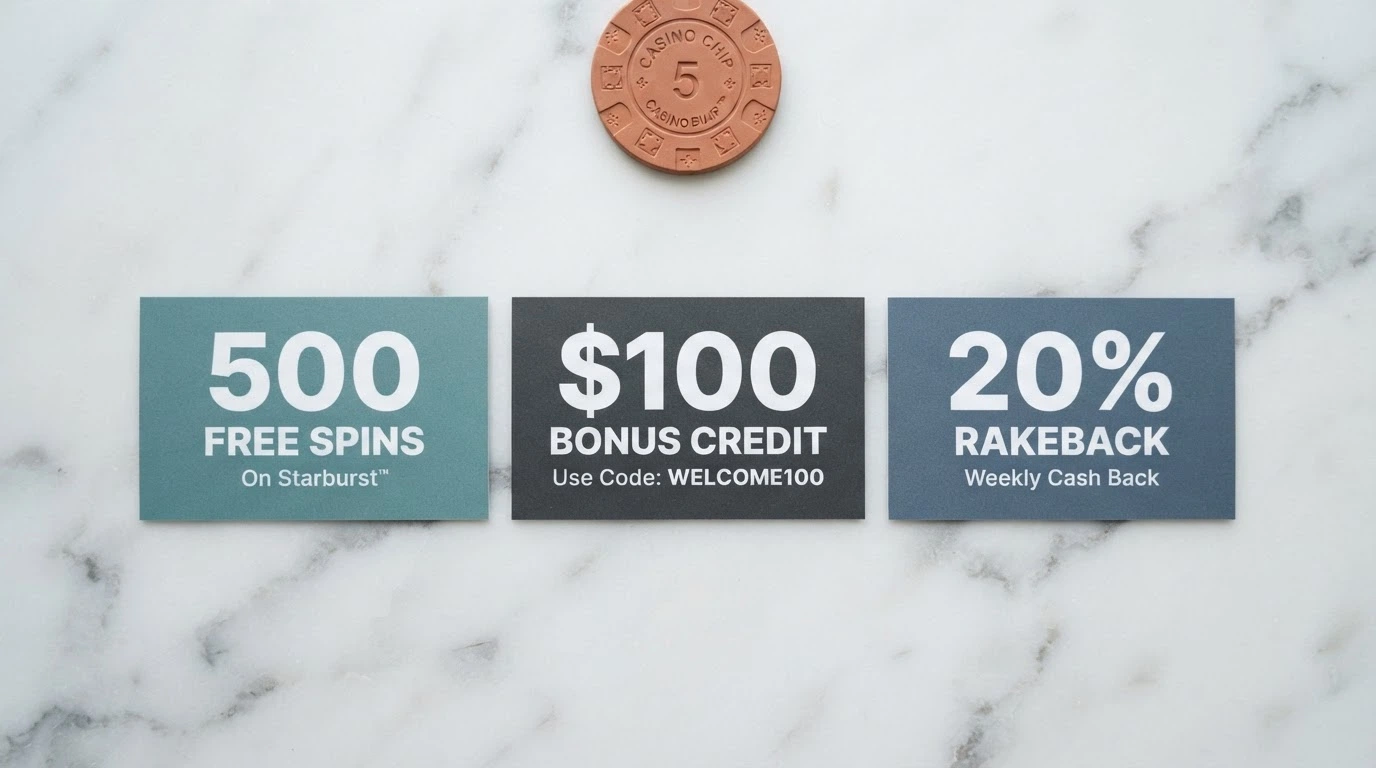
| Operator | Legal Status in Australia | No-Deposit Bonus | Wagering | Max Cashout | Bonus Validity |
|---|---|---|---|---|---|
| Skycrown | Offshore (Curacao licence) | 100 free spins, phone-verified | 30x on FS winnings | — | 14 days |
| Rocket Play | Offshore (licence not confirmed) | 50 free spins | 60x on FS winnings | A$75 | 5 days |
| Royal Reels | Offshore (licence not confirmed) | A$10 sign-up bonus | 40x on bonus | A$200 | 7 days |
| Fair Go | Offshore (licence not confirmed) | A$50 | 60x on bonus | No cap | — |
| WinSpirit | Offshore (Curacao licence) | 40 free spins | 60x on FS winnings | A$50 | 2 days |
| Bizzo Casino | Offshore (licence not confirmed) | Free spins | 40x on bonus | 50–100 USD | — |
| Stake | ACMA-blocked (Curacao licence) | No NDB currently confirmed | — | — | — |
| Scream Casino | Offshore (licence not confirmed) | Not confirmed | — | — | — |
| Rainbet | Offshore (licence not confirmed) | 20% rakeback, 72h (not a traditional NDB) | — | — | — |
| BitStarz | Offshore (Curacao licence) | 50–100 free spins | 40x on bonus cash | A$100 | 7 days |
The universal offshore status is the headline that none of these landing pages volunteer. Online casino is prohibited in Australia; every operator above is breaking Australian law by offering its product to Australian players. The ACMA has blocked 1,564 illegal gambling and affiliate websites as at March 2026, and 225 or more services have withdrawn from the Australian market since enforcement was strengthened in 2017. Any of the ten domains in this list can be added to that block at any time, which means a player balance on any of them can become inaccessible without warning. The terms in the table are the best-case reading; the legal reality is the bigger one.
Skycrown — 100 Free Spins, 10,400 Games, and a Curacao Licence
Skycrown is the largest game library in this set. The operator lists more than 10,400 games from over 50 providers, including Pragmatic Play, NetEnt, Microgaming, Play’n GO, BGaming, Hacksaw Gaming and Nolimit City. The no-deposit offer is 100 free spins, activated by phone verification rather than a bonus code — the player registers an account, confirms their phone number, and the spins are credited automatically.
The wider welcome package is A$8,000 plus 400 free spins spread across four deposits, with 40x wagering on the bonus funds and 30x on free spin winnings, and a 14-day validity window per tier. The maximum bet during wagering is A$5 per spin, with pokies contributing 100%, table games 10% and live casino 5% toward the requirement. The wagering multiple on the free-spin winnings is at the easier end of the market band, and the game library is large enough that a player can move between titles to find one they enjoy. Tested PayID withdrawals at Skycrown cleared in 2 hours 29 minutes for an A$180 payout, which is at the fast end of the set, and Skycrown is verified to run the published-maximum RTP on tested games rather than a degraded configuration.
The Curacao licence is the only licence Skycrown holds. It is not an Australian licence. A Curacao licence does not give an Australian player any local consumer protection, any recourse through the ACMA, or any BetStop coverage. What it does provide is a third-party regulator the player can complain to if Skycrown refuses a withdrawal — useful, but not equivalent to Australian oversight. For a player who has decided to claim a no-deposit bonus despite the offshore status, Skycrown is the strongest package in the set on the dimensions that matter: game count, RTP integrity, withdrawal speed, and wagering multiple on the no-deposit winnings. With a library that deep and verified payout speeds, it leads the set.
Rocket Play — 50 Free Spins and a A$75 Cashout Cap
Rocket Play’s no-deposit offer is 50 free spins on a Gamzix title at A$0.10 per spin, with 60x wagering on the winnings and a A$75 maximum cashout for AUD players. The bonus is valid for five days, and the max bet during wagering is A$7.50 per spin. The total stake value of the 50 free spins is A$5, which is the smallest in the set; the wagering multiple of 60x is at the harder end of the typical band.
A A$75 cashout cap on a A$5 spin stack is generous relative to the size of the bonus — the player is being told they can withdraw up to fifteen times the raw stake of the offer, which is reasonable. The trade-off is the wagering multiple and the tight five-day window. A 60x requirement on whatever the spins return is heavy: a player who wins A$20 from the spin stack must run A$1,200 of turnover through eligible games, and the five-day clock starts the moment the bonus is credited. Rocket Play’s licensing and current terms should be verified directly on their site before signing up, as details can shift.
The Rocket Play package suits a player who is comfortable with a high wagering multiple, content with a single-game free-spin offer, and unwilling to wait beyond a week to clear it. For most players the maths is harder than it looks at first read.
Royal Reels — A$10 Sign-Up Bonus With the Set’s Highest Cashout Cap
Royal Reels offers a A$10 no-deposit sign-up bonus, with 40x wagering on the bonus, a A$200 maximum cashout, and a 7-day expiry. The cashout cap is the highest in the reviewed set: a player who clears the requirement with a balance over A$200 keeps A$200 and forfeits the rest, but the ceiling is high enough to allow a meaningful run from a lucky bonus session.
The bonus is the smallest headline figure in the cash-bonus cluster, but the cashout ceiling and the moderate 40x wagering multiple make it competitive on expected value. A A$10 bonus at 40x is A$400 of turnover, which at 96% RTP costs the player roughly A$16 in expected loss. The cap of A$200 gives the player real upside if the bonus lands well; the trade-off is the time pressure, since seven days is short for a 40x requirement if the player is constrained to small stakes. Providers tested at Royal Reels include Pragmatic Play, Play’n GO, Nolimit City and Hacksaw Gaming, which covers the high-volatility pokies that produce the big wins a cashout cap of A$200 is designed to absorb.
The maximum bet during wagering and the operator’s licence are details players should verify on the site before claiming. Given the competitive cashout ceiling and the moderate 40x wagering requirement, Royal Reels is a solid choice for players prioritising high-volatility pokies.
Fair Go — A$50 No-Deposit With No Cashout Limit
Fair Go offered a A$50 no-deposit bonus — the largest cash amount in the reviewed set — with 60x wagering and no maximum cashout limit. The absence of a cap is the most distinctive feature: a player who clears the 60x requirement on a large balance can withdraw everything above the bonus amount, rather than being clipped at A$50 or A$200.
The 60x multiple on A$50 is A$3,000 of required turnover, which at 96% RTP carries an expected loss of roughly A$120. The bonus is offering A$50 of credit in exchange for A$120 of expected cost, which makes it one of the more expensive bonuses in the set to clear, even before time is factored in. The bonus validity and the max bet during wagering are not specified in the sources reviewed for this page, and the licence under which Fair Go operates is not confirmed — players should check the current terms on the operator’s site.
The no-cap cashout is the feature that makes Fair Go worth a look. For a player who is willing to grind through a heavy wagering requirement on a high-volatility pokie, the absence of a withdrawal ceiling means the only thing standing between a big bonus session and a large payout is whether the spins land. That is a different proposition from the capped bonuses elsewhere in the set, and it is the reason Fair Go is included despite the heavy multiple.
WinSpirit — 40 Free Spins, 60x Wagering, 2 Days to Clear
WinSpirit’s no-deposit offer is 40 free spins on Supercharged Clovers Hold and Win, with 60x wagering on free-spin winnings, a A$50 maximum cashout, and a 2-day expiry. The 2-day window is the shortest in the reviewed set by a wide margin: a player who does not start clearing the bonus immediately will lose both the spins and any winnings when the timer runs out.
A 60x wagering requirement on winnings from forty free spins is feasible inside 48 hours only at the maximum bet. The max bet during wagering at WinSpirit is not specified in the sources reviewed; the player should confirm it on the site. WinSpirit accepts crypto payment methods including Bitcoin, Ethereum, Litecoin and Tether, which is itself a signal that the operator sits outside the Australian licensed wagering perimeter, since crypto is banned as a payment method for licensed Australian wagering.
The combination of a tight window, a heavy wagering multiple, and crypto-only payment options makes WinSpirit a niche offer. It suits a player who already has crypto holdings, can sit down and clear the requirement immediately, and is comfortable with a single-game spin stack. For most players in the set, the 2-day window is the disqualifying feature rather than the headline number.
Bizzo Casino — Free Spins With a USD-Denominated Cashout Cap
Bizzo Casino’s bonus terms state a default maximum bet of USD 5 per spin during bonus wagering, with no-deposit bonuses carrying maximum withdrawal limits in the range of 50 to 100 USD. The wagering multiple on the bonus is 40x. Specifics like the free-spins count and licensing details vary, so players should check the current offer page directly before claiming.
The USD-denominated terms are a tell. A casino that quotes its cashout cap in US dollars, rather than Australian dollars, is not built around the Australian player — even if it accepts AUD deposits. The practical implication is that the player pays the AUD/USD conversion cost on any withdrawal above the cap, and that the cap itself is a moving target as the exchange rate shifts. Combined with a 40x wagering multiple, the package sits in the middle of the market: not the easiest to clear, not the hardest, but with a smaller withdrawal ceiling than several competitors.
Players interested in Bizzo should check the current free-spins count and licensing information on the operator’s site before claiming. The terms reviewed for this page are the terms the operator publishes, not the terms of a specific current offer, and free-spin counts at offshore casinos change frequently.
Stake — ACMA-Blocked, No No-Deposit Bonus
Stake is included in this comparison for what it represents, not for what it offers. The operator is officially blocked in Australia by the ACMA under the Interactive Gambling Act 2001, and the platform’s own FAQ confirms that its services are not available to Australian players. No current no-deposit bonus has been confirmed for Stake at the time of this review.
Stake’s acquisition model is built around a rakeback structure and a VIP programme rather than a traditional welcome bonus. Players earn a share of the house edge back on every bet, with the percentage rising through the VIP tiers. That is a different shape from a no-deposit bonus — the player is paid for play rather than paid to start playing — and it sits awkwardly in a list of no-deposit offers. For an Australian player, the more relevant point is that Stake is one of the named domains the ACMA has blocked; accessing it from an Australian IP address requires a workaround, and any balance on the platform is at the same risk as on any other offshore site.
Stake is included here as a benchmark, not as a recommendation. A player who is comparing what Australian-facing no-deposit bonuses look like should know that one of the most visible offshore brands is already outside the Australian perimeter, and that the bonuses on the rest of this list are offered by operators in the same legal category.
Scream Casino — Limited Data This Review
Scream Casino is an offshore operator with no Australian licence. The no-deposit offer, wagering terms, and other specific bonus details are not reliably sourced; players are advised to verify all terms on the operator’s site directly. Given the lack of verified information, caution is recommended.
A player considering Scream should treat the absence of confirmed terms as a flag. A no-deposit bonus that cannot be verified from operator-published terms pages, or from independent review sites, is one the player is taking on trust. That trust is harder to extend to an offshore operator with no local licence, no Australian consumer protection, and no entry on the ACMA’s blocked-site register that would at least confirm the site is recognised by the regulator. Players should check the operator’s current site directly before claiming any offer, and should weight the unverified status accordingly.
Scream is included in this list to round out the ten-operator set the page was built around, not because the data on it is strong. A reader who is comparing offers will find the operator write-ups for Skycrown, Rocket Play, Royal Reels, Fair Go, WinSpirit and BitStarz more useful, because each of those has at least one term confirmed in independent sources.
Rainbet — Rakeback, Not a No-Deposit Bonus
Rainbet’s acquisition model is built around a 20% rakeback for the first 72 hours after sign-up rather than a traditional no-deposit bonus. A rakeback is a percentage of the house edge returned to the player on every bet, which is structurally different from a fixed credit. The player must deposit and play to trigger the rakeback, and the bonus value scales with the volume of play, not with a flat offer. Rainbet also runs a 100% first-deposit match up to A$500 plus free spins as a welcome offer for depositing players, and the platform straddles casino and sportsbook.
For a page about no-deposit bonuses, Rainbet is a partial fit. The 72-hour rakeback window is closer to a deposit-gated retention offer than to a true no-deposit credit, and the specific terms attached to it (wagering requirements on rakeback-derived winnings, maximum cashout, game contribution rates) are not specified in the sources reviewed for this page. The licence under which Rainbet operates is not confirmed. A player interested in the offer should verify the current terms on the operator’s site, and should understand that the 20% rakeback is a different kind of value from a fixed free-spins package.
Rainbet is included in the set because the comparison page aims to cover the Australian-facing operator landscape, not just the operators that offer a textbook no-deposit bonus. It is a worthwhile alternative for those seeking cashback-style acquisition rewards.
BitStarz — 50–100 Free Spins, 79 Providers, Crypto-Native
BitStarz’s no-deposit offer ranges from 50 to 100 free spins on registration, depending on the source. The wagering multiple on bonus cash is 40x, the maximum cashout is A$100, and the bonus validity is 7 days. The platform lists 79 providers and more than 5,000 games, holds a Curacao licence, and accepts both crypto (Bitcoin, Ethereum, Litecoin, Dogecoin, Bitcoin Cash, USDT) and AUD.
The crypto support is the distinguishing feature. BitStarz is built for players who want to deposit and withdraw in cryptocurrency, and the AUD support is an accommodation for fiat users rather than the platform’s primary rail. The Curacao licence is not an Australian licence; it is the only licence BitStarz holds. The A$100 cashout cap is mid-range for the set, and the 40x wagering multiple is at the easier end of the typical band. Seven days is a tight but workable validity window for a 40x requirement at the max bet.
For a crypto-native player who wants an offshore casino with a deep game library, fast withdrawals, and a moderate wagering multiple, BitStarz is one of the stronger packages in the set. For a fiat-only player, the AUD support is enough to use the platform, but the experience is not as fluent as at an operator built around PayID.
Four Things a No-Deposit Bonus Must Get Right Before You Claim It
The Wagering Multiple Is the Real Price Tag
A wagering multiple is the number of times the bonus amount must be turned over in eligible games before any of the bonus balance can be withdrawn. At Australian-facing casinos the multiple runs from 30x to 60x, with 40x to 60x the most common band. The cost of clearing a multiple is what turns the bonus from marketing into a transaction, and the cost is higher than most players expect on first reading.

The maths is straightforward. On a A$25 bonus at 30x, the player must run A$750 of stake through eligible games. The house edge on pokies is roughly 3% to 5%, which means the casino keeps, in expectation, A$22 to A$37 of that A$750. The player is therefore paying A$22 to A$37 to clear a A$25 bonus, in addition to the time it takes to run the turnover. At 60x on the same A$25, the turnover is A$1,500 and the expected cost is A$45 to A$75, which is two to three times the value of the bonus. The multiple is the price tag, and the price tag is higher than the bonus.
A smaller bonus with a lower multiple can outperform a larger bonus with a higher one. A A$10 bonus at 30x costs the player about A$9 to A$15 in expected loss; a A$50 bonus at 60x costs about A$90 to A$150. The expected value of the first offer, after the cost of clearing it, is closer to zero, which is the same on a percentage basis as the second. The headline figure is not the comparison; the multiple is.
The Real Economic Cost of Wagering Requirements
The wagering multiple decides the cost of clearing the bonus; the cashout cap decides the ceiling on what the player keeps. A A$50 cap on a bonus that produces A$500 in winnings returns A$50 to the player and forfeits A$450. A no-cap bonus, of which Fair Go’s A$50 offer is the only example in this set, returns the full amount above the bonus credit.
For most players, the cashout cap is the second most important number after the wagering multiple. A bonus with a 30x requirement and a A$50 cap is roughly equivalent in real value to a bonus with a 60x requirement and a A$200 cap, because the player is choosing between clearing a lighter requirement with limited upside and clearing a heavier one with more headroom. The two numbers compound each other, and the combination is what to compare across offers rather than the headline bonus figure alone.
The Expiry Window Is the Silent Disqualifier
A 60x wagering requirement on a A$25 bonus, run at the max bet of A$5, is 300 spins, or about twenty-five minutes of play. The same requirement at A$0.10 per spin is 15,000 spins, or more than twenty hours. The expiry window is the gate that decides which of these two play patterns the player is forced into: at seven days, A$5 per spin is feasible; at two days, A$0.10 per spin is the realistic pace for most players. WinSpirit’s 2-day window is the tightest in the set, and it is the window that disqualifies the offer for any player who cannot commit to a long clearing session immediately.
A seven-day window is workable for most multiples at the max bet. A 14-day window, like Skycrown’s, is generous. Anything shorter than three days is only realistic at the highest stake sizes, and players should weight the window against the multiple and the max bet before claiming.
Game Eligibility and Contribution Rates Decide What You Can Play
Pokies contribute 100% toward wagering requirements at Australian-facing casinos, table games contribute 10%, and live casino contributes 0% to 5%. The contribution rate is the share of each stake that counts toward clearing the bonus. A A$5 blackjack hand, played at a 10% contribution rate, satisfies A$0.50 of wagering. A A$5 pokie spin satisfies A$5.
The implication is that a no-deposit bonus is cleared on pokies, not on table games or live casino. A player who prefers roulette or blackjack to pokies is paying a hidden cost on the bonus: ten times the turnover, or more, to reach the same wagering target. The bonus terms are not negotiable on this point. The eligible games list and the contribution table are the only way to know what the player is committing to, and the player should read them before claiming.
New Casinos With No-Deposit Offers in 2026
What’s Actually New — And What Hasn’t Changed
The Australian-facing no-deposit bonus market is not static. New operators enter regularly, often with more generous headline offers than the established names, in the same way that new credit cards offer larger sign-up bonuses than long-running products. The trade-off is that a new operator has no track record, no history of how it handles withdrawals, and no body of player reviews. A familiar name with average terms is a known quantity; a fresh name with strong terms is a guess.

The structural features of the offers are unchanged by the launch date. Wagering multiples on the new entrants sit in the same 30x to 60x band as the established names. Maximum cashout caps sit in the same A$50 to A$200 range. Expiry windows run the same seven to thirty days. The reason is that the offers are competitive at the same level, against the same player expectations, and an entrant that pushed the terms in either direction would either be undercut on headline appeal or unable to make the unit economics work. The same set of evaluation criteria applies regardless of how long the operator has been in market.
The legal reality is identical for new and established names. Online casino is prohibited in Australia under the IGA 2001; a new offshore operator is no more legal than a long-running one. The ACMA’s blocking list stands at 1,564 sites, and a new domain can be added at any time. The player protection gap is the same. New does not mean safer; it means untested. The verification work on a new operator is at least as much as on a familiar one, and often more, because there is no track record to lean on.
PayID, Crypto and the Payment Maze at Australian-Facing Casinos
Why PayID Dominates the Australian-Facing Market
PayID is the payment rail every offshore casino chasing Australian players has adopted. It is instant, AUD-native, and built on the Osko network that Australian banks have spent the last several years pushing as the default for fast transfers. The player enters a PayID — typically a phone number or email — and the funds move from their bank account to the casino’s account in seconds. Withdrawals reverse the flow. Tested PayID withdrawals at Australian-facing casinos have cleared in as little as 35 minutes, and a typical minimum withdrawal is A$30 via PayID.

PayID is not a payment method Australian-licensed wagering operators invented. The licensed Australian wagering market uses PayID, debit card, bank transfer and BPAY for deposits. The reason offshore casinos also support it is the same reason any retailer supports the dominant local payment rail: lowering payment friction raises conversion. An Australian player who can deposit in AUD with their phone number and withdraw back to the same bank account in under an hour is a player who is more likely to deposit at all.
The dominance of PayID is a signal of operator intent, not of operator legitimacy. An offshore casino that supports PayID is built for Australian depositors; it is not necessarily licensed in Australia, and the IGA 2001 prohibition still applies. The player should not confuse the familiarity of the payment rail with the legitimacy of the operator.
Crypto, E-Wallets and the Methods That Signal Offshore Status
The credit card and crypto ban for licensed Australian wagering has been in force since 11 June 2024. Under the Interactive Gambling Amendment (Credit and Other Measures) Act 2023, an Australian-licensed wagering operator cannot accept credit cards, credit-related products, or digital currency (crypto) as payment from Australian customers. The penalty for non-compliance is up to A$247,500. The ban is the single clearest signal of where a casino sits in the regulatory perimeter: if a casino accepts credit card or crypto deposits from an Australian player, it is not an Australian-licensed wagering operator.
For an offshore casino, the ban is irrelevant. WinSpirit accepts Bitcoin, Ethereum, Litecoin and Tether. BitStarz accepts Bitcoin, Ethereum, Litecoin, Dogecoin, Bitcoin Cash and USDT alongside AUD. These operators are outside the Australian regulatory perimeter, and the credit/crypto ban does not apply to them. The ban is, instead, a diagnostic for the player: a casino that takes your credit card or your Bitcoin is by definition not Australian-licensed, and the player should adjust their expectations accordingly.
E-wallets occupy a middle ground. Some e-wallets are accepted by both licensed and unlicensed operators; the payment method alone is not a clean signal. PayID is a stronger signal of Australian intent, but intent is not the same as legitimacy. The clearest diagnostic remains the ACMA’s register of blocked sites: a casino on the list is one the regulator has already acted against, and a casino not on the list has not yet been tested by enforcement. From 1 January 2027, banks and payment providers in Australia will gain express authority to block transactions to illegal gambling operators, which means that even PayID deposits to offshore casinos may be interrupted at the banking layer. The financial plumbing of offshore play is tightening, and the credit/crypto ban is the first sign of the tightening.
The Pokies Your Bonus Actually Lets You Play
Bonus-Eligible Pokies and Their Real RTPs
A no-deposit bonus at an Australian-facing casino is cleared on pokies, because pokies are the only category that contributes 100% toward wagering requirements at most operators. The player therefore needs to know which pokies are eligible, what their return-to-player is, and how their volatility affects the realistic path through the wagering requirement. The table below covers six high-profile pokies that appear across the reviewed operators’ libraries, with the RTP, volatility class and maximum win that determine whether the bonus maths works in the player’s favour.
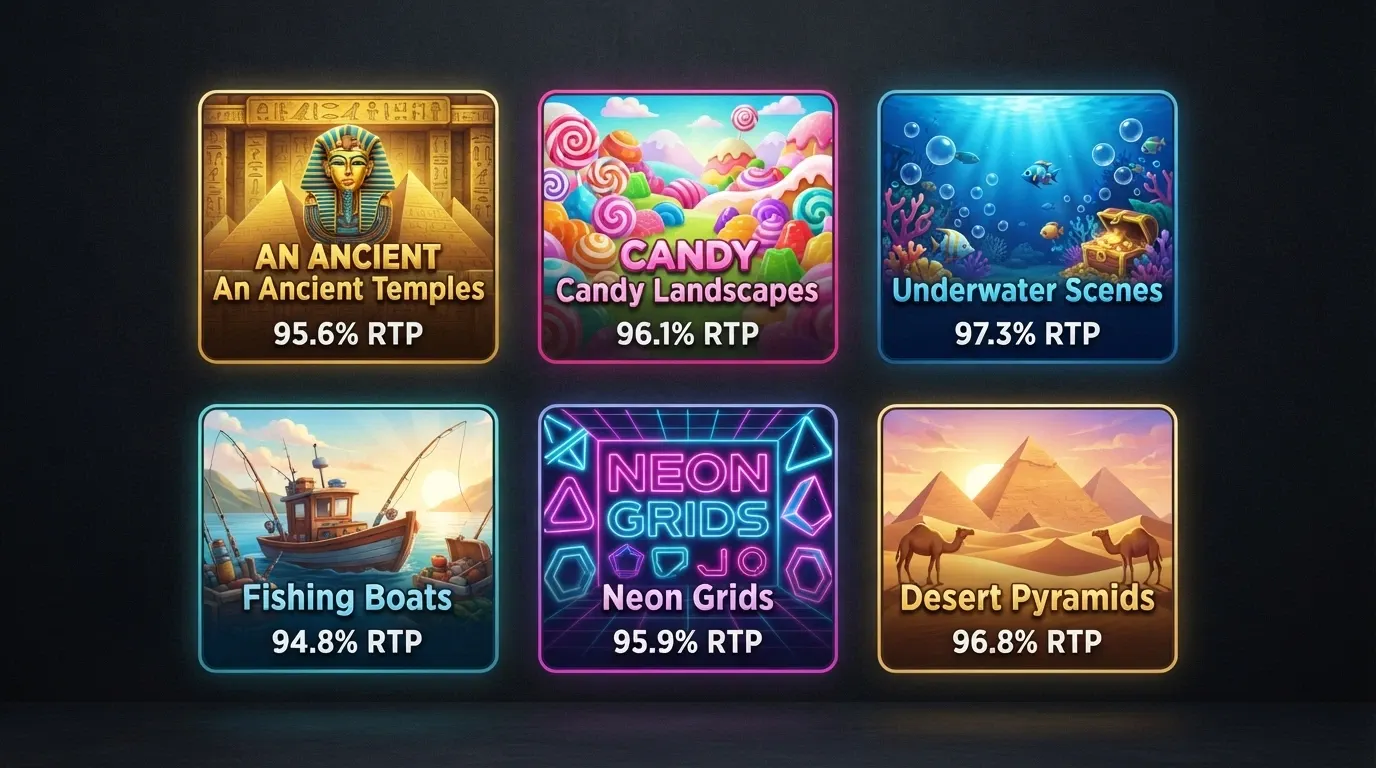
| Slot Title | Provider | RTP | Volatility | Max Win |
|---|---|---|---|---|
| Gates of Olympus | Pragmatic Play | 96.50% | High | 5,000x |
| Sweet Bonanza | Pragmatic Play | 96.48%–96.51% | High | 21,175x |
| Book of Dead | Play’n GO | 96.21% | High | 5,000x |
| Big Bass Splash | Pragmatic Play | 96.71% | Medium-high | 5,000x |
| San Quentin xWays | Nolimit City | 96.03% | Very high | 150,000x |
| Reactoonz | Play’n GO | 96.51% | High | 4,570x |
RTP is the share of stake the pokie returns to the player over a very large number of spins. At 96.50%, Gates of Olympus keeps 3.50% in expectation; on A$1,000 of turnover, the player loses A$35 in expectation, before the bonus maths is layered on top. Volatility is the spread of outcomes around that average: a high-volatility pokie produces long losing runs punctuated by occasional large wins, while a low-volatility pokie produces smaller, more frequent wins. Maximum win is the ceiling the pokie’s design imposes on a single spin, which limits how much of a cashout cap a player can actually reach in one hit.
The combination matters. A high-volatility pokie with a high max win — Sweet Bonanza at 21,175x stake, or San Quentin xWays at 150,000x stake — is the type of game a player wants to be playing when chasing a cashout cap of A$100 or A$200. The same volatility, on a low max win, is a longer grind with less upside. Skycrown is verified to run the published-maximum RTP on tested games rather than a degraded operator configuration; the same cannot be assumed for every offshore casino in the set, and the player’s best protection is to check the in-game help screen on the title they intend to play, since the RTP a casino actually runs is sometimes lower than the developer default.
The clearing strategy is straightforward. Low-volatility pokies clear wagering requirements quickly and cheaply, at the cost of producing few large wins. High-volatility pokies clear the same requirements more slowly, with more dead spins, but offer the chance of a bonus-sized hit that the cashout cap can absorb. The player who wants to convert bonus credit into a withdrawal is best served by a balanced approach: clear most of the wagering on a medium-volatility title, then move to a high-volatility pokie for the last portion of the requirement. The cap is the constraint; the volatility is the lever.
Mobile Play — Every Site Works, Few Build an App
The featured operators in this review all run their casino platforms in a mobile browser. The modern offshore casino is built on HTML5 first, and the same game library is available on a phone as on a desktop. The player does not need to install a native app to claim a no-deposit bonus, clear the wagering, or request a withdrawal. Native apps exist in the Apple App Store and Google Play for some of the operators in the set, but their availability in the Australian stores is patchy, and the browser experience is usually the better path.
The mobile and desktop experiences are not identical in every detail. Some operators compress the game lobby on smaller screens, and some live-dealer tables have fewer seats available on mobile. The features that matter for a no-deposit bonus — registration, bonus claiming, wagering tracking, withdrawal requests — are typically identical across form factors. A player who prefers to play on a phone is not giving up anything material relative to a desktop player, and in some cases the mobile experience is the better one because the casino has built for mobile first.
The lack of a native app is not a disadvantage. The features of a casino app — push notifications, biometric login, home-screen presence — are nice to have, but they do not change the bonus maths or the withdrawal experience. A player who is choosing between operators on the basis of the offer rather than the form factor is choosing well.
The Law Australian Casino Sites Don’t Want You to Read
Online Casino Is Prohibited — Period
Online casino games, online pokies and in-play betting on sporting events are prohibited to people in Australia under section 15 of the Interactive Gambling Act 2001. There is no Australian licence for online casino, not federally, not in any state, not in any territory. The Act was strengthened by the Interactive Gambling Amendment Act 2017, which closed the offshore loopholes the industry had been using, and gave the Australian Communications and Media Authority (ACMA) the power to investigate, warn, and seek blocking of illegal services. The prohibition is the law; the absence of a licence is not a regulatory gap.

What is licensed in Australia is narrower than most players realise. Wagering on races and on sport placed before the event begins is licensed, through operators authorised by a state or territory. The de facto national licensor is the Northern Territory Racing and Wagering Commission, which administers wagering licences through Licensing NT. Lotteries and keno are licensed. Land-based casinos are state-licensed and operate under separate frameworks. The point is that the licensed perimeter covers a small fraction of the gambling products that exist, and online casino is not inside it.
The reason offshore casinos target Australian players despite the prohibition is the same reason any banned product develops a black market: there is Australian demand, the product is profitable, and enforcement is not absolute. The ACMA has blocked 1,564 illegal gambling and affiliate websites as at March 2026, and 225 or more services have withdrawn from the Australian market since 2017. The enforcement is real, but it operates at the domain level rather than at the player level, and the individual player is not the target of the IGA. The provider is.
The 2026 Reform and What Changes in 2027
The Interactive Gambling Amendment (Gambling Reform) Bill 2026 passed Parliament on 19 August 2026; its measures commence on 1 January 2027. The reform is the biggest overhaul of Australian gambling law in a generation, and several of its provisions change the practical environment for offshore casinos targeting Australian players.
AdStop is a national wagering advertising opt-out register, administered by the ACMA. Australians who do not want to see wagering advertising can register once and have the opt-out apply across platforms. Wagering advertising itself is being capped at three ads per hour between 6:00 am and 8:30 pm, with a blackout from fifteen minutes before a live sporting event until five minutes after it ends. Direct marketing of inducements — sign-up offers, deposit matches, free bets — is prohibited for fourteen days after a customer signs up, for three months after a person deregisters from BetStop, and indefinitely for customers identified as at risk of gambling harm.
From 1 January 2027, banks and payment providers in Australia gain express authority to block transactions to illegal gambling operators. The mechanism is the financial plumbing: an Australian bank that identifies a transaction heading to an offshore casino on the ACMA’s register can refuse to process the payment. The provision is a structural tightening of the offshore casino business model in Australia, because it cuts off the deposit rail at the bank level rather than relying on the ACMA to block the domain.
A statutory review is scheduled after three years. The reform is not the end of the regulatory cycle; it is the most aggressive move in a longer trajectory. Players who use offshore casinos today should expect the friction to increase, not decrease, over the next several years.
What Playing Offshore Actually Costs You
The cost of playing at an offshore casino is not the wagering requirement or the cashout cap. It is the absence of every protection the Australian regulatory system has built for people who gamble.
BetStop, the National Self-Exclusion Register, launched in August 2023. A single registration excludes a person from every Australian-licensed online and phone wagering service, for a minimum of three months and up to a lifetime exclusion. As at 31 March 2026, BetStop had 59,830 registrations, with 37,247 active exclusions. Seventy-eight per cent of registrants were under 40; thirty-eight per cent chose lifetime exclusion. The system works for the people it covers, but it does not cover offshore casinos. An offshore operator is not connected to the BetStop register and will keep accepting a self-excluded person’s money. A player who has registered with BetStop and then plays at an offshore casino has not protected themselves; the offshore operator does not know about the registration and will not enforce it.
The ACMA’s blocking is at the domain level. When the regulator moves against an offshore casino, the Australian ISPs block the domain. The block is not retroactive: a player who has a balance on the site at the moment of blocking may find the site inaccessible from Australia, with no clear path to withdrawing the balance. The 1,564 sites already blocked include cases where players have lost access to funds. The risk is structural, and it grows as the ACMA’s enforcement expands.
There is no Australian consumer law recourse for an offshore casino that refuses a withdrawal, closes an account, or changes its terms after a player has accepted a bonus. The dispute goes to the operator’s home regulator — typically Curacao, sometimes Malta — and the path is slow, expensive, and uncertain. A player who has been wronged by an Australian-licensed operator has the ACMA, the state regulator, and the Australian Consumer Law on their side. A player who has been wronged by an offshore operator has, at best, an email address.
The credit card and crypto ban is the third signal. A casino that accepts these payment methods from an Australian player is by definition not Australian-licensed. The payment method is not a curiosity; it is a flag. Players who choose to use these methods are choosing to operate outside the Australian regulatory perimeter, and the consequences flow from that choice.
When the Free Spins Stop — Gambling Harm in Australia by the Numbers
Approximately 3.32 million Australians, or 15.1% of the adult population, are experiencing some form of gambling harm, with 2.86 million, or 13.0%, harmed by their own gambling behaviours. An estimated 1.97 million Australian adults are classified as having at-risk or problem gambling. The annual health loss associated with gambling harm in Australian adults is more than 400,000 Years Lived with Disability. About 2.1% of adults, roughly 430,000 people, experience problem gambling specifically. These figures are not the population of a single demographic; they are the population of a country, and they are the population the no-deposit bonus is designed to convert into depositing players.

The trend is not improving. Risky gambling in Australia rose from 13.7% in 2024 to 19.4% in 2025, an increase of more than five percentage points in a single year and an almost-doubling since the COVID-19 lockdowns of 2020–2021. Online participation has grown in parallel: 56.1% of Australians who gambled in 2025 mainly participated online. The product the offshore casino sells is the product Australians are consuming more of, and the harm data sits behind the bonus landing page.
Help is available, and it is free. The National Gambling Helpline is 1800 858 858, available 24 hours a day, every day, with trained counsellors who can take a call, start a chat, or refer the caller to local services. Gambling Help Online, at gamblinghelponline.org.au, offers live chat, email counselling and self-help tools. BetStop, the National Self-Exclusion Register, is at betstop.gov.au, and a single registration excludes a person from every Australian-licensed wagering service for a minimum of three months and up to a lifetime. The catch — and the reason this page has spent several thousand words on offshore casinos — is that BetStop does not reach offshore operators. The exclusion works inside the Australian perimeter and stops there.
A player who finds that the no-deposit bonus has become a depositing habit has several concrete steps available, in order of friction. The first is to call the National Gambling Helpline. The second is to register with BetStop, which closes off the licensed Australian wagering operators. The third is to ask their bank to add a gambling block, which several Australian banks now offer at the customer level. None of these steps is a substitute for the others, and none of them is a substitute for the decision the player is making about whether to play at all.
How We Evaluated These No-Deposit Bonuses
The ten operators in this review were selected from a market scan of Australian-facing casinos that currently advertise a no-deposit bonus to Australian players. The set is not exhaustive; the Australian-facing market is large, and operators enter and leave it frequently. The set is representative of the offer shapes the market currently carries, from the largest spin stacks to the highest cashout caps, and from pure free-spin offers to bonus-cash packages to rakeback and VIP structures.
The data on each operator came from three sources. The first was the operator’s own terms pages and bonus pages, accessed during the review window. The second was a set of independent casino review sites — Gambling Insider, PokiesAustralia, TrueBlueCasinos, Jedinews, Chipy.com and Slotozilla — that publish bonus terms and verification notes for Australian-facing operators. The third was the ACMA’s register of blocked sites, which is the definitive reference for whether a domain has been subject to enforcement action. The ACMA’s register was checked for each of the ten operators in the set.
The evaluation criteria were, in order of weight: bonus size and type; wagering multiple; maximum cashout; bonus validity; game eligibility and contribution rates; payment methods; licence transparency; and RTP verification. A bonus that failed any of the first four criteria was excluded from the rankings even if the headline figure was attractive; a bonus that passed all four was ranked by the secondary criteria. Two operators in the set — Scream Casino and Rainbet — failed the first-tier criteria for data completeness, and are included for completeness of the market picture rather than as recommendations.
Licence claims were checked against the ACMA register and the operator’s own terms pages. Where a licence was confirmed, the source is named in the operator write-up. Where a licence was not confirmed from sources reviewed, the write-up says so explicitly. The reader should weight the licence status in their own decision-making, since the licence determines the consumer protection the player can fall back on.
RTP figures for the bonus-eligible pokies were taken from the developers’ published specifications and from independent verification where available. Skycrown is verified to run the published-maximum RTP on tested games; the same cannot be assumed for every operator in the set. The in-game help screen on the title being played is the most reliable check for the player.
The page is current as of 18 October 2026. No-deposit bonus terms at offshore casinos change frequently, and the table above is a snapshot of the offers available at the time of review. A player who is comparing offers today should check the operator’s current promotion page before claiming.
No-Deposit Bonuses in Australia: Claim One If You Must, but Know What You’re Giving Up
Every no-deposit bonus available to an Australian player is offered by an offshore operator with no Australian licence, on a product that the Interactive Gambling Act 2001 prohibits from being offered to Australians in the first place. The offer itself is a real economic proposition: a small credit with a wagering requirement, a cashout cap, and an expiry window, all of which the player must clear before any of the bonus balance becomes withdrawable. The expected cost of clearing the wagering requirement, on a typical pokie at a typical Australian-facing casino, is between 3% and 5% of the turnover. The bonus is real; the cost of the bonus is also real, and the cost is usually larger than the bonus.
The legal frame is the larger cost. No Australian consumer protection applies to an offshore casino. No BetStop coverage applies. No ACMA recourse applies if a withdrawal is refused or an account is closed. The ACMA has the power to block the domain at any time, with any balance the player has on the site at the moment of blocking potentially inaccessible. The 1,564 sites already on the blocked list are the precedents for what enforcement looks like. The 2026 reform, commencing 1 January 2027, will tighten the financial plumbing further, with banks gaining express authority to block transactions to illegal operators. The trajectory of the regulatory environment is toward less access, not more, and a player who claims a no-deposit bonus today is playing on a platform that the Australian government has decided, by statute, should not exist.
The harm data is the deepest cost. Roughly 3.32 million Australians are experiencing gambling harm, and the trend is rising. The product the no-deposit bonus sells is the product those 3.32 million people are consuming. The 56.1% of Australians who gambled in 2025 who did so mainly online are the population the offer is built to convert. The expected value of the bonus, after the wagering requirement and the cashout cap, is negative. The expected value of the bonus, after the offshore legal risk and the harm data, is more negative still.
The concrete takeaway is not a recommendation. It is a checklist. A player who has read this far and still wants to claim a no-deposit bonus should do so with the following commitments: treat the bonus as paid entertainment with a known statistical cost, not as a path to profit; clear the wagering requirement on a pokie with a published RTP at or near the developer default, rather than at a degraded configuration; never deposit more than the player is willing to lose in full; never chase losses; and use the tools Australia provides — BetStop for licensed services, the National Gambling Helpline at 1800 858 858, Gambling Help Online at gamblinghelponline.org.au — if play escalates beyond what the player intended. The bonus is the player’s choice. The consequences are the player’s responsibility.
Frequently Asked Questions
Can I withdraw real money from a no deposit bonus at Australian casinos?
Yes, but only after the wagering requirement is met and only up to the maximum cashout cap. A no-deposit bonus at an Australian-facing casino typically runs 30x to 60x the bonus amount in required turnover, with a cashout cap of A$50 to A$200 on bonus-derived winnings. The player who clears the requirement within the validity window can withdraw whatever is left under the cap, via PayID or another supported method. Withdrawal of the bonus amount itself is not permitted.
What is the maximum cashout from a no deposit bonus at Australian casinos?
Maximum cashout caps on no-deposit bonuses at Australian-facing casinos typically range from A$50 to A$200, with A$50 common for free-spin offers and A$100 to A$200 for bonus cash offers. Fair Go’s A$50 no-deposit bonus is the only offer in this review without a stated cashout cap. Caps apply to bonus-derived winnings only; they do not cap a player’s deposits or their non-bonus balance.
Is PayID accepted for deposits and withdrawals at no deposit bonus casinos in Australia?
Yes, PayID is the dominant payment method at Australian-facing casinos and is supported by most of the operators in this review for both deposits and withdrawals. Tested PayID withdrawals have cleared in as little as 35 minutes, with a typical minimum withdrawal of A$30. PayID is also a payment method used by Australian-licensed wagering operators, so its presence on an offshore casino indicates Australian customer focus rather than Australian licensing.
Are offshore online casinos safe for Australian players?
Offshore casinos are not safe in the sense that an Australian-licensed operator is safe, because no Australian licence exists for online casino and no Australian consumer protection covers offshore operators. The IGA 2001 prohibits the supply of online casino games to Australian players, and every offshore casino offering a no-deposit bonus to Australians is breaking that law. Players have no BetStop coverage at offshore sites, no ACMA recourse for disputes, and the risk of the domain being blocked with a balance on the account. The label “safe” cannot honestly be applied.
What happens if an offshore casino blocks my account or refuses a withdrawal?
The player has no Australian recourse. The dispute must be taken to the operator’s home regulator, typically in Curacao or Malta, which is slow, expensive, and uncertain. Australian consumer law does not apply to offshore operators, and the ACMA cannot compel an offshore operator to pay a withdrawal. The only practical protection is to choose operators with a track record of paying out, to withdraw winnings promptly rather than letting them accumulate, and to keep deposits and bonus play at a level the player can afford to lose outright.
What should I look for in the terms and conditions of a no deposit bonus?
Four numbers, in this order: the wagering multiple, the maximum cashout cap, the bonus validity window, and the maximum bet during wagering. A wagering multiple of 30x to 40x is manageable; 60x is heavy. A cashout cap of A$50 to A$200 is typical; a no-cap offer is rare. A validity window of seven to fourteen days is workable; two days is tight. A max bet of A$5 to A$7.50 is the norm. Game contribution rates should also be checked: pokies contribute 100%, table games 10%, live casino 0–5%. If any of these numbers are missing from the terms, the player should treat the offer as unverified.