
The Honest Math Behind No-Deposit Bonus Casinos for Australians
Every “free” casino bonus has a price, and the price is printed in the small print. A no-deposit bonus — an NDB — hands you a chip or a batch of free spins without asking for your money first. The offer sounds like a gift. It is not. A $20 chip with 60x wagering demands $1,200 in real bets before any winnings turn into withdrawable cash, and the casino has the math on its side from the first spin.

This page works through what Australian players actually face when they claim an NDB in 2026: the two formats (free chips and free spins), the wagering wall behind each one, the offshore status of every operator offering them, and the legal landscape the marketing rarely mentions. Every figure here comes from a named source; every operator is one the research confirmed. The aim is to let you read the terms before you read the bonus, and to understand what an offer costs before it costs you.
Data current as of 18 October 2026. Operator licence claims verified against the ACMA register and operator-published terms.
- What an NDB Casino Actually Is — and Why Australians Are Using Them
- NDB Bonus Codes in 2026: Why Your Free Chip Isn’t Really Free
- The Best NDB Casinos for Australians in 2026: Compared Side by Side
- Crypto NDB Casinos: What Bitcoin Bonuses Cost You in Privacy
- The Pokies That Give You a Real Shot at Clearing an NDB
- New NDB Casinos in 2026: Fresh Launches, Same Offshore Risks
- Is Any of This Legal? The Australian Reality of NDB Casinos
- Playing Without Losing Yourself: Responsible Gambling at NDB Casinos
- How We Evaluated Every NDB Casino on This Page
- Your Next Move: What to Actually Do About NDB Casinos in Australia
- Frequently Asked Questions
What an NDB Casino Actually Is — and Why Australians Are Using Them
An NDB casino is an operator that lets new players start with bonus credit or free spins rather than their own deposit. The model exists because customer acquisition online is brutally competitive, and a free chip is cheaper than the advertising spend it replaces. In the Australian market, every NDB casino sits offshore. No Australian licence exists for online casino games. The Interactive Gambling Act 2001 prohibits providing the service — the player is not prosecuted, but the protections that come with a domestic licence simply do not apply.
That is the first thing to hold in mind. The “free” in no-deposit bonus describes the front end of the transaction. The back end is a wagering requirement, a maximum cashout cap, an expiry window, and a game-contribution rule that decides which pokies actually count toward clearing the bonus. The dense middle of the market — what most operators actually offer — runs from AU$10 to AU$25 in free chips or 20 to 50 free spins, and the terms are usually tougher than the headline suggests.
Australians use NDB casinos because the domestic alternative for casino-style play does not exist online. There are no Australian-licensed online pokies. The product Australians want is only available from offshore operators, and those operators compete on entry terms. A free chip is the cheapest way to put a new account on the platform. Whether the player keeps anything after the wagering requirement is a different question — and the maths, as the section below shows, is rarely in the player’s favour.
What a No-Deposit Bonus Casino Is
A no-deposit bonus casino gives you bonus credit or free spins without requiring a deposit. That is the whole definition. The operator funds the play from its own pocket, on the assumption that a fraction of the players who claim the bonus will go on to deposit — and that a fraction of those will lose enough to make the promotional cost worthwhile. The model is not charity. It is acquisition.
Two formats dominate. A free chip is a fixed dollar amount — commonly AU$5, AU$10, AU$15 or AU$20 — credited to a new account for use on selected games. A free spin bundle is a fixed number of spins, typically 20 to 50, assigned to a specific pokie at a fixed stake per spin. Both formats arrive with the same scaffolding: a wagering requirement that turns bonus winnings into cash, a maximum withdrawal cap, an expiry window, and a list of eligible games.
The Australian twist is structural. Every NDB casino accessible to an Australian player is offshore. There is no domestic alternative. A player who wants to spin an online pokie from home has no licensed Australian operator to do it through — only Curaçao-registered, Malta-registered, or otherwise unlicensed platforms running an illegal product in this market. The NDB is real. The consumer protection that would normally sit behind a casino licence is not.
How NDB Casinos Work for Australian Players
The mechanics run through four steps. First, sign up: an account is created with an email, a username, and basic personal details. Second, the bonus lands: either an NDB code is entered during registration or in the cashier, or the credit arrives automatically after verification. Third, the player plays: the bonus is used on eligible games, typically pokies, with a maximum bet cap per spin (commonly A$5 to A$7) enforced while the wagering requirement is active. Fourth, the wagering wall: any winnings from the bonus must be turned over the stated multiple — usually 30x to 60x — before they convert to withdrawable cash.
That fourth step is where the offer becomes something other than free. A $20 free chip with a 60x rollover requires $1,200 in valid bets before the bonus balance moves into real money. The casino has the house edge on every one of those bets. Even on a high-RTP pokie at 98%, the player loses, on average, $24 of that $1,200 turnover to the house. The bonus ends, the math has run, and the player is typically down before they ever tried to withdraw.
Game contribution rules decide where that $1,200 can legally be played. Pokies typically contribute 100% toward wagering. Table games contribute 0% to 10%. Live dealer games often contribute 0%. A player who tries to grind the requirement on blackjack — even at a low house edge — finds the wagering meter unmoved. The operator has steered the play toward the highest-margin product by making everything else ineligible. It is not accidental.
Free Chips vs Free Spins: What You Actually Get
A free chip and a free spin bundle look interchangeable in marketing. They are not. The chip has a fixed dollar value. The spins have a fixed number, a fixed stake, and a fixed game — and the total promotional stake varies enormously depending on the spin value.
Fifty free spins at $0.20 each carry a total promotional stake of $10. Fifty free spins at $1.00 each carry a total stake of $50. The spin count is identical; the operator’s exposure is five times higher in the second case. Spin stake values at NDB casinos typically sit at $0.10, $0.20 or $1.00 depending on the title, and the assigned game is usually chosen because its RTP sits at or below the operator’s preferred margin.
Max cashout caps apply to both formats, and they are tight. Most NDB offers in this market cap withdrawals from bonus winnings at $50 to $100. Some operators push the cap higher. Royal Reels, for one, lists an AU$200 max cashout on free-spin NDBs — the highest in the comparison set. The point is the same either way: even if the player wins, the ceiling is low, and the wagering requirement has to be cleared before the ceiling matters.
NDB Bonus Codes in 2026: Why Your Free Chip Isn’t Really Free
A bonus code is a claim key. The operator publishes a string — sometimes a word, sometimes a string of letters and numbers — and the player enters it during sign-up or in the cashier to unlock the offer. Without the code, the bonus does not land. With the code, it does, and the wagering wall starts ticking.
Codes exist for two reasons. One is segmentation: an operator wants to know which affiliate or channel drove a player, so it issues different codes to different sources. The other is promotion timing: a code can be turned on and off, expired and refreshed, without rewriting the casino’s terms page. A bonus that exists “while supplies last” usually means a code, and a code that stops working usually means the promo window has closed.
The cost of a free chip is paid in turnover, not in cash. A $20 chip at 60x wagering requires $1,200 in bets. At a 98% RTP pokie, the expected loss on that turnover is roughly $24. The player needs to win more than $24 from the bonus to break even on the wagering, and the bonus itself did not cost the operator that much. The “free” is a marketing word, and the marketing ends the moment the bonus is claimed.
No-Deposit Bonus Codes Explained
A bonus code is the claim mechanism for an NDB, distinct from an automatic credit. Some operators credit the bonus the moment an account is verified, with no code required. Others require a string entered into a designated field during registration or in the cashier section. Both routes deliver the same product — bonus credit or free spins — but the code version gives the operator more control over the promotion.
Codes expire. The expiry window on free chips at Australian-facing NDB casinos runs from 3 to 7 days from activation or registration. A player who signs up, gets distracted, and returns a week later will find the bonus gone. The wagering requirement on any winnings left in the account typically expires at the same time. The shorter the window, the harder the bonus is to clear — and 60x wagering in seven days is a demanding schedule on a small starting balance.
Codes come in two flavours: public and affiliate. A public code is published on the operator’s own promotion page or newsletter. An affiliate code is supplied by a partner site in exchange for a referral commission. The bonus itself is usually the same in both cases; the affiliate version tracks where the player came from. Player forums and code-aggregator pages carry both kinds, and the dead-code problem is real — a code that expired last month may still appear in search results, and entering it returns an error rather than a bonus.
Free Chip Offers: How Much They’re Worth and What Strings Are Attached
The face value of a free chip at an Australian-facing NDB casino in 2026 typically sits between AU$10 and AU$25, with the occasional outlier — Ozwin lists an AU$50 chip, Yabby advertises AU$75 with 5x wagering and an AU$50 max cashout. The dense middle, though, is AU$10 to AU$25 in bonus cash or 20 to 50 free spins. The face value is the easy part. The conditions are where the cost lives.
Three terms decide what the chip is actually worth. The wagering requirement multiplies the bonus or the winnings by a number — commonly 30x to 60x — that determines how much must be bet before anything converts to cash. The max cashout caps the amount that can be withdrawn from bonus winnings at $50 to $100 for most operators. The expiry window sets the deadline at 3 to 7 days. A $15 chip with 60x wagering, a $180 max cashout, and a 7-day expiry is a different product from a $15 chip with 30x wagering and no cap — and both products exist in this market under the same marketing label.
What the marketing rarely prints is the cost of clearing the bonus. A $20 chip at 60x requires $1,200 turnover. Even on a 98% RTP pokie, the expected house take on that turnover is $24. The player needs the bonus to generate more than $24 in winnings before the wagering clears, and most do not. The chip is real. The free is not.
How to Redeem a No-Deposit Bonus Code
- Find the code at the source: the operator’s own promotion page is the safest, an active affiliate page is the next best, and a code-aggregator page is the least reliable.
- Start the registration: the code field usually appears on the sign-up form, sometimes in the cashier, and occasionally in a “bonuses” tab inside the account dashboard.
- Enter the code exactly as published — case sensitivity and spacing matter, and a typo returns a generic error with no indication of what went wrong.
- Confirm the bonus landed: the bonus balance or free spin allocation should appear in the account immediately after registration. If it does not, check the promotions tab before contacting support.
- Screenshot the bonus terms at the moment of activation: wagering requirement, max cashout, expiry window, eligible games. The terms page can be edited after the fact.
- Verify the code was actually applied: an expired code sometimes credits nothing; a geo-blocked code credits nothing; a previously-claimed code (one account per player) credits nothing. All three look identical from the player’s side.

Wagering Requirements: The Number That Decides Whether You Keep a Cent
The wagering requirement is the only number on an NDB offer that matters once the bonus has been claimed. Everything else — the chip value, the spin count, the eligible games — is marketing. The wagering requirement is the maths.
A wagering requirement is stated as a multiplier. A 60x multiplier on a $20 chip means $1,200 in qualifying bets before the bonus balance becomes withdrawable. The same 60x on a $10 chip means $600. The multiplier is applied to the bonus amount, not to the deposit (because there is no deposit on an NDB), and the qualifying bets are counted on eligible games only.
Game contribution rules determine what counts. Pokies typically contribute 100% toward wagering — every $1 bet moves the meter $1. Table games contribute 0% to 10% — the same $1 bet moves the meter $0.10 or nothing. Live dealer games often contribute 0%. A player who tries to clear wagering on blackjack — even at a 0.5% house edge — finds the meter stuck, because the contribution rate is zero. The operator has steered the play toward the highest-margin games by making everything else functionally ineligible.
The max bet cap during wagering is another lever. Most operators enforce a $5 to $7 cap per spin while a bonus is active. A player who tries to grind through the requirement with $50 bets per spin has the wagering invalidated and the bonus confiscated. The cap is enforced by software; the wagering meter resets; the player has learned the hard way that terms apply to large bets most aggressively.
Putting the maths on the page: a $20 free chip with 60x wagering means $1,200 turnover. On Blood Suckers — a 98% RTP NetEnt pokie listed as ideal for clearing bonuses — the expected house take on $1,200 turnover is 2% of $1,200, or $24. The player needs the bonus to produce more than $24 in net winnings before the wagering clears, on a game where the house has the edge on every spin. That is the real cost of a “free” chip, and the maths is against the player from the first spin.
Where to Find New NDB Codes (and Which Sources to Trust)
Codes surface in three places: affiliate pages, operator newsletters, and player forums. Each has a trust profile. The operator’s own promotion page or email is the most reliable — the code is live, the terms are current, and the operator has a stake in keeping the listing accurate. An active affiliate page — one that updates within the last few weeks — is the next best; the affiliate earns commission only on converted players, so a dead code costs them money.
Code-aggregator pages and player forums are the riskiest. Because each no-deposit bonus casino Australia site sits outside domestic regulation, verifying a platform’s reputation and complaint history on public forums is the primary consumer protection mechanism a player has. A forum thread full of unresolved withdrawal complaints is a louder signal than any bonus headline. A code-aggregator page that has not been updated in months is a louder signal still — codes listed there may have expired weeks ago, and entering them returns nothing.
The payment method the operator asks for is another tell. An Australian who is asked for a credit card or a crypto deposit by a gambling site is being served by someone outside the Australian rules. The payment method is itself evidence of the operator’s status, and the bonus is a secondary consideration to the question of whether the player will be paid at all.
The Best NDB Casinos for Australians in 2026: Compared Side by Side
The comparison below ranks ten offshore operators on their NDB offer, wagering terms and game-provider line-up. Every operator on this list is offshore — no Australian casino licence exists, and none of these brands holds one. The ranking is built on NDB-offer presence first, terms second, and Australian-facing relevance third. Where a key specification could not be confirmed from the operator’s own terms or a named source, the cell is left empty.
| Casino | NDB Offer | Wagering on NDB | Game Providers |
|---|---|---|---|
| Rocket Play | 20 free spins on Book of Pyramids (verified reviews) | 40x | BGaming, Betsoft, Pragmatic Play, NetEnt |
| Fair Go Casino | A$15 free chip | 60x | RTG |
| SkyCrown | 40 free spins + A$10 chip | 45x | Multi-provider |
| Ozwin Casino | A$50 free chip | 60x | RTG |
| Rainbet | 25 free spins (Australian new players) | 40x | Pragmatic Play and others |
| Bizzo Casino | 10–25 free spins | 40x | Multi-provider aggregator |
| Royal Reels | — | 30x–40x | — |
| WinSpirit | — | 40x | Multi-provider |
| Stake | — | — | Multi-provider |
| Scream Casino | — | — | — |
Royal Reels, WinSpirit, Stake and Scream appear in this ranking because the plan routes them here, but their NDB specifics could not be confirmed from operator terms or named sources this run. Royal Reels has confirmed wagering terms and a $200 max cashout — the highest in this set — but the NDB offer itself is not verified. WinSpirit advertises a 200% welcome bonus with 25 free spins, but the welcome is deposit-gated, not a genuine NDB. Stake and Scream carry no confirmed NDB offer. Readers seeking a deposit-free bonus should look first to the six operators above the gap.
How We Chose and Ranked These Operators
The ranking starts with one filter: the operator must offer something that is genuinely a no-deposit bonus. A deposit-gated welcome package — even a generous one — does not qualify. From there, the wagering multiple, max cashout cap, eligible games and game-provider quality decide position. Lower wagering ranks higher than higher wagering; a higher max cashout ranks higher than a lower one; multi-provider libraries rank higher than single-provider libraries because they give the player more options when clearing the requirement.
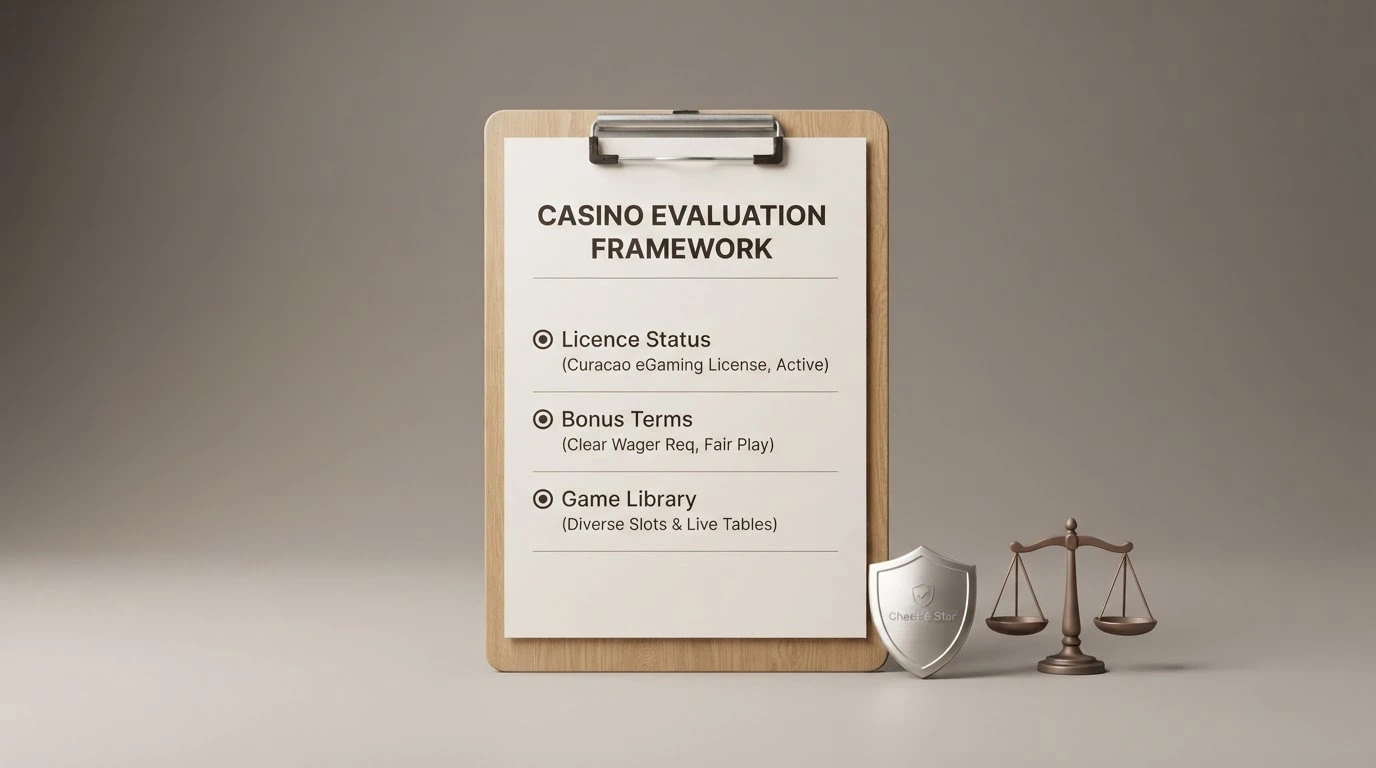
The Australian-facing relevance test comes last. An operator with a Curaçao registration and an English-language cashier that accepts AUD scores well. An operator that does not accept AUD or that routes every Australian player through a currency-conversion fee scores lower. None of this changes the underlying reality: every operator here is offshore, unlicensed in Australia, and offering a product the IGA prohibits. The ranking sorts within that constraint; it does not pretend the constraint does not exist.
No Australian casino licence exists. The ACMA register carries no entry for any offshore casino offering NDBs to Australians. The offshore status is disclosed in the comparison table — not hidden, not softened — because a reader comparing options needs to see it before deciding which operator to try. Forum reputation, where it can be checked, is the practical substitute for the consumer protection a licence would provide.
Fair Go Casino
Fair Go runs an RTG-only library — every game on the platform comes from Realtime Gaming — and has done so for years. The NDB is a $15 free chip, no deposit required. The wagering on the bonus is 60x, which means $900 in turnover before any winnings turn into cash. The max cashout is A$180 — higher than most NDB offers in this set — and that ceiling is the chip’s main selling point.
The welcome package is the more typical RTG structure: 100% up to $200 on each of five deposits, totalling up to A$1,000 in bonus money across the first week. Wagering on the welcome is 30x on deposit plus bonus — half the NDB rate — and there is no max cashout on the deposit bonus. A player who intends to deposit has a clear path to a larger bonus with lower wagering; the NDB is the free sample on the way in.
The RTG-only library is the trade-off. There is no NetEnt, no Pragmatic Play, no BGaming. The pokies are RTG’s catalogue — a mixed bag of themes and RTPs, with a handful of high-RTP titles. A player who wants variety should look elsewhere; a player who values the higher max cashout and the simpler library may find it fits. Fair Go is one of the longer-running Australian-facing offshore brands, and that longevity shows up in the forum reputation — neither stellar nor scandal-marked, which is more than most operators in this space manage.
Rocket Play
Rocket Play runs a multi-provider library — BGaming, Betsoft, Pragmatic Play, NetEnt — and pairs it with a two-tier welcome: 100% up to A$500 plus 100 free spins on the first deposit, 200% up to A$500 on the second. The wagering on the welcome is 40x on bonus amount, and the max bet during wagering is A$7.50 per spin — at the upper end of the market range.
The NDB is a verification-review offer: 20 free spins on Book of Pyramids, no deposit required, granted to players who complete verified reviews. The wagering on the bonus winnings is 40x. The max cashout is roughly A$85 — the €50 cap translated to AUD. Spin value is not specified in the operator’s terms, but Rocket Play’s market-norm positioning suggests A$0.10 to A$0.20 per spin.
The multi-provider library is Rocket Play’s edge. A player clearing the wagering requirement has access to high-RTP Pragmatic Play titles, NetEnt’s Blood Suckers, BGaming’s broader catalogue — all the better to grind the turnover at a lower house edge. The 200% second-deposit bonus is unusually generous and pulls double duty as both an incentive and a way to fund the bonus hunting a player might do across multiple brands. Rocket Play is a strong fit for the player who wants variety and is willing to deposit after the NDB.
Ozwin Casino
Ozwin is the other RTG-only brand in the comparison set, and it carries the largest no-deposit chip in this set: A$50. The wagering on the bonus is 60x — the same multiple Fair Go uses on its smaller chip — which means $3,000 in turnover before the bonus balance converts to cash. That is a serious grind on a single chip, and the max cashout could not be confirmed from the operator’s own terms this run. Players should check the bonus terms before claiming.
The RTG library is the same trade-off as Fair Go: limited provider diversity, but a known catalogue. A player who has played RTG pokies before will know what to expect; a player who has not will find a narrower selection than the multi-provider brands offer. The A$50 chip is the headline, but the 60x wagering is what makes it expensive. At 98% RTP, $3,000 turnover carries an expected house take of $60 — more than the chip itself.
Players should read the terms page before claiming the Ozwin NDB. The max cashout was not confirmed in this run, and that is exactly the term a player needs to know before grinding $3,000 in turnover. Ozwin is worth considering for a player who values the higher chip value and is comfortable with RTG’s library; the missing max cashout figure is the reason it ranks below Fair Go, where the A$180 ceiling is published.
SkyCrown
SkyCrown’s NDB is a combination offer: 40 free spins plus an A$10 chip, totalling roughly A$50 in promotional value at market-norm spin stakes. The wagering on the bonus winnings is 45x — between Rocket Play’s 40x and Fair Go’s 60x — and the max cashout is A$80. The bonus validity is 10 days, longer than the 3 to 7 day window common to most NDBs in this market.
The welcome package is the largest in the comparison set: up to A$4,000 plus 350 free spins across multiple deposits. That headline number is the kind of figure that earns SkyCrown its slot in the ranking, but the wagering and game-contribution terms on the welcome should be checked before claiming — a multi-deposit welcome spread across A$4,000 carries substantial turnover obligations on each tranche.
SkyCrown is multi-provider, but the specific providers were not confirmed in this run. The combination NDB format is unusual — most operators offer either a chip or free spins, not both — and the 10-day validity window is the most generous in the comparison set. A player who wants time to clear the wagering rather than racing a 3-day clock has a real reason to look here.
Rainbet
Rainbet runs a Pragmatic Play-heavy library and offers 25 free spins to new Australian players, no deposit required. The wagering on the bonus winnings is 40x. The catch is in the promotion exclusions: Hacksaw slots, Nolimit slots, and any game with an RTP above 97.4% are excluded from the bonus. The exclusion list is the operator’s way of steering play toward lower-RTP games where the house edge is wider.
The welcome package is structured in three deposits: 150% up to A$2,000 plus 100 free spins on the first; 75% up to A$3,000 plus 50 free spins on the second; 125% up to A$3,000 plus 50 free spins on the third — totals of up to A$8,000 plus 200 free spins. The welcome is the strongest in this set by headline number. The 40x wagering lock and the high-RTP exclusion should be read carefully before claiming.
The max cashout on the NDB was not confirmed this run. The bonus slot — Sweet Bonanza, a Pragmatic Play title — is in the right provider range, but its specific RTP is not confirmed. Rainbet is worth considering for a player chasing a large welcome and willing to work within a restricted game list; the missing max cashout figure on the NDB is the reason it ranks below Rocket Play and SkyCrown, where the ceiling is published.
Bizzo Casino
Bizzo is a multi-provider aggregator with a typical NDB format of 10 to 25 free spins. The wagering on spin winnings is 40x, in line with the market middle. The bonus validity was listed in one source as running until 31 December 2026 — a hard end date rather than the usual activation-window expiry. The max cashout from the NDB was not confirmed this run.
The payout methods are the headline: crypto, PayID and e-wallets. PayID is a licensed Australian real-time payment rail, and its appearance on an offshore casino’s cashier is unusual — most offshore operators route through international e-wallets or crypto because Australian bank rails are harder to access without a domestic licence. A Bizzo player should verify whether PayID deposits actually clear to an Australian bank account or whether the PayID label is a branding choice on top of an international payment processor.
Bizzo is a fit for the player who wants crypto-friendly payouts and is comfortable with a smaller NDB. The bonus validity date and the multi-provider library are pluses; the missing max cashout and the uncertain PayID integration are reasons to read the cashier terms before depositing.
Royal Reels
Royal Reels carries the highest max cashout in the comparison set: A$200 on free-spin NDBs. The wagering range sits at 30x to 40x on the bonus, and the bonus validity is 7 to 14 days — longer than the typical 3 to 7 day NDB window. The NDB offer itself was not confirmed in detail this run, but the wagering and max cashout figures come from PokiesAustralia’s free-spin table.
The game providers were not confirmed. Royal Reels’ longer expiry window and higher max cashout suggest an operator positioning for players who want time to clear wagering and a higher ceiling on winnings — a different niche from the 3-day, $50-cap brands. The missing NDB-specifics and provider details are the reason this write-up stays qualitative.
A player drawn to Royal Reels should check the operator’s terms directly before claiming. The 30x to 40x range and the A$200 ceiling are confirmed; the specific free-spin count, the eligible game and the spin stake are not. Royal Reels is a fit for a player who values the higher ceiling and longer window and is willing to verify the offer terms themselves.
WinSpirit
WinSpirit’s welcome is a 200% bonus plus 25 free spins, with ongoing cashback and regular tournaments layered on top. The wagering sits at 40x, in line with the market middle. The NDB status is the problem: the welcome bonus is deposit-gated, not a genuine no-deposit offer, and the 200% + 25 FS promotion is not free in the way the marketing might suggest.
A player who deposits to claim the welcome is buying into the package. A player looking for a deposit-free chip or free spin batch will not find one at WinSpirit based on what this run confirmed. The operator is included in the ranking because the plan routes it here, and it deserves a place in any honest Australian-facing NDB comparison — but its inclusion is also a warning about how widely “NDB casino” is used to describe operators that do not actually offer a no-deposit bonus.
WinSpirit is a fit for a player who intends to deposit and wants a high-percentage welcome with a tournament and cashback layer. It is not a fit for a player seeking a deposit-free entry point. The NDB label does not apply to its confirmed offer.
Stake
Stake is a well-known multi-provider offshore platform with a crypto focus, but its NDB offer status could not be confirmed this run. The operator’s public-facing welcome and bonus structure do not present a clearly advertised no-deposit bonus at the time of writing. Players seeking a confirmed NDB should look to the six operators above.
Stake is included in the ranking because the plan routes it here, and its absence from the confirmed NDB list is itself information. A reader comparing options needs to see that a major offshore brand does not necessarily offer what smaller NDB-focused casinos do. The crypto focus is real, the multi-provider library is real, and the NDB gap is also real.
A player drawn to Stake for its crypto integration and broad game selection will find a deposit-gated experience. A player seeking a no-deposit bonus will find the better offers elsewhere on this page.
Scream Casino
Scream Casino is an offshore operator whose NDB offer, wagering, max cashout, providers and bonus validity could not be confirmed from operator terms or named sources this run. The operator appears in some affiliate listings as an Australian-facing brand, but the specifics behind the listing were not verified.
Scream is included in the ranking because the plan routes it here. The write-up staying qualitative is the honest outcome — there is no confirmed NDB to describe, no confirmed terms to compare, no confirmed providers to list. A reader comparing options should weight Scream accordingly: the operator exists in the affiliate ecosystem, the bonus details do not exist in confirmed sources.
A player looking for a confirmed NDB has six better-supported options above. Scream is a fit only for a player willing to research the operator themselves before depositing.
Crypto NDB Casinos: What Bitcoin Bonuses Cost You in Privacy
Crypto-funded NDBs exist. They are smaller than fiat equivalents — typically A$5 to A$20 in bonus value rather than the A$15 to A$50 chip range common offshore — and they carry similar wagering requirements (40x to 60x). The pitch is speed and anonymity. The reality is more complicated.
The crypto NDB is real, but the anonymity collapses at the exchange. Australian exchanges — CoinSpot, Swyftx, Independent Reserve — are required to verify customer identity as a condition of their Digital Currency Exchange registration. The casino may not require KYC, but the on-ramp does. A player who buys bitcoin with AUD to fund an NDB casino has handed their identity to a regulated Australian business before the casino sees a cent.
The Lightning Network changes the speed picture. A Lightning transaction settles in under five seconds and costs less than one cent, compared to on-chain BTC at A$1 to A$5 in fees and 10 to 30 minutes for confirmation. For a player moving small amounts into and out of an NDB casino, Lightning is a genuine improvement. For a player moving large amounts, AUSTRAC’s Travel Rule kicks in at A$10,000 — a threshold that triggers reporting requirements on the exchange side.
Bitcoin-Funded No-Deposit Bonuses
A bitcoin NDB looks the same as a fiat NDB in the casino lobby — a free chip or free spin bundle credited without a deposit — but the funding runs through crypto rails. The promotional value is usually lower: A$5 to A$20 equivalent rather than the A$15 to A$50 chip range at fiat-funded NDB casinos. The wagering range is similar, sitting at 40x to 60x on bonus winnings.

The smaller chip reflects operator caution. Crypto assets are volatile, and an operator that issues an NDB denominated in bitcoin is exposed to price movement between the bonus claim and the wagering completion. A player who claims a 0.0005 BTC chip and clears the wagering three days later may find the bitcoin price has moved enough to change the AUD value of any winnings. The operator prices for that risk by keeping the chip small.
Crypto NDBs are offered by a subset of offshore operators — typically those already set up for crypto deposits. Stake and similar crypto-focused brands carry the format. The player considering a crypto NDB should know that the bonus is smaller, the wagering is similar, and the anonymity promise is thinner than the marketing suggests. The exchange knows who they are; the casino learns it at withdrawal.
Crypto vs Fiat: Deposit Options Compared
The deposit method an operator accepts is a tell about where the operator sits relative to Australian rules. An Australian who is asked for a credit card or a crypto deposit by a gambling site is being served by someone outside the Australian rules. The payment method is itself evidence.
Licensed Australian wagering operators accept debit card, bank transfer, PayID/Osko and BPAY. Credit cards and crypto are banned as payment for online wagering since 11 June 2024, with penalties of up to A$247,500 for operators that fail to enforce the ban. An NDB casino asking for credit card or crypto is not bound by that ban — and is not licensed in Australia.
Crypto deposits split into two practical routes. The Lightning Network settles in under five seconds at sub-cent cost, ideal for small deposits and quick play. On-chain BTC costs A$1 to A$5 in fees and takes 10 to 30 minutes for confirmation, slower and more expensive but appropriate for larger amounts. Both routes bypass the Australian banking system, which is the point for an offshore operator and a complication for a player whose bank may later flag the transaction.
From 1 January 2027, banks and payment providers gain express authority to block transactions to illegal gambling operators. A player using crypto today is using the route that the 2027 reform is specifically designed to close off — though the closure targets bank-rail transactions, not crypto-on-crypto movement.
Anonymity, KYC and What Happens When You Try to Withdraw
“No-KYC casino” is a real category at some offshore operators, but the claim stops at the casino door. Australian crypto exchanges — CoinSpot, Swyftx, Independent Reserve — are required to verify customer identity as a condition of their Digital Currency Exchange registration. A player buying bitcoin to fund an NDB casino has already handed over ID, address and bank details to a regulated Australian business.
The casino itself may not require KYC at deposit. The withdrawal is where it comes back. Operators that skip deposit verification typically enforce KYC at the first withdrawal request — proof of identity, proof of address, sometimes proof of source of funds. A player who deposited anonymously finds the anonymity gone at the moment they try to cash out. The casino has the leverage; the player has the choice between handing over documents or abandoning the balance.
AUSTRAC’s Travel Rule adds another layer. At A$10,000 in crypto transaction value, the exchange is required to collect and share counterparty information. A player moving large amounts through crypto hits reporting thresholds the casino never imposed. The “anonymous” crypto casino is anonymous only at the small-amount, short-tenure level — and most NDB play sits there, but a player who scales up meets the same identity checks the fiat route imposes.
The Pokies That Give You a Real Shot at Clearing an NDB
The wagering requirement is fixed; the house edge is variable. A player who clears a 60x requirement on a 96% RTP pokie loses, on average, 4% of turnover to the house. The same player clearing on a 99% RTP pokie loses 1%. On $1,200 turnover, that is the difference between $48 of expected loss and $12.
The pokies that give the player the best mathematical chance of clearing an NDB are the high-RTP titles — the games whose published return-to-player sits above 98%. The comparison set is small. Most pokies in regular distribution sit at 94% to 96% RTP, the industry-standard range where the operator’s margin is widest. A handful of titles publish RTPs above 97%, and a smaller handful push above 99%.
The Slot Titles with the Highest RTP for Clearing Wagering
| Slot Title | RTP | Provider | Volatility |
|---|---|---|---|
| Ugga Bugga | 99.07% | Playtech | — |
| Book of 99 | 99.00% | Relax Gaming | Medium-high |
| 1429 Uncharted Seas | 98.50% | Thunderkick | Low-medium |
| Blood Suckers | 98.00% | NetEnt | Low |
| Big Bass Bonanza | 96.71% | Pragmatic Play | — |
RTP is the only lever a player can pull during wagering. A 99% pokie returns $99 of every $100 wagered, on average, across a long session; a 96% pokie returns $96. On $1,200 turnover, that is $12 versus $48 in expected loss. The arithmetic compounds across the wagering requirement, and it is the single most effective decision a player makes.
Volatility is the qualifier. A low-volatility pokie pays out small amounts frequently; a high-volatility pokie pays out rarely and in larger chunks. For wagering clearance, low volatility is the better fit — the wagering meter moves steadily, the bonus balance grows in small increments, and the player is less likely to bust the balance before clearing. Blood Suckers (98% RTP, low volatility) is the textbook fit; Book of 99 (99% RTP, medium-high volatility) is the higher-edge but bumpier ride.
A player clearing wagering on a 96.71% pokie instead of a 99.07% pokie loses roughly $28 more of expected value per $1,000 turnover. The choice of game is not aesthetic; it is arithmetic.
The Providers Behind the Reels
The studios behind the reels are the operator’s bet on player retention. RealTime Gaming — RTG — powers Fair Go and Ozwin, both single-provider libraries. Pragmatic Play supplies Rainbet and most multi-provider aggregators. NetEnt, BGaming, Betsoft and Relax Gaming appear across the multi-provider brands. Each studio has a portfolio identity: RTG leans toward classic pokie formats, Pragmatic Play toward high-volatility video slots with feature rounds, NetEnt toward branded content and recognised high-RTP titles.
The single-provider versus multi-provider split is a real choice. A single-provider library gives the operator tighter control over RTP settings — RTG casinos typically run a narrow RTP range across the catalogue — but narrows the player’s options. A multi-provider library gives the player access to high-RTP titles from multiple studios, but RTP settings can vary by operator, and the player should check the game’s information panel before committing turnover.
Provider quality is one signal of operator quality. Studios like NetEnt, Pragmatic Play and Relax Gaming publish RTPs transparently and maintain independent testing certifications. Studios with less transparent RTP reporting or fewer certifications are a softer signal. The NDB casinos in this comparison run the range — RTG-only at one end, multi-provider aggregators at the other — and the player’s choice depends on whether they value the catalogue breadth or the operator’s tighter control.
How No-Deposit Free Spins Work on Specific Pokies
Free spins are not generic. A 20-spin bundle at Rocket Play is 20 spins on Book of Pyramids, not 20 spins of the player’s choosing. The operator assigns the title, the spin stake is fixed (typically $0.10, $0.20 or $1.00 depending on the game), and the wagering requirement applies to the winnings from those specific spins.
The spin stake determines the total promotional value. Fifty free spins at $0.20 each carry a total promotional stake of $10. Fifty free spins at $1.00 each carry a total stake of $50. The spin count is the same; the operator’s exposure is five times higher in the second case. Most NDB free-spin bundles in this market use lower stake values — $0.10 to $0.20 — because that keeps the operator’s liability manageable and the wagering requirement tractable on the bonus balance.
The assigned title matters because its RTP and volatility determine the player’s expected return on the wagering turnover. A 20-spin bundle on a 99% pokie is a fundamentally different offer from the same 20 spins on a 94% pokie — even with the same wagering requirement, same max cashout, same expiry. The player cannot choose the title; the operator has chosen, and the choice is rarely the highest-RTP game in the lobby.
New NDB Casinos in 2026: Fresh Launches, Same Offshore Risks
New NDB casinos enter the market regularly. The bonuses are fresh — launch promotions are often more generous than the steady-state offers at established operators — and the platform is new. The trade-off is the absence of a track record. There is no complaint history to check, no forum thread to read, no payment pattern to verify.
The launch bonus is a familiar pattern. A new operator competes for players by offering larger NDBs, lower wagering requirements, or higher max cashout caps than the established brands. The terms are usually tighter elsewhere to compensate — shorter expiry windows, restricted game lists, higher max bet caps during wagering. A player who claims a launch NDB should read the full terms page, not just the headline.
The reliability check on a new operator is the same as for an established one, minus the historical data. Check the licence — though no Australian licence will be found. Check the payment methods — credit card and crypto requests signal an offshore operator outside Australian rules. Check the domain age — a domain registered in the last six months is a softer signal than one registered years ago. Check the forum reputation — or the absence of it. The newer the operator, the less forum data exists, and the more the player is relying on terms-page trust.
What Makes a New NDB Casino Worth a Look
The freshness of a new operator’s bonus terms can be a genuine advantage. Established operators settle into their offer structure — a $15 chip here, a 60x there, a $50 cashout — and the promotional terms become predictable. A new operator launching into that market has an incentive to differentiate, and the differentiation usually shows up in the bonus terms.
The risk is the absence of a player track record. An established operator with two years of forum complaints has a known reputation — for better or worse. A new operator has no reputation to check. The licence check (always offshore, never Australian), the payment-method check (credit card or crypto request signals the operator’s status), and the forum scan are the available substitutes.
An Australian who uses an offshore casino has no Australian consumer protection, no Australian complaints body, no BetStop coverage, no recourse if the operator refuses a withdrawal or voids a win, and the site can be blocked at any time with a balance still on it. That statement applies equally to a new and an established operator. The difference is the predictability: an established operator either has a forum reputation or does not, and the player can read it. A new operator is a blank page, and the player is reading terms instead.
Launch Bonuses at New Operators
Launch bonuses follow a playbook: a larger NDB, a lower wagering multiple, a higher max cashout, or some combination of all three. The terms that accompany the launch offer are usually tighter in other dimensions — a shorter expiry window, a restricted eligible-games list, a higher max bet cap during wagering. The total cost to the operator is balanced across the terms.
Per-operator launch data for new AU-facing NDB operators was not confirmed this run. The general pattern is reliable across the market, though: a launch NDB is more generous on the headline and tighter on the conditions. A player who claims one should expect to read a longer terms page than usual and to find restrictions on the eligible games and the wagering window.
The responsible-gambling caveat applies at full force to new operators. BetStop — the National Self-Exclusion Register — binds approximately 150 Australian-licensed wagering services only. Offshore casinos are not connected to the register and will keep taking a self-excluded person’s money. A new offshore NDB casino has no Australian connection at all, and BetStop does not reach it.
Is Any of This Legal? The Australian Reality of NDB Casinos
The legal picture is unambiguous. The Interactive Gambling Act 2001 makes it illegal for gambling providers to offer online casino games, online pokies, and in-play betting to people in Australia. There is no licence for online casino anywhere in the country. Every NDB casino accessible to an Australian player is offshore and offering a prohibited product.
The player is not prosecuted. The IGA targets the provider, not the individual. But the protections that come with a domestic licence do not exist for offshore play. No Australian consumer protection. No Australian complaints body. No BetStop coverage. No recourse if the operator refuses a withdrawal or voids a win. The site can be blocked by Australian ISPs at any time, and the player’s balance can be on it when that happens.
The Interactive Gambling Amendment (Gambling Reform) Bill 2026 was introduced to Parliament on 2 July 2026 and passed on 19 August 2026. Its measures commence on 1 January 2027. From that date, banks and payment providers gain express authority to block transactions to illegal gambling operators. From that date, the reform bans direct marketing of inducements for 14 days after a customer signs up, for three months after a person deregisters from BetStop, and indefinitely for customers identified as at risk of gambling-related harm. From that date, wagering advertising faces a three-ads-per-hour cap and a live-sport blackout window.
The Interactive Gambling Act and What It Actually Bans
The Interactive Gambling Act 2001 prohibits online casino games, online pokies, and in-play betting on sporting events once they have started. The Act permits pre-event wagering on sport and races, lotteries and keno — through operators licensed by a state or territory. Online casino games are not on the permitted list. The Australian Communications and Media Authority — ACMA — enforces the prohibition.

ACMA’s enforcement record is concrete. Since its first blocking request in November 2019, the ACMA has had more than 1,564 illegal gambling and affiliate websites blocked by Australian ISPs. More than 225 illegal gambling services have withdrawn from the Australian market since enforcement was strengthened in 2017. The blocking is DNS-level: ISPs prevent Australian customers from resolving the operator’s domain, and the site becomes inaccessible from an Australian IP address.
The IGA targets the provider, not the player. An Australian player is not prosecuted for using an offshore casino. The distinction is real, and it is also the entire scope of what the player keeps. No prosecution does not mean no consequence. It means no Australian consumer protection, no complaints body, no BetStop coverage, and no recourse if the offshore operator declines a withdrawal or voids a bonus win on a technicality.
The stated objective of the wagering advertising measures in the 2026 reform is to “break the connection between wagering and sport, minimise exposure of children and other vulnerable people to wagering advertising, and reduce its saturation across the internet, radio and television.” The reform does not legalise online casino. It tightens the prohibition.
Licensed vs Offshore: What the Difference Costs You
A licensed Australian wagering operator holds a state or territory licence — the Northern Territory Racing and Wagering Commission is the de facto national licensor for major online bookmakers. The licence comes with obligations: customer-set deposit limits, activity statements, connection to BetStop, an Australian complaints body, identity verification, and — since 11 June 2024 — a ban on accepting credit cards or crypto as payment.
The offshore NDB casino has none of those obligations. It is not connected to BetStop — the National Self-Exclusion Register binds approximately 150 Australian-licensed wagering services only. It does not offer the activity statements and deposit limits that come with the licence. It is not subject to an Australian complaints process. Its acceptance of credit card or crypto deposits is, by itself, evidence that it sits outside the Australian rules. The payment method is itself a tell.
What the player loses is concrete. A self-excluded person who registers with an offshore NDB casino is not flagged by BetStop — the casino does not check the register. A player who deposits more than they intended has no activity statement reminding them. A player who wins and is refused payout has no Australian complaints body to escalate to. The site’s domain can be added to the ACMA blocklist at any time, and the player’s balance is locked on the platform.
From 1 January 2027, banks and payment providers gain express authority to block transactions to illegal gambling operators. From that date, the bank-rail route from an Australian account to an offshore NDB casino can be cut off at the bank’s discretion. Crypto-on-crypto movement is harder to block, but the exchange side of the route still sits within Australian regulatory reach.
Protections Australian Players Do and Don’t Have
The protections available to an Australian who uses a licensed wagering operator are extensive. BetStop — the National Self-Exclusion Register — has been live since August 2023 and had 67,480 registrations as at 31 July 2026, of which 41,290 exclusions were still active. Self-exclusion can be for a minimum of 3 months and up to a lifetime. 78% of registrants were under 40; 38% chose lifetime exclusion. The register works because licensed operators are required to check it.
The protections available to an Australian who uses an offshore NDB casino are zero. BetStop does not reach offshore operators. The National Gambling Helpline (1800 858 858, free, confidential, 24/7) does — but counselling is not the same as consumer protection. The offshore operator has no obligation to verify identity, to provide deposit limits, to supply activity statements, to connect to a complaints process, or to honour a withdrawal request the operator’s own terms would otherwise permit.
The 2026 reform tightens the offshore route. From 1 January 2027, the inducement ban closes off sign-up offers and referral bonuses from licensed operators for 14 days after registration. From the same date, the bank-blocking power lets financial institutions refuse transactions to illegal operators. The advertising cap (three wagering ads per hour between 6am and 8:30pm, live-sport blackout from 15 minutes before to 5 minutes after an event) reduces the visibility of wagering inducements. An advertising opt-out register under ACMA is part of the same package.
Gambling winnings are not assessable income under section 6-5 of the ITAA 1997 for ordinary recreational players. Losses are not deductible. The tax position does not change between licensed and offshore operators — but neither does the consumer protection gap.
Playing Without Losing Yourself: Responsible Gambling at NDB Casinos
The numbers behind the bonus are the numbers behind the bonus. The numbers behind the player are different. About 2.1% of Australian adults — roughly 430,000 people — experience problem gambling, with high-risk gambling at 1.8% (AIHW, 2022). Every NDB offer in this market is consumed by some fraction of those 430,000 people, and the offshore route removes the domestic safety nets that a licensed operator would provide.
The tools that exist are real. The National Gambling Helpline is 1800 858 858, free, confidential, and staffed 24 hours a day, 7 days a week. Gambling Help Online (gamblinghelponline.org.au) provides chat and email counselling at the same hours. BetStop — the National Self-Exclusion Register — lets a person exclude themselves from all approximately 150 Australian-licensed wagering services in a single registration, for a minimum of 3 months and up to a lifetime. Removal from BetStop requires a statutory declaration confirming counselling or advice from a qualified counsellor, psychologist or doctor.
The limitation is honest. BetStop binds Australian-licensed wagering services only. Offshore casinos are not connected to the register and will keep taking a self-excluded person’s money. A player who recognises a problem and self-excludes through BetStop has cut off the licensed route. The offshore route remains open, and the same NDB offer that triggered the problem is still available from the same operator under the same terms.
Setting Limits and Recognising the Signs of Problem Play
- Setting a deposit limit before claiming any NDB: a written number the player will not exceed, tracked against an activity statement if the operator provides one (offshore operators usually do not).
- Setting a session limit: a time window, not just a money window, because problem play correlates with lost time as much as lost money.
- Watching the chase: returning to deposit again after a loss “to win it back” is the single most consistent behavioural signal of escalating harm.
- Watching the concealment: hiding gambling spend from a partner, family, or accountant is the second most consistent signal; the activity statement is supposed to make this harder, but an offshore operator does not provide one.
- Watching the borrowing: funding play with credit, overdraft, or a payday loan is the financial signal that play has moved beyond disposable income.
- Using BetStop if the licensed route is in play: a single registration excludes from all ~150 licensed wagering services for 3 months to lifetime. It does not reach offshore casinos, but it removes the Australian-licensed avenue.
- Calling 1800 858 858 at any point: the helpline is free, confidential, and 24/7. A conversation is not a commitment; it is information.
Support Resources for Australian Players
The National Gambling Helpline is 1800 858 858, free and confidential, staffed 24 hours a day, 7 days a week. Online chat and email counselling are available through Gambling Help Online at gamblinghelponline.org.au. Both services are funded for Australian residents and accept calls from anywhere in the country.

BetStop — the National Self-Exclusion Register — lets a person exclude themselves from all approximately 150 Australian-licensed wagering services in a single registration. The minimum exclusion period is 3 months; the maximum is lifetime. 78% of registrants were under 40; 38% chose lifetime. Removal from BetStop before the chosen period expires requires a statutory declaration confirming counselling or advice from a qualified counsellor, psychologist or doctor.
BetStop’s limitation is the honest one: it binds licensed services only. Offshore casinos are not connected to the register and will keep taking a self-excluded person’s money. A person who has registered with BetStop and continues to gamble at an offshore NDB casino has not solved the problem; they have moved it offshore.
Financial counselling is available through the National Debt Helpline (1800 007 007) for Australians whose gambling has affected their finances. The service is free and confidential. A player whose gambling spend has reached the credit-card or borrowing stage should consider both the gambling helpline and the financial counsellor.
How We Evaluated Every NDB Casino on This Page
The evaluation framework drew on operator terms pages, affiliate audits, the ACMA register, and public player forums. Every operator in the comparison was checked against the same criteria: NDB offer presence, wagering multiple, max cashout cap, eligible games, game-provider quality, and Australian-facing relevance. Operators that could not be confirmed against a named source on their key specifications were left with qualitative descriptions rather than fabricated figures.
The entry criterion was NDB-offer presence. A deposit-gated welcome package, however generous, was excluded from the NDB ranking. WinSpirit and Stake are included in the table because the plan routes them here, but their NDB status is qualitative in the write-up — WinSpirit’s welcome is deposit-gated, and Stake’s NDB was not confirmed. Scream Casino carries no confirmed NDB details at all.
The honest disclosure that every operator is offshore is not a footnote. No Australian casino licence exists. The ACMA register carries no entry for any offshore casino offering NDBs to Australians. The offshore status sits in the comparison table itself and recurs in each operator write-up, because a reader comparing options needs to see it before deciding which operator to try. Because each no deposit bonus casino Australia site sits outside domestic regulation, verifying a platform’s reputation and complaint history on public forums is the primary consumer protection mechanism a player has.
The methodology is also a description of what was not done. Specific RTP figures were not invented where research did not confirm them. Max cashout figures were not invented where the operator’s own terms did not publish them. Per-operator launch-bonus data for new entrants was not fabricated; the new-casinos section stays qualitative on the specifics.
Your Next Move: What to Actually Do About NDB Casinos in Australia
The NDB market in Australia is what it is: offshore operators offering unlicensed products to Australian players, with terms that range from generous to punitive and a consumer-protection gap that is structural rather than incidental. The offers exist. The wagering maths is real. The legal landscape is settled.
Three questions to answer before claiming any NDB. First: can I clear the wagering requirement inside the expiry window on a game I am willing to play? A $20 chip at 60x in seven days on a 96% RTP pokie is a $48 expected-loss grind against a $180 max cashout ceiling; a player should know the numbers before starting. Second: am I comfortable with an offshore operator holding my balance, with no Australian complaints body to escalate to if a withdrawal is refused? Third: do I have a deposit limit and a session limit set, in writing, before I claim?
There is no pokie that beats 35x wagering — the maths is against you from the first spin. The free chip is not free. The free spins are not free. The NDB is a marketing word for a promotional credit with a turnover obligation and a withdrawal ceiling, and the obligation is the cost. Treat the offer as a calculated cost, not a gift, and read the terms before the bonus.
The responsible-gambling anchor is real. About 2.1% of Australian adults — roughly 430,000 people — experience problem gambling, with high-risk gambling at 1.8%. Every NDB offer in this market reaches some fraction of those 430,000 people. The National Gambling Helpline is 1800 858 858, free, confidential, 24/7. Gambling Help Online is gamblinghelponline.org.au. BetStop is the national self-exclusion register, and it binds the ~150 Australian-licensed wagering services — not the offshore NDB casino. The offshore route removes the safety nets; the safety nets that remain are the ones a player chooses to use.
Frequently Asked Questions
Can I actually win real money from a no deposit bonus in Australia?
Yes — but the wagering requirement and the maximum cashout cap decide how much. A $20 chip with 60x wagering requires $1,200 turnover before winnings convert to cash, and most NDB offers cap withdrawals at $50 to $100. A player who clears the requirement inside the cap can withdraw real money; a player who does not clears the requirement with nothing to show for it.
What is the maximum I can cash out from a no deposit bonus?
Most NDB offers at Australian-facing offshore casinos cap withdrawals from bonus winnings at $50 to $100. Royal Reels lists a higher cap at A$200, and some operators publish higher figures on specific promotional codes. The cap applies to bonus winnings only — it does not limit withdrawals from a subsequent deposit bonus, which usually carries no cap.
Do no deposit bonuses work on mobile in Australia?
Yes. The NDB is credited to the player account and the wagering requirement applies regardless of whether the player plays on desktop or mobile. The bonus terms — eligible games, max bet cap, expiry window — are identical across devices. A player who claims an NDB on mobile and plays on mobile clears the requirement the same way as a desktop player.
What happens if an offshore casino refuses to pay my winnings?
The casino’s terms page governs. If the refusal cites a terms violation — max bet exceeded during wagering, bonus abused, multi-account — there is no Australian complaints body to escalate to. An offshore operator is outside Australian regulatory reach, and the player has no domestic recourse. This is the consumer-protection gap every NDB player should know about before depositing any subsequent funds.
Are digital currency casino bonuses actually safe for Australians?
Crypto NDBs are real and the wagering terms are similar to fiat equivalents, but the anonymity claim is thinner than the marketing suggests. Australian crypto exchanges require KYC, so the on-ramp already records the player’s identity. The casino may not require KYC at deposit, but most operators enforce verification at the first withdrawal. Crypto banned as payment for licensed AU wagering since June 2024; from 1 January 2027, banks gain authority to block transactions to illegal operators.