
Online Casino Reload Bonuses in Australia — A Skeptical Buyer’s Guide for 2026
The reload bonus is the offer that keeps showing up after the welcome package has been claimed. It rewards the second deposit, the fifth, the tenth. For an Australian player comparing offshore casinos, it is also the offer most likely to be misread — because the headline match percentage hides a turnover requirement that can run into thousands of dollars of real-money play before any withdrawal is possible. This guide walks through what reload bonuses actually are at AU-facing offshore casinos, which ones carry the heaviest strings, and the legal reality that every one of them sits inside.
Current as of 18 October 2026, verified against ACMA public statements, the Interactive Gambling Act 2001, and operator-published bonus terms at the time of writing.
- What a Casino Reload Bonus Actually Is (and Isn’t) in 2026
- Reload Bonus Types: From Weekly Boosts to No-Deposit Free Spins
- The Best Reload Bonus Casinos for Australian Players in 2026
- Why Your Payment Method Changes the Reload Bonus You Get
- Crypto Reloads: Bigger Bonuses, Fewer Questions
- The Legal Reality: Online Casino Is Prohibited in Australia
- How We Evaluated These Reload Bonus Offers
- What Every Australian Should Know Before Claiming a Reload Bonus
- Frequently Asked Questions
What a Casino Reload Bonus Actually Is (and Isn’t) in 2026
The Core Definition: What a Reload Bonus Is
A reload bonus is a deposit-triggered reward offered to a player who has already made their first deposit and is back for another. It is the operator’s retention tool, set against the welcome bonus that pulled the player in. Where a welcome bonus might match a first deposit at 100% or 200% with a stack of free spins attached, a reload bonus is the smaller, repeated version of the same mechanic — same idea, smaller headline.
The shape it takes across the AU-facing offshore market is one of two. It is either a percentage-match on the deposit — the operator adds bonus cash equal to a stated percentage of what the player just put in — or a free-spins bundle credited to a nominated pokie. Both forms carry a wagering requirement: a multiple of either the bonus amount or the deposit plus bonus that must be turned over before any of the bonus-derived balance can be withdrawn. In practice, reload matches at offshore casinos serving Australian players range from 25% up to 300%, with 100% match being the most common single shape on offer. The max cashout cap — the most quietly punishing term on the page — typically sits between A$50 and A$500 on most deals, with anything above the cap forfeited back to the operator.
How Reload Bonuses Work — Step by Step
The mechanics, end to end, run the same way at almost every AU-facing offshore casino.
First, the player deposits and opts in. Opt-in is the part reload bonuses share with welcome bonuses that catches players out: most reloads are not credited automatically. The player has to enter a code, tick a checkbox, or contact support before depositing. Rocket Play’s Friday reload, for example, requires the player to have made at least one prior deposit and to deposit at a tier that triggers the spin bundle — A$30, A$75, or A$150 and above unlock 20, 50, or 100 free spins respectively.
Second, the bonus lands in a separate balance. The deposit cash sits in real-money balance, withdrawable at any time. The bonus cash sits in a bonus wallet, locked until the wagering requirement is met. The two balances are tracked separately; the casino decides the order they are played from, and it is almost always bonus-first.
Third, the wagering clock starts. At AU-facing casinos, the typical requirement sits between 25x and 50x on the bonus amount. Pokies contribute 100% toward turnover. Table games contribute 10–20%, which means the same A$100 of wagering on blackjack clears far less of the requirement than the same A$100 on a pokie. Rocket Play gives the player five days to clear the reload; most other operators run the validity window between 7 and 14 days. Miss the deadline and the bonus balance is wiped, along with any winnings sitting on it.
Fourth, the withdrawal either happens or it doesn’t. If wagering is met, the bonus-derived balance converts to real money and becomes withdrawable, subject to the max cashout cap. If it isn’t met, the bonus balance expires and the deposit cash is unaffected — a partial consolation that the player often overlooks in the panic of a clock running out. What a lot of players miss is that winnings above the cap are not paid out. Hit a lucky line on a pokie while playing through a reload and watch the balance quietly trim itself to the cap before withdrawal.
Reload Bonus vs Welcome Bonus: What’s Different
Welcome bonuses are bigger because they only fire once. The operator’s acquisition cost is paid out on the first deposit, and the headline is built to win the click. Rocket Play’s first-deposit welcome is 100% up to A$1,000 plus 100 free spins; the second-deposit bonus jumps to 200% up to A$1,000. Fair Go’s welcome is 300% up to A$3,000 plus 50 free spins. Royal Reels’ welcome is 100% up to A$500 plus 50 free spins.
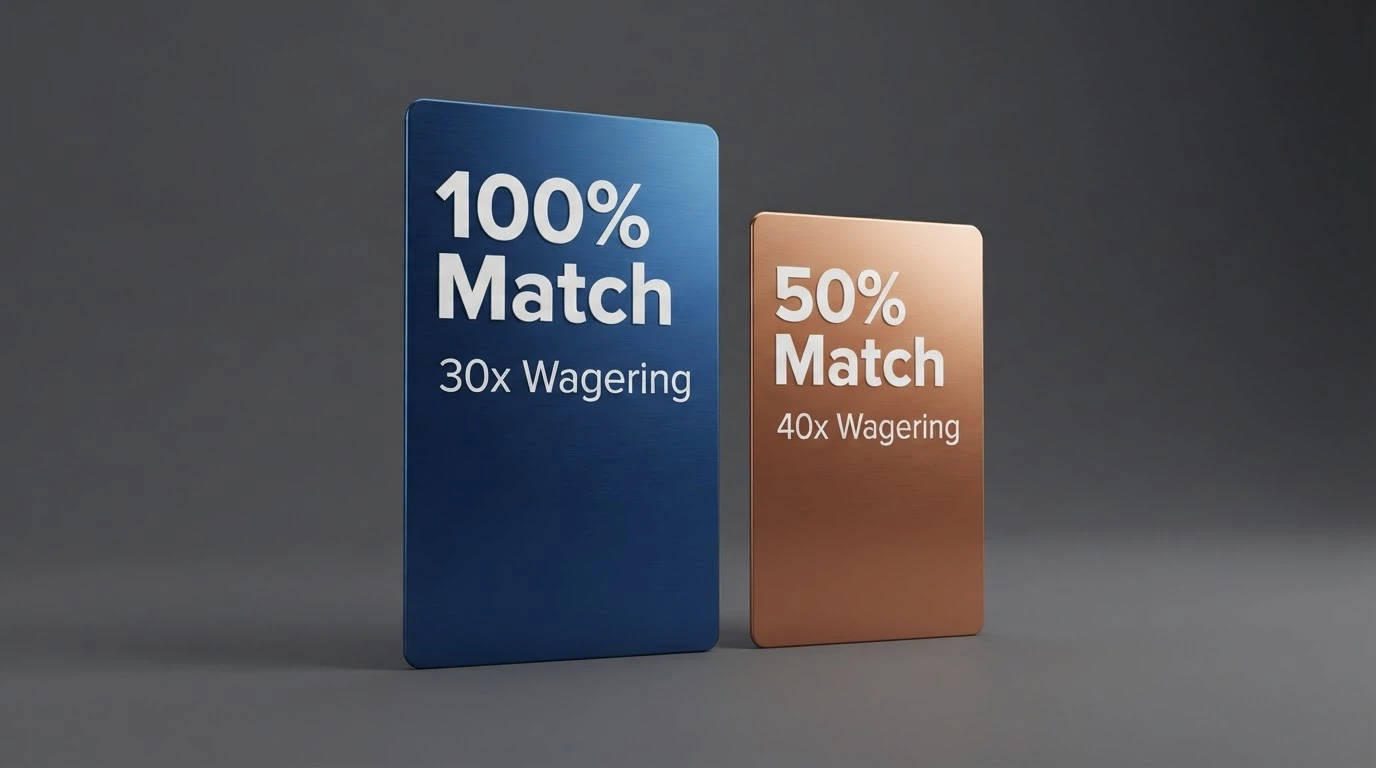
Reload bonuses are smaller because they have to repeat. The same operator cannot hand out 300% match every Friday and stay solvent, so the reload is calibrated lower and with more varied terms. Rocket Play’s Friday reload hands out free spins rather than bonus cash, in a 20–100 range that scales with deposit size. Fair Go’s reloads run 50%–125% match, with wagering that climbs as the match climbs. Skycrown fronts its five-stage A$8,000 welcome with weekly reloads and cashback rather than headline reload matches.
The terms often run the other way from the headline. A welcome bonus at 300% match with 30x wagering on deposit plus bonus is the same as 60x on the bonus value alone — heavier than most reloads. Royal Reels, by contrast, runs its welcome at 30x on the bonus amount — lighter than Fair Go’s reloads, and one of the lowest wagering figures on the AU-facing side of the market. The welcome-versus-reload split is not consistently in one direction: it depends on the operator, the promotion and the calendar.
For a returning player, the reload is what matters most. The welcome is a memory by the second deposit. The reload is the offer that decides whether the player keeps depositing on Tuesday night or saves the bankroll for the weekend.
Who Gets a Reload Bonus? Eligibility Explained
Not every deposit gets a reload. The first gate is the returning-player rule: the account has to have at least one prior deposit on the books. New accounts are routed to the welcome package, not the reload calendar. The second gate is the opt-in: most reloads require a code, a button, or a message to live support before the deposit is made. Deposits that don’t carry the opt-in rarely retroactively trigger a reload — the bonus is forfeited, not backdated.
Minimum deposit thresholds are the third gate. Rocket Play sets the floor at A$30 for the entry-level Friday spin bundle; Bizzo’s Monday and Thursday reloads set it at A$20. Some operators tier the reload by deposit size: Rocket Play’s Friday spins scale from 20 spins at A$30 to 100 spins at A$150 and above. Players depositing A$29.99 on a Friday at Rocket Play walk away with nothing.
Loyalty-program gating is the fourth gate, harder to verify from the outside. Several AU-facing operators — Skycrown and Stake included — run tiered loyalty schemes where the reload calendar improves as the player’s tier rises. The publicly visible reload is the floor; what sits above it depends on a status the operator does not publish in detail. A player who has been depositing for six months at the same offshore casino may be receiving reload offers that a player depositing for the first month does not see.
Game restrictions are the fifth gate, and the one most likely to void a bonus without warning. Most reload bonuses are pokie-only, or weighted heavily toward pokies: table games at 10%–20% contribution means a blackjack-only player would have to wager five to ten times the stated turnover to clear the same bonus. Royal Reels sets table-game contribution at just 3%, which makes a reload bonus effectively unusable for a player who does not intend to play pokies.
Reload Bonus Types: From Weekly Boosts to No-Deposit Free Spins
The reload bonus is not one thing. It is a family of mechanics, each with its own wagering burden and its own trap. The shape the player picks changes how much the offer is really worth.
How Reload Offers Are Structured: Match, Wagering and Caps
Four numbers decide whether a reload is worth claiming. The match percentage is the headline — 100% on a A$100 deposit returns A$100 in bonus cash. The wagering multiple is the cost of unlocking it — 40x on the bonus amount means A$4,000 of real-money play before withdrawal. The game-contribution rate decides whether that play counts in full or in part. The max cashout cap decides how much of the eventual win is actually paid out.
| Reload Type | Typical Value | Wagering Multiple | Validity Window | Max Cashout Cap |
|---|---|---|---|---|
| Percentage-match reload | 50%–125% of deposit (Fair Go); up to 300% at the top of the AU-facing range | 30x–50x on bonus amount | 7–14 days typical | A$50–A$500 on most deals |
| Free-spins reload | 20–100 spins per week, scaling with deposit tier | 40x on spin winnings | 5–7 days typical | A$300 on Rocket Play welcome FS; capped on most reloads |
| Cashback reload | 10%–25% of net losses returned (Fair Go’s 25% sits at the top) | 10x on cashback amount | Weekly | Cap varies; usually higher than match bonuses |
| No-deposit reload | A$10–A$50 free chip or small spin bundle, no deposit required | 60x on bonus amount | 1–7 days | A$180 at Fair Go — the most common published cap |
The economics differ across these shapes in ways the marketing copy rarely surfaces. A A$100 bonus at 100% match with 40x wagering requires A$4,000 of turnover. On a 96% RTP pokie, that turnover carries an expected loss of A$160 — already more than the bonus itself. The reload is not a discount; it is a discount ticket to a game whose house always wins. The discount is real but smaller than the headline match suggests.
Free-spin reloads carry a different cost. The typical free-spin value at AU casinos is A$0.10 per spin, so 100 free spins return roughly A$9.60 in expected value at 96% RTP before wagering is even considered. A 40x wagering requirement on those winnings means the player has to turn roughly A$384 over before the A$9.60 becomes withdrawable. The math is uncomfortable for the player and exactly what the operator wants.
Cashback reloads are the closest the family comes to a fair deal. Fair Go’s 25% weekly cashback on losses, with 10x playthrough, returns a quarter of what the player lost during the week with a low turnover cost. A A$200 net loss returns A$50 in cashback with only A$500 of wagering to clear — a fraction of what a match reload demands for the same nominal value.
The Best Reload Bonus Types Available Right Now
Cashback reloads give the player the most honest value, because the bonus is funded by what the player has already lost rather than by the player’s next deposit. The wagering is lower and the cap is usually higher. The trade-off is that a player who takes cashback reloads is a player who has already lost — the reload is compensation, not profit.
Percentage-match reloads are the headline-grabbing format, and they are the format most likely to mislead. Fair Go’s 50%–125% match reload range is the widest publicly visible in the featured set. The wagering ranges from 30x to 60x depending on the promotion. The 30x is on deposit plus bonus, which doubles the effective multiple to 60x on the bonus value alone. A A$100 deposit at 100% match with this structure means A$200 in bonus-plus-deposit turnover — A$12,000 of turnover to clear a A$100 bonus, with an expected loss at 96% RTP of A$480. The headline is “100% match”; the actual cost-to-player ratio is closer to 5-to-1.
Free-spin reloads sit in the middle. They are cheap to clear in time but expensive in absolute cash if the player wins above the cap. Rocket Play’s Friday spin reload at A$30 deposit for 20 spins is a low-cost way to try a pokie; the same operator’s A$150 tier for 100 spins is where the spin volume starts to feel generous and the cap starts to bite.
No-deposit reloads are the smallest in nominal value and the heaviest in strings. A A$10 free chip with 60x wagering means A$600 of turnover before withdrawal is possible, with an A$180 cap on what can actually be cashed out. The expected loss on A$600 of turnover at 96% RTP is A$24. If the player wins the maximum A$180, the operator pays out A$180. If the player wins A$300, the operator pays A$180 and keeps A$120. The house edge applies at every stage; the cap just decides which stage it applies at.
Slot-Specific Reload Free Spins: What You Can Actually Play
Free-spins reloads are only as good as the pokies they unlock, and the AU-facing offshore market is dominated by Pragmatic Play. Gates of Olympus and Sweet Bonanza are the biggest titles running through 2026 reload calendars; Big Bass Splash anchors Casino Rocket’s welcome and reload spins; Money Train 4 from Relax Gaming carries a 100,000x max win and shows up on the higher-volatility side of some operators’ spin bundles.
Pokie RTP in this segment sits in the 96% to 97.5% range on the better titles. Pragmatic Play’s standard RTP is 96.5%, which is the figure most players should assume unless the operator publishes a higher number for a specific title. Operators are not always honest about RTP, though: technical checks in AU-facing lobbies have found variable RTP builds for popular Pragmatic Play titles at slightly lower RTPs than the public standard. A pokie advertised at 96.5% may be running at 94% on a specific operator’s build, and the player has no way to check from the lobby.
The spin value matters as much as the pokie. A$0.10 per spin is the AU casino standard; a 100-spin bundle at that stake on a 96.5% RTP pokie returns A$9.65 in expected value before wagering. A higher spin value pushes the expected return up linearly; a lower spin value pushes it down. The pokie’s volatility decides whether the player sees that expected return as a smooth drip or as a long run of nothing followed by a single large hit.
No-Deposit Reload Bonuses: The Catch Behind Free Money
A reload that asks for nothing upfront sounds unbeatable. It isn’t. No-deposit reloads are the smallest in nominal value — typically A$10 to A$50 in free chip or a small spin bundle — and the heaviest in wagering. The standard no-deposit wagering requirement at AU offshore casinos is 60x on the bonus amount. A A$10 free chip means A$600 of required turnover before withdrawal. The withdrawal cap — A$180 at Fair Go, the most commonly published figure — is the second trap: even if the wagering is met and the player wins big, anything above A$180 is forfeited.
The operator’s reason for offering these is straightforward. No-deposit reloads are retention tools, not giveaways. They are targeted at players who have stopped depositing, sent as a one-off nudge to bring them back into the lobby. The strings are calibrated so that only a small fraction of recipients ever clear the wagering, and an even smaller fraction hit a win worth the cap. The marketing value of “free money” is the conversion mechanism; the expected loss to the operator is negligible.
Free-Play and Weekend Reloads: Timing Your Deposit
Operators push reloads hardest on Fridays and Mondays. Rocket Play’s Friday free-spins reload scales from 20 spins at A$30 to 100 spins at A$150 and above. Bizzo’s Monday reload hands out up to 100 free spins, with a Thursday 50%-match-plus-100-spins reload rounding out the week. Casino Rocket runs a 50% up to A$150 Weekend Reload Bonus — a percentage match with a defined ceiling — alongside its No Wager Daily Rewards spin drops.
The cadence is not arbitrary. Friday is the heaviest depositing day in the AU-facing offshore market, partly because pay packets land mid-week and partly because weekend play starts on Friday night. Monday reloads target the post-weekend balance: the player who lost on Saturday and Sunday is most likely to deposit again on Monday, and a free-spin reload is the cheapest possible nudge. A player who times deposits to the calendar rather than the impulse can pick up an extra 100–200 free spins per week at the same total deposit volume. The reload is not free, but the cadence is real.
The Best Reload Bonus Casinos for Australian Players in 2026
Ten offshore casinos serving Australian players, ranked by the reload bonus they put on the table. Every term pulled apart so the reader can compare. Every operator is Curacao-licensed or similarly offshore — no Australian licence exists for online casino.
Rocket Play
Rocket Play runs under Curacao licence 8048/JAZ2020-013, issued by Antillephone N.V. to Dama N.V. The welcome is a two-stage structure: 100% up to A$1,000 plus 100 free spins on the first deposit, 200% up to A$1,000 on the second. The reload is the Friday free-spins bundle — 20, 50, or 100 spins at A$30, A$75, or A$150+ deposit tiers. Wagering on the reload runs 40x. The max bet during wagering is capped at A$7.50; the bonus validity is five days from receipt; the max cashout from the welcome free spins is A$300.
The Friday reload is the operator’s standout mechanic. A returning player depositing A$75 every Friday picks up 50 free spins at a known wagering cost — 40x on spin winnings, A$7.50 max bet, five-day window. The cadence is reliable, the terms are published, and the tiers are simple. The five-day validity is the tightest in the featured set, and the player who doesn’t play through the bonus in that window loses everything.
PayID and crypto deposits are accepted. The reload is bonus-eligible across both rails.
Rocket Play offers a predictable rhythm for players who prefer a set weekly spin volume, and its bonus structure is the most transparent of the featured AU-facing options.
Skycrown
Skycrown runs under a Curacao eGaming licence held by Hollycorn N.V. The welcome is a five-deposit structure: up to A$8,000 in bonus funds plus free spins on the first four deposits (100/75/75/75). Each stage carries a A$30 minimum deposit and 40x wagering.
The reload is where Skycrown differs from the rest of the featured set. The operator’s headline reload offer is not a single weekly calendar but a stack of weekly reloads, cashback on losses, and a tiered loyalty programme. The reload-specific match percentage is not publicly published in the snippets available — a gap the player has to navigate by asking support or by reading the bonus terms at the point of deposit.
PayID and crypto deposits are accepted. The reload is bonus-eligible across both rails.
Skycrown suits the player who wants the welcome package as the headline and treats the reload as a slow-burn loyalty return — but the opacity around the published reload terms is itself a signal that the player has to do their own digging.
Royal Reels
Royal Reels runs under a Curacao licence held by Digibrite S.R.L. The welcome is 100% up to A$500 plus 50 free spins on the first deposit, with a three-deposit total package of up to A$2,500 plus 50 spins. The wagering on the welcome bonus is 30x on the bonus amount — the lowest in the featured set.
The reload is the operator’s weakest published offer. Royal Reels runs ongoing reload promotions, but the specific match percentage and cadence are not publicly detailed. Table games contribute only 3% toward wagering, which makes a Royal Reels reload bonus effectively unusable for any player who isn’t playing pokies.
For the player who cares about the wagering multiple above everything else, Royal Reels’ 30x welcome is the cleanest number on the page. The reload terms, however, are thinner than the welcome — and a player signing up for the welcome and expecting the same low-multiple reload is going to be reading the small print at deposit time.
Fair Go
Fair Go runs as a Curacao-implied, RTG-exclusive casino — RealTime Gaming is the only provider in the lobby. The welcome is 300% up to A$3,000 plus 50 free spins. The reload is the widest publicly visible in the featured set: 50% to 125% match bonuses, plus an up-to-25% weekly cashback on losses.
The wagering maths bite harder than the headline suggests. The welcome runs 30x on deposit plus bonus, which is equivalent to 60x on the bonus value alone — heavier than every other operator in the set. The reload runs 30x to 60x depending on the promotion, with the same deposit-plus-bonus doubling effect on the lower end. No-deposit promotions cap withdrawals at A$180. The maximum bet during wagering is A$10.
The cashback is where Fair Go earns its reputation. Up to 25% weekly cashback on net losses, with a A$10 minimum net loss and 10x playthrough on the cashback, returns a quarter of what the player lost with low turnover. A A$200 net loss returns A$50 in cashback with A$500 of wagering to clear — a different deal from a A$200-deposit match at 100% with A$8,000 of wagering.
PayID, card and crypto deposits are accepted.
Fair Go presents a versatile reload environment, but players must be wary: the 30x-on-deposit-plus-bonus wagering structure effectively doubles the playthrough requirement, making it one of the more expensive deals in the market if not carefully managed.
Stake
Stake runs under a Curacao eGaming licence. The operator is crypto-primary, with BTC, ETH and LTC as the headline payment rails and some fiat options layered on top. The lobby is multi-provider: Pragmatic Play, Hacksaw, Evolution and others.
The reload calendar is the gap. Stake runs regular promotions, but specific AU-facing reload bonus terms are not publicly detailed in the operator’s published bonus terms or in the third-party data available. A player signing up to chase Stake’s reloads is signing up to a calendar they cannot fully read from the outside. The opacity is itself a signal: an operator that publishes clear reload terms is signalling that it expects players to compare them; an operator that doesn’t is signalling that it expects deposits first and questions later.
For the crypto-primary player who wants a multi-provider lobby and accepts that the reload calendar will be opaque, Stake is the operator in the set with the broadest provider stack.
Rainbet
Rainbet runs as a Curacao-implied, crypto-first casino. The welcome is 250% up to A$2,100 plus 60 free spins across three deposits (100% / 50% / 100% match), with Sweet Bonanza from Pragmatic Play as the featured spin title. Minimum deposit is A$30 per stage; the bonus expires seven days from activation.
Rainbet’s reload mechanic is the most unusual in the featured set. The operator offers two bonus modes. Wager Lock runs 40x on the bonus amount — comparable to Rocket Play and Bizzo. No Wager Lock skips the turnover requirement entirely, releasing bonus funds gradually at a rate of wager × 1% × 20% per bet — roughly A$0.20 in unlocked bonus for every A$100 wagered, with no deadline. The max bet during wagering is 2% of the deposit amount, so a A$700 deposit caps at A$14 per spin.
The No Wager Lock mechanic is the only no-wager reload mode in the featured set. A player who deposits A$1,000 and wagers A$50,000 in pokie play walks away with roughly A$100 in unlocked bonus — slow, but unlocked without a turnover threshold. A player who chooses Wager Lock clears A$1,000 in bonus at 40x turnover, or A$40,000 of pokie play, in seven days. The two modes target different player types: the casual depositor who wants a slow trickle, and the high-volume player who wants the full bonus cleared fast.
Crypto deposits (BTC, ETH, USDT) and some fiat options are accepted.
For the player who hates turnover requirements, Rainbet’s No Wager Lock is the closest thing on the AU-facing market to a bonus that pays out for playing. The trade-off is the glacial release rate.
WinSpirit
WinSpirit runs as a Curacao-implied offshore casino. Specific reload bonus terms — match percentage, wagering multiple, validity window, max cashout — are not publicly detailed in the data available.
The operator is in the AU-facing set by inclusion in the comparison table, but the reload offer is the operator’s weakest published element. A player signing up at WinSpirit for the reload is signing up to terms that have to be confirmed with support at the point of deposit.
WinSpirit does not publish its reload terms publicly. Players will need to confirm the match percentage and wagering details directly with support before committing a deposit.
Bizzo Casino
Bizzo runs as a Curacao-implied offshore casino. The headline reload calendar is the highest free-spins volume in the featured set: up to 100 free spins on Mondays, plus a 50%-match reload plus 100 free spins on Thursdays. Minimum deposit on the reload is A$20 — the lowest in the set.
Wagering on the bonus runs 35x to 40x. Validity is 7–14 days. The game list for the spin drops includes Book of Dead, Starburst, and Gonzo’s Quest — a wider provider mix than Rocket Play’s Pragmatic Play focus.
For the player who deposits small and frequently, Bizzo’s A$20 minimum and 200-spin weekly volume is the most accessible reload calendar in the set. The wagering is mid-range and the validity window is forgiving.
Casino Rocket
Casino Rocket runs as a Curacao-implied offshore casino with a Pragmatic Play focus. The welcome is 100% up to A$525 plus 50 free spins on Big Bass Splash — the title that defines the operator’s spin calendar — at a A$30 minimum deposit, with 45x wagering.
The reload is two-pronged. The Weekend Reload Bonus runs 50% up to A$150 with 45x wagering. The No Wager Daily Rewards spin drops run free spins with no wagering requirement — a small but reliable daily trickle that the player can collect without a turnover cost. The combination of a heavy-match weekend reload and a no-wager daily drop is unusual: most operators push players toward one or the other.
Casino Rocket is suited for the daily player; its No Wager Daily Rewards function as a low-cost, consistent alternative to high-turnover weekly reloads, even if the per-drop spin count is relatively modest.
Scream Casino
Scream Casino runs as a Curacao-implied offshore casino. Specific reload bonus terms are not publicly detailed in the data available.
The operator is in the AU-facing set by inclusion, but the reload offer is opaque. A player signing up at Scream for the reload is signing up to terms that have to be confirmed with support.
Scream Casino provides insufficient public data regarding its reload offers, making it difficult for players to assess the value proposition against other operators.
Reload Bonus Comparison at a Glance
| Operator | Licence | Reload Bonus Offer | Wagering on Reload | Payment Methods |
|---|---|---|---|---|
| Rocket Play | Curacao 8048/JAZ2020-013 | Friday 20–100 free spins (A$30/A$75/A$150+ tiers) | 40x on bonus | PayID, Visa, Mastercard, crypto |
| Skycrown | Curacao eGaming (Hollycorn N.V.) | Weekly reloads + cashback (specific % not published) | 40x | PayID, card, crypto |
| Royal Reels | Curacao (Digibrite S.R.L.) | Ongoing reload promotions (terms not published) | 30x on welcome bonus | AUD deposits |
| Fair Go | Curacao-implied (RTG-exclusive) | 50%–125% match reloads + up to 25% weekly cashback | 30x–60x on bonus | PayID, card, crypto, Neosurf, bank transfer |
| Stake | Curacao eGaming | Regular promotions (terms not confirmed) | — | Crypto-primary |
| Rainbet | Curacao-implied (crypto-first) | Wager Lock 40x OR No Wager Lock gradual release | 40x or no-wager | Crypto, some fiat |
| WinSpirit | Curacao-implied | Not publicly detailed | — | — |
| Bizzo Casino | Curacao-implied | Monday up to 100 FS + Thursday 50% + 100 FS | 35x–40x | — |
| Casino Rocket | Curacao-implied | 50% up to A$150 Weekend Reload + No Wager Daily FS | 45x | AUD deposits |
| Scream Casino | Curacao-implied | Not publicly detailed | — | — |

How to Pick the Right Reload Bonus for You
Three questions, asked in order, before clicking Claim.
The first is the wagering multiple. 25x to 50x is the AU-facing range, with 30x considered favourable and 45x considered heavy. Royal Reels’ 30x welcome is the lowest in the set; Rocket Play and Bizzo sit at 35x–40x; Casino Rocket at 45x; Fair Go’s reload range stretches to 60x on the bonus value. The player who picks on the wagering multiple first picks on the single most expensive term on the page.
The second is the game contribution. Pokies contribute 100% at every operator in the featured set. Table games contribute 10%–20% at most, and Royal Reels caps table contribution at 3%. A blackjack-only player has no business claiming a reload bonus — the turnover would take ten times as long to clear, and the expected loss would eat the bonus value twice over.
The third is the max cashout cap. A$50 to A$500 is the AU-facing range, with A$180 the most commonly published cap on no-deposit reloads. A player who hits a lucky line on a pokie during wagering walks away with the cap, not the win. The cap is the term most likely to be invisible until withdrawal time.
The cadence check is the fourth, less obvious question. A player who deposits weekly should pick an operator with a weekly reload calendar. A player who deposits daily should pick an operator with a daily drop or a no-wager trickle. The bonus is sized to the cadence it was designed for.
Why Your Payment Method Changes the Reload Bonus You Get
The deposit rail the player chooses changes which reload bonuses are available and on what terms. PayID, crypto and card each carry different bonus eligibility at AU-facing casinos — and the licensed-versus-offshore distinction is now visible in the payment methods alone.
PayID Reload Bonuses — Instant and Fee-Free
PayID deposits at AU-facing offshore casinos are treated like direct bank transfers for bonus purposes. The deposit is bonus-eligible with no restrictions, settles through the Osko network near-instantly, and carries no merchant fees for the player. The reload bonus the player sees on the bonus page is the reload bonus the player gets when depositing by PayID — no separate code, no reduced match, no payment-method exclusion.
PayID’s speed is the operational advantage. A deposit at 10pm on a Friday night credits to the casino balance before the first spin, which matters when the Friday reload at Rocket Play expires in five days. The same deposit by bank transfer might take 24 hours to clear; the player who deposits on Friday night and waits until Saturday to play has already lost a day of the validity window.
PayID’s fee structure is the financial advantage. The player pays nothing to deposit. The casino pays a small processing cost, which it absorbs rather than passing on. For reload bonuses, where the player is moving A$30 to A$150 per transaction, the absence of fees means the full deposit amount is the figure the wagering requirement applies to. A 40x bonus on a A$100 deposit is A$4,000 of turnover whether the player paid a fee or not — but the fee-free version means the player keeps the A$1–A$3 they would otherwise have lost to merchant charges on a smaller deposit.
Crypto Deposit Reloads: Higher Matches, Different Rules
Bitcoin and Ethereum deposits at AU-facing offshore casinos often unlock bigger reload matches than fiat deposits. The premium is operator-specific and not always published in advance; a player who deposits by crypto may see a 150% match where the PayID depositor sees 100%.
The premium carries a different legal status. Credit cards and crypto have been banned as payment methods for licensed Australian wagering since 11 June 2024, under the Interactive Gambling Amendment (Credit and Other Measures) Act 2023. An operator that accepts either from an Australian player is, by definition, operating outside the Australian licensed system. The crypto reload bonus is therefore available only at offshore, unlicensed casinos — which means no BetStop coverage, no ACMA complaints body, no Australian consumer protection if the withdrawal is refused.
The premium is real; the trade-off is real. The player who deposits crypto to a Curacao-licensed offshore casino to chase a 150% reload is choosing a bigger match in exchange for every consumer protection the Australian licensing system would otherwise provide. The maths on the bonus are favourable; the maths on the player protections are not.
Deposit-Linked Reloads: What Your Banking Method Unlocks
The reload bonus the player sees depends on the rail they deposit through. PayID is universally bonus-eligible at the AU-facing casinos that accept it. Card deposits are bonus-eligible at most, with some operators excluding credit cards by name even at offshore sites — the licensed-AU ban has bled into operator-side policy at the larger brands. Crypto deposits are bonus-eligible and sometimes carry an exclusive higher match.
The minimum deposit thresholds vary by method and operator. Rocket Play’s A$30 minimum applies across PayID and crypto. Bizzo’s A$20 minimum applies to the Monday and Thursday reloads. The player depositing A$20 by PayID at Bizzo picks up the same bonus as the player depositing A$20 by crypto — the rail doesn’t change the floor.
The practical choice is speed versus match rate. PayID is the fastest rail, bonus-eligible everywhere, fee-free. Crypto is slower on first deposit (blockchain confirmation time) but faster on repeat (no KYC repeat, no card 3DS) and unlocks the higher-match reload at some operators. Card sits in the middle on speed, bonus-eligible at most operators, and excluded by name at a few — and the player’s card statement will show the casino name, which is not the case for crypto.
Crypto Reloads: Bigger Bonuses, Fewer Questions
Crypto deposits unlock the highest reload matches in the AU-facing offshore market — and they also bypass the identity checks that licensed Australian operators must run. The trade-off is the consumer protection the identity check exists to support.
Bitcoin-Specific Reload Offers
The AU-facing offshore casinos that accept crypto for reloads split into two camps. The first runs an explicit crypto-exclusive reload calendar: a higher match for BTC, ETH, USDT, or Litecoin deposits, published on a dedicated bonus page. The second runs the same reload calendar for crypto as for fiat, with no premium — the player gets the bonus either way.
The first camp is harder to find than the second. Rocket Play, Skycrown, Fair Go, Stake and Rainbet all accept crypto, but only a subset publishes an explicit crypto-premium reload. The player who wants the premium has to read the crypto-specific bonus terms rather than the generic reload page.
Bitcoin, Ethereum and stablecoins each carry slightly different reload calendars at the operators that distinguish them. USDT deposits sometimes unlock a different match than BTC, with the stablecoin premium reflecting the lower volatility risk on the operator’s side. A player who holds USDT and is choosing a deposit rail for a reload may find that the USDT calendar is published where the BTC calendar is not.
Anonymity and KYC: What Crypto Deposits Actually Bypass
A crypto deposit at an offshore casino skips the identity verification that every licensed Australian wagering operator must run. No driver’s licence scan. No passport upload. No proof of address. The wallet address is the identity, and the wallet address does not need a name attached to it.
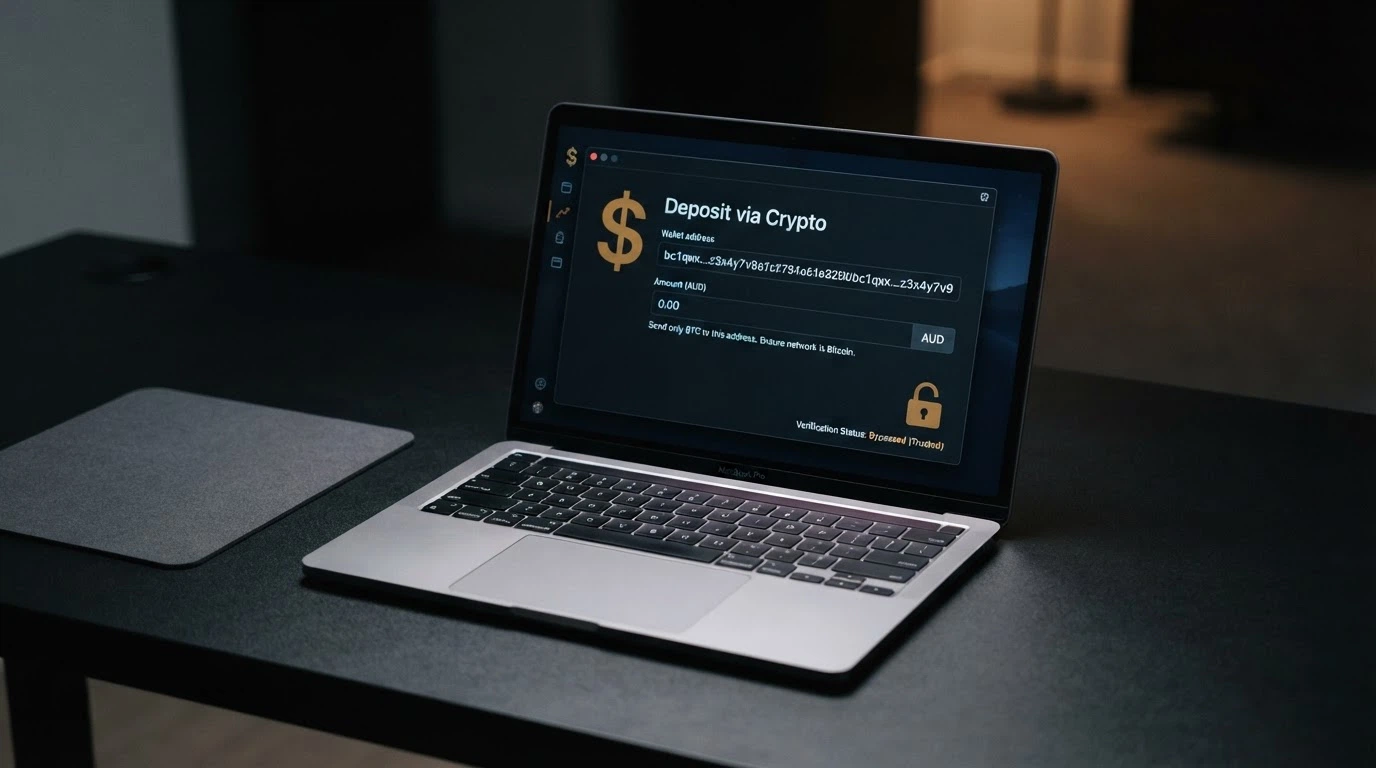
The anonymity is the product, and the absence of consumer protection is the cost. BetStop — the National Self-Exclusion Register — covers approximately 150 licensed wagering providers in Australia. Offshore casinos are not connected to the register, and a self-excluded Australian who deposits crypto to an offshore casino will find their deposit accepted. The same player has no ACMA complaints body to approach if the operator refuses a withdrawal. The same player has no Australian consumer protection framework to invoke if the operator voids a winning spin. The site itself can be blocked by ACMA at any time, with the player’s balance stranded on a server the Australian ISPs can no longer reach.
From 1 January 2027, banks and payment providers gain express authority to block transactions to illegal gambling operators. The authority is the second layer of the offshore-blocking mechanism — DNS-level ISP blocking from 2019 onwards, payment-level bank blocking from 2027 onwards. A player using crypto at an offshore casino today sits outside both layers, but the bank-blocking layer extends to fiat deposits and may eventually reach the on-ramps where crypto is purchased.
The anonymity at the offshore crypto casino is real. The cost is paid in the protections the player gives up to get it.
The Legal Reality: Online Casino Is Prohibited in Australia
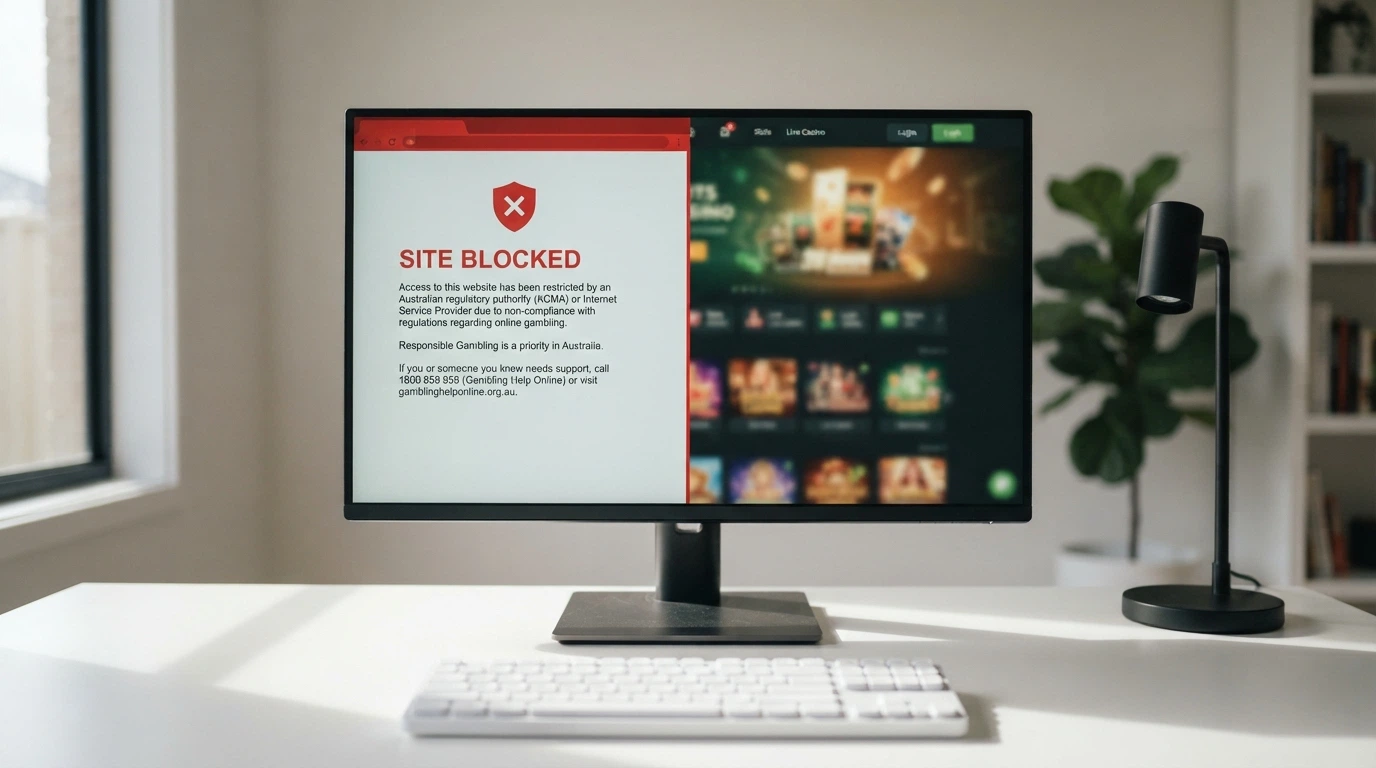
Every reload bonus on this page comes from an offshore, unlicensed operator. Online casino is prohibited in Australia under the Interactive Gambling Act 2001, and no licence exists for online casino anywhere in the country — federally, or in any state or territory.
The Interactive Gambling Act 2001: What It Actually Prohibits
The IGA prohibits online casino games, online pokies, and in-play betting on a sporting event once it has started. Providing such a service to a person in Australia is an offence. The prohibition targets the provider, not the player — the individual Australian who deposits at an offshore casino is not prosecuted. The enforcement tool is ACMA, which has directed Australian ISPs to block 1,564 illegal gambling and affiliate websites since November 2019, with more than 225 illegal services withdrawing from the Australian market since enforcement was strengthened in 2017.
What is permitted and licensable is narrower than most players realise. Wagering on races and sport placed before the event begins is licensed through state and territory regimes, with the Northern Territory Racing and Wagering Commission as the de facto national licensor for online bookmakers. Lotteries and keno are licensed at state level. Land-based casinos (Crown, The Star and others) hold state licences for their physical premises. Online casino — the product that hosts every reload bonus on this page — is the product the IGA does not licence.
The 2026 reform passed Parliament on 19 August 2026, with measures commencing 1 January 2027. From that date, wagering advertising is capped at three ads per hour between 6:00 am and 8:30 pm, betting ads are banned from 15 minutes before a live sporting event until 5 minutes after, and direct marketing of inducements is prohibited for 14 days after sign-up, three months after BetStop deregistration, and indefinitely for at-risk customers. The reform does not legalise online casino; it tightens the rules around wagering, which remains the only licensable online gambling product.
Offshore Casinos and the Risks Australian Players Face
Playing at an offshore casino means no BetStop coverage, no ACMA complaints body with jurisdiction, and no Australian consumer protection framework the player can invoke if the operator refuses a withdrawal or voids a winning spin. The site can be blocked at any time, with the player’s balance stranded on a server Australian ISPs no longer route to.
The payment method is the cleanest tell. Credit cards and crypto have been banned for licensed Australian wagering since 11 June 2024. An Australian player who is asked for a credit card or crypto deposit by a gambling site is being served by someone outside the Australian rules. The reload bonus is therefore available only at offshore, unlicensed casinos — a fact visible in the payment page before the player deposits a cent.
DNS-level blocking has limits. A player using a VPN, an alternative DNS resolver, or a non-Australian ISP routing can reach a blocked site. ACMA does not pursue individual players who circumvent blocking; the IGA targets the provider. The cost of the circumvention is paid by the player in the form of unresolved disputes if the operator declines to pay out.
Staying Safer: Responsible Gambling Tools That Actually Work
The tools that exist work only inside the licensed system. BetStop — the National Self-Exclusion Register, live since August 2023 — covers approximately 150 licensed wagering providers. As of 31 March 2026, 59,830 Australians had registered, with 37,247 exclusions active. The register does not cover offshore casinos, and a self-excluded Australian who opens an account at an offshore crypto casino will find their deposit accepted.
The National Gambling Helpline is 1800 858 858, free, confidential, and staffed 24 hours a day, with online chat and counselling through Gambling Help Online. The line is the one piece of responsible-gambling infrastructure that reaches players regardless of which operator they use — licensed, offshore, crypto, or otherwise.
The harm context is Australian and current. Between March 2025 and March 2026, Australians lost A$36.0 billion to gambling — more per capita than any other country, according to the Australia Institute. As of March 2026, 15.1% of the Australian adult population — an estimated 3.32 million people — were experiencing some level of gambling harm, according to Roy Morgan. Risky gambling, measured by the Problem Gambling Severity Index, increased from 13.7% in 2024 to 19.4% in 2025 among Australians, more than five percentage points in a single year. The figures are not about the reload bonus specifically; they are about the product the bonus sits on top of, and they are the context a reader should carry into any claim decision.
How We Evaluated These Reload Bonus Offers
The evaluation drew on three sources: operator-published bonus terms pages at the time of writing, AU-facing casino comparison databases, and the ACMA public statements and registers for the legal and responsible-gambling context. The operator set checked was the ten offshore casinos that Australian players actually reach in the reload segment — the list above. Each operator’s reload bonus was read for the match percentage, wagering multiple, game contribution rates, validity window, max cashout cap, and payment-method eligibility. Each licence was confirmed against the operator’s own footer or terms page; operators whose licence could not be confirmed against a primary source were marked as Curacao-implied rather than named.
The ranking prioritised reload bonus availability and clarity over headline match percentage. An operator with a published 100% reload at 40x wagering ranks above an operator with an unpublished reload at an unknown multiple, because the player can compare the first and cannot compare the second. An operator with weekly cadence ranks above an operator with monthly cadence, because the reload is sized to deposit frequency. An operator with PayID and crypto acceptance ranks above an operator with card-only deposits, because the payment-method range determines who can actually claim the bonus.
No invented weightings. No composite scores. The reader can run the same checks against the same sources and reach the same conclusions. Where the operator’s published data did not cover a term, the term was marked with the no-data marker in the comparison table rather than estimated.
What Every Australian Should Know Before Claiming a Reload Bonus
The reload bonus is not free money. It is a discounted ticket to a game whose house always wins, and the discount is smaller than the headline match suggests.
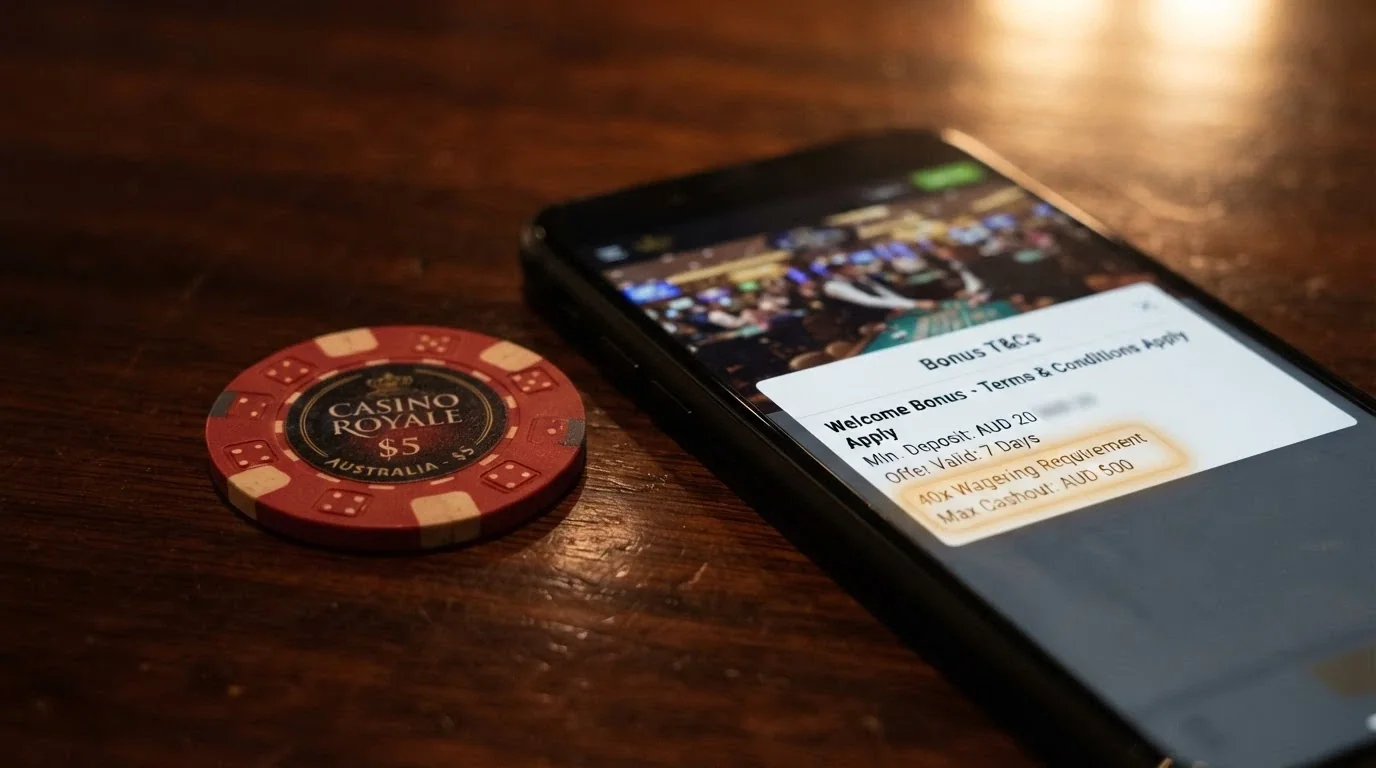
A 100% match at 40x wagering on a A$100 deposit, played through at 96% RTP on pokies, carries an expected loss of A$160 across the A$4,000 turnover required to clear it. The player walks away with the A$100 bonus only if the bonus-derived balance survives the turnover — and the A$160 expected loss is the average cost of getting there. The house edge applies to every spin; the reload bonus changes the size of the bet, not the direction of the edge.
The wagering hurdle is the real cost. Every reload bonus on the AU-facing market carries one. The cheapest is Royal Reels’ 30x on the welcome bonus. The heaviest is Fair Go’s 60x on the bonus value through the deposit-plus-bonus doubling effect. The wagering multiple is the number that decides whether the bonus is a discount or a loss — and a player who claims a reload without reading the multiple is the player the marketing is written for.
The consumer-protection gap is the second cost. No Australian licence exists for online casino, which means every reload bonus on this page comes from an offshore operator outside the Australian regulatory system. No BetStop coverage. No ACMA complaints body. No recourse for refused withdrawals. The site can be blocked with the player’s balance still on it. The 2027 reform gives banks authority to block transactions to illegal operators, which tightens the offshore space further but does not close it.
The licensed alternative exists for the player who wants Australian protections. BetStop covers approximately 150 licensed wagering providers. The licensed product is pre-event wagering on sport and racing, plus lotteries and keno — not casino games, not pokies, not the product the reload bonus sits on. A player who wants the reload bonus is choosing the offshore product; the choice is the player’s.
The practical checklist for the player who decides to proceed anyway is short. Read the wagering multiple before claiming. Confirm the preferred pokies contribute 100% toward turnover. Read the max cashout cap before depositing. Check the validity window against the player’s own play schedule. Use PayID where the operator accepts it, because PayID is fee-free and bonus-eligible at every AU-facing casino in the featured set. Avoid depositing more than the reload tier requires, because the tiers scale and the player who deposits A$200 at a A$30 reload tier has overpaid for the bonus.
For the player who is already spending more than they planned at an offshore casino, the National Gambling Helpline is 1800 858 858 — free, confidential, 24 hours a day, with online chat and counselling through Gambling Help Online. The line works regardless of which operator the player is using, licensed or offshore.
Frequently Asked Questions
What wagering requirements do Australian online casino reload bonuses typically have?
Reload bonuses at AU-facing offshore casinos generally carry wagering requirements between 25x and 50x on the bonus amount. Pokies contribute 100% toward turnover at most operators, while table games contribute 10–20% — or as little as 3% at Royal Reels. The 30x welcome at Royal Reels is the lowest published figure; Fair Go’s reload range stretches to 60x on the bonus value through the deposit-plus-bonus doubling effect.
What is the maximum amount I can win from a casino reload bonus?
The max cashout cap on most reload bonus deals ranges from A$50 to A$500, with anything above the cap forfeited to the operator. No-deposit reloads at Fair Go cap withdrawals at A$180. The cap applies even if the player hits a winning spin during wagering — the balance is trimmed before withdrawal, not after.
How often can I claim a reload bonus at an online casino?
Weekly cadence is standard at the AU-facing offshore casinos. Rocket Play’s Friday free-spin reload runs every week. Bizzo runs a Monday spin reload and a Thursday match-plus-spin reload. Fair Go runs 50–125% match reloads on a rolling calendar alongside weekly cashback. Monthly reloads exist at some operators but are less common.
Do reload bonuses have lower wagering requirements than welcome bonuses?
Not consistently. Royal Reels’ 30x welcome is lower than its reload terms. Fair Go’s 30x on deposit plus bonus (60x on bonus value) is heavier than several reload calendars elsewhere in the set. The direction depends on the operator and the specific promotion. The reload-versus-welcome split is not a rule.
What happens if I don’t meet the wagering requirements before the bonus expires?
The bonus balance expires. Any winnings sitting on the bonus side of the wallet are wiped along with it. The deposit cash on the real-money side of the wallet is unaffected and remains withdrawable. Validity windows range from five days at Rocket Play to fourteen days at several other operators — the player who doesn’t clear the turnover in the window walks away with the deposit and nothing else.