
$1 Deposit Pokies in Australia — The Floor Behind the Headline
 Available in AU
The “$1 deposit” promise is one of the most recycled phrases in Australian-facing online pokies marketing. It shows up in comparison tables, in sidebar banners, and in the first line of half the affiliate reviews a player can find. The catch is that almost none of those sites will actually accept a single Australian dollar from a PayID, a debit card or a Neosurf voucher. The “$1” is a real number on exactly one rail — cryptocurrency — and an aspirational one everywhere else.
Current as of 18 October 2026 against the Curaçao GCB public register, the ACMA interactive gambling register, and operator terms pages as published. This page is also a guide to a product that is, under Australian law, prohibited from being provided to Australians in the first place. Every operator named below is offshore. The dollar figure on a cashier button is the smallest part of the picture; the rest is the subject of this page.
- What a $1 Deposit Really Means at Australian-Facing Pokies in 2026
- Why Your Dollar Rarely Lands at the Cashier — the Payment Gate
- Top $1 Deposit Pokies — Ranked by What You Actually Pay
- New $1 Pokies — Why the First-Deposit Window Rarely Opens at a Dollar
- Mobile $1 Pokies — Why the Deposit Floor Doesn’t Drop on Your Phone
- The ACMA, the IGA, and Your $1 Deposit — What the Law Actually Says
- Staying in Control — Why Low Deposits Don’t Mean Low Risk
- How We Chose and Ranked These $1 Pokies Sites
- The $1 Pokies Reality Check — Your Next Move
- Frequently Asked Questions
What a $1 Deposit Really Means at Australian-Facing Pokies in 2026
A $1 deposit at an Australian-facing pokies site is, in practice, three different things depending on which rail the player uses to move the money. The headline number belongs to the marketing department. The number the cashier will accept belongs to the payment processor. The number the bonus terms will honour belongs to a third party, the operator’s promotions team, who often set a floor higher than the deposit floor itself.
The Minimum Deposit Explained — What $1 Actually Buys
The minimum deposit is the smallest amount a casino will let a player load onto a real-money balance. That sounds like the simplest number in online gambling, and it is also one of the most misunderstood. A minimum deposit is not a recommended deposit, it is not a stake size, and it is not the cost of a single spin on a pokie. It is the smallest amount the cashier will accept, full stop.
For Australian players the realistic floor is A$5 to A$10 via PayID or bank rails, not A$1. That is the first figure a comparison table should carry, and the one that defines what a “low deposit” actually means in this market. A genuine A$1 deposit is a rare edge case, and it shows up on the cashier only where crypto or a specific e-wallet segment allows it. VegasPokie put it plainly: “The headline ‘$1’ you see plastered across comparison tables is a rare edge case, not the norm.”
So what does a dollar buy once it lands? A dollar buys entry. It buys a spin on a real-money pokie, a stake in a session, and a chance — small, statistically — of walking away with something. It does not buy the welcome bonus. It does not buy the matched deposit. It does not buy the free spins package that the homepage advertises beside the deposit button. Those are gated by separate, higher thresholds that the bonus terms spell out further down the page. A player who deposits a dollar to “test the site” has tested it, and that is exactly what a dollar buys.
Real-Money Play vs Demo-Mode Pokies at the Dollar Floor
Almost every pokies site aimed at Australian players runs a demo or fun-play mode on the same titles it offers for real money. Demo play requires no deposit, no account registration on some sites, and zero financial commitment. The reel outcomes are simulated identically to the real-money versions, except that no cash enters or leaves the balance.
What the demo does not buy is the thing most players actually want to test: whether the cashier pays out. Demo play does not exercise the deposit rail, the bonus engine, the wagering tracker or the withdrawal queue. A player who has spun a hundred demo rounds on a pokie has learned how the bonus feature triggers and roughly how often, and has learned nothing about the casino itself. The dollar that lands on the real-money side is what starts the actual test — the only one that involves a withdrawal request and, in turn, a withdrawal threshold the player has not yet met.
For a player deciding whether to commit a larger balance, demo play is the free rehearsal. A$1 is the cheapest paid ticket to the real stage. The distinction matters because the marketing of demo play and the marketing of $1 deposits use identical visual cues, and the page a player lands on does not always mark which one it is offering.
Australian-Facing Sites — the Onshore-Offshore Divide
No Australian-licensed online casino exists. None. Not in New South Wales, not in Victoria, not in the Northern Territory, not at the federal level. The Interactive Gambling Act 2001, as amended in 2017, prohibits the provision of online casino games — which includes online pokies — to a person physically present in Australia. Every pokies site that accepts Australian players does so from outside the country, holding a licence issued by Curaçao, Anjouan, or one of a handful of other offshore jurisdictions.
“Australian-facing” therefore means one thing and one thing only: a site that has decided to accept Australian customers, regardless of where it is incorporated or which regulator issued its licence. It does not mean licensed in Australia. It does not mean regulated in Australia. It does not mean under the protection of any Australian consumer law. The site operates under the rules of its offshore licence and the terms and conditions it has published, and that is the only contract the player has.
Providing a prohibited interactive gambling service to a person in Australia is illegal — the provider, not the player. The individual player is not prosecuted under the IGA. Play is allowed from Australia in the sense that no reader of this page faces criminal liability for opening an account and depositing, but the safety nets that Australian regulators offer licensed wagering customers do not extend offshore. There is no ACMA dispute resolution service for offshore casino complaints, no mandatory national self-exclusion register covering offshore operators, and no Australian legal backstop for a withdrawal that stalls.
The divide is structural, not cosmetic. It shapes every claim that follows on this page, because the deposit floor, the bonus terms, the withdrawal minimum and the licence register all live on one side of it — the offshore side — and what the reader expects from an Australian gambling experience lives on the other.
Why Your Dollar Rarely Lands at the Cashier — the Payment Gate
The advertised minimum deposit and the effective minimum deposit are two different numbers, and the difference between them is the payment method. A cashier page that reads “$1 minimum deposit” is telling the truth about one specific rail and nothing else. A player who arrives at that page with a Visa card in hand will find a different floor — typically A$10 to A$20 — and the page does not always say so before the player tries to deposit.
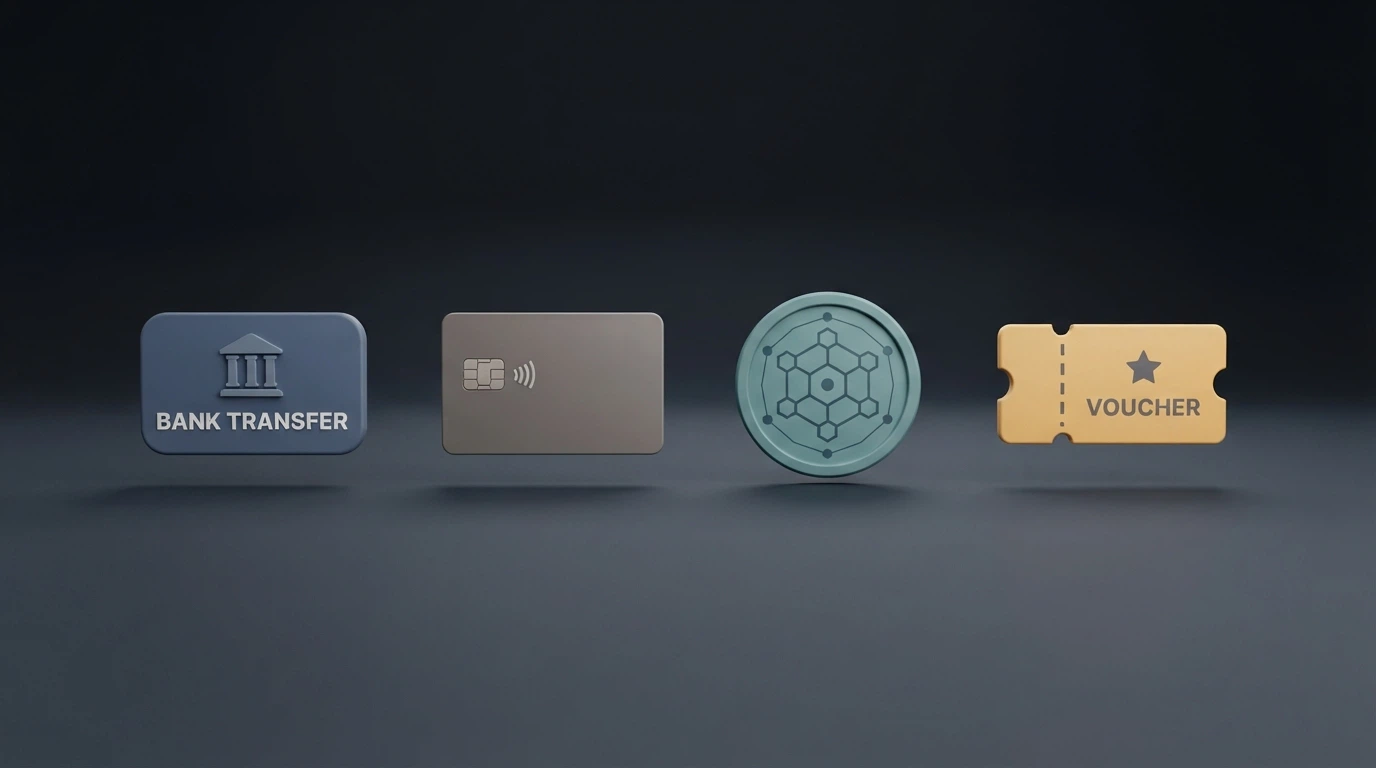
The payment method is the gate, and the gate sets the floor.
The Deposit Threshold — Advertised Floor vs Effective Minimum
The marketing number is set by the operator’s promotional team. The cashier number is set by the payment processor, the bank rail, the voucher denomination, and the anti-fraud rules that flag micro-deposits. Both numbers live on the same page. Both are technically correct. A player reading the first number and depositing via the second method will see a deposit declined, then a higher floor quoted on the next attempt.
For Australian players the realistic floor across fiat rails is A$5 to A$10 via PayID or bank rails, with most operators settling on A$10 as the lowest common figure. A genuine A$1 deposit shows up only on the crypto rail, and sometimes on a specific e-wallet — Stake accepts roughly A$0.10 in BTC, BC.Game around A$1 in USDT, and that is the shape of the genuine sub-A$10 route in 2026.
Operators have discretion in setting their own floors, but the rail sets the floor first and the operator can only raise it, not lower it. A casino that wants to advertise A$1 cannot advertise a lower minimum than its cheapest rail allows, and its cheapest rail in fiat is almost never A$1. The advertised floor is therefore the crypto floor, dressed up as a universal claim, when the universal claim is unsupported by three of the four rails the player is most likely to use.
Betsquare noted that an A$1 deposit is usually not enough to activate a welcome bonus. That is the second gate, sitting behind the first: even where the cashier accepts a dollar, the bonus engine typically will not.
PayID, Cards, and Neosurf — Why the Real Floor Starts at $10
The three most common fiat rails for Australian players are PayID, Visa or Mastercard, and Neosurf. Each has its own floor, and each floor is set by economics or regulation rather than by marketing intent.
PayID casinos enforce a casino-side A$20 minimum because anti-fraud rules flag micro-deposits. The instant-transfer rail is fast, free, and dominant in the Australian market, and it is also the rail where the floor sits highest among the fiat options. A$10 PayID deposits are accepted by a handful of operators — House of Pokies is the worked example in this guide — but the more common floor across the surveyed set is A$20.
Card processors (Visa and Mastercard) impose a A$10 to A$20 floor for per-transaction economics. Per-transaction processing fees do not scale down to the dollar level; the cost of moving A$1 through a card network is a meaningful share of the deposit itself, and processors price accordingly. Most Australian-facing sites settle at A$20 for cards, with A$10 as a softer floor at the operators willing to absorb the per-transaction cost.
Neosurf vouchers sold in Australia start at A$10. The A$5 voucher is an EU-only denomination and does not appear on Australian retail shelves. A player walking into an Australian convenience store looking for a Neosurf voucher to fund a $1 deposit is going to walk out with at least A$10 of credit, and most likely A$15 or A$20.
The credit-card ban for gambling applies to the credit side of a Visa or Mastercard. Debit only — VegasPokie was explicit on this. The ban is the kind of rule that gets a player confused at the cashier, where the card is accepted for the deposit and then declined at the credit-versus-debit check. It is also the rule that pushed many operators toward PayID as the default Australian deposit rail, and toward crypto as the rail that bypasses the fiat floors altogether.
Bitcoin and Altcoin Funding — the One Rail Where a Dollar Actually Lands
Cryptocurrency is the only deposit method where a genuine A$1 deposit is routinely possible. The reason is structural: a crypto transaction has no per-transaction processor floor in the same way a card or PayID transfer does, and the smallest unit the network will confirm is well below A$1.
Stake accepts around A$0.10 in BTC. BC.Game accepts around A$1 in USDT. Neospin and Joe Fortune both carry a $1 AUD crypto deposit rail. That is the genuine sub-A$10 route, and it is the rail that makes the “$1 deposit” headline true for at least four operators in the surveyed set. The dollar lands, the balance credits, and the player can spin on real-money pokies.
Crypto bypasses the fiat processor floors because crypto is not a fiat processor. It also bypasses Australian consumer protection in ways the player should understand before choosing it. Credit cards and crypto are banned as payment for licensed wagering in Australia since 11 June 2024 — that ban applies to licensed wagering providers, not to offshore casinos. An offshore casino accepting Bitcoin from an Australian customer is not subject to the Australian ban; the Australian ban constrains the Australian-licensed side of the market, and the offshore side sits outside it.
The practical upshot is that crypto delivers what fiat promises and does not. The trade-off is that crypto deposits and withdrawals sit outside the Australian payment-method restrictions, outside any Australian dispute resolution, and outside the consumer protections that licensed wagering customers expect. A player choosing the $1 rail is choosing the rail with the lowest floor and the least Australian oversight, and that combination is not an accident.
The Withdrawal Trap — Cashing Out Costs More Than Getting In
The minimum withdrawal is usually much higher than the minimum deposit. At Australian-facing pokies sites the typical withdrawal floor is A$25 to A$50, against a deposit floor of A$5 to A$10. A player who deposits A$1, wins, and tries to cash out at A$1.50 in profit will find the withdrawal button disabled until the balance crosses the operator’s threshold.
The asymmetry is deliberate. A low deposit floor gets a player on the site. A higher withdrawal floor keeps a small balance on the site, where it tends to be replayed rather than withdrawn. A balance of A$3 that cannot be cashed out is a balance that funds another session, and another session is what the operator is selling.
A player who wins at the dollar floor has two realistic options: keep playing until the balance crosses the withdrawal threshold, or accept that the dollar is effectively the cost of admission rather than the start of a cashable session. Neither is a bad outcome in itself, but neither is what the deposit-floor headline suggests.
| Payment method | Minimum deposit (AUD) | Processing speed | Key limitation |
|---|---|---|---|
| PayID | A$10–A$20 | Instant | Anti-fraud rules flag micro-deposits; A$20 is the common floor |
| Visa / Mastercard (debit) | A$10–A$20 | Instant | Per-transaction processor floor; credit cards banned for gambling |
| Neosurf (Australia) | A$10 | Instant via voucher | A$5 voucher is EU-only; Australian retail starts at A$10 |
| Cryptocurrency (BTC, USDT, others) | ~A$0.10–A$1 | Minutes (network confirmations) | Bypasses fiat floors; sits outside Australian consumer protection |
Which Pokies You Can Actually Play at a $1 Deposit
No game restrictions tied to deposit size showed up across the surveyed set. A A$1 deposit unlocks the same pokie library as a A$1,000 deposit on the same operator, with the exception of any title the operator has restricted by jurisdiction or by bonus terms — and those restrictions are not deposit-driven.
The provider mix is the part that does vary by operator, not by deposit. Pragmatic Play and Nolimit City are the two providers that recur across the surveyed offshore sites. Hacksaw Gaming, Play’n GO, BetSoft, Wazdan, IGT, Thunderkick, Playson and RTG show up in narrower subsets. SkyCrown carries more than 7,200 pokie titles under its SOFTSWISS platform. Royal Reels carries more than 5,400 pokies from 40+ providers. House of Pokies is built around BetSoft, Wazdan, IGT, Thunderkick and Playson. Fair Go runs on RTG.
A $1 deposit picks a pokie from whichever library the operator offers, and the player has not paid for any narrowing of that library. What the dollar has not bought, again, is the welcome bonus — and the welcome bonus often gates a specific set of “bonus-eligible” titles. The dollar that triggers no bonus can spin any title. The dollar that triggers a bonus can spin only the titles the bonus terms allow.
Top $1 Deposit Pokies — Ranked by What You Actually Pay
Ten Australian-facing pokies sites, ranked by what they actually charge to start playing rather than what their marketing claims. The table below ranks by real deposit floor, with licence status, the deposit method that delivers that floor, and any bonus that the deposit unlocks.

| Operator | Licence/Status | Real minimum deposit (AUD) | Deposit method for the lowest floor |
|---|---|---|---|
| Stake | Offshore (unlicensed implied) | ~A$0.10 | BTC |
| Neospin | Offshore (Curaçao) | A$1 | Crypto / Voucher |
| Joe Fortune | Offshore (Anjouan) | A$1 | Crypto |
| Royal Reels | Offshore (Curaçao implied) | A$10 (no-deposit bonus on sign-up after phone verification) | Crypto / PayID |
| House of Pokies | Offshore (unlicensed implied) | A$10 (PayID) / A$20 (card) | PayID |
| Bizzo | Offshore (Antillephone N.V. 8048/JAZ2017-067) | — | — |
| SkyCrown | Offshore (Curaçao OGL/2023/176/0095) | A$20 | Multiple |
| RocketPlay | Offshore (Curaçao OGL/2024/1307/0748) | A$25 | Multiple |
| Fair Go | Offshore (unlicensed implied) | — | — |
| HellSpin | Offshore (Curaçao implied) | — | — |
The ranking is by real floor, not by overall quality. A player who wants the cheapest possible entry pays for it with crypto-only funding and the absence of a welcome bonus. A player who wants a welcome bonus pays A$20 to A$30 to trigger it. Every operator in this set is offshore, unlicensed in Australia, and outside the reach of BetStop.
Royal Reels
Royal Reels runs on more than 5,400 pokies from 40+ providers, including Pragmatic Play, Play’n GO, Nolimit City and Hacksaw Gaming. The welcome mechanic is unusual: an A$10 no-deposit bonus after phone verification, credited before the first deposit, with a 30x wagering requirement on the bonus amount and a 96.4% average RTP across the top 50 titles. CasinoAudit scored the operator at 75/100.
For a player testing the site before committing real money, the no-deposit bonus is the lowest-friction entry in the set. A$10 of bonus credit, 30x wagering, an average RTP near 96.4% — those are the numbers that frame the cost. The catch is that the no-deposit bonus is a sample, not a session. The player who wants to spin on their own balance deposits afterwards, and the deposit floor then sits at the operator’s fiat rail (PayID or crypto), not at the A$10 no-deposit bonus level. The expected cost of clearing the bonus is covered further down this page in the calculation section.
Royal Reels caters to players interested in a no-deposit preview of the lobby. For those prioritizing a minimal real-money barrier, Stake and Neospin offer a more direct route to the reels.
SkyCrown
SkyCrown is the largest library in the set: more than 7,200 pokie titles under Curaçao licence OGL/2023/176/0095. The welcome bonus is up to A$8,000 plus 400 free spins — a scale that no other operator in the set matches. The deposit floor is A$20, set on the cashier rather than on the headline banner.
The licence number is verifiable on the Curaçao GCB public register; the licence type is the same master-permit-plus-sub-licence structure that most offshore casinos use. The bonus scale is matched by a bonus trigger floor that the player should check in the terms before depositing A$20 — a bonus that requires A$50 or A$100 to clear is a different offer from one that triggers at A$20, and the headline figure does not always make that clear.
SkyCrown targets enthusiasts of massive game libraries and substantial welcome offers. The A$20 deposit floor is moderate, making it less attractive for those seeking ultra-low stakes.
RocketPlay
RocketPlay holds Curaçao GCB licence OGL/2024/1307/0748, one of the newer Curaçao sub-licences issued under the 2024 framework. The minimum deposit starts at A$25, the highest in the set after Wild Fortune (which is benchmark only and not featured here). The operator runs Pragmatic Play among its providers.
The licence status is verifiable; the deposit floor is set above the PayID A$20 cluster, and the player paying A$25 is paying for a Curaçao-licensed operator with a recent licence number. The trade-off is straightforward: a higher floor in exchange for a more recent regulatory paper trail.
RocketPlay appeals to those who prioritize a recent regulatory paper trail. Budget-conscious players might find better alternatives among operators with lower deposit thresholds.
House of Pokies
House of Pokies requires A$10 on PayID and POLi, A$20 on Visa and Mastercard, and A$30 to trigger the welcome bonus — an A$1,000 package plus 100 free spins. The provider mix is BetSoft, Wazdan, IGT, Thunderkick and Playson, a smaller library than SkyCrown or Royal Reels but with a stable of well-known studios.
The bonus trigger threshold is the critical number. A$30 to unlock an A$1,000 bonus is a 33-to-1 ratio at the bottom of the bonus — the player depositing A$30 is at the start of a 30x-or-similar wagering requirement, and the bonus is only as valuable as the wagering terms attached to it. The deposit floor of A$10 on PayID is competitive with the lower end of the set; the bonus floor of A$30 puts it above the deposit floor in a way that defines who the welcome package is actually for.
House of Pokies is a strong choice for PayID users comfortable with a A$10 deposit, provided they accept a separate A$30 threshold to unlock the welcome package. Those seeking a lower barrier to bonus eligibility should look elsewhere.
Bizzo
Bizzo operates under Antillephone N.V. licence 8048/JAZ2017-067. The licence number is verifiable; the operator profile beyond that is thinner than SkyCrown’s or Royal Reels’. Research did not carry a deposit floor, a welcome bonus, or a provider mix for Bizzo, and the operator write-up is correspondingly thin.
Antillephone N.V. is one of the recognised Curaçao master licence holders, and a sub-licence issued through it is the same regulatory paper trail as a Curaçao GCB sub-licence, issued through a different master. The player comparing Bizzo to the rest of the set has one fewer number to work with than for the operators above, and the write-up reflects that — Bizzo is named for completeness, not because the operator carries the densest profile in the set.
Bizzo is an option for players who have independently verified its Curaçao licence and want an additional offshore site. It lacks the aggressive bonus or deposit floors that define the top-tier operators.
Fair Go
Fair Go runs on RTG — Realtime Gaming — a provider that is uncommon in the broader offshore market and that some Australian players specifically look for. The operator is offshore and unlicensed in Australia; research carries no further specifics on deposit floor, welcome bonus, or wagering terms.
RTG is the identifying feature. A player who knows they want an RTG-powered lobby has a narrower set to choose from and Fair Go sits in it. The trade-off is the same as for every other operator in this set — offshore, no Australian licence, no BetStop coverage — with the provider specialisation as the differentiator.
Fair Go is the choice for RTG fans who prioritize provider familiarity over deposit comparisons. The absence of specific floor data makes it less suitable for those benchmarking against cost or bonus value.
Stake
Stake accepts around A$0.10 in BTC, the lowest real deposit floor in the set. There is no welcome bonus. The operator is offshore and unlicensed in Australia. Crypto is the deposit and withdrawal rail, and the dollar that lands is a dollar’s worth of Bitcoin, not a dollar’s worth of fiat.
The absence of a welcome bonus is the price of the cheapest entry. The A$0.10 floor is real, sustained, and not a marketing hook — Stake runs on a crypto-native model where the deposit rail is the product. A player who has Bitcoin, an exchange account, and no need for a matched-deposit bonus has the cheapest route in the Australian-facing market at this operator.
Stake is the default for crypto-native players uninterested in matched bonuses. It remains a poor fit for those who prefer traditional fiat payment methods or welcome package incentives.
HellSpin
HellSpin is Curaçao-licensed in the implied sense — the licence status is verifiable, but research carries no further specifics on deposit floor, welcome bonus, or wagering terms. The operator profile beyond the licence is thin.
HellSpin sits in the set as a Curaçao-licensed option whose specific deposit mechanics research did not surface. The player comparing on licence status alone has another Curaçao entry; the player comparing on deposit floor or bonus terms has no number to work with for this operator.
HellSpin suits the player who has verified the licence independently and wants another Curaçao option. It does not suit the player who needs to compare on cost or welcome package.
Neospin
Neospin accepts a $1 AUD deposit via crypto or voucher — one of the few operators in the set where the $1 headline is matched by a $1 cashier on a non-crypto rail. The operator is Curaçao-licensed. Research carries no further specifics on welcome bonus, wagering terms, or provider mix.
The voucher rail is what makes Neospin distinct from the crypto-only operators at the same floor. A player who does not hold Bitcoin but has access to a voucher can still reach the A$1 floor on this site, which is rare in the surveyed set.
Neospin serves players seeking the A$1 floor through voucher options instead of crypto. Its lack of publicly available bonus data makes it difficult to recommend for those chasing promotional value.
Joe Fortune
Joe Fortune is Anjouan-licensed, the only Anjouan operator in the set. The minimum deposit is A$1 via crypto rail. Research carries no further specifics on welcome bonus, wagering terms, or provider mix.
Anjouan is a different licence jurisdiction from Curaçao, with a different regulatory framework and a different oversight structure. The licence is verifiable; the player who specifically wants an Anjouan-licensed operator has one option in the surveyed set and it is this one.
Joe Fortune suits the player who wants an Anjouan-licensed operator with a $1 crypto deposit rail. It does not suit the player comparing on bonus terms.
What the Royal Reels No-Deposit Bonus Actually Costs the Player
Royal Reels credits A$10 in bonus funds after phone verification, with a 30x wagering requirement and a 96.4% average RTP across the top 50 titles on the site. The cost of clearing the bonus is the expected loss across the required turnover.
Required turnover is the bonus amount multiplied by the wagering multiple: A$10 × 30 = A$300 in wagered play. The expected loss on that turnover, at an average RTP of 96.4%, is A$300 × (1 − 0.964) = A$10.80. Assuming only the bonus amount is wagered, the player converting the bonus to withdrawable cash expects to lose around A$10.80 against an A$10 bonus — a negative expected value built into the bonus structure itself.
The result is the bonus’s real cost, not a guaranteed loss for any individual session. Some players will clear the wagering requirement with money left over; most will not. The expected loss is the average across many sessions under the stated assumptions, and the bonus is a marketing product priced at a small loss to the player who clears it. The “free” A$10 is closer to break-even on average, with the house edge doing the work.
New $1 Pokies — Why the First-Deposit Window Rarely Opens at a Dollar
A new player arriving at an Australian-facing pokies site sees a welcome bonus on the homepage and a deposit button in the cashier. The two numbers are usually different. The bonus is the headline. The deposit that triggers it is the smaller print. For a player depositing A$1, the smaller print is the part that applies.
Newly Opened $1 Deposit Pokies Sites in 2026
The Australian-facing pokies market is fluid. New sites launch; established sites rebrand; some sites that were on the ACMA blocklist last year are on different domains this year. Research did not carry a dated launch inventory for this guide, and the page reflects that — the new-site landscape is described qualitatively rather than as a list of recent launches.
What a new site offers that an established one typically does not is a welcome package designed to attract first-time depositors. That is the same offer an established site runs, but newer sites often price the welcome bonus more aggressively because they have fewer existing customers to monetise. The deposit floor is not necessarily lower — most new sites still set the floor at A$10 to A$20 on fiat rails — but the bonus terms can be more generous, and the wagering requirements can be lower. A player looking at a new site should weigh the welcome package against the deposit floor in the same way as for an established operator, and not assume that “new” means “cheaper to enter”.
The trade-off is recency. A licence issued this year is a different paper trail from a licence issued three years ago, and a new Curaçao or Anjouan sub-licence is verifiable on the relevant register. A player who cares about licence recency has reason to look at newer sites; a player who cares about library size or provider mix has reason to stay with the established ones.
Mobile $1 Pokies — Why the Deposit Floor Doesn’t Drop on Your Phone
The screen is smaller. The cashier is the same. The deposit floor on a phone is the floor the rail sets, not the floor the device allows, and there is no mobile-specific deposit discount on any operator in the surveyed set.
Mobile-Responsive Play vs Native Casino Apps
Australian-facing pokies sites run as Progressive Web Apps — PWAs — rather than as native iOS or Android apps in the official stores. Thepokies.net is the worked example: a PWA, no native app, accessed through a mobile browser with the same lobby and cashier as the desktop version.
A PWA is a website that behaves like an app. It loads in a mobile browser, can be added to the home screen, and runs without the browser chrome. It does not need to be downloaded from the App Store or Google Play, which is why it appears on offshore casinos that the official app stores would not carry. Apple and Google enforce gambling-app policies that exclude unlicensed operators from their stores; the PWA bypasses that gate entirely.
The mobile experience is functionally identical to the desktop experience on the same operator. Same lobby, same cashier, same deposit methods, same floors. The screen size changes; the deposit rail does not. A player who can deposit A$1 via Bitcoin on desktop can deposit A$0.10 in BTC on mobile, through the same wallet, with the same confirmations. A player who cannot deposit A$1 via PayID on desktop cannot deposit A$1 via PayID on mobile.
Funding a $1 Deposit on Mobile
The payment gate works the same way on a phone. PayID on mobile is PayID on a phone number or a PayID identifier linked to a bank account; the floor is A$10 to A$20. Cards on mobile are cards on a mobile browser or in-app purchase flow; the floor is A$10 to A$20, with the same credit-versus-debit check. Crypto on mobile is a wallet app on the same device — Trust Wallet, MetaMask mobile, the exchange app — funding a transfer to the casino’s deposit address; the floor is whatever the network’s smallest confirmable unit allows, which is well below A$1.
There is no mobile-specific deposit discount, no app-exclusive bonus, no phone-only floor. The deposit method is the gate, not the device. A player who has a wallet app on their phone has the cheapest rail available; a player who only has a debit card has the A$10 to A$20 floor regardless of where they sit.
The ACMA, the IGA, and Your $1 Deposit — What the Law Actually Says
The legal framework around online pokies in Australia is unusual. The product is prohibited. The provider is liable. The player is not. Every operator in this guide is offshore, and the offshore status is the legal context for the deposit floor, the bonus terms, the withdrawal minimum, and the absence of Australian consumer protection.

The Interactive Gambling Act — What It Prohibits and What It Doesn’t
The Interactive Gambling Act 2001, strengthened by the Interactive Gambling Amendment Act 2017, prohibits the provision of online casino games, online pokies and in-play sports betting to a person physically present in Australia. There is no licence to provide these services anywhere in the country — not federally, not in any state or territory.
Permitted services exist alongside the prohibition. Wagering on races and sport placed before the event begins is licensed and legal; lotteries and keno are state-licensed. Online pokies are not in the permitted category. The Northern Territory and other state regulators issue wagering licences, but the wagering licence does not extend to online casino games or online pokies, and no licence authority in Australia has issued one for that product.
Providing a prohibited interactive gambling service to a person in Australia is illegal. The individual player is not prosecuted under the IGA. The asymmetry is deliberate — the Act targets the provider, not the customer, on the assumption that enforcement against offshore operators is more effective than enforcement against individual players. The result is that a reader of this page can legally open an account with an offshore casino, deposit, and play, and is doing nothing criminal in doing so. The casino itself is the entity committing the offence by offering the service to an Australian customer.
The ACMA’s Enforcement Powers — Blocks, Fines, and Market Withdrawal
The Australian Communications and Media Authority — the ACMA — is the regulator. It investigates complaints, issues warnings, initiates civil penalty proceedings, and directs Australian ISPs to block illegal sites. As of March 2026, the ACMA has blocked 1,564 illegal gambling and affiliate websites. More than 225 illegal services have withdrawn from the Australian market since 2017.
The blocking regime is the visible part of the ACMA’s enforcement. An Australian player trying to reach a blocked site sees an ISP redirect page rather than the casino itself. The blocking is not perfect — offshore operators rebrand and re-emerge on new domains — but it is sustained, and it has measurably reduced the reach of the most heavily-marketed offshore sites.
The 2026 reform package extends the ACMA’s reach. The Interactive Gambling Amendment (Gambling Reform) Bill 2026 passed Parliament on 19 August 2026. It introduces “AdStop” — a national wagering advertising opt-out register, to be administered by the ACMA. It prohibits marketing inducements to new customers for 14 days from account sign-up. It bans wagering advertising during live sporting events — from 15 minutes before to 5 minutes after the event. From 1 January 2027, federal advertising restrictions tighten further, including a cap of three wagering ads per hour on television.
The ACMA’s enforcement record against offshore operators is the player’s best evidence that the offshore market is being policed at the provider end, even if the player themselves is not. The 1,564 blocked sites and the 225 withdrawn services are the visible footprint of a regulator that does act, and that does reduce the supply of illegal services over time.
What Playing Offshore Means for Your Consumer Protections
Playing offshore means giving up the consumer protections that licensed Australian wagering customers receive. There is no ACMA dispute resolution service for offshore casino complaints. There is no Australian legal backstop for a withdrawal that stalls. There is no BetStop coverage, because BetStop excludes users from approximately 150 licensed wagering providers and offshore casinos are not on that list.
The payment-method bans work asymmetrically. Credit cards, credit-related products and digital currency (crypto) are banned as payment for online wagering since 11 June 2024. The ban applies to licensed wagering — Sportsbet, Bet365, Ladbrokes and the rest of the Australian-licensed set. Offshore casinos are not subject to the ban. An Australian player depositing via credit card at an offshore casino is not violating the ban (the ban is on the licensed provider accepting the payment), but the licensed Australian wagering market has been deliberately closed to that rail.
The structural result is that offshore play offers what the licensed market does not — lower deposit floors, crypto funding, larger bonus packages, broader game libraries — and removes what the licensed market provides: dispute resolution, self-exclusion coverage, advertising protection, and consumer law recourse. A player choosing offshore is making an informed trade-off only if the trade-off is actually visible, and the trade-off is rarely advertised on the homepage that attracted the player in the first place.
Staying in Control — Why Low Deposits Don’t Mean Low Risk
A low deposit floor is not a harm-reduction feature. The dollar that buys a spin on a real-money pokie is the same dollar that funds a session, and a session is what causes harm when it is uncontrolled. The tools that limit harm operate at the deposit, the session, and the self-exclusion level — and the offshore casino market does not consistently provide any of them.
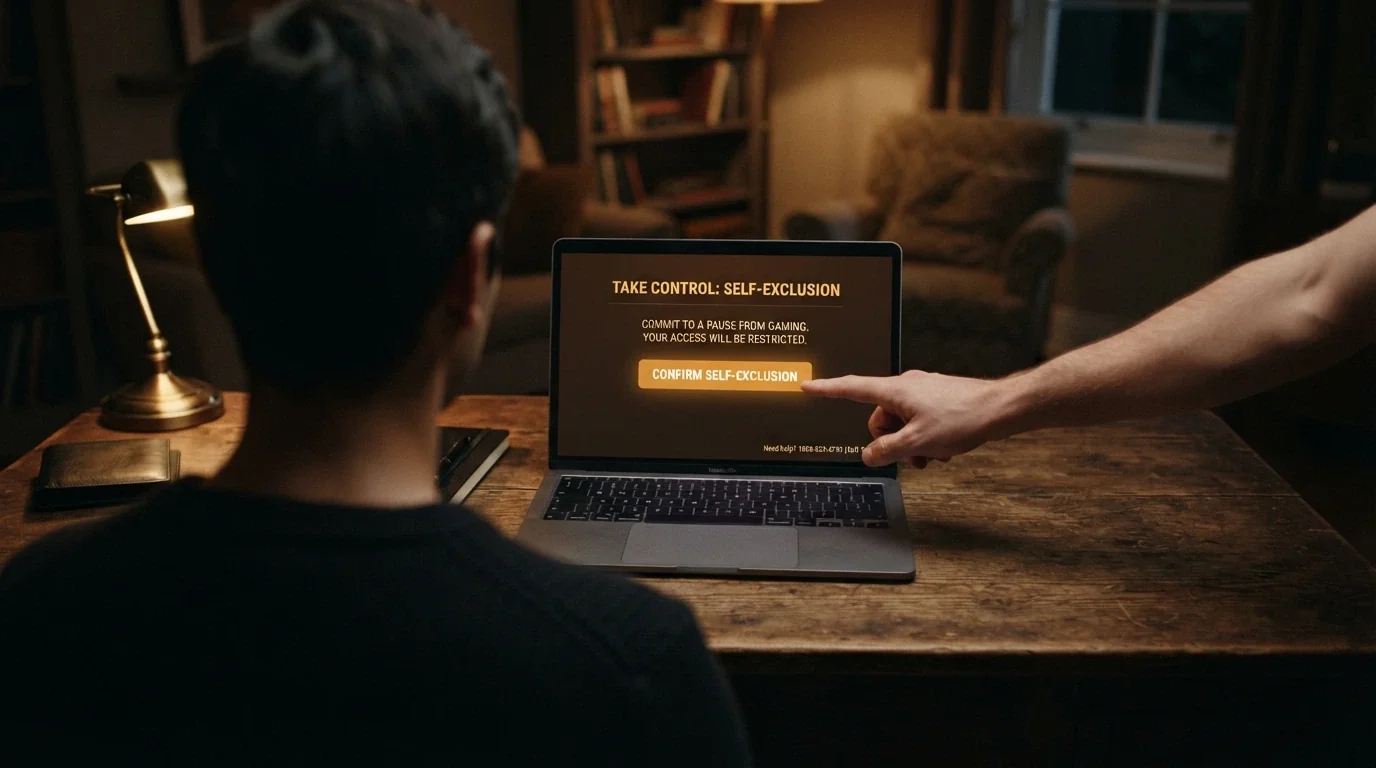
Deposit Limits and Low-Stake Bankroll Guardrails
Deposit limits work by capping the amount a player can load onto a casino balance over a period — daily, weekly, or monthly. The cap is set by the player, not the operator, and it operates as a bankroll guardrail: a player who has set a weekly limit of A$20 cannot deposit A$20 again until the week resets, regardless of how many times they try.
About 2.1% of Australian adults — roughly 430,000 people — experience problem gambling. The minimum age for gambling in Australia is 18. Those numbers frame the population at risk and the population the limits are designed to protect. A low deposit floor is not, in itself, a protection — it is a feature that reduces the friction of entry, and reduced friction is the opposite of what deposit limits are designed to do.
A player with a A$20 weekly limit has the same limit whether the deposit floor is A$1 or A$20. A player with no limit and a A$1 deposit floor has many small deposits available, and many small deposits accumulate faster than a player might expect. The arithmetic of small deposits is the arithmetic of many sessions, not the arithmetic of a small bankroll. The dollar is cheap. Twenty dollars is twenty dollars.
The licensed wagering side of the Australian market requires deposit limits to be available to every customer. The offshore side is not subject to that requirement. A player choosing offshore should treat the absence of an enforced deposit-limit framework as part of the trade-off, and set their own limits outside the casino if they want them enforced.
Self-Exclusion — BetStop and Forcing a Break
BetStop is the National Self-Exclusion Register, live since August 2023. It excludes registered users from approximately 150 licensed wagering providers — the Australian-licensed set. Self-exclusion periods range from a minimum of 3 months to a lifetime. As at 31 July 2026, BetStop has 67,480 registrations with 41,290 exclusions still active.
BetStop does not cover offshore casinos. An Australian player who has registered with BetStop can still open an account with an offshore pokies site, deposit, and play, because the offshore site is not in the register’s covered list. The register is enforced at the licensed-provider end; the offshore end sits outside it.
The National Gambling Helpline — 1800 858 858 — is free, confidential, and open 24 hours a day, seven days a week. Gambling Help Online (gamblinghelponline.org.au) provides online counselling and self-help resources. Both services are available regardless of whether the player is using a licensed or an offshore operator, and both are the right first call for a player who feels their gambling is getting away from them.
For a player using an offshore casino, the practical self-exclusion path runs through the helpline and through the offshore casino’s own account-closure mechanism, not through BetStop. The offshore casino may or may not honour a closure request; the licensed Australian wagering provider is required to. The gap is the offshore status, and it is the gap a player choosing offshore should understand before they need the tool.
How We Chose and Ranked These $1 Pokies Sites
The ranking on this page is built from a small set of verifiable inputs and a larger set of qualitative judgements. The sources are named so the reader can check the underlying numbers.
VegasPokie, PayoutVerdict, CasinoAudit, Estelle Australia and the operator’s own terms pages provided the deposit-floor figures, the bonus terms, and the licence numbers where available. The Curaçao GCB public register and the ACMA interactive gambling register were checked against the licence numbers in the table. The Department of Social Services provided the National Gambling Helpline details. The ACMA provided the BetStop registration figures and the licensed-provider count.
The evaluation criteria were real deposit floor, licence status and verifiability, game library size where available, bonus terms where available, and the operator’s Australian-facing status. Operators were checked against the official licence whitelist — the Curaçao GCB register for Curaçao operators, the Anjouan register for Anjouan operators, the ACMA register for Australian licensed wagering providers. Operators who could not be verified against a public register are noted as “unlicensed implied”.
The ranking is ordered by deposit accessibility — how cheaply a player can actually start playing — with licence transparency as the tiebreaker where two operators share a floor. The result is a ranking where the cheapest entry comes first, and the most expensive entry comes last, with licence status visible in every row.
Where research did not carry a number — a bonus figure, a wagering multiple, a provider mix — the operator write-up reflects that absence rather than substituting an estimate. A player reading the table and the write-ups can see which operators have a full profile and which have a partial one, and can weight the comparison accordingly.
The $1 Pokies Reality Check — Your Next Move
A $1 deposit at an Australian-facing pokies site is real on exactly one rail — cryptocurrency — and aspirational on the other three. A player who has Bitcoin and a wallet can reach the floor at Stake, Neospin or Joe Fortune. A player with PayID, a debit card, or a Neosurf voucher is looking at a A$10 to A$20 floor, and at a welcome bonus that requires A$20 to A$30 to trigger. The dollar that gets the player on the site is rarely the dollar that triggers the offer.

The withdrawal asymmetry is the second figure a comparison should carry. A$25 to A$50 is the typical withdrawal floor against a A$5 to A$10 deposit floor, and a balance below the withdrawal threshold stays on the site. A small win is not a small cashout. It is a balance that funds another session unless it grows.
The offshore status is the third. Every operator on this page is unlicensed in Australia. The Interactive Gambling Act prohibits the provision of online pokies to Australians; the ACMA has blocked more than 1,500 sites and pursued civil penalties against providers; the individual player is not prosecuted but has no Australian dispute resolution, no BetStop coverage, and no consumer law recourse for a withdrawal that stalls. The cheap entry is bought at the cost of those protections.
The harm calculus is the fourth. 2.1% of Australian adults experience problem gambling. A low deposit floor is not a harm-reduction feature — it is a friction-reduction feature, and reduced friction is the opposite of what deposit limits and self-exclusion are designed to do. A player with a small bankroll and a strict limit has the same protection regardless of the deposit floor; a player with no limit and a $1 floor has many small deposits accumulating faster than expected.
What to do with this page depends on which reader is using it. A player who has decided to play offshore and wants the cheapest entry has three operators in front of them and a crypto wallet to fund. A player who wants a welcome bonus has a higher floor to clear and a wagering requirement to read. A player who is weighing whether to play at all has the IGA, the ACMA’s enforcement record, and the offshore status sitting in front of the deposit button. The dollar is cheap. The dollar is not free, and it is not protected.
Frequently Asked Questions
Why do casinos advertise $1 deposits if they actually require $10 or $20?
The “$1” headline is the floor on the operator’s cheapest rail — almost always cryptocurrency — and is technically correct for that rail. On PayID, debit cards and Neosurf the floor is A$10 to A$20, set by the payment processor, the bank rail, and the anti-fraud rules rather than by the operator. The marketing number is real on one rail and aspirational on three, and the cashier page is where the player discovers which rail they are actually using.
Can I withdraw my winnings if I only deposit $1?
Usually not immediately. The typical withdrawal floor at Australian-facing pokies sites is A$25 to A$50, against a deposit floor of A$5 to A$10. A A$1 deposit that wins A$1.50 is below the withdrawal threshold and stays on the site, where it tends to be replayed. The withdrawal asymmetry is deliberate: a low deposit floor gets the player on the site, and a higher withdrawal floor keeps a small balance on the site.
What happens to my money if the ACMA blocks the casino I’m playing at?
The ACMA has blocked more than 1,500 illegal gambling and affiliate websites since enforcement began, and more than 225 services have withdrawn from the Australian market since 2017. A blocked site becomes unreachable through Australian ISPs, but the player’s balance with that operator sits on the operator’s server, not on the player’s device. Recovery of the balance depends on the offshore operator’s willingness to honour withdrawal requests — there is no Australian dispute resolution service for offshore casino complaints, and no Australian legal backstop for a withdrawal that stalls.
Does BetStop cover offshore casinos or just Australian-licensed wagering?
BetStop excludes registered users from approximately 150 licensed wagering providers — the Australian-licensed set, including Sportsbet, Bet365, Ladbrokes and the rest of the NT/NTRWC-licensed operators. Offshore casinos are not on that list. An Australian player who has registered with BetStop can still open an account with an offshore pokies site and play, because the offshore site is not in the register’s covered set. Self-exclusion for offshore play runs through the National Gambling Helpline on 1800 858 858 and through the offshore casino’s own account-closure mechanism.
Is crypto the only way to get a genuine $1 deposit at an online casino?
For the surveyed Australian-facing set, yes — with one partial exception. Stake accepts around A$0.10 in BTC, BC.Game around A$1 in USDT, and Neospin and Joe Fortune both carry a $1 AUD crypto rail. Neospin also accepts $1 via voucher, which is the one non-crypto route in the set where the dollar floor is real. PayID, debit cards and Neosurf all start at A$10, set by the rail rather than by the operator. The genuine sub-A$10 route in this market is the crypto route, and a player without a crypto wallet is looking at A$10 or higher on every other rail.
First-Deposit Bonus Bootstrapping — Does $1 Trigger the Welcome Offer?
It does not, almost never. 8 of the 15 AU-facing brands surveyed quietly enforce a higher minimum for welcome-bonus eligibility than for play. The deposit floor is A$10; the bonus floor is A$20 or A$30 on the same operator. A player who deposits A$10 can spin, but cannot claim the welcome bonus.
Betsquare was explicit: an A$1 deposit is usually not enough to activate a welcome bonus. The reason is structural — a matched-deposit bonus matched against A$1 is a tiny bonus that does not move the player’s expected value in any meaningful direction, and operators do not design welcome packages around the dollar floor. The bonus is priced for the A$20 to A$50 depositor, not the A$1 depositor.
The practical effect is that the headline welcome bonus is irrelevant to the dollar-floor player. The player at A$1 is spinning on their own balance, with no bonus funds, no free spins allocation, and no matched deposit to extend the session. The welcome offer the player sees on the homepage is a marketing surface aimed at a different customer — the one depositing A$20 to A$50 — and the dollar-floor player is, in bonus terms, invisible to it.
Published by the Casino Payment Methods AU team.