
The High-Cashback Casino Question in Australia — and Why the Page Has to Start With the Ban
A reader searching for the best online casino with high cashback bonus in Australia is asking a question that most affiliate pages refuse to answer honestly. Yes, the offshore casinos with the highest cashback rates are reachable. Yes, the rates look generous on paper. And no, none of them is licensed to operate in Australia — because the licence they would need does not exist. The Interactive Gambling Act 2001 prohibits online casino games, online pokies and in-play betting; no regulator, federal or state, hands out an online casino licence to anyone. Every cashback offer this page ranks is therefore an inducement from an offshore brand running outside Australian consumer law, outside the BetStop register, and one ACMA blocking notice away from disappearing mid-session.
That is the frame. Inside it, the cashback question is worth asking properly. Cashback is the least bad offshore bonus for a player who has already decided to play at an unlicensed site: it is a refund on losses, it usually carries a low or zero wagering multiple, and it lands in real money rather than locked bonus credit. Compared with a 200% deposit match locked behind 40x wagering on a 14-day clock, a 10% weekly cashback at zero or low playthrough returns more per dollar the player loses — not because the marketing is generous, but because the mechanism stops the bonus from eating what the player is trying to win back.
The rankings that follow are honest on that point. They rank offshore operators on cashback value — rate, wagering, cap, payout type — not on welcome-bonus size, and they never present any featured brand as licensed in Australia. They are current as of 18 October 2026 against the operator terms pages and the ACMA register, and against the Blask and Betzoid datasets that ground the comparison figures.
- What Cashback Actually Means at an Online Casino
- Why Your 2026 Cashback Bonus Is Smaller Than It Looks
- The Best Cashback Casinos Open to Australians in 2026
- Australia’s Online Casino Ban — and What It Means for Your Cashback
- Crypto Cashback: The Payment Method That Tells You Everything
- No-Deposit Cashback — Rare, but It Exists
- Mobile Cashback Play: Sites That Work on Your Phone
- How to Pick a Cashback Offer That Actually Pays
- When Cashback Stops Being Protection
- How We Selected and Ranked These Cashback Casinos
- Frequently Asked Questions
What Cashback Actually Means at an Online Casino
Cashback at an online casino is a percentage of a player’s net losses returned over a defined window — daily, weekly, monthly, or instant. It is not free money, and it is not a discount on play. It is a partial refund on what the house has already taken, paid out of a separate balance the operator sets aside from gross gaming revenue. The standard rate for a regular player runs between 5% and 25% on net losses, with VIP tiers reaching up to 30% for high rollers depositing A$10,000 or more per month. The headline rate is the easy part of the offer to read. The hard parts — wagering multiple, weekly cap, payout type, eligible games — are what decide whether a “10% cashback” is worth claiming at all.
Casinos offer cashback because it works on the customer side without the up-front cost of a deposit match. A A$500 welcome bonus, even at 100% matched, is a liability the moment it lands in a player account and stays one until the wagering requirement is cleared. A 10% weekly cashback on a player who lost A$200 that week costs the operator A$20, and most of that player reloads, so the net cost to gross revenue is closer to single-digit dollars. Cashback is a retention tool disguised as a refund, and the best version of it — zero wagering, real money, high cap — costs the operator the least per loyal player it can keep.
How Cashback Differs From a Welcome Bonus
A welcome bonus gives the player extra credit on top of a deposit, in exchange for a wagering requirement that multiplies the bonus (and sometimes the deposit) by a number — 30x, 40x, sometimes higher — before any withdrawal is allowed. A cashback bonus gives the player a percentage of what they have already lost, usually with a much smaller multiplier attached, often zero. The marketing language for both sounds similar: “bonus money”, “extra value”, “rewards”. The mechanics could not be more different.
A deposit match is front-loaded. A A$500 bonus at 40x wagering means the player has to turn over A$20,000 before the bonus and any winnings from it become withdrawable. At a 96.5% return-to-player rate on a typical pokie, that A$20,000 in wagers returns A$19,300 in expectation — a A$700 expected loss on a “free” A$500. The bonus has a real cost, and the cost is paid in the time it takes to clear it. Cashback is back-loaded. A 5% cashback with zero wagering returns A$10 on a A$200 weekly loss, and that A$10 is the player’s to withdraw, bet, or leave in their account, with no playthrough gate. As one industry commentator put it, a 5% cashback with zero wagering beats 20% locked behind impossible terms every time — because a percentage the player cannot reach is not a percentage at all.
The player each type suits is also different. A welcome bonus suits a player with a large bankroll and the time to grind through wagering on games that contribute 100%. Cashback suits a player who plans to play anyway and wants a partial floor under their losses — the kind of player who would rather have a 5% refund on the A$1,000 they expected to lose than a 100% match on a A$200 deposit they would not otherwise have made. Cashback does not subsidise play; it prices it. A welcome bonus subsidises play and then charges the subsidy back through wagering.
The Net-Loss Formula Your Cashback Rests On
A cashback offer that is worth taking calculates the refund on net losses — deposits minus withdrawals minus the current balance — not on the total amount wagered. The distinction matters. A player who deposits A$500, wins A$300, withdraws A$200 and has A$100 still in their account has net losses of A$200 (A$500 deposited, A$300 withdrawn, A$100 balance remaining), not A$500 in total bets. A 10% cashback on net losses returns A$20. A 10% cashback on total bets would return A$50 on the same activity, but no major operator runs that calculation because it would be paying back money the player has not actually lost.
The Betzoid dataset verified this calculation method at 14 of 23 tested sites — a strong majority, but not universal. The minority that calculate on gross turnover or on a player-loss definition that excludes withdrawals effectively pay a smaller percentage than their headline rate suggests, and they do so quietly. A reader who sees “10% cashback” and assumes the same refund across operators will get a different answer depending on the formula the operator uses. The honest baseline is net losses; the rest is marketing.
The mechanics of one large platform provider, GR8_TECH, make the calculation explicit. Their Instant Cashback windows — 1, 3, 6, 8, 12, 24, 48 or 72 hours — are calculated on Net Spend, defined as Real Deposits minus (Real Withdrawals plus Current Balance). That is the same formula the better operators use, and it is the one a player should expect to see in any cashback T&Cs they read.
Why Your 2026 Cashback Bonus Is Smaller Than It Looks
The headline rate on a cashback offer is the least informative number on the page. A 25% rate with a A$50 weekly cap and 40x wagering is worth less than a 10% rate with a A$500 cap and zero playthrough, and the comparison does not require any mathematics to see. The point of this section is to walk through the four ways a headline rate shrinks between the marketing and the balance: caps, wagering, game-weighting exclusions, and VIP-tier gating.
The wagering range across Australian-facing offshore casinos runs from zero — the gold standard, applied by Slotozen on live cashback and JustCasino on its first-week daily offer — to 40x and above on offers that present themselves as generous. The best of the set land in the 0–5x range; eight sites in one industry test carried this range, while many competitors sit at 40x or higher. The standard cashback rate itself runs 5–25% for regular players, and up to 30% at the top VIP tier for monthly depositors of A$10,000 or more — a ceiling that exists precisely because so few players reach it.
Weekly caps tell the second half of the story. A player who loses A$2,000 in a week and claims a 10% cashback with a A$100 cap walks away with A$100, not A$200 — the rate is correct, the cap has eaten half the refund. The market splits here: some operators cap weekly cashback under A$100, which makes the offer near-worthless for high-volume play; six casinos in one industry survey carried A$500+ weekly caps for VIP tiers, which is where the value lives for anyone playing at scale. Between the two, the gap between what a player is offered and what a player keeps is where the offer’s real terms sit.
| Cashback Type | Typical Rate | Wagering | Typical Weekly Cap | Paid As |
|---|---|---|---|---|
| Daily (first-week offer) | up to 20% | 0x (best case) | A$100–A$500 | Real money |
| Daily (recurring) | 10–20% | 3x | A$500 | Real money or bonus |
| Weekly | 10% | 10x (standard) | A$300 | Bonus balance (most) |
| Weekly (VIP) | up to 30% | 0–10x | A$500–A$7,500 | Real money (best) |
| Live-dealer | 10% | 0x (rare) | A$5,000 | Real money |
| Rakeback (crypto) | up to 20% | 0x | No cap (model) | Real money |
100% Cashback Promises — What They Really Deliver
The “100% cashback” pitch is one of the more durable marketing terms in offshore casino advertising, and one of the more misleading. A 100% cashback offer refunds the player’s full net losses over a defined window — usually a single deposit, sometimes a 24-hour window, occasionally the first bet. The headline reads as if the player will play, lose, and get the money back. The mechanics are almost never that clean.
What a 100% cashback offer actually delivers depends on three numbers. The first is the cap. A 100% cashback up to A$200 on a first-day loss is a different offer from a 100% cashback up to A$2,000 — and the second is rare outside VIP tiers. The second is the wagering multiple. A 100% cashback with 40x wagering is not a refund; it is a deposit match with a worse marketing label, and the player has to turn over the refund (and sometimes the refunded losses) before any of it becomes withdrawable. The third is the eligibility window. A 100% cashback on a player’s first deposit only is a welcome bonus by another name, and the player has already paid for the refund with the deposit they had to make to claim it.
The market does not run many clean 100% cashback offers. VIP cashback at the top tier reaches 30% on net losses, not 100%, and that is for depositors committing A$10,000 or more per month. The offers that advertise 100% cashback usually attach a high wagering multiple, a low cap, and a single-event or single-deposit trigger — and the player who reads the small print finds the effective rate far below the number on the banner. The honest way to read a 100% cashback pitch is: assume the net effective rate lands between 3% and 8% of net losses after wagering, caps, and time-value decay, and check the T&Cs to see where in that range the specific offer sits.
Instant Cashback: When the Money Hits Your Real Balance
Instant cashback is the strongest form the offer takes, and it is the version the rest of the market is measured against. A standard cashback offer runs on a daily, weekly or monthly window, calculates the refund at the end of the window, and credits it to a bonus balance with a wagering multiple attached. Instant cashback calculates the refund continuously — or at a very short interval — and credits it to the player’s real balance with no wagering requirement, so the player can withdraw, bet, or hold it as they choose.
The window length on an instant-cashback offer, where the platform uses a configurable engine like GR8_TECH’s Instant Cashback, can be set anywhere from 1 hour to 72 hours. The calculation is the same net-spend formula the better weekly offers use — Real Deposits minus (Real Withdrawals plus Current Balance) — but applied on a much shorter cycle. The result for the player is a continuous stream of small refunds rather than a single weekly credit, and the absence of wagering means each refund is fully theirs at the moment it lands.
JustCasino’s first-week offer is a clean example: 20% daily cashback during the first seven days, up to A$100 a day, paid as real money with no wagering requirement, on a minimum deposit of A$20. A player who loses A$100 on day one and A$50 on day two walks away with A$20 and A$10 in real money, not in a bonus balance locked behind playthrough. The trade-off is the cap — A$100 a day is modest, and the offer expires after a week — but the form of the refund is the one the rest of the market is competing with.
Live Casino Cashback — the Slotozen Exception
Live-dealer games carry tighter margins for the operator and tighter cashback terms for the player as a result. Most cashback offers exclude live tables entirely or limit the eligible games to a short list, on the logic that the house edge on live blackjack and live roulette is already low and a percentage refund on top of that would erode operator economics. The result is that a player who prefers live games often finds their cashback rate is half the headline or zero, depending on the brand.
Slotozen is the exception the industry has named. Their 10% live cashback, up to A$5,000 with zero wagering, applies to live games specifically, and the zero playthrough means the refund is real money the moment it lands. The offer is rare because most operators either exclude live games from cashback entirely or apply a higher wagering multiple to live-game refunds. As one industry reviewer put it, Slotozen edged out the rest because its 0x wagering cashback applies to live games, which is a rare and valuable term since many casinos exclude live tables or limit the eligible games.
For a player whose preferred table is live blackjack or live roulette, the Slotozen terms change the comparison entirely. A 10% refund with zero playthrough on live games is more valuable per dollar lost than a 20% refund on pokies with 10x wagering, because the form of the refund — real money, immediately withdrawable — is the form the player can actually use.
New-Casino Cashback and Why VIP Tiers Change the Maths
New-casino cashback tends to run hotter than the market median, because the brand is buying acquisition share. A new offshore operator with no track record cannot compete with established brands on welcome-bonus size, so it competes on cashback rate and cap instead. The result is that the best headline rates in any given quarter often sit on brands that did not exist the year before — and that the rate often steps down once the brand has built a customer base.
The VIP tier exists for the same reason, in reverse. A 5% standard cashback is the cost of doing business; a 30% VIP cashback is the cost of keeping a high-volume player from walking across to a competitor with a better offer. The standard rate for regular players is what the operator would prefer the player to take; the VIP rate is what the operator pays to keep a player whose weekly loss the operator has come to depend on. The threshold that unlocks the top tier varies, but A$10,000 a month in deposits is the band the market generally uses for the 30% rate.
A player who is not a high-volume depositor does not see the VIP rate. The player who is should treat the standard rate as a marketing placeholder and the VIP rate as the offer that matters — because the difference between a 10% standard cashback and a 30% VIP cashback on a A$20,000 monthly loss is A$4,000 a month, which is the cost of the negotiation the player should be having with the operator’s host.
The Best Cashback Casinos Open to Australians in 2026
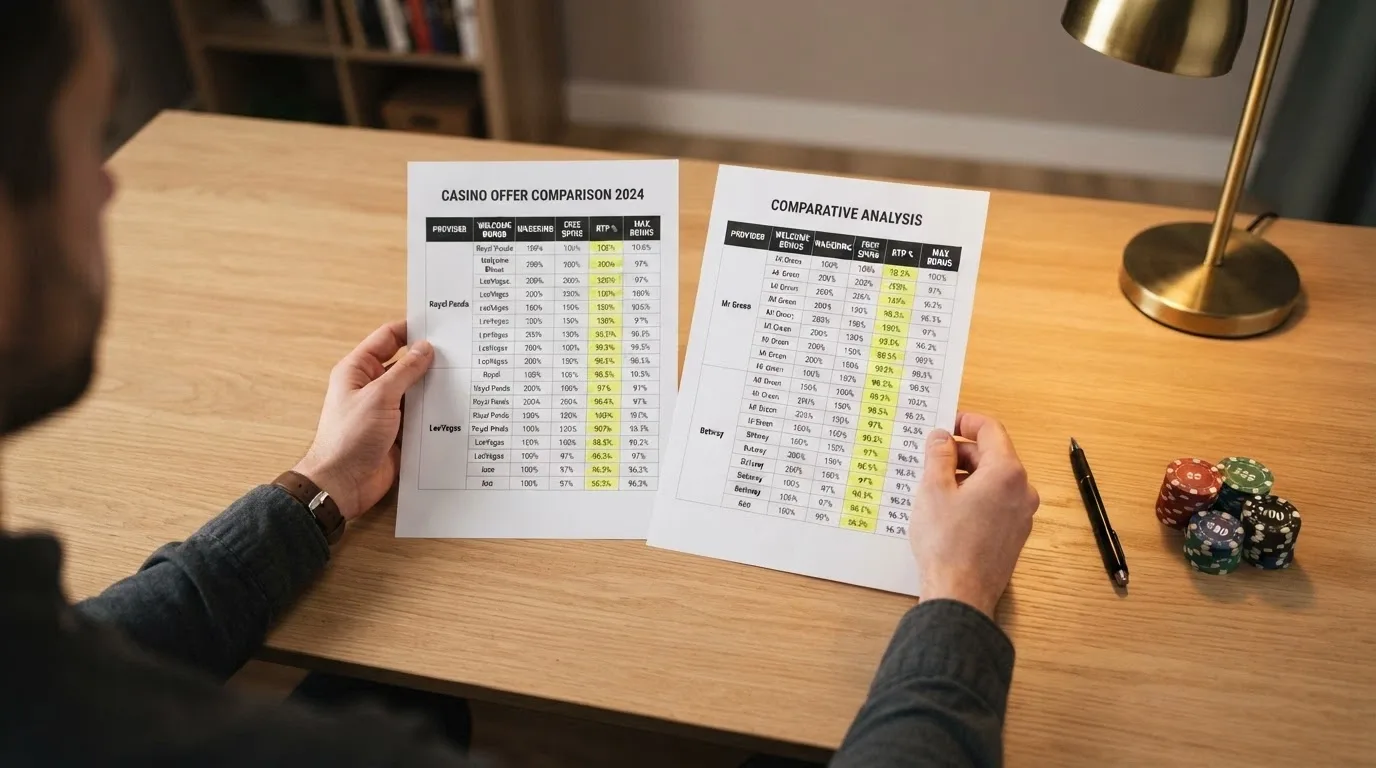
The nine operators below are the offshore brands accessible to Australian players that this page ranked on cashback value, not on welcome-bonus size. All nine sit outside the Australian licensing system — no online casino licence exists in Australia, and none of them holds one. They are ranked on the three numbers that decide whether a cashback offer is worth claiming: rate, wagering, cap. The ranking is honest on the gaps where research did not surface a figure, and the gaps are marked as such in the comparison table that follows.
| Operator | Licence / AU Status | Cashback Rate | Welcome Bonus | Max Bet During Wagering |
|---|---|---|---|---|
| Skycrown | Offshore (Curaçao); no AU licence | 10% weekly up to A$300 | 100% up to A$500 + 100 FS | A$7.50 |
| Royal Reels | Offshore; no AU licence | 10% weekly on net slot losses | A$10 no-deposit + 100% up to A$500 + 50 FS | A$7.50 |
| RocketPlay | Offshore; no AU licence | Up to 10% weekly (VIP) | First-deposit bonus available | A$7.50 |
| Stake | Offshore (Curaçao); no AU licence | Rakeback (no traditional cashback) | No traditional welcome bonus | N/A |
| Fair Go | Offshore (Curaçao); no AU licence | 25% Mon–Thu / 30% Fri–Sun | 300% up to A$3,000 + 50 FS | — |
| Bizzo Casino | Offshore (Curaçao); no AU licence | — | A$7,250 + 175 FS + 1 bonus game | A$8 |
| WinSpirit | Offshore (Curaçao); no AU licence | — | Welcome bonus available | — |
| Rainbet | Offshore (Curaçao); no AU licence | Rakeback up to 20% | 250% up to A$2,100 + 60 FS | 2% of deposit |
| Scream Casino | Offshore; no AU licence | — | — | — |
The em-dash entries in the table are deliberate. Where the research did not surface a specific cashback rate, wagering multiple or welcome-bonus figure for an operator, the cell is left blank rather than filled with a guess. The page does not pretend to know what the operator has not published, and the reader should treat the empty cells as a reason to read the operator’s own T&Cs before claiming anything.
How We Compared These Cashback Offers
The ranking is built on three criteria, in this order of weight. The first is rate purity — the headline cashback percentage, with adjustments for the form of the refund (real money versus bonus balance) and the eligible games. The second is wagering burden — the multiplier applied to the refund before it can be withdrawn, with zero as the gold standard and anything above 10x as a significant drag on value. The third is cap generosity — the maximum weekly refund, with A$500+ for VIP tiers treated as the threshold above which an offer scales with a high-volume player.
Welcome-bonus size is a secondary signal on this page. A 300% match up to A$3,000 looks impressive on a banner, but on a cashback ranking it is a 300% match locked behind 30–40x wagering on deposit plus bonus, with a 7–14 day validity window — a different product from cashback, priced differently, with a different time commitment. The page is about cashback. Where the welcome bonus is large, that is noted; where it is the operator’s only inducement, that is noted too.
A note on one operator not in the ranked set. Slotozen, which carries the 10% live cashback with zero wagering this page has already discussed, sits outside the nine-operator ranking because their offer is live-dealer specific and does not generalise to the cashback comparison this table is built around. The page still treats Slotozen as the live-cashback benchmark, and the operator’s terms are the standard the rest of the live-dealer market is measured against.
Cashback Comparison at a Glance
A worked example makes the table’s logic concrete. Take a player who deposits A$500 a week, plays through it across pokies and live tables, and ends the week with a net loss of A$300 — meaning A$500 deposited, A$100 withdrawn, A$100 balance remaining, A$300 net loss. The cashback that player receives depends on which operator they are at.
At Skycrown’s 10% weekly cashback with a A$300 cap and 10x wagering, the player receives A$30 in a bonus balance, which has to be turned over A$300 in wagers before the A$30 (and any winnings from it) becomes withdrawable. At JustCasino’s 20% daily cashback in the first week with a A$100 daily cap and zero wagering, the player receives up to A$100 a day in real money, no turnover required. At Slotozen’s 10% live cashback with zero wagering, the player receives 10% of live-game net losses in real money. The headline rate is one part of the answer; the form of the refund is the other.
What the Best Cashback Deals of 2026 Share
The offers that lead the ranking share four traits. The first is a wagering multiple in the 0–5x range, with zero as the gold standard and 5x as the upper bound for what a serious player should accept. Eight sites in one industry test carried this range. The second is a real-money payout, so the refund is the player’s at the moment it lands. The third is a cap that does not capsize the value — a 10% cashback with a A$50 weekly cap is not an offer a high-volume player can use, and a 3% weekly cashback with a A$7,500 cap is. The fourth is an eligible-games list that includes what the player actually plays, which is why Slotozen’s live-dealer cashback with zero wagering is a different offer from a 20% pokie cashback locked behind 30x turnover.
The standout is the Slotozen and JustCasino model. Slotozen at 10% live cashback with zero wagering and a A$5,000 cap. JustCasino at 20% daily cashback in the first week with zero wagering, real money, and a A$100 daily cap. Neospin’s 20% daily cashback with 3x wagering sits one rung below on the wagering ladder but higher on the rate. The pattern across all three is the same: a headline rate that is competitive on its face, a wagering multiple at or near zero, and a real-money payout. That is the model the rest of the market is competing with, and the operators that clear it are the ones the page ranks at the top.
Skycrown
Skycrown runs a 10% weekly cashback up to A$300 with 10x wagering, on a minimum deposit of A$45, and the welcome package is a 100% match up to A$500 plus 100 free spins, valid for 14 days with a A$7.50 maximum bet during wagering. The casino is licensed in Curaçao, not Australia; the market share sits around 8.55% on Blask’s traffic dataset, with annualised revenue around A$436M. The game catalogue is broad — Pragmatic Play, NetEnt, Evolution, and more than 100 other providers.
The cashback offer is the steady mid-market option: the rate is the standard 10% rather than the higher 20–25% some competitors run, the cap is A$300, and the wagering at 10x is the band the page treats as a meaningful drag. A player losing A$200 a week who claims Skycrown cashback walks away with A$20 in a bonus balance that has to be turned over A$200 before withdrawal. That is honest cashback, priced at a mid-market rate, with a brand that has the catalogue and the licence footprint to back it. Bottom line: a safe, mid-market choice with predictable terms for players who value catalogue breadth over the highest possible cashback.
Royal Reels
Royal Reels runs a 10% weekly cashback on net slot losses, gated behind three conditions: the player must have made at least three deposits, with the most recent within the last 30 days, and the cashback applies only to slot play. The welcome package is a two-step — an A$10 no-deposit bonus for phone verification, then a 100% match up to A$500 with 50 free spins on first deposit, at 35x wagering on the bonus with a A$2,500 maximum cashout and a 30-day validity. The casino is offshore with no Australian licence; Blask’s market share sits at 2.51% and revenue around A$244M. The default max bet during wagering is A$7.50.
The conditionality is the whole story. The 10% cashback is at the standard rate and the cap is unstated in the public terms, which means the player has to check the operator’s T&Cs for the weekly cap before assuming the rate scales with their volume. The three-deposit and 30-day recency gates are accessibility hurdles that the offer is not free of, and the slot-only eligibility excludes table-game players. The verdict: worth a look for slot players meeting the eligibility conditions, but less appealing for those who prioritise table-game cashback.
RocketPlay
RocketPlay offers up to 10% weekly cashback on casino losses for VIP members, with a default 5-day bonus validity and a A$7.50 maximum bet during wagering. The no-deposit bonus carries a A$75 maximum withdrawal. The casino is offshore with no Australian licence; Blask’s market share sits at 9.4% — the highest in this ranking — with revenue around A$633M. The welcome package is a first-deposit bonus with terms in the operator’s T&Cs, and the game catalogue is not specified in the public data.
The cashback is a VIP offer rather than a standard one, and the 5-day validity on a bonus the player is meant to clear through wagering is short — most operators run 7 to 14 days on bonus validity, and 5 days leaves a player with a small refund a tight window to clear. The A$75 no-deposit withdrawal cap is the kind of number that signals the no-deposit offer is a marketing entry point, not a payout. In short: a brand whose cashback appeal is gated behind VIP status, leaving regular players with few meaningful advantages.
Stake
Stake does not run a traditional cashback offer. It runs a rakeback model — a percentage of the house edge returned to the player, calculated continuously, paid in real money with no wagering — and a promotional layer on top: daily races with A$100,000 in prizes every 24 hours, and a A$75,000 weekly raffle. Stake operates under a Curaçao licence with no Australian authorisation; it captures 1.28% of the market, with revenue around A$116M. The game catalogue includes Stake Originals, Pragmatic Play, Evolution and Hacksaw, and the platform runs on a crypto-native deposit and withdrawal model.
The rakeback model is the value proposition, and it is the cleanest mechanism on this page. A percentage of the house edge returned in real money, with no cap, no wagering, and no weekly window — the player is paid on every bet, not on the bottom line at the end of a window. The daily and weekly prize pools are an additional layer that does not depend on the player’s loss rate. Summary: a top-tier fit for players who prefer ongoing rakeback over weekly refunds, especially at medium-to-high volumes.
Fair Go
Fair Go runs 25% cashback Monday through Thursday and 30% Friday through Sunday, at 10x wagering, on a minimum deposit of A$10. The welcome package is a 300% match up to A$3,000 plus 50 free spins, at 30–40x wagering on deposit plus bonus, valid for 7–14 days. Fair Go is another Curaçao-licensed, offshore operator; it holds a 0.8% market share, generating approximately A$69M in revenue. The game catalogue is RTG (RealTime Gaming) only.
The headline cashback rate is the highest in the ranked set, and the 10x wagering is at the upper end of what a player should accept — below the 40x that deposit matches carry, but above the 0–5x range the page treats as the quality band. The 30% weekend rate is a deliberate marketing pattern designed to push weekend play, and a player who plays mostly weekdays is leaving that lift on the table. The RTG-only catalogue is the most significant constraint: the player is not getting Pragmatic Play or Evolution, and the variety is narrower than the multi-provider brands. The verdict: the strongest headline rate in this ranking, but held back by its RTG-exclusive catalogue.
Bizzo Casino
Bizzo’s welcome package is the largest in the ranking — A$7,250 in bonus money, 175 free spins and one bonus game across four deposits, at 40x wagering with a 14-day validity and a A$8 maximum bet during wagering. A separate 200% crypto welcome bonus is available up to A$800 on first deposit, also at 40x wagering, on a minimum deposit of A$30. The casino is Curaçao-licensed, not Australian; market share is around 0.57% and revenue around A$51M. The game catalogue includes Pragmatic Play, NetEnt, Evolution and 70+ other providers.
The cashback offer is the gap. The research did not surface a specific cashback rate, cap, or wagering figure for Bizzo this run, and the page marks the cell accordingly rather than guessing. The substance of this section is therefore the welcome package — large, fast-expiring, and behind a 40x wagering requirement that materially reduces the effective value of the headline. Our take: a heavy welcome-offer player with a shallow cashback profile; look elsewhere if cashback is your priority.
WinSpirit
WinSpirit holds a Curaçao licence and applies 40x wagering on the bonus portion of any welcome offer, with bonus-only wagering, a maximum bet limit, and game weighting that reduces or excludes table games from bonus contribution. The casino is offshore with no Australian licence; market share is around 1.55% and revenue around A$110M. The cashback offer exists but the specific terms were not surfaced this run.
The bonus-only wagering is a real distinction: the player is turning over the bonus, not the deposit, which halves the playthrough requirement on a 100% match and is friendlier than a deposit-plus-bonus structure. The 40x rate, however, is high, and the game weighting exclusion on table games is a constraint on where the player can clear the bonus. The verdict is a brand whose cashback terms are not on the public surface and whose bonus structure is built around a heavy wagering requirement — a player should treat the absence of clear cashback terms as a reason to read the T&Cs in full before depositing.
Rainbet
Rainbet runs a rakeback system reaching up to 20% on the cashback side and a split-path welcome on the deposit side. The welcome package totals 250% up to A$2,100 plus 60 free spins across three deposits, with a choice between a wager-locked bonus at 40x wagering or a no-wager bonus released gradually as play continues. The wager-locked option carries a max bet of 2% of the deposit. Validity is 7 days. The casino is Curaçao-licensed, not Australian; market share is around 1.28% and revenue around A$83M. Daily races and a weekly raffle are also part of the promotional layer.
The split welcome is the distinguishing feature. A player who would rather have a A$2,100 bonus locked behind 40x wagering and a short validity can take that path. A player who would rather have a smaller bonus credited to real money as they play can take the no-wager path and let the balance build gradually. The rakeback at up to 20% sits between Stake’s pure rakeback model and a standard weekly cashback, with a higher ceiling than the standard 10% but a different mechanism. The verdict is the most flexible welcome structure in the ranking, and a cashback mechanism that rewards high-volume play without the weekly cap constraint of a standard offer.
Scream Casino
Scream Casino is an offshore brand with no Australian licence, a Blask market share of around 0.99% and revenue around A$95M. The specific cashback rate, wagering multiple, welcome-bonus structure and game catalogue were not surfaced this run. The page marks the relevant table cells with the no-data marker rather than guessing at terms the research did not find.
The substance of this section is therefore the market position and the licence status. A player considering Scream is choosing an offshore brand with a mid-range Blask footprint and no specific cashback or welcome terms on the public surface, which is itself information — the absence of clear terms is a reason to read the operator’s T&Cs carefully before claiming any offer. The verdict is a brand that the page cannot rank on cashback value because the cashback value is not on the page, and a player should treat that gap as the ranking it implies.
Australia’s Online Casino Ban — and What It Means for Your Cashback
The Interactive Gambling Act 2001 prohibits online casino games, online pokies and in-play sports betting in Australia. There is no licence for online casino anywhere in the country — not federally, not in any state or territory. The Australian Communications and Media Authority (ACMA) is the federal regulator that enforces the prohibition, and since its first blocking request in November 2019 the ACMA has had 1,564 illegal gambling and affiliate websites blocked by Australian internet service providers, as at March 2026. More than 225 illegal services have withdrawn from the Australian market since enforcement was strengthened in 2017.

The individual player is not prosecuted. The Act targets the provider of the prohibited service, not the customer — an Australian who places a bet at an offshore casino is not committing an offence under the IGA. The operator offering the service is. That legal distinction does not, however, leave the player protected. An Australian who plays at an offshore casino has no Australian consumer law to enforce a withdrawal, no recourse through ACMA or the Australian Financial Complaints Authority, and no guarantee the site will still be reachable next week. The 1,564 blocked sites include operators that were accepting Australian deposits the day before they were blocked; a player with a balance on a blocked site has a balance on a site that no longer resolves on an Australian ISP.
The 2026 reform changes the perimeter. The Interactive Gambling Amendment (Gambling Reform) Bill 2026 was passed by Parliament on 19 August 2026 and its measures commence on 1 January 2027. From that date, banks and payment providers gain express authority to block transactions to illegal gambling operators — a player funding an offshore casino account may see a debit or wire blocked at the bank level, regardless of the operator’s payment processing. Advertising inducements are prohibited for 14 days after a new customer signs up with a licensed wagering operator, and for 90 days after a person deregisters from BetStop. AdStop — a national wagering advertising opt-out register — gives Australians a single mechanism to suppress licensed wagering advertising. None of these measures reach an offshore casino, because the casino is not subject to Australian law, and the player using one is the one who has stepped outside the perimeter.
The IGA and What It Actually Bans
The IGA makes it an offence to provide an online casino, online pokies or in-play sports betting to a person physically in Australia. What is licensed is wagering on racing and on pre-match sport, plus lotteries and keno, through operators licensed by a state or territory. The Northern Territory Racing and Wagering Commission (NTRWC), administered through Licensing NT, is the de facto national licensor for online wagering; licences run for terms of up to 20 years. A licensed Australian wagering operator cannot offer casino games, pokies or in-play betting — the product does not exist within the licensing regime.
The 2026 reform layer adds three things. AdStop — a national opt-out register for wagering advertising, administered by the ACMA — will let Australians suppress licensed wagering ads across all media. An inducement ban prohibits marketing offers to new customers for 14 days after sign-up and for 90 days after a person comes off BetStop, an indefinite exclusion for at-risk customers. The advertising blackout for live sport is extended from 5 minutes to 15 minutes before the event. Banks and payment providers gain express authority to block transactions to illegal gambling operators from 1 January 2027, which is the change that most directly affects offshore casino play: a debit card or wire transfer to an unlicensed operator can be refused at the bank level. Penalties for non-compliance reach A$247,500 per offence.
The scope of the perimeter is what a player needs to keep in mind. Every operator this page ranks is offshore, none holds an Australian licence, and the IGA, the ACMA blocking regime and the 2027 payment-blocking authority all treat the operator as a prohibited provider. The player’s protection comes from none of these.
What You Give Up Playing Offshore — No BetStop, No Recourse
BetStop — the National Self-Exclusion Register — has had 67,480 registrations as at 31 July 2026, of which 41,290 exclusions are still active. Seventy-eight per cent of registrants are under 40; 38% chose lifetime exclusion. A single BetStop registration excludes the person from every Australian-licensed online and phone wagering service, and the service is free, confidential and effective within the licensed market. It does not reach an offshore casino. As one regulatory source put it, BetStop binds Australian-licensed wagering services — an offshore casino is not licensed here, is not connected to the register, and will keep taking a self-excluded person’s money.
That is the gap. A person who has self-excluded because their gambling has become harmful still has full access to every operator on this page. The BetStop entry stops the licensed bookmaker from accepting their bets; it does not stop the offshore casino from accepting their deposits. The page does not say this to lecture a reader. It says it because the choice to play offshore has a specific, named cost, and the cost is the one safety net that a self-excluded Australian can least afford to lose.
The other loss is consumer protection. A licensed Australian wagering operator is subject to Australian consumer law, to ACMA supervision, and to the Australian Financial Complaints Authority. An offshore operator is subject to its own jurisdiction’s rules — usually Curaçao, occasionally Malta — and to whatever recourse the player can extract through the operator’s own complaints process, the payment provider, and the courts of the operator’s home jurisdiction. A player who has a A$5,000 withdrawal refused by an offshore casino does not have a local ombudsman to call. The escalation path runs through the operator’s T&Cs, the operator’s licence regulator, and the player’s own legal advice — a path the player is unlikely to start without the funds at stake being significant.
Crypto Cashback: The Payment Method That Tells You Everything
Australia banned credit cards, credit-related products and digital currency — cryptocurrency — as payment for online wagering from 11 June 2024, under the Interactive Gambling Amendment (Credit and Other Measures) Act 2023. The ban applies to licensed wagering services. An operator that still accepts a credit card or a crypto deposit is therefore operating outside the Australian perimeter, because the payment method is one the law says a licensed operator cannot take. As one industry source put it, an Australian who is asked for a credit card or a crypto deposit by a gambling site is being served by someone outside the Australian rules. The payment method is itself a tell.
Crypto cashback is therefore an offshore-only product. Every operator on this page that runs a crypto-linked cashback or rakeback — Stake’s rakeback, Rainbet’s rakeback up to 20%, Bizzo’s 200% crypto welcome bonus, JustCasino’s ten-cryptocurrency deposit stack — is doing so because the product is not legal for a licensed Australian operator to offer. The terms of crypto cashback often differ from standard cashback: a rakeback model rather than a net-loss refund, higher caps, shorter windows, and a different payout cadence. JustCasino, for instance, accepts deposits and withdrawals in ten cryptocurrencies and stocks 14,000+ games from over 90 studios; the cashback on a crypto deposit follows the same 20% daily, zero-wagering, real-money structure as a fiat deposit, but the deposit route itself signals the operator’s regulatory position.
Why Crypto and Credit Cards Are the Tell
The credit and crypto ban has a specific purpose: limit harm by closing the payment-method loophole that allowed Australians to fund gambling with borrowed money or with assets outside the regulated banking system. The penalty for a licensed operator accepting a banned payment is up to A$247,500 per offence. The ban is therefore an indicator of which operators are inside the Australian perimeter and which are not. A licensed wagering operator cannot accept a credit card or a crypto deposit. An offshore casino can and does.
For a player, the payment method is the simplest test of whether an operator is licensed in Australia. A licensed wagering operator will offer debit card, bank transfer, PayID, Osko and BPAY — the legal Australian payment routes. A site that asks for a credit card or a crypto wallet is by definition outside that perimeter. The page does not recommend any one operator, and it does not tell a reader where to play; it does, however, name the test that distinguishes a licensed operator from an offshore one, because the test is one the reader can run on any site before depositing.
Crypto cashback terms differ from standard cashback in three predictable ways. The first is the model: crypto operators often run rakeback rather than net-loss cashback, paying a percentage of the house edge back to the player on every bet rather than at the end of a window. The second is the cap: rakeback is typically uncapped or carries a high cap, because the model pays on volume rather than on net outcome. The third is the settlement: crypto cashback pays in the same cryptocurrency the player deposited with, and the player holds the refund in that currency until they choose to convert or withdraw. The anonymity trade-off is part of the package — crypto deposits do not generate the same bank statement trail a debit card does, and the player has fewer payment-provider escalation paths if a withdrawal is refused.
No-Deposit Cashback — Rare, but It Exists
A no-deposit cashback offer refunds a percentage of a player’s losses without requiring a deposit, which sounds like a free lunch and almost never is. Only 14.1% of casinos offer any no-deposit promotion at all, according to Blask’s dataset, and the operators that do offer one attach terms that price the no-deposit element back through wagering, cashout caps, or both. The rarity is structural: a no-deposit offer is a marketing cost with no deposit commitment, and the operator recoups that cost by making the cashback hard to extract.
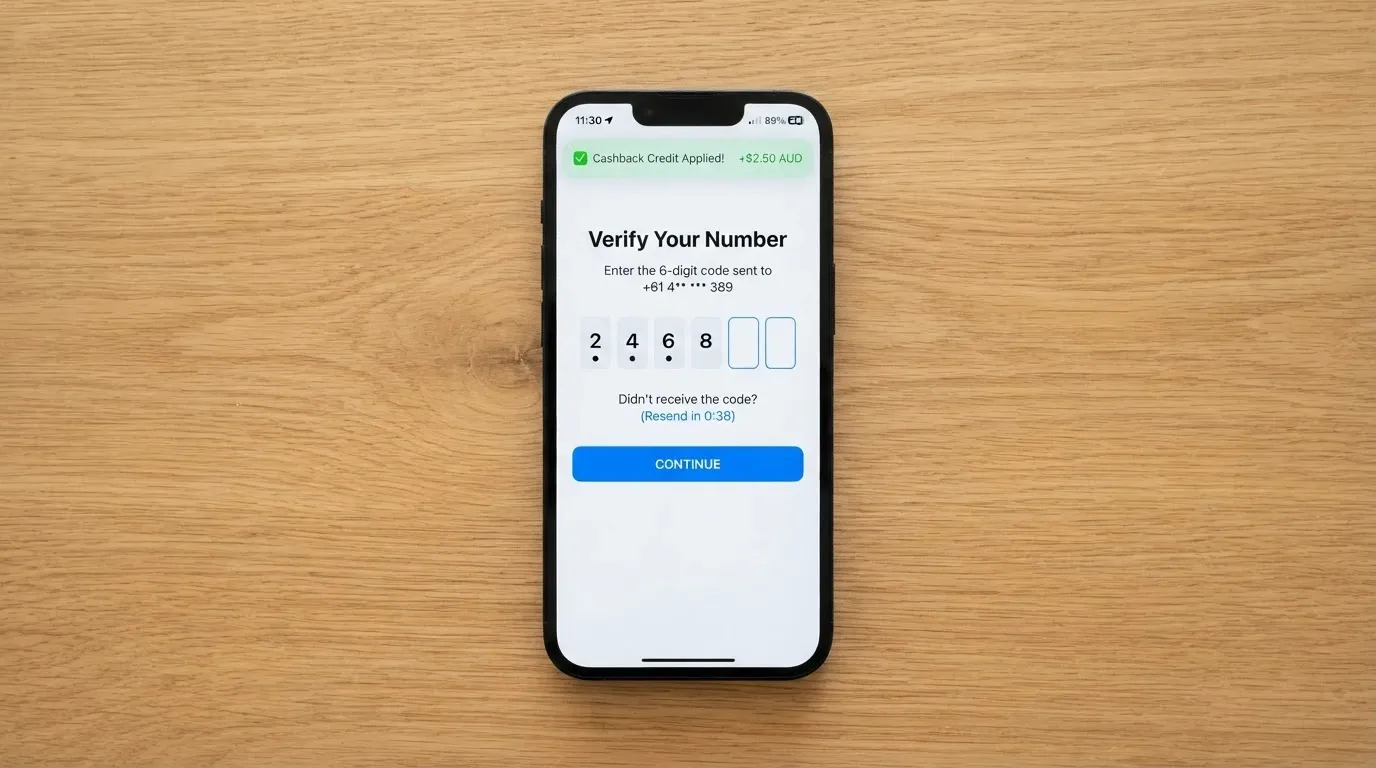
Royal Reels runs the cleanest example on this page. The operator offers a A$10 no-deposit bonus for phone number verification, then a first-deposit 100% match up to A$500 with 50 free spins, at 35x wagering on the bonus, with a A$2,500 maximum cashout and a 30-day validity. The no-deposit A$10 is the entry point; the rest of the package is the operator’s main welcome offer. RocketPlay runs a separate no-deposit bonus with a A$75 maximum withdrawal cap — a number low enough that the offer is, in effect, a way to test the platform rather than to withdraw a meaningful amount. Both are gated behind verification, both carry wagering, and both cap the player’s upside.
Why Only 14% of Casinos Offer No-Deposit Cashback
The economics of no-deposit offers explain the gap. A no-deposit bonus costs the operator real money at the moment it is credited, with no corresponding deposit to offset it, and the operator has to price the bonus in a way that recoups that cost across the small percentage of players who actually clear the wagering. The pricing shows up as high wagering requirements (35x on Royal Reels’ no-deposit A$10 is at the high end), tight cashout caps (RocketPlay’s A$75 cap is the structural limit), and short validity windows. The phone-verification gate is an additional friction layer that filters for genuine accounts and against the rapid-bonus-claim-and-withdraw pattern that no-deposit offers invite.
The honest way to read a no-deposit cashback is as a way to test a casino’s platform, game catalogue and withdrawal process at the operator’s expense — not as a way to withdraw a meaningful amount. The player who treats a no-deposit offer as a chance to play, see how the platform performs, and decide whether to deposit is the player whose expectations match what the offer is for. The player who expects a no-deposit cashback to be a payout is the player whose expectations do not.
Mobile Cashback Play: Sites That Work on Your Phone
Mobile cashback play does not change the terms of a cashback offer. The same rate, the same wagering multiple, the same weekly cap apply whether the player is on a desktop browser, a phone browser or a tablet. What mobile does change is the operator’s distribution channel. Most offshore casinos accessible to Australians run a responsive website rather than a native mobile app, because the Apple App Store and Google Play Store restrict real-money gambling apps in Australia and most of the major offshore brands do not maintain app-store presence in the country. The player opens the casino in a mobile browser and plays the same catalogue, the same live-dealer lobby, the same cashback window.
The practical consequence is the absence of push notifications. A player on a licensed Australian wagering app receives a push alert when a new cashback window opens or when a balance has been credited. A player on a responsive offshore casino has to log in to check, and the cashback window is the operator’s window, not the player’s. For a daily cashback offer, that means the player is checking the site each day to confirm the credit; for a weekly offer, it means a single check at the end of the window. The absence of a push-notification layer is not a deal-breaker, but it is a workflow difference the player should plan around.
How to Pick a Cashback Offer That Actually Pays
Three numbers tell a player whether a cashback offer is worth claiming. The first is the wagering multiple, expressed as a multiplier on the cashback amount. The second is the weekly cap, expressed as a maximum refund per window. The third is the payout type, expressed as either real money or a locked bonus balance. Check these three and the headline rate stops mattering — a player who knows the wagering, the cap and the payout type can compare offers without being misled by a 25% rate behind 40x wagering on a A$50 cap.
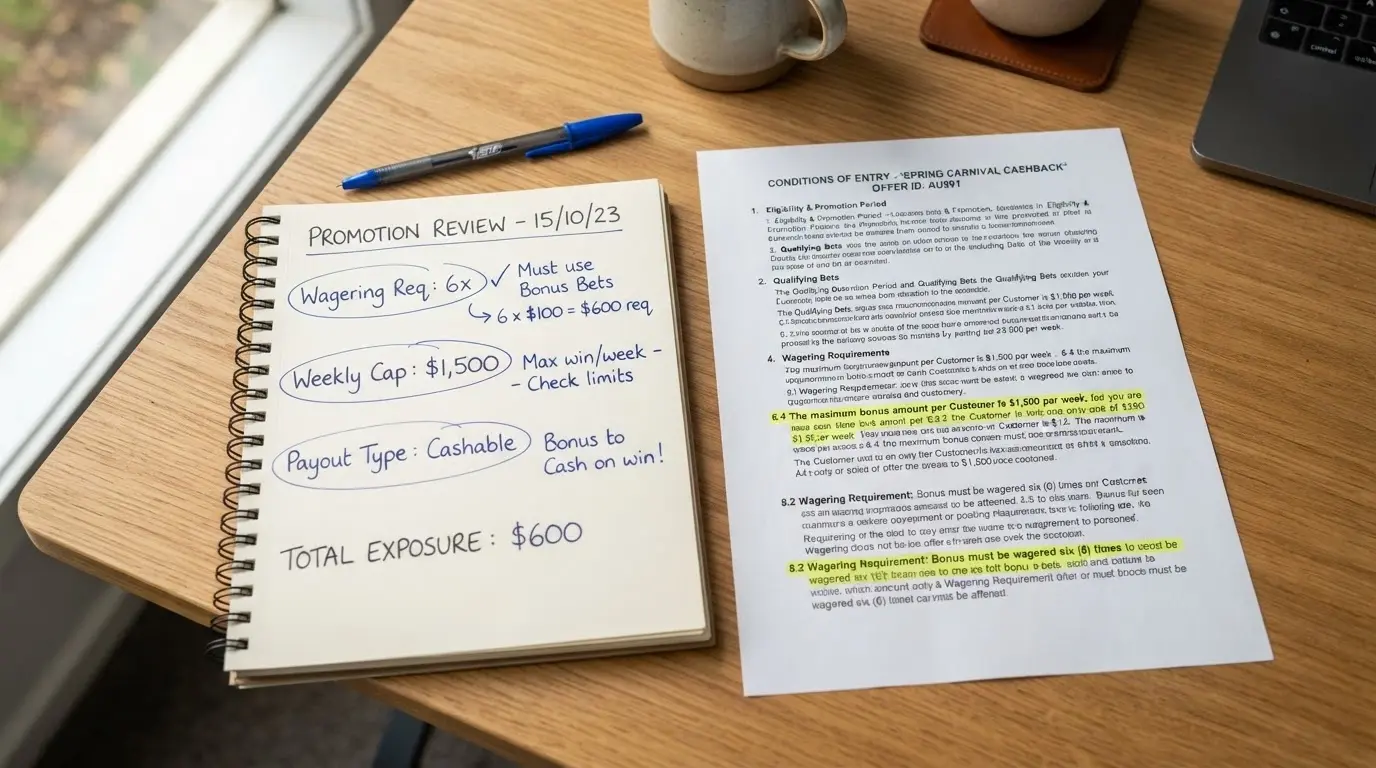
The wagering threshold to apply is 0–5x as the quality band, 10x as a meaningful drag, and 40x as a deposit-match level of burden that has no place on a cashback offer. The cap threshold is A$100 as the floor for any meaningful refund, A$500 as the band where cashback scales with a high-volume player, and uncapped rakeback as the cleanest mechanism a player can ask for. The payout type is binary: real money is what the player should accept, bonus balance is what the player should treat as a marketing label rather than a refund. A cashback offer that clears all three — 0–5x, A$500+ cap, real money — is one the player can claim without further calculation. An offer that fails any of the three needs the T&Cs read before the player commits.
Three Numbers That Tell You If a Cashback Deal Is Fair
The wagering multiple is the first number to check. A 5x wagering on a A$20 cashback means the player has to turn over A$100 before the refund is withdrawable — manageable on most sessions. A 40x wagering on the same refund means A$800 in turnover, which is the deposit-match level of burden applied to a cashback offer, and the offer is, in effect, a bonus match with worse marketing. The threshold a player should apply is 5x: anything above is a meaningful drag on the refund’s value, and anything at or below is in the quality band.
The weekly cap is the second number. A 10% cashback on a A$200 weekly loss is a A$20 refund. On a A$2,000 weekly loss it is a A$200 refund, and on a A$5,000 weekly loss it is a A$500 refund — unless the cap is A$100, in which case the A$5,000-loss player walks away with A$100 instead of A$500. The cap is the silent constraint that determines whether a high-volume player sees a meaningful refund, and the threshold to apply is A$200 as the floor for any offer a serious player should consider.
The payout type is the third number. A cashback offer that credits real money is a refund; the player can withdraw it, bet with it, or hold it. A cashback offer that credits a bonus balance is a marketing label — the player has to clear the wagering, often on a clock, before the refund becomes theirs. The threshold a player should apply is binary: real money is acceptable, bonus balance is not, regardless of how generous the headline rate looks.
When Cashback Stops Being Protection
Cashback is a retention mechanism dressed as a safety net, and for a player chasing losses or using an offshore site outside BetStop’s reach, it becomes the opposite of protection. About 2.1% of Australian adults — roughly 430,000 people — experience problem gambling, with high-risk gambling measured at 1.8% in the Australian Institute of Health and Welfare’s 2022 figures. The cashback offer that looks like loss insurance to a recreational player looks like a discount on continued play to a player who has lost the ability to stop, and the offshore operator that offers it is doing so for retention reasons, not welfare reasons.
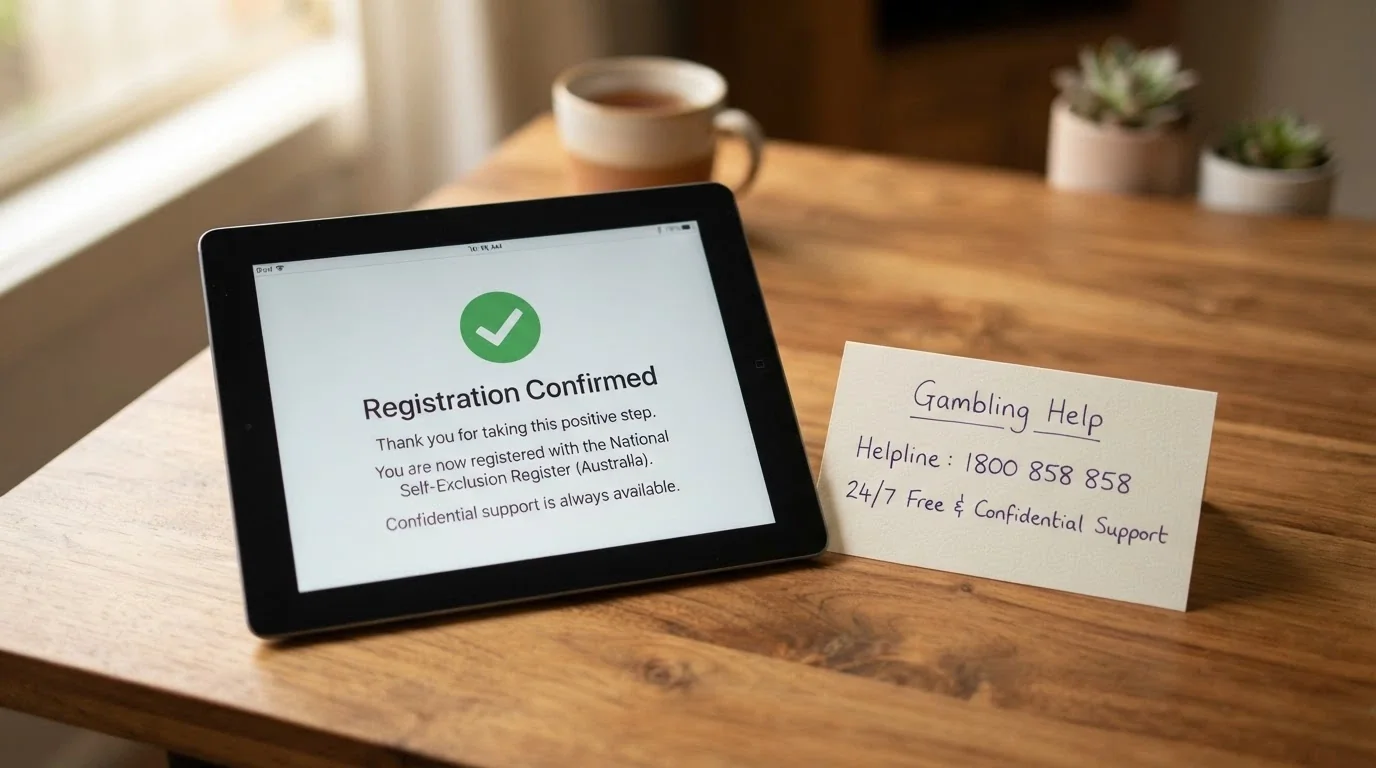
BetStop’s 67,480 registrations are a measure of how many Australians have asked the licensed system to keep them out. The licensed system does. The offshore system does not, and a self-excluded Australian who plays at one of the operators on this page has stepped past the only nationally coordinated exclusion mechanism the country runs. The 41,290 active exclusions are not protected from the operators on this page. The page does not say this to lecture a reader; it says it because the choice to play offshore has a cost that the marketing page does not name, and the cost is the one a player in harm’s way is least likely to be weighing.
Beyond the Refund — Where to Get Help
- The National Gambling Helpline is 1800 858 858 — free, confidential, staffed 24 hours a day, 7 days a week, with online chat and counselling through Gambling Help Online.
- Gambling Help Online (gamblinghelponline.org.au) offers self-test tools, online counselling, and information for family members affected by someone else’s gambling.
- BetStop (betstop.gov.au) is the National Self-Exclusion Register; a single registration excludes the person from every Australian-licensed online and phone wagering service. It binds licensed wagering only, not the offshore casinos on this page.
- The ACMA website (acma.gov.au) carries information on the Interactive Gambling Act, the blocking regime, and the credit and crypto ban.
How We Selected and Ranked These Cashback Casinos
The ranking on this page is built on operator T&Cs read directly, the ACMA register, the Blask market-share dataset, the Betzoid industry test of 23 sites, and the Australian Gamblers and Slotozilla review data. The operator set is the offshore brands accessible to Australian players; the ACMA register was checked against every operator on the list, and none of them holds an Australian online casino licence, because no such licence exists. Market-share and revenue figures are from Blask’s traffic dataset, which is a snapshot of observed web traffic and is not evidence of legal status. The ranking criteria are, in order of weight: cashback rate, wagering burden, cap generosity, real-money versus bonus-balance payout, and welcome-bonus size as a secondary signal. A player who wants to replicate the ranking should read each operator’s cashback T&Cs directly, because the public-facing marketing page on an offshore casino is rarely the version the operator enforces.
The verdict that closes the page is built on the same inputs and adds nothing new. Cashback is the least bad offshore bonus on offer, because it carries a low or zero wagering multiple, lands in real money on the best offers, and does not require a deposit commitment. It is not, however, a substitute for the protection a player gives up by playing at an unlicensed site. The 10% weekly cashback with 5x wagering that a player at 96.5% return-to-player can expect to see returns roughly half its headline value, and the player has also given up BetStop coverage, ACMA complaint access, and Australian consumer-law recourse. A player who has decided to play offshore should choose by wagering burden first and headline rate second, and should treat any single operator ranking on this page as a starting point rather than a recommendation.
Frequently Asked Questions
Do cashback bonuses carry wagering requirements?
Some do, some do not. The best cashback offers on this page carry zero wagering (Slotozen on live cashback, JustCasino on its first-week daily offer), and the rest range from 3x (Neospin, Caswino) to 40x (Wild Tokyo, Bizzo’s bonus structure). The threshold a player should treat as a meaningful drag is 10x; anything above 5x should be checked against the offer’s cap and payout type before claiming.
How does the ACMA blocking regime affect my cashback balance?
The ACMA has had 1,564 illegal gambling and affiliate sites blocked by Australian ISPs as at March 2026. A blocked offshore casino is not reachable from an Australian IP address, and any balance on the site is on a site the player cannot access until the block is lifted, the operator migrates to a new domain, or the player uses a non-Australian connection. The block is the player’s problem, not the operator’s, and there is no Australian regulator the player can call to recover a balance on a blocked site.
Is cashback on crypto deposits different from regular cashback?
The cashback rate, wagering and cap are usually the same on crypto and fiat deposits at the same operator. The difference is the payment method itself: Australia banned credit cards and crypto for licensed wagering from 11 June 2024, and an operator that still accepts either is by definition offshore. Crypto cashback often pays in the same cryptocurrency the player deposited, and the player holds the refund in that currency until they convert or withdraw. There is no chargeback option on a crypto deposit, and the player’s escalation paths in a dispute are narrower than on a debit card.
Does BetStop cover cashback offers at offshore casinos?
No. BetStop binds Australian-licensed online and phone wagering services; an offshore casino is not licensed in Australia and is not connected to the register. A person who has self-excluded through BetStop still has full access to every operator on this page, and the offshore casino will keep taking their money. BetStop is an effective exclusion within the licensed market and ineffective outside it.
What is a fair cashback wagering requirement?
The quality band for cashback wagering is 0–5x, with zero as the gold standard. The 5x upper bound is where the page treats the offer as fair; 10x is a meaningful drag on the refund’s value; 40x and above is the level of burden associated with deposit matches, and a cashback offer at that level is functionally a deposit match with worse marketing. The 0–5x range was confirmed at 8 of 23 sites in the Betzoid industry test.
What determines how much cashback you actually receive?
Three numbers. The first is the rate: 5% to 30% on net losses for the standard market, with VIP tiers at the top. The second is the calculation: net losses (deposits minus withdrawals minus balance) is the honest baseline, confirmed at 14 of 23 sites in the Betzoid test. The third is the cap: a 10% cashback with a A$100 weekly cap is a different offer from a 10% cashback with a A$7,500 cap. Payout type — real money or bonus balance — is the fourth, and a player who does not check it is reading the offer’s marketing rather than its terms.
Daily Cashback Versus Weekly: Which One Pays More?
The cashback frequency question — daily, weekly, or monthly — is a question about the time value of money at the bottom of the bankroll, and the answer depends on how much the player is going to lose. The trade-off is between rate, cap and timing. A daily cashback offer at 20% with a A$100 daily cap and zero wagering returns a maximum of A$700 a week, and it does so without delay. A weekly cashback offer at 10% with a A$300 weekly cap and 10x wagering returns the same A$700 maximum, but only at the end of the week, and only after the player has turned over A$3,000 in cleared wagers to extract it.
For a player losing less than A$100 a day on average, daily cashback dominates: the rate is higher, the wagering is zero or low, and the player has access to the refund throughout the week rather than at the end. For a player losing more than A$100 a day, the daily cap kicks in and weekly or monthly cashback with a higher cap becomes the better value. The VIP tier with a A$500 or A$7,500 weekly cap exists precisely for this player — a 3% weekly cashback up to A$7,500 at 5x wagering returns up to A$7,500 a week on a A$250,000 weekly loss, which is a fundamentally different offer from a 20% daily cashback capped at A$100.
The cashback terms in the table earlier summarise the trade-off. Daily cashback tends to pay real money, weekly cashback tends to pay a bonus balance, monthly and VIP cashback tends to pay real money with a high cap. The wagering multiple and the cap together determine the effective return, and the player’s loss rate determines which combination is optimal. There is no single “best” frequency — there is the frequency that matches the player’s deposit and loss pattern.
Site Versus App — Does Mobile Cashback Change?
No, and yes. The cashback terms are identical on mobile and desktop because they are written once in the operator’s T&Cs and apply across all access points. What does change is the player’s tracking workflow: a desktop player can keep a browser tab open and watch the cashback window close; a mobile player has to remember to log in. The recommendation is the same as on desktop — claim the cashback as soon as it is available, because the validity clock on a bonus-balance cashback starts at credit, not at login.
A responsive site is the dominant pattern for offshore operators serving Australia, and the mobile experience is generally comparable to desktop. The exception is the live-dealer lobby, which can be more demanding on a phone’s data and battery than a slot-only session, and where a player on a metered connection may want to be on Wi-Fi. The cashback terms, again, are not affected by the connection type — the operator does not pay a different rate for a 4G session than for a fibre session.