
What an Australian Player Actually Gets From a No-Deposit Free Spins Bonus in 2026
A no-deposit free spins bonus is the closest thing in online pokies to a free lunch — and like most lunches in this market, it costs something even when the price tag says zero. Walk through what an Australian player actually receives when one of these bonuses lands in their account, and the headline number shrinks fast: a hundred spins at ten cents each is a ten-dollar bonus, and ten dollars at fifty-five-times wagering has to run through more than five hundred dollars of bets before any of it is theirs to keep. None of the offshore casinos covered here hold an Australian licence, because no such licence exists. What follows is what those offers are worth on the math, which pokies carry the RTP to make them playable, and where the legal frame ends and the offshore one begins.

Current as of 18 October 2026 · Licence claims verified against ACMA and Interactive Gambling Act 2001 records
- What No-Deposit Free Spins on Pokies Actually Are
- The Best No-Deposit Free Spins Sites Available to Australian Players in 2026
- Why Your Free Spins Bonus Is Smaller Than the Advertised Number
- Free Pokies Without Spending a Cent: Demo Mode and No-Download Play
- From PayID to Real-Money Withdrawals: Getting Paid on Your Free Spins
- The Pokies That Earn Your Free Spins: Games, RTP and What to Play
- What a Casino’s Payment Methods Tell You About Its Legal Status
- Online Pokies and Australian Law: What the IGA Actually Means for Players
- Staying Safe: Responsible Gambling Tools That Work for Australian Players
- How We Picked and Ranked Every Site on This Page
- Your No-Deposit Free Spins Plan: What to Do Next
- Frequently Asked Questions About No-Deposit Free Spins on Australian Online Pokies
What No-Deposit Free Spins on Pokies Actually Are
A no-deposit free spins bonus is the closest thing in online pokies to a free lunch — the spins land in a new account without the player paying anything in, and what the spins produce is real money, subject to the operator’s terms. The mechanism is straightforward: a player registers an account, verifies their details — usually a mobile number and an email — and the spins are credited to a specific pokie, or a small set of pokies, at a fixed value per spin. No bank transfer, no card, no deposit of any kind triggers the credit. The distinction matters because most “free spins” a search result links to do require a deposit first, and the no-deposit version is rarer and tighter in its conditions.
The numbers behind the offer vary widely across the Australian-facing offshore market. A typical NDB is between ten and two hundred spins, with twenty to one hundred the most common band; spin value runs from ten to fifty cents per spin; and the wagering requirement attached to whatever the spins produce averages around fifty-five times in this market, against forty times for a standard welcome offer. Pokies contribute the full one hundred per cent of every dollar wagered toward clearing that requirement; live dealer games contribute ten to twenty per cent and are often excluded altogether. That last point shapes how a player can actually use a free spins bonus — table play barely counts, so the bonus is, in practice, locked to pokies from the moment it is claimed.
The claim flow itself is the same across the operators covered on this page: register with an email and password, verify a mobile number (sometimes also an email link), and the spins appear on the eligible pokie within minutes. Some operators gate a small first batch of spins on phone verification and a second batch on email confirmation, which is a deliberate friction point rather than a processing delay. The whole sequence takes a few minutes; the limit on whether the bonus becomes real money is the terms attached to it, not the time it takes to claim.
Real-Money Free Spins vs Free-Play Demos: Do Not Confuse Them
The third thing that calls itself “free spins” — and the one a search result is most likely to surface first — is the demo mode on a pokie. Demo spins run on play-money credits, pay out nothing real, and do not require an account at most operators. They are the same game, with the same return-to-player percentage, but with opposite outcomes: every dollar won in demo mode is unwithdrawable, and the balance counter on the screen is the player’s whole stake. The on-screen experience is identical to a real-money spin — the same reels, the same animations, the same bonus features — which is precisely why the distinction matters. A reader who clicks what they think is a no-deposit free spins offer and lands in a demo session has wasted their registration, not gained a bonus.
The way to tell them apart is the registration step. A real-money no-deposit spins offer requires the player to open an account, verify an email or phone number, and accept bonus terms before the spins are credited. A demo session asks for nothing beyond a click. Real-money spins also arrive with a terms page attached — a wagering requirement, a max cashout cap, an expiry window — and those terms are the entire reason the bonus is worth or not worth claiming. The presence of those terms, and the requirement to verify, is the dividing line.
Both formats have their place. Demo play is the right tool for testing a pokie’s volatility, learning a bonus round, or spending an afternoon with no financial exposure. A real-money no-deposit spins bonus is the right tool for an Australian player who has decided they want to play at an offshore casino and wants a free pass to test the cashier before committing a deposit. Confusing the two — landing in a demo when they thought they had a bonus, or expecting demo winnings to clear into a real balance — is the single commonest mistake a player can make on this subject.
The Best No-Deposit Free Spins Sites Available to Australian Players in 2026
Every operator on this page is offshore. There is no licence for online casino in Australia — federal, state or territory — so the ten brands below operate from outside the country under licences issued in places like Curaçao and Anjouan, and they accept Australian players because the Australian rules prohibit providing the service, not receiving it. That is the single most important fact about any “best of” list of this kind, and it sits behind every other consideration on this page.
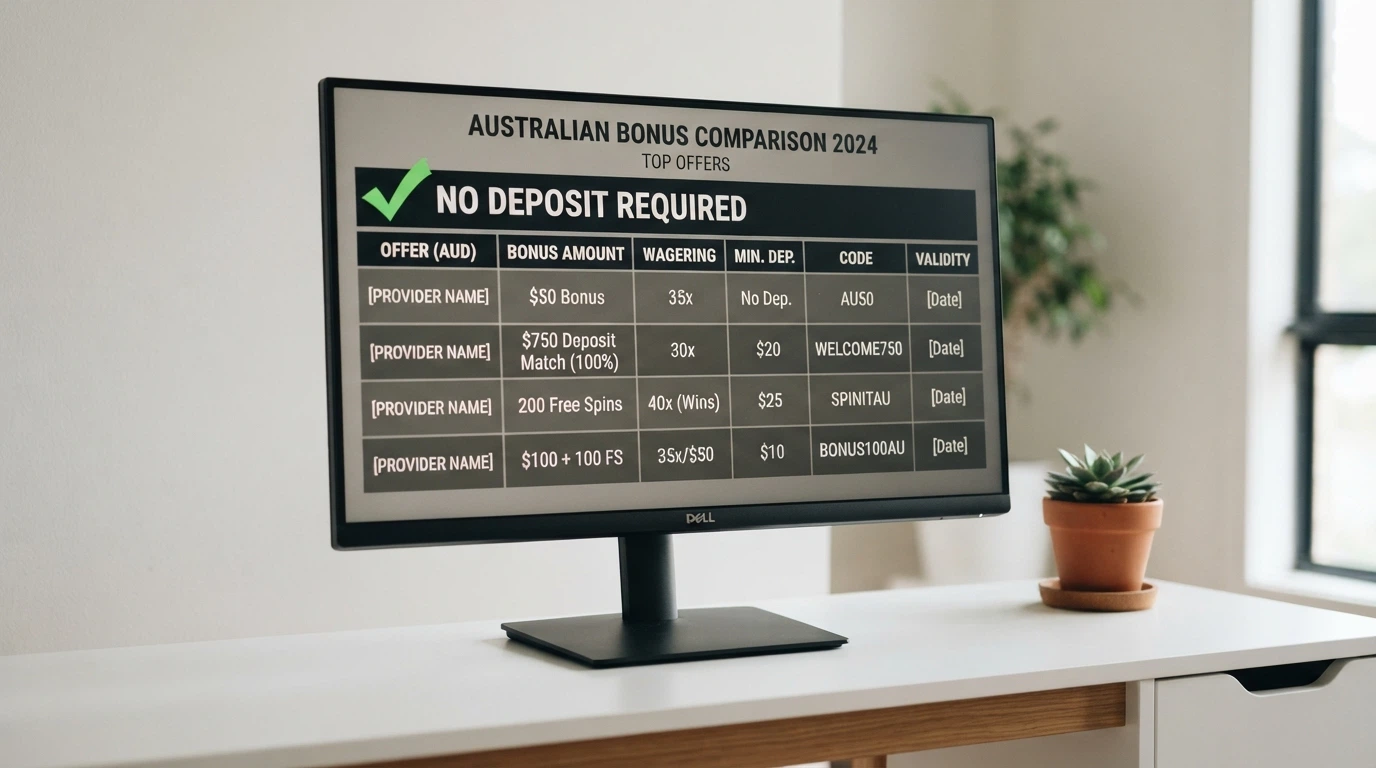
The table ranks the operators by what a no-deposit free spins bonus is actually worth on the math, not by the headline spin count. Spin count is the least useful number in any promotion; what decides an offer’s real value is the wagering multiple, the cashout cap, the expiry window and the per-spin value. The four operators with confirmed terms sit at the top; the six with an NDB confirmed present but terms not fixed at the time of review come after, and any reader should check the operator’s bonus page directly before deciding on them.
| Operator | AU legal status | No-deposit offer as confirmed |
|---|---|---|
| Skycrown | Offshore — no AU casino licence exists | 100 free spins NDB (phone verification only); 10,400+ games from 50+ providers |
| Royal Reels | Offshore — no AU casino licence exists | 30x–40x wagering on bonus; AU$200 max cashout; 7–14 day expiry |
| Bizzo Casino | Offshore — no AU casino licence exists | 10 free spins NDB; 40x wagering on winnings; deposit-free |
| Rocket Casino | Offshore — no AU casino licence exists | Up to 125 free spins NDB; 45x wagering on winnings; deposit-free |
| WinSpirit | Offshore — no AU casino licence exists | NDB confirmed present on AU-facing list; 1.55% AU market share; terms not fixed at review |
| Stake | Offshore — no AU casino licence exists (crypto-only) | NDB confirmed present; crypto-focused; terms not fixed at review |
| FairGO | Offshore — no AU casino licence exists (RTG-powered) | NDB confirmed present; RTG library; 0.80% AU market share; terms not fixed at review |
| Rocket Play | Offshore — no AU casino licence exists | NDB confirmed present; 9.4% AU market share; terms not fixed at review |
| Rainbet | Offshore — no AU casino licence exists (crypto-only) | NDB confirmed present; crypto-focused; 1.28% AU market share; terms not fixed at review |
| Scream Casino | Offshore — no AU casino licence exists | NDB confirmed present; 0.99% AU market share; terms not fixed at review |
A note on what is and is not in the table. The four operators with confirmed terms above all sit inside the Australian-facing offshore market and were the only operators where a spin count, wagering multiple and cashout cap were all verifiable at the time of review. The other six operators appear on Australian-facing shortlists and confirm a no-deposit offer in some form, but terms remained unconfirmed at the time of review. That does not make them bad operators; it means a reader should treat the bonus page on each as the source of truth, not a third-party listicle.
Skycrown
Skycrown sits at the top of the table because it combines the largest no-deposit free-spins count on the page with a verification step that is genuinely free of any deposit requirement. The bonus is one hundred free spins, activated by verifying a mobile phone number; no payment method is required at the claim stage, and the spins are credited on the eligible pokie once verification is complete. The library behind those spins is the largest on this page: more than ten thousand four hundred games from over fifty providers, including Pragmatic Play, NetEnt, Microgaming, Play’n GO, BGaming, Hacksaw Gaming and Nolimit City. A reader who claims the Skycrown NDB and runs through the spins has, in effect, sampled the entire catalogue of one of the bigger offshore brands before deciding whether to deposit.
What also separates Skycrown on this list is a tested PayID withdrawal. A one-hundred-and-eighty-dollar PayID cashout during testing cleared in two hours and twenty-nine minutes — fast for an offshore operator and faster than most of the brands a search result links to in the first page. That is a useful counterweight to the offshore status: the operator is outside Australian rules, but the PayID withdrawal channel works, and it works faster than bank transfer at most of the offshore alternatives.
Skycrown is the right pick for an Australian player who wants the largest free-spins count on this list, the broadest library behind those spins and a PayID withdrawal that has been independently timed.
Royal Reels
Royal Reels earns the second position on a single term: the two-hundred-dollar maximum cashout, which is the highest on the page and the figure that decides whether a no-deposit bonus produces a meaningful withdrawal. The wagering requirement is thirty to forty times the bonus value, sitting well below the Australian NDB average of fifty-five times — a player clearing Royal Reels’ playthrough is staking roughly forty per cent of what they would on a typical NDB at the market average. The expiry window is seven to fourteen days, again well above the market’s twenty-four-hour floor, which gives a player a workable timeframe to clear wagering without rushing.
What Royal Reels does not match is the spin count. The bonus is no-deposit free spins; the exact number was not fixed at review and the wagering is on the bonus rather than on winnings-only, so the practical playthrough can run heavier than the headline multiple suggests. A reader weighing Royal Reels against Skycrown is choosing a smaller count with lower wagering and a higher cashout ceiling, not the largest offer on the page.
Royal Reels suits an Australian player who treats the bonus as a numbers game and values the highest cashout ceiling on this list over the largest spin count.
Bizzo Casino
Bizzo is the smallest confirmed NDB on this page — ten free spins, at the standard ten-cent per-spin value, with forty-times wagering on winnings and no deposit required at the claim stage. There is no headline here. Ten spins at ten cents is a one-dollar bonus before wagering, and forty-times wagering on whatever those ten spins produce is a tight but workable playthrough at the lower end of the AU NDB scale. Bizzo is on this list as a benchmark: it is what the floor of the market looks like, and everything else on the page sits above it on either spin count, wagering or cap.
For an Australian player who wants to test an offshore casino’s cashier and bonus mechanics with the minimum exposure, Bizzo’s ten-spin offer is the smallest ticket on the page. The wagering is moderate by AU NDB standards, the spin value is standard, and the operator carries the typical multi-provider library. There is no great upside and no great downside.
Rocket Casino
Rocket Casino sits at the opposite end of the spin-count spectrum from Bizzo. The advertised no-deposit bonus runs up to one hundred and twenty-five free spins, the largest headline figure on this page, with forty-five-times wagering on winnings and no deposit required. The wagering sits inside the Australian NDB average band but above Royal Reels, so the trade-off is clear: more spins, heavier playthrough. The cap on Rocket Casino’s offer was not fixed at review.
For an Australian player who values spin count over wagering, Rocket Casino offers the largest single bonus available on this list. The forty-five-times multiple is workable but not generous, and a player who intends to clear wagering on the offer should expect a heavier session than they would at Royal Reels or Bizzo.
Where Skycrown gives one hundred spins and Royal Reels gives lower wagering, Rocket Casino trades both for up to one hundred and twenty-five spins at forty-five-times — the page’s most generous count with terms that sit in the middle of the field.
FairGO
FairGO is the only RealTime Gaming-only operator on this list. Its game library is built around the RTG catalogue — a smaller range of titles than the multi-provider brands above it but a recognisable one for Australian players who have played at RTG casinos over the last decade. The no-deposit offer is confirmed present on Australian-facing shortlists; terms were likewise unconfirmed during research, and a reader should check the operator’s bonus page directly for current terms.
FairGO carries a small share of the Australian-facing offshore market — enough to keep it on the shortlists that affiliate pages draw from. The RTG-only library is the operator’s distinguishing feature on a page otherwise dominated by Pragmatic Play, NetEnt and Microgaming.
FairGO is a defensible choice for an Australian player who specifically wants the RTG catalogue and accepts the small market share as the cost of doing so.
WinSpirit
WinSpirit is on the list with a confirmed no-deposit offer — it appears on the shortlists that this page draws from but does not have a large footprint in the market. The bonus is qualitative at review: WinSpirit carries a no-deposit free-spins offer but specific terms were not confirmed when this page was researched. The operator runs a multi-provider library, which gives it more variety than FairGO and slightly less brand recognition than Skycrown.
WinSpirit is worth a look for an Australian player who already has an account with the brand, but anyone choosing among these ten for the first time has more to work with elsewhere on the list.
Stake
Stake is the largest crypto-native brand on this page and the one whose payment model signals its offshore status more visibly than any other operator here. The casino accepts crypto deposits and operates a Stake originals catalogue alongside major third-party providers, and its no-deposit offer is confirmed present on Australian-facing shortlists. The specific bonus terms — spin count, wagering, cashout cap — were not fixed at the moment this page was written.
The reason Stake sits in a different regulatory bucket than the rest of the list is the deposit model itself. Since 11 June 2024, licensed Australian wagering operators have been banned from accepting credit cards, credit-related products and digital currency as payment for online wagering, with penalties of up to two hundred and forty-seven thousand five hundred dollars. Crypto is therefore a tell: an Australian who is asked to deposit in Bitcoin or Ethereum by a gambling site is being served by someone outside the Australian rules. That is not, on its own, a reason to avoid Stake — it is a reason to know what the operator is, and what it is not.
Stake belongs on this list because Australian-facing comparison pages keep naming it; the crypto-only deposit model and the qualitative NDB make it the operator a reader should treat with the most caution.
Rocket Play
Rocket Play is the operator with a significant share of the Australian-facing offshore market on this page — wider reach than many of the other operators in the table and a brand many Australian players will have already encountered. The library is multi-provider, the NDB is confirmed present on Australian shortlists, and the specific bonus terms were not fixed at the moment this page was written.
The market share is Rocket Play’s argument on this list. A large user base translates into more tested withdrawal paths, more reviewed bonus terms across comparison sites, and more published player feedback than any of the smaller operators above. That volume does not change the offshore status — Rocket Play has no Australian licence because none exists — but it does mean a reader has more third-party evidence to weigh than they would for FairGO or Scream Casino.
A significant share of the Australian-facing offshore casino market uses Rocket Play — and that is its argument.
Rainbet
Rainbet is the second of the two crypto-focused operators on this list. The no-deposit offer is confirmed present; the specific bonus terms were not fixed at review. Like Stake, Rainbet’s deposit model sits outside the Australian rules that took effect in June 2024, and the crypto-only tell applies in the same way — a reader who is asked to fund an account in digital currency by an Australian-facing site is dealing with an offshore operator, full stop.
Rainbet is the operator a reader should weigh against the credit-card and crypto ban for licensed AU wagering in the same way as Stake: useful to know about, but the regulatory tell is built into the payment screen.
Scream Casino
Scream Casino is the operator with a small share of the Australian-facing offshore market — the one with the least third-party evidence to weigh. The library is multi-provider, the no-deposit offer is confirmed present, and the specific bonus terms were not fixed at the moment this page was written.
For a reader evaluating the operators on this page, Scream Casino is the one where the bonus page should be checked first and the most directly. The market share is small, and the absence of fixed terms at review simply means the operator’s own bonus page is the only source a player can rely on.
Scream Casino is a small operator on this list by Australian market share and, with no fixed NDB terms to evaluate, the one where the reader should check the bonus page directly before any decision.
Why Your Free Spins Bonus Is Smaller Than the Advertised Number
A no-deposit free spins bonus looks bigger on the marketing page than it ends up in the player’s account. One hundred spins at ten cents each is a ten-dollar bonus before any conditions are applied; after wagering, a cashout cap and an expiry window are priced in, the same bonus is worth considerably less, and on the expected-value calculation it can actually cost more than its headline value to clear. This section works through the three terms that decide what an offer is really worth, and the comparison between no-deposit and deposit-match offers that explains why some players decide to deposit anyway.

The three terms, in order of impact, are the wagering multiple, the max cashout cap and the expiry window. Spin count is the least useful number in any promotion — per-spin value, wagering scope and the cashout cap decide what an offer is worth.
Wagering Requirements: The Number That Decides Whether You Keep Anything
A wagering requirement is the multiplier on the bonus that sets the total stake a player must run through before a withdrawal is allowed. On no-deposit free spins in Australia it ranges from thirty times to sixty times, with most offers in the forty-to-fifty band and an average of fifty-five times across the market; standard welcome bonuses, by contrast, average around forty times. The gap exists because no-deposit offers cost the operator nothing at the claim stage, so the operator offsets that cost in the playthrough.
Worked example. A one-hundred-spin no-deposit bonus at ten cents per spin gives the player ten dollars in bonus value. At the Australian NDB average of fifty-five-times wagering, the player must place five hundred and fifty dollars in valid bets before any of the winnings are eligible to withdraw. Run that playthrough on a pokie at the Sweet Bonanza return-to-player of ninety-six-point-four-eight per cent and the house keeps three-point-five-two per cent of every dollar wagered: an expected loss of nineteen dollars and thirty-six cents across the playthrough, before the cashout cap is even considered. The bonus is worth ten dollars at claim; the expected cost of clearing it is nineteen dollars and thirty-six cents. The house edge, in other words, is large enough that the math is working against the player from the moment the spins are credited, and the offer is worth playing only because the bonus itself costs nothing — the player’s downside is bounded by the cashout cap, not by the expected loss. That figure is a statistical estimate, not a guaranteed outcome for any single session.
Game contribution rates sharpen that picture. Pokies contribute one hundred per cent of every dollar wagered toward clearing the requirement; live dealer games contribute ten to twenty per cent and are frequently excluded altogether. On a small NDB balance, a player who tries to clear wagering on blackjack or roulette is moving at one-tenth to one-fifth of the speed of a pokie player, and the playthrough window rarely covers the difference. Table play is not a route through the bonus; it is the slowest possible way through it.
Wagering can also apply to the bonus plus the deposit, rather than to the bonus only, and that distinction can quadruple the staking requirement: a seven-hundred-dollar playthrough on winnings-only becomes a two-thousand-eight-hundred-dollar playthrough on bonus-plus-deposit for the same effective offer. The phrase to look for in any bonus terms is whether the multiplier attaches to the bonus, to the deposit, or to both — and an Australian-facing NDB will almost always apply it to the bonus alone.
Max Cashout Caps: Why A$200 in Winnings Might Mean A$50 in Your Pocket
The cashout cap is the single most important term on a no-deposit bonus, and it is the one players most often miss until they try to withdraw. Most Australian-facing NDBs cap withdrawals at between fifty and three hundred dollars, with most sitting in the fifty-to-one-hundred-and-fifty-dollar band; deposit-match offers, by contrast, carry caps up to five thousand dollars. The cap is the ceiling on what the offer is worth in real money, regardless of how high the bonus balance ran during play.
The interaction with wagering is what catches players out. Clearing wagering does not mean the player withdraws their balance — it means the balance becomes eligible for withdrawal up to the cap. Run a Skycrown-style NDB into four hundred dollars during play, clear the fifty-five-times playthrough, and the player is allowed to withdraw one hundred dollars (assuming a Skycrown-tier cap), not four hundred. The arithmetic is brutal in its clarity: a bonus can produce a balance much larger than the cap, and the cap is what the player walks away with.
Royal Reels’ two-hundred-dollar cap is the highest on this page and the figure that puts the operator at the top of the value calculation for any player whose playthrough is going to land in the higher part of the cashout band. A fifty-dollar cap, by contrast, turns even a successful bonus into a small withdrawal regardless of what the spins produced — the operator has set the ceiling at a level where the bonus is entertainment value with a small upside, not a serious play.
Expiry Windows: Seven Days to Clear, or You Lose the Lot
The expiry window on an Australian-facing NDB runs from twenty-four hours to fourteen days, with the better offers clustering in the three-to-fourteen-day band. The clock starts at claim, not at first spin, and an offer that sits unopened in an account for two days has already lost two days of clearing time. Caswino’s twenty-four-hour expiry, for example, means the player has one day from the moment the bonus is credited to clear wagering or lose the bonus; Royal Reels’ seven-to-fourteen-day window gives a workable timeframe.
What the clock actually costs the player is volume. A seven-day window allows roughly forty wagering turns per day at a five-second spin interval on a typical pokie, which is enough to clear a fifty-five-times playthrough on most offers in the table. A twenty-four-hour window, by contrast, requires the player to clear the same playthrough in one-seventh the time, which most sessions cannot sustain without burning through the bonus balance faster than the wagering accumulates.
Deposit-match offers typically carry longer expiry windows — often thirty days — because the player has already committed money and the operator wants the playthrough to feel like part of normal play, not a race. The shorter windows on NDBs are a deliberate pressure tactic: they force the player to play more spins per day than is comfortable, which is exactly the behaviour the house edge benefits from.
No-Deposit Spins vs Deposit-Match Spins: Two Different Games
- No-deposit spins cost nothing to claim, average fifty-five-times wagering, cap withdrawals at one hundred to three hundred dollars and expire in twenty-four hours to fourteen days. The format is built for the player who wants to test an offshore casino with no commitment and is willing to accept tight terms in exchange.
- Deposit-match spins require a real-money deposit first, carry thirty-to-forty-times wagering, cap withdrawals at up to five thousand dollars and typically run on a thirty-day expiry. The format is built for the player who has decided to play at the casino anyway and wants a serious bonus on top of their deposit.
- The choice between them is not “free versus paid” — it is “small upside at no cost” versus “large upside at real cost”, with the cost paid both in the deposit itself and in the higher wagering that often attaches to the matched funds.
For most readers of this page, the right answer is the no-deposit format: it costs nothing, it tests the operator’s cashier, and the worst-case outcome is a small withdrawal at the cashout cap. The deposit-match offer becomes the better play only after the no-deposit spins have been cleared, the operator’s withdrawal path has been tested and the player has decided to commit money to that specific casino.
Free Pokies Without Spending a Cent: Demo Mode and No-Download Play
The phrase “free pokies” covers two very different products. The first is the no-deposit free spins bonus covered on this page: real-money play, real withdrawable winnings subject to terms, and a registration requirement before the spins are credited. The second is the demo mode most pokie sites offer on every title in their library: play-money credits, no registration on many sites, no real withdrawal, and the same RTP as the real-money version. Both are free in the sense that the player does not pay to use them. They are not free in the same way.

Demo mode is the right tool for spending an afternoon with a pokie without spending money. The player loads a title, the balance counter shows ten thousand play-money credits, and the reels spin at the same return-to-player as the real-money version. The graphics, the bonus rounds, the volatility profile — everything except the financial outcome is identical to a real-money session. A player who wants to know whether a pokie’s volatility suits their taste before depositing can find out in demo mode without opening an account.
Demo mode’s limits are exactly what makes it free. There is no withdrawal, because there is no real-money balance. The play-money credits cannot be converted to cash. Most demo sessions can be reset by refreshing the page, which means there is no stake — and therefore no loss — to manage. The closest equivalent in the real-money world is a session in which the player puts zero dollars on the line, which is precisely what demo mode delivers without the formality.
For Australian players who want to learn a pokie’s bonus round, test a betting pattern or just spend an hour with a new title, demo mode is the right answer. For an Australian player who wants to walk away with real winnings, demo mode is the wrong tool — the player will need a no-deposit free spins bonus, or a deposit, to put real money at stake.
Play-for-Fun vs Real-Money Free Spins: Know Which One You Are Clicking
The dividing line between demo play and a real-money no-deposit bonus is the registration step. A demo session asks for nothing beyond a click; the balance counter is set to ten thousand play-money credits and the player spins. A real-money no-deposit free spins bonus requires the player to open an account, verify an email or mobile number, accept bonus terms, and have the spins credited to the eligible pokie. Both pathways use the phrase “free spins” on the operator’s marketing, which is why the confusion is so common.
The simplest test is whether the site asks for a password before the spins are credited. If it does, the player is on a real-money bonus path and the spins are subject to wagering, a cashout cap and an expiry window. If it does not, the player is in demo mode and the winnings are play money.
From PayID to Real-Money Withdrawals: Getting Paid on Your Free Spins
Getting a no-deposit free spins bonus is the easy part. Getting the winnings out is the part that varies wildly across the Australian-facing offshore market, and the variation is mostly a function of two things: whether the operator supports PayID at all, and how fast the operator processes a withdrawal once wagering is cleared. PayID is the preferred deposit method for Australian players, but PayID withdrawals are not universal, and where they are supported the timing ranges from minutes to days.
PayID is built on the New Payments Platform and links a payment to a mobile number or email address rather than a BSB and account number. Deposits via PayID are instant at any operator that supports them, including at licensed Australian wagering services where the minimum PayID deposit is set as low as two dollars at the state TABs. Withdrawals via PayID are not instant, because the operator still has to clear its internal review before releasing the funds, but at the faster end of the market they clear in minutes. Skycrown processed a one-hundred-and-eighty-dollar PayID withdrawal in two hours and twenty-nine minutes during testing — fast for an offshore operator. VegasNow averaged fourteen minutes across its PayID test cashouts.
The legal frame matters here. PayID, debit card, bank transfer and BPAY are the legal deposit routes for licensed Australian wagering services. Since 11 June 2024, credit cards, credit-related products and digital currency are banned for licensed wagering; an offshore casino that accepts credit cards or crypto from Australian players is operating outside those rules, and the payment method is itself a tell about the operator’s regulatory stance. From 1 January 2027, banks and payment providers will gain express authority to block transactions to illegal gambling operators, which will add a second layer of friction at the deposit stage for the offshore brands on this list.
PayID on Pokies Sites: Fast Deposits, Variable Withdrawals
PayID deposits land in seconds at every Australian-facing site that supports the method. The minimum deposit at licensed wagering operators is set low — two dollars at Tab — to encourage players to fund accounts without friction, and offshore operators generally match that floor to keep their deposit screens competitive. The friction sits on the withdrawal side.
The variation across the operators on this page comes down to two things: whether the operator supports PayID at all, and how quickly it processes a withdrawal once wagering is cleared. Skycrown supports PayID and processed an AU$180 withdrawal in two hours and twenty-nine minutes during testing; VegasNow, not on this list, averaged fourteen minutes; operators further down the speed ranking can take several business days, especially for a first withdrawal that triggers full KYC review. PayID support is also not universal across the offshore market: a player who has chosen an operator without PayID is paying by debit card or bank transfer, and the bank-transfer withdrawal can clear faster than PayID at a slow operator and slower than PayID at a fast one.
For an Australian player deciding between operators on this list, PayID support plus a tested withdrawal time is the most useful operational data point after the bonus terms. A two-hour PayID payout and a five-day bank-transfer payout are not equivalent experiences.
Withdrawal Terms on No-Deposit Winnings: The Fine Print That Blocks Payouts
Clearing wagering does not guarantee a withdrawal. Four fine-print conditions can each independently block a payout: the maximum cashout cap, the KYC verification hold, the payment-method restriction and the minimum-withdrawal floor. The cashout cap is covered above; the other three are the silent block on most failed withdrawals in this market.
KYC verification is the first. A licensed Australian wagering operator verifies identity at the account-opening stage; an offshore casino often does not, and the verification is triggered by the first withdrawal request. The hold can take twenty-four to seventy-two hours while the operator checks the player’s identity documents against the payment method, and a player who has not prepared clean scans of their ID and a recent address document can stall the payout for several days. The fix is simple — have the documents ready before claiming any bonus — but most players do not prepare them.
The payment-method restriction is the second. Most operators require withdrawals to go back to the same payment method used to deposit. On a no-deposit bonus, where no deposit was made, this rule interacts awkwardly with the operator’s policy on first-withdrawal method: many offshore casinos require a small deposit to be made and withdrawn before any bonus winnings are released, specifically so the operator has a payment-method on file. A player who has claimed a no-deposit bonus and walked away without ever depositing can find their first withdrawal blocked by this requirement.
The minimum-withdrawal floor is the third. Offshore operators set minimum withdrawals — typically between twenty and one hundred Australian dollars — and a no-deposit bonus whose winnings are below the floor cannot be cashed out. Combined with the cashout cap and the wagering requirement, a small bonus that produces a balance below the minimum-withdrawal floor is effectively unpayable, regardless of how cleanly the player cleared wagering.
If an offshore casino refuses a withdrawal outright, the Australian player has no recourse. The ACMA cannot recover money from an offshore operator; BetStop does not reach offshore casinos; no Australian consumer-protection body has jurisdiction. The site can also be blocked at any time under ACMA’s existing powers, with the player’s balance still on it. These are not theoretical risks — they are the operational reality of every operator on this page.
The Pokies That Earn Your Free Spins: Games, RTP and What to Play
No-deposit free spins are almost always locked to specific pokies, and the return-to-player of those pokies — plus their volatility profile — decides whether the spins are worth claiming at all. The table below lists the titles researched for this page with their confirmed RTP and volatility class; research carries volatility for only a handful of titles, so most rows leave the volatility column empty. The figures are the operator-published or provider-published RTPs at the time of review.

| Pokie title | Provider | RTP | Volatility |
|---|---|---|---|
| Mega Joker (supermeter mode) | NetEnt | 99% | — |
| Blood Suckers | NetEnt | 98% | — |
| Big Bass Bonanza | — | 96.71% | — |
| Sugar Rush | Pragmatic Play | 96.50% | — |
| Sweet Bonanza | Pragmatic Play | 96.48% | — |
| Book of Dead | Play’n GO | 96.21% | High |
| Starburst | NetEnt | 96.08% | — |
| Bonanza Megaways | Big Time Gaming | 96.00% | High |
Two titles stand out on RTP alone. Mega Joker in supermeter mode returns ninety-nine per cent of every dollar wagered over the long run — the highest figure in the offshore market for a single title and the closest a pokie gets to break-even for the player. Blood Suckers, also by NetEnt, returns ninety-eight per cent and has long been one of the cheapest pokies in any catalogue to play through. Sweet Bonanza and Sugar Rush, both Pragmatic Play titles, sit in the ninety-six-point-four-to-ninety-six-point-five band — well above the provider’s typical RTP range and the kind of return-to-player a bonus playthrough is designed around. Big Bass Bonanza comes in at ninety-six-point-seven-one per cent, the highest of the high-traffic Pragmatic Play stable.
Book of Dead and Bonanza Megaways carry high volatility, which means the same RTP can produce very different balance behaviour during a free-spins session. The remaining titles in the table do not have a published volatility class in the research consulted for this page, and a player who needs that information to choose between them should check the provider’s own game information page.
Provider Mix: Who Makes the Pokies Behind Australian Free Spins
Pragmatic Play, NetEnt, Microgaming, Play’n GO and Big Time Gaming dominate the AU-facing offshore casino lobby, and each provider’s typical RTP range sets the ceiling on what a free-spins bonus can return. Pragmatic Play’s typical range runs from ninety-five-point-five to ninety-six-point-five per cent; PG Soft sits slightly higher at ninety-six-point-five to ninety-six-point-seven-five per cent; Microgaming runs from ninety-five-point-eight to ninety-six-point-three per cent. NetEnt is the outlier on the upside — titles start at ninety-five per cent and the strongest reach ninety-eight to ninety-nine per cent, including Blood Suckers and Mega Joker in the table above. Skycrown’s library, with over fifty providers and more than ten thousand four hundred games, is the broadest mix on this page; FairGO’s RTG-only catalogue is the narrowest.
Provider mix matters for bonus play because the operator’s library decides which pokies contribute to wagering and at what rate. Almost every pokie in every provider’s catalogue contributes one hundred per cent to wagering requirements, but the specific pokies a free-spins bonus is locked to are usually a small subset, and the player’s choice is limited to those titles. An operator with a broad provider mix gives the player more locked-pokie options, which matters when one of the named pokies has a lower-than-expected RTP.
Volatility and Your Free Spins: Why High-Volatility Pokies Eat Small Bonuses
A high-volatility pokie pays out less often, in larger amounts; a low-volatility pokie pays out more often, in smaller amounts. On a real-money session funded by a deposit, the player can absorb the dry spells because the balance is large enough to ride them out. On a no-deposit free-spins session, the balance is the bonus value of the spins — typically between one and twenty dollars — and a high-volatility pokie can drain the entire balance before a single win lands.
Book of Dead by Play’n GO is the canonical example. With high volatility and a five-thousand-times max win, the title produces long stretches of dead spins followed by occasional large payouts; on a ten-dollar bonus, the player is statistically more likely to see the bonus balance hit zero before a payout clears the wagering requirement. Bonanza Megaways, by Big Time Gaming, runs the same profile at higher scale: high volatility, twenty-six-thousand-times max win, and a balance-swing pattern that punishes small starting balances. Money Train 4 by Relax Gaming carries the highest max win in the offshore AU market at one-hundred-thousand-times, but the title does not have a published RTP in the research consulted for this page, and so it is named here rather than placed in the RTP table.
The practical implication is that low- and medium-volatility pokies are the better fit for a no-deposit free spins session, and an operator that locks spins to a high-volatility title is essentially asking the player to roll the entire bonus on a long shot. RTP tells the player what the long-run return is; volatility tells the player whether that long run is survivable on the balance they have.
What a Casino’s Payment Methods Tell You About Its Legal Status
The payment screen an Australian player sees at an offshore casino is itself a regulatory tell. A site that accepts credit cards, credit-related products or digital currency for wagering is operating outside the rules that took effect on 11 June 2024 — the Interactive Gambling Amendment (Credit and Other Measures) Act 2023 banned all three as deposit methods for licensed Australian wagering services, with penalties of up to two hundred and forty-seven thousand five hundred dollars. The licensed deposit routes are debit card, bank transfer, PayID and Osko, and BPAY. An offshore casino that accepts credit cards or crypto from Australian players is not subject to that prohibition, because the operator is not licensed in Australia.
The reason this matters on a page about no-deposit free spins is that the prohibition shapes which operators are even on the list. Stake and Rainbet, the two crypto-focused operators on this page, are operating on a payment model that a licensed Australian wagering service cannot legally offer. A player reading this list who sees “crypto accepted” at an operator should treat the deposit method as a confirmation of the operator’s offshore status, not as an incidental detail — the credit-card and crypto acceptance is itself the regulatory tell.
From 1 January 2027, the picture tightens further. Banks and payment providers gain express authority under the Interactive Gambling Amendment (Gambling Reform) Bill 2026 to block transactions to illegal gambling operators, which means a deposit attempt at an offshore casino may be refused at the bank’s end rather than at the casino’s end. The change does not make offshore play impossible — the operator can route through different payment intermediaries — but it adds a layer of friction that does not exist today, and any reader planning to use the operators on this list in the next twelve months should expect the deposit experience to become less reliable as the commencement date approaches.
Online Pokies and Australian Law: What the IGA Actually Means for Players
Online casino is prohibited in Australia under the Interactive Gambling Act 2001. There is no licence for online casino anywhere in the country — not federally, not in any state or territory, not for any product. The IGA prohibits the provision of online casino games, online pokies and in-play sports betting to a person in Australia, and the prohibition targets the provider of the service. The individual player is not prosecuted under the Act — the ACMA’s enforcement regime has always been aimed at operators, not at the Australians who use them.
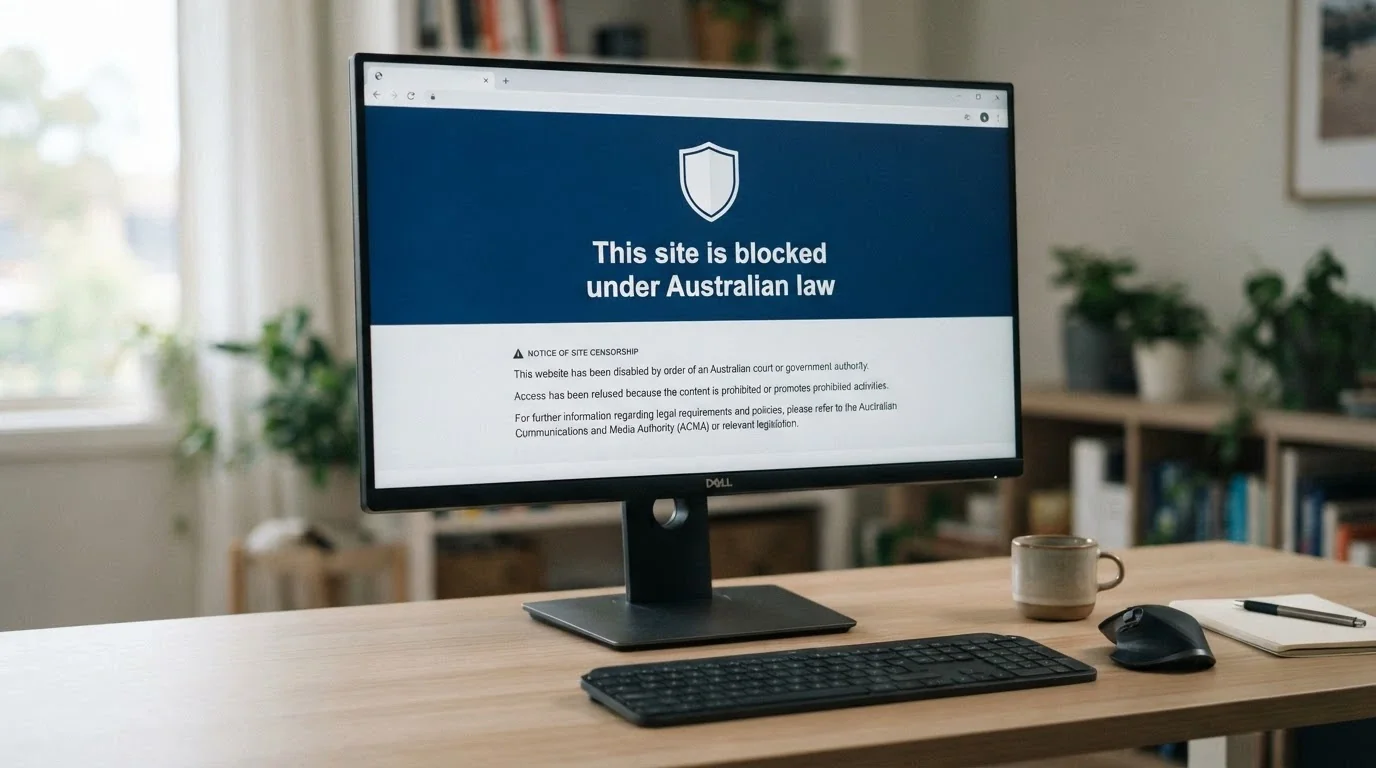
Enforcement has been substantial. Since its first blocking request in November 2019, the ACMA has had one thousand five hundred and sixty-four illegal gambling and affiliate websites blocked by Australian ISPs. Over two hundred and twenty-five illegal services have withdrawn from the Australian market since the ACMA started enforcing in 2017. The blocking is DNS-level — effective at the Australian internet edge but not absolute — and the ACMA itself describes the regime as enforcement rather than elimination. Offshore operators continue to accept Australian players; the ACMA continues to block them when identified.
The 2026 reform changed the legal frame from 1 January 2027. The Interactive Gambling Amendment (Gambling Reform) Bill 2026 passed Parliament on 19 August 2026 and its measures commence on the same date the calendar turns. Wagering advertising is capped at three ads per hour between 6 am and 8:30 pm, with a live-sport blackout from fifteen minutes before to five minutes after an event; radio ads are barred during school drop-off and pick-up times; broadcasting of sporting odds is banned; online ads may run only to logged-in, age-confirmed users with an opt-out mechanism; no advertising inside sports venues or on uniforms; and athletes, celebrities and influencers are barred from promoting wagering products. Direct marketing of inducements is prohibited for fourteen days after a customer signs up, for three months after a person deregisters from BetStop, and indefinitely for customers identified as at risk of gambling-related harm. Banks and payment providers gain express authority to block transactions to illegal gambling operators. Online keno and foreign-matched lotteries are banned.
What this means for the no-deposit free spins market is straightforward. The reform makes inducement marketing to Australians illegal from January 2027 — a casino that emails a sign-up offer or displays a welcome bonus to an Australian customer is breaking the prohibition itself, not merely an advertising rule. The bank-blocking powers add a friction layer at the deposit stage. The offshore operators on this page can continue to accept Australian players, but the legal frame around how they reach those players has tightened materially.
Licensed Wagering vs Offshore Casino: Two Different Universes
SportsBet, Tab, Bet365, Ladbrokes, TABtouch, PointsBet, Neds, Betr, Picklebet and Betfair all hold Australian state or territory wagering licences — predominantly Northern Territory — and they operate under those licences for sports and racing wagering only. None of them offers online pokies or casino games. There is no licensed online casino to anchor a “best of” list to, and any page describing an offshore casino as “licensed in Australia” is describing something that does not exist.
A page about “the best licensed online casinos in Australia” describes something that does not exist, and writing one produces a factual lie on every screen.
The licensed Australian wagering market is large and legitimate: SportsBet carries roughly nineteen-point-five-seven per cent of the market, Tab eleven-point-five-four per cent, Bet365 six-point-five-six per cent. None of those licences permit online casino games, because no licence permits online casino games anywhere in Australia. The Northern Territory Racing and Wagering Commission, administered through Licensing NT, is the de facto national licensor — large online bookmakers hold NT licences that run for up to twenty years. The wagering market operates inside Australian rules; the online casino market operates outside them.
What the Offshore Route Actually Costs an Australian Player
The offshore route looks free at the claim stage and gets expensive in three specific ways. There is no Australian consumer protection and no Australian complaints body for offshore operators — the ACMA can block the operator’s site but cannot recover a player’s money. BetStop, the National Self-Exclusion Register, binds Australian-licensed wagering services only; an offshore casino is not connected to the register and will keep accepting a self-excluded person’s money. The site can be blocked at any time under the ACMA’s existing powers, with the player’s balance still on it.
The withdrawal-refusal scenario is the most concrete of the three. An offshore operator that voids a player’s win, closes the account or simply stops responding to withdrawal requests leaves the player with no Australian recourse. The ACMA can investigate, can refer the operator for enforcement and can request blocking, but it cannot compel a payout from a Curaçao-licensed company. The credit card and crypto bans do not help: a player who deposited in crypto has no chargeback path, and a player who used a debit card has only the offshore operator’s internal complaints process. The 2027 bank-blocking powers do not solve this either — they block future transactions, they do not retrieve past ones.
The voided-win scenario is the second concrete cost. Most no-deposit bonuses carry terms that allow the operator to void winnings for irregular play, and the definition of “irregular” is set by the operator. A player who runs a bonus balance up against the cashout cap and then sees the win voided for “irregular play” has no Australian body to appeal to. These are not theoretical risks — they are common enough that any reader of this page should treat them as the operational cost of using the offshore route.
The 2026 Reform: What Changes on 1 January 2027
The biggest gambling-law reform in a decade passed Parliament on 19 August 2026 and takes effect on 1 January 2027. The measures reshape how offshore casinos can reach Australian players and how licensed wagering operators can advertise to them.
The advertising rules are the most visible. Wagering ads are capped at three per hour between 6 am and 8:30 pm, with a live-sport blackout from fifteen minutes before to five minutes after an event. Radio ads are barred during school drop-off and pick-up times. Broadcasting of sporting odds is banned outright. Online ads may run only to logged-in, age-confirmed users with an opt-out. No advertising inside sports venues or on uniforms. Athletes, celebrities and influencers are barred from promoting wagering products. The combined effect is to compress wagering advertising into narrower windows and tighter audience segments than the current market allows.
The inducement marketing bans close the welcome-bonus loophole that offshore casinos have used to recruit Australian players. Direct marketing of inducements is prohibited for fourteen days after sign-up, three months after BetStop deregistration and indefinitely for at-risk customers. A casino that sends a free-spins offer to a new Australian customer in 2027 is breaking the prohibition itself.
The bank and payment-provider blocking powers are the most operationally significant change. From 1 January 2027, banks and payment providers have express authority to block transactions to illegal gambling operators. The change does not eliminate offshore play, but it adds a friction layer at the deposit stage that does not exist today. A player who has been using a particular payment method to fund an offshore account may find the bank declines the transaction, and the operator may have only limited alternative routes.
Staying Safe: Responsible Gambling Tools That Work for Australian Players
Approximately two-point-one per cent of Australian adults — roughly four hundred and thirty thousand people — experience problem gambling. The Australian Institute of Health and Welfare put high-risk gambling at one-point-eight per cent in 2022. A 2026 model-based estimate published in the Journal of Gambling Studies puts the broader annual toll higher: approximately three-point-two-nine million Australians aged five and over are affected annually by their own or another person’s gambling, including one-point-nine-seven million adults classified as at-risk or problem gambling. The annual health loss associated with gambling-related harm is estimated at over four hundred thousand Years Lived with Disability. These figures are not specific to online pokies, and they cover all gambling formats — but the harm data is the closest proxy for who is at risk when an Australian opens an offshore casino account.
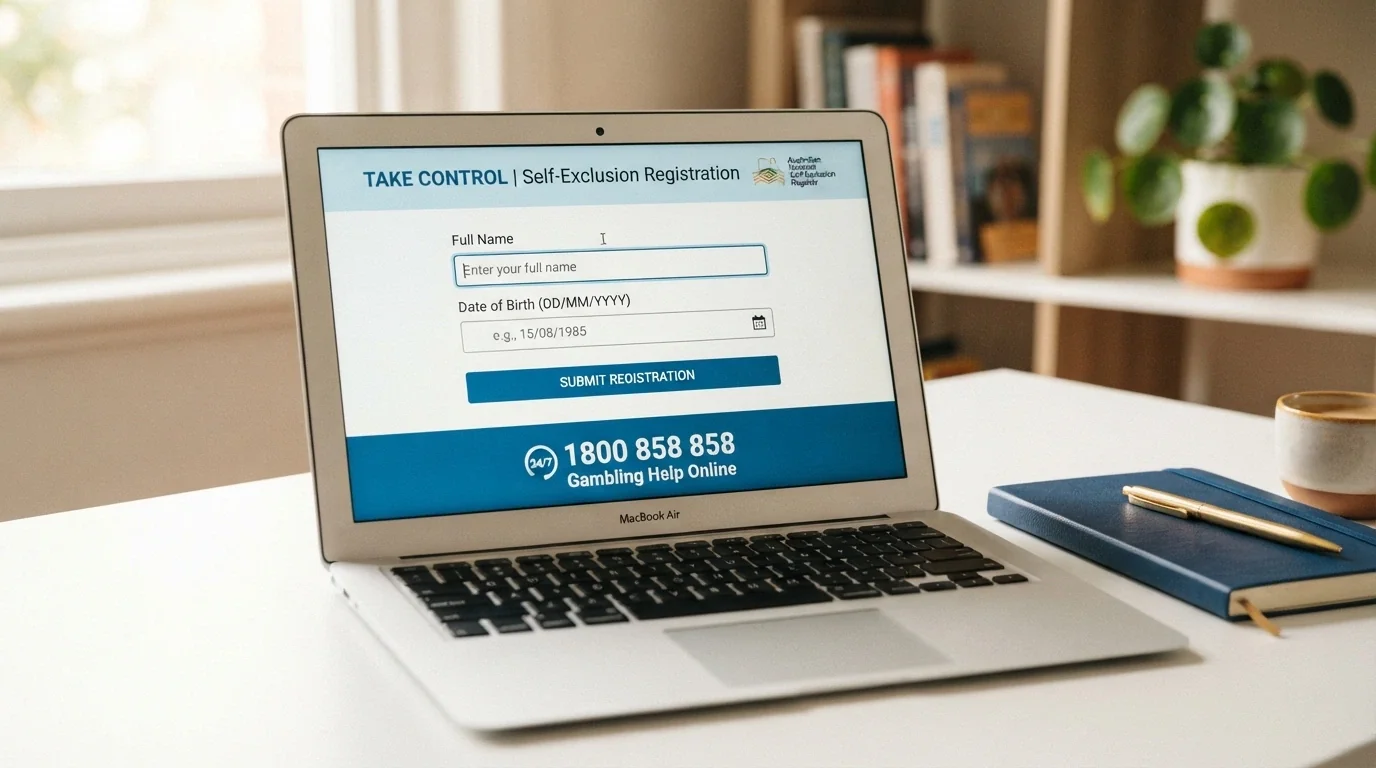
The tools that exist work differently depending on whether the player is using a licensed Australian wagering service or an offshore casino. BetStop — the National Self-Exclusion Register, live since 21 August 2023 — excludes a person from every Australian-licensed online and phone wagering service in a single step. As at 31 July 2026, sixty-seven thousand four hundred and eighty people had registered, of which forty-one thousand two hundred and ninety exclusions were still active — over sixty per cent of everyone who ever signed up. Seventy-eight per cent of registrants were under forty, and thirty-eight per cent chose lifetime exclusion. The register works for the licensed wagering market. It does not work for offshore casinos: an offshore operator is not connected to the register, and the exclusion does not reach it.
For an Australian player who has self-excluded from licensed wagering and is now considering an offshore casino, the gap is the single most important fact on this page. The licensed-wagering self-exclusion has not closed the door on gambling; it has closed the door on the licensed side and left the offshore side open. No-deposit free spins at an offshore casino are available to a BetStop-registered player by default, and the operator has no mechanism to check the register. The responsibility to stop playing sits with the player, not with the system.
Where to Get Help
- National Gambling Helpline: 1800 858 858 — free, confidential, available 24/7, with online chat and counselling through Gambling Help Online at gamblinghelponline.org.au
- BetStop: the National Self-Exclusion Register at betstop.gov.au — minimum three-month exclusion, up to lifetime, for Australian-licensed wagering services (does not reach offshore casinos)
- Gambler’s Help: state-based face-to-face support services in each Australian state and territory
- Gambling Help Online: gamblinghelponline.org.au — online chat, counselling and self-help tools
How We Picked and Ranked Every Site on This Page
The ten operators on this page were selected because they appear on Australian-facing operator shortlists and carry a no-deposit free-spins or free-chip offer accessible from Australia. The selection drew on comparison pages that Australian players actually use — PokiesAustralia, SlotSpeak, CrazyVegas, CaswinoAustralia — and cross-referenced the operators named there against the brands that consistently appear across multiple sources. The final list is not exhaustive of the offshore market; it is the set that the comparison shortlists converge on for an Australian player looking for a no-deposit offer.
The ranking weights what the bonus is actually worth on the math, not the headline spin count. Wagering multiple, max cashout cap, expiry window and per-spin value are the four terms that decide an offer’s value, and the operators with all four fixed at the time of review sit at the top. For the six operators with terms not fixed, the ranking is based on the operator’s presence across multiple comparison sources and on Australian-facing market share data where available.
The legal-status check is the filter that runs through the ranking. Every operator on this list is offshore because no Australian licence for online casino exists. The licensed wagering operators — SportsBet, Tab, Bet365 and the rest — were excluded from the ranking because they do not offer online pokies. The credit-card and crypto ban for licensed wagering was used as a flag, not a filter: an operator that accepts credit cards or crypto is marked as such, but the ranking does not exclude them on that basis, because the credit-card and crypto acceptance is precisely what makes them offshore operators in the first place.
What was not weighted is brand age, affiliate commission, and the deposit-match terms that a separate page on welcome bonuses would cover. A no-deposit page that ranked operators by their deposit-match welcome bonus would be evaluating something the reader has not come here to evaluate.
Your No-Deposit Free Spins Plan: What to Do Next
The framework that gets the most out of a no-deposit free spins bonus without overpaying for it has three parts, in order: check the wagering first, the cashout cap second and the expiry third. Spin count is the last number to look at — a hundred spins at forty-times wagering with a fifty-dollar cap is a worse offer than twenty spins at thirty-times wagering with a two-hundred-dollar cap, because the cap is what the player walks away with.
The three-question test before claiming any NDB. First, am I playing at an offshore site without Australian consumer protection? Every operator on this list is, and the answer to this question is yes for all of them. Second, does BetStop reach this operator? The answer is no for every offshore casino, and that fact should weigh on the decision to claim any bonus at all if the player has previously self-excluded. Third, what is the real cash value after the cap? Take the spin count, multiply by the spin value, divide by the wagering multiple, and apply the cashout cap — the resulting figure is the realistic upside, and the expected loss on the playthrough is the realistic cost. If the cost exceeds the upside at the cap, the offer is entertainment value only.
The safest no-deposit free spins experience is the one that costs nothing at the claim stage, expects nothing at the withdrawal stage and treats any payout as a small bonus rather than an income. The house always has an edge, and the bonus’s value is set by that edge, not by the headline number on the marketing page. A player who claims a no-deposit bonus with the expectation of walking away with anything other than entertainment value is paying for the lesson twice.
The decision framework is short. Claim a no-deposit bonus at one of the four operators with confirmed terms on this page if the terms look reasonable; check the bonus page directly at the other six before claiming; do not deposit until the no-deposit bonus has been cleared and the operator’s withdrawal path has been tested. The free spins are worth claiming for the test they offer, not for the cash they might pay.
Frequently Asked Questions About No-Deposit Free Spins on Australian Online Pokies
Can I really get free spins on pokies without making a deposit in Australia?
Yes — only at offshore casinos. Online casino is prohibited under the Interactive Gambling Act 2001 and no Australian licence exists, so any no-deposit offer comes from an offshore brand. The spins are credited on registration and verification, with no payment required at claim. They pay real money, subject to wagering, a cashout cap and an expiry window.
How much can I withdraw from no-deposit free spins winnings?
Australian-facing no-deposit offers typically cap withdrawals between A$50 and A$300, with most sitting around A$50–A$150. Royal Reels on this list has the highest cap at A$200. The cap is the ceiling on real payouts, regardless of how high the bonus balance ran. Clearing wagering makes the balance eligible for withdrawal up to the cap, not the full balance.
Is it legal to play online pokies in Australia?
Online casino and online pokies are prohibited under the Interactive Gambling Act 2001. No licence for online casino exists anywhere in Australia — federal, state or territory. The prohibition targets the provider of the service, not the player. From 1 January 2027, banks gain authority under the 2026 reform to block transactions to illegal operators.
Which pokies can I use my no-deposit free spins on?
No-deposit free spins are locked to one pokie or a short list in the bonus terms. The pokie’s RTP sets the ceiling on what the bonus can return; high-volatility titles can drain a small balance before a payout. The eligible title is in the bonus terms — check the operator’s page for the specific game.
What happens if an offshore casino blocks my withdrawal?
No Australian player has recourse at an offshore casino. The ACMA can investigate and block the operator’s site but cannot compel a payout from an offshore company. No Australian consumer-protection body has jurisdiction over offshore withdrawals. The cashout cap, KYC, payment-method rules or minimum floor can each block a withdrawal, with no external complaints process available.
Are no-deposit free spins winnings paid in real money or bonus funds?
No-deposit free spins winnings are credited as bonus funds, not real cash. The bonus carries a wagering requirement (typically 40x–60x) and a cashout cap (typically A$50–A$300). Once wagering is cleared, the balance becomes eligible for withdrawal up to the cap. After a deposit, real-money play is outside the bonus terms and winnings are withdrawable directly.
Free Spins vs Free Chips: What Is the Difference?
Two no-deposit formats show up in the Australian-facing offshore market, and they behave differently. Free spins lock the player to a specific pokie or a short list of pokies; the spin value is fixed, usually at the lower end of the range, and the wagering requirement applies to whatever the spins win. Free chips, by contrast, give the player a cash balance — typically between twenty and fifty Australian dollars — that can be played across a much wider selection of games, often a full library of over a thousand pokies. The chip is more flexible, but it is also more constrained at the other end: wagering on chip winnings tends to be heavier, and the max cashout on a chip is usually lower than on a comparable spins offer.
Take LuckyDreams as the chips example. Its fifty-dollar chip carries fifty-times wagering on the bonus and a fifty-dollar maximum cashout — even if the player runs the chip up into four figures during play, the operator caps the withdrawal at fifty dollars. Uptown Pokies, by contrast, offers a twenty-dollar chip at the same fifty-times wagering but with a two-hundred-dollar cashout ceiling, more in line with what a stronger spins offer would carry. The flexibility of the chip format costs the player on the cap side, and the heavier wagering means the playthrough volume is substantial regardless of which game they pick.
In practice, the choice between a spins offer and a chip offer comes down to what the player wants to do with their bonus. Spins make sense for a player who is happy to play the specific pokie the operator has named and who wants a clear, narrow playthrough; chips make sense for a player who wants to spread their bonus across a few different pokies and is willing to accept tighter terms in exchange. Neither format is automatically better than the other — but the terms attached to each, especially the max cashout, decide which one is worth claiming.