
A$10 Deposits at Offshore Casinos: What Australian Players Should Verify in 2026
An A$10 deposit sounds like a harmless way to test an online casino. In Australia, that wording does too much work: online casino games and online pokies are prohibited under the Interactive Gambling Act 2001, and the brands that accept Australian players are offshore rather than locally licensed. The useful comparison is not which site prints the smallest number. It is which payment rail can clear the amount, what that money actually buys, and which protections disappear when the transaction leaves the Australian framework.

Data current as of 25 November 2026; regulatory and licence claims checked against ACMA guidance, the Curaçao Gaming Control Board register and the Tobique/Anjouan licensing record where applicable.
- Your A$10 Goes Further Than You Think — but Only If You Know Where
- The A$5 Deposit Casino Doesn’t Exist in Australia — Here’s What Does
- 10 Low-Deposit Casinos Accepting Australian Players in 2026
- Why Your 2026 Low-Deposit Bonus Is Smaller Than It Looks
- Pokies You Can Play From A$0.10 a Spin in 2026
- Crypto Casinos: The Only Route Below A$10 for Australian Players
- No, Online Casino Is Not Legal in Australia — What That Means for Your Deposit
- When a A$10 Deposit Isn’t Just a A$10 Deposit
- Frequently Asked Questions
- How We Picked and Ranked These Low-Deposit Casinos
- Your Low-Deposit Playbook: What A$20 Actually Buys You in 2026
Your A$10 Goes Further Than You Think — but Only If You Know Where
The low-deposit market is a landscape of thresholds rather than one simple low price. A casino can accept A$10 for real-money play, require A$20 or A$30 before a welcome offer starts, and still set a withdrawal floor that makes a small balance difficult to turn back into cash. The payment method matters as much as the brand because Neosurf, PayID, cards and crypto have different practical floors and different protections.
A genuine low-deposit option has to clear several tests at once. The payment must be accepted for the amount shown, the advertised bonus must actually be available at that amount, the withdrawal rules must not turn the balance into a dead end, and the games must have stakes that suit the bankroll. A small deposit without a workable exit is not a bargain. It is merely a small way to give an offshore operator your money.
That distinction matters especially in 2026 because low-deposit pages often treat “playable” and “bonus-ready” as interchangeable. They are not. A brand may accept A$10 while its welcome offer begins at A$20. A card may be declined by an Australian bank. A voucher may put money in but be unable to receive it back. The number at the top of an offer is only the beginning of the decision.
The sharpest comparison also resists the idea that a tiny deposit makes the casino itself small-risk. A$10 limits the amount put at stake in one session, but it does not change the house edge, the legality of the product, or the quality of the protection available if a withdrawal is disputed. Low exposure and low risk are different claims. Offshore casinos can offer a low floor while leaving the player with very little recourse above it.
Best Low-Deposit Casinos: What “Best” Means at A$10–A$20
A sensible ranking starts with the transaction that must succeed. A deposit floor is not genuinely low if the rail rejects the payment, the bonus is advertised at a different amount, or the account cannot cash out a small balance. The minimum that can actually be used is more important than the minimum written in a headline.
The next test is the gap between play and promotion. Most AU-facing welcome offers need somewhere between A$10 and A$30 to activate. Eight of fifteen brands in the available comparison set imposed a higher minimum for welcome-bonus eligibility than for ordinary play. That makes A$10 a useful playing threshold but an unreliable bonus threshold. The player who checks only the cashier can reach the account and still miss the offer entirely.
Withdrawal rules are the trap most likely to be discovered too late. Minimum withdrawals at many offshore casinos sit at A$25–A$50, with some at A$50–A$100, compared with deposits that can begin at A$5–A$10. A$10 may therefore be enough to open a session but not enough to make a modest cashout straightforward. Neosurf is even less flexible: prepaid vouchers can fund a deposit but cannot be used to receive the withdrawal.
The catalogue has to meet the bankroll where it actually is. Minimum bets on most pokies start at A$0.10 per spin, and the featured set includes games at that level. A large library is irrelevant to a small bankroll if the cheapest tables or live rooms are inaccessible, so the practical test is not “more than 3,000 titles” in the abstract. It is whether the games can be played at A$0.10–A$0.20 without forcing the player into a larger stake.
There is no scoring system here because the evidence is uneven. The brands with verified minimums and tested payment or withdrawal details deserve a different kind of attention from brands known to attract Australian traffic but lacking a verified low-deposit floor. A missing number is not a bad score. It is a reason not to build a claim around it.
The best low-deposit choice is therefore the one whose smallest real transaction survives the whole journey: money in, eligible play, bonus if that is part of the decision, and a withdrawal route if the balance grows. Anything that fails halfway through that sequence is not a complete low-deposit product.
Real-Money Play vs Free-Play Mode at Minimum Stakes
Demo or fun mode has a different job from real-money play. It can be useful for learning a pokie’s layout, reading its pay information, or getting a feel for how its features appear without putting the session balance at risk. Offshore casinos commonly make that kind of play available, but the available information does not support a per-operator breakdown of demo availability or the exact conditions attached to every game.
The psychological difference begins as soon as money is involved. A A$0.10 spin is a small stake in dollar terms, yet it is still a real decision, a real balance change and a real contribution to the house edge. Free-play credits can make a session feel consequence-free. Real credits cannot be replaced by switching back to the demo after a losing run.
Minimum-stake real play is most useful when the budget has already been decided. A$10 can support 100 A$0.10 spins before accounting for anything else. That gives the player a defined ceiling, but it does not make the games safer or change the mathematical return. A pokie with a 96.50% RTP still has a house edge. The small stake simply slows the rate at which the balance is exposed to it.
Free play is therefore a rehearsal, not a substitute for deciding whether to gamble. It can show what a feature looks like and how the interface behaves. It cannot tell a player whether a particular withdrawal rule works, whether a bank accepts the deposit, or whether a bonus will be voided by one over-limit spin. Those checks belong to the real-money account and its terms.
The A$5 Deposit Casino Doesn’t Exist in Australia — Here’s What Does
There is no genuine A$5 fiat-deposit casino for Australian players. The figure survives in comparison pages because it makes a neat tier, not because AU-facing payment systems support it. The practical fiat floor is A$10 through Neosurf, while PayID can sit at A$20 under a casino-side minimum and cards commonly sit at A$20. Sub-A$10 deposits belong to crypto-only offshore routes.
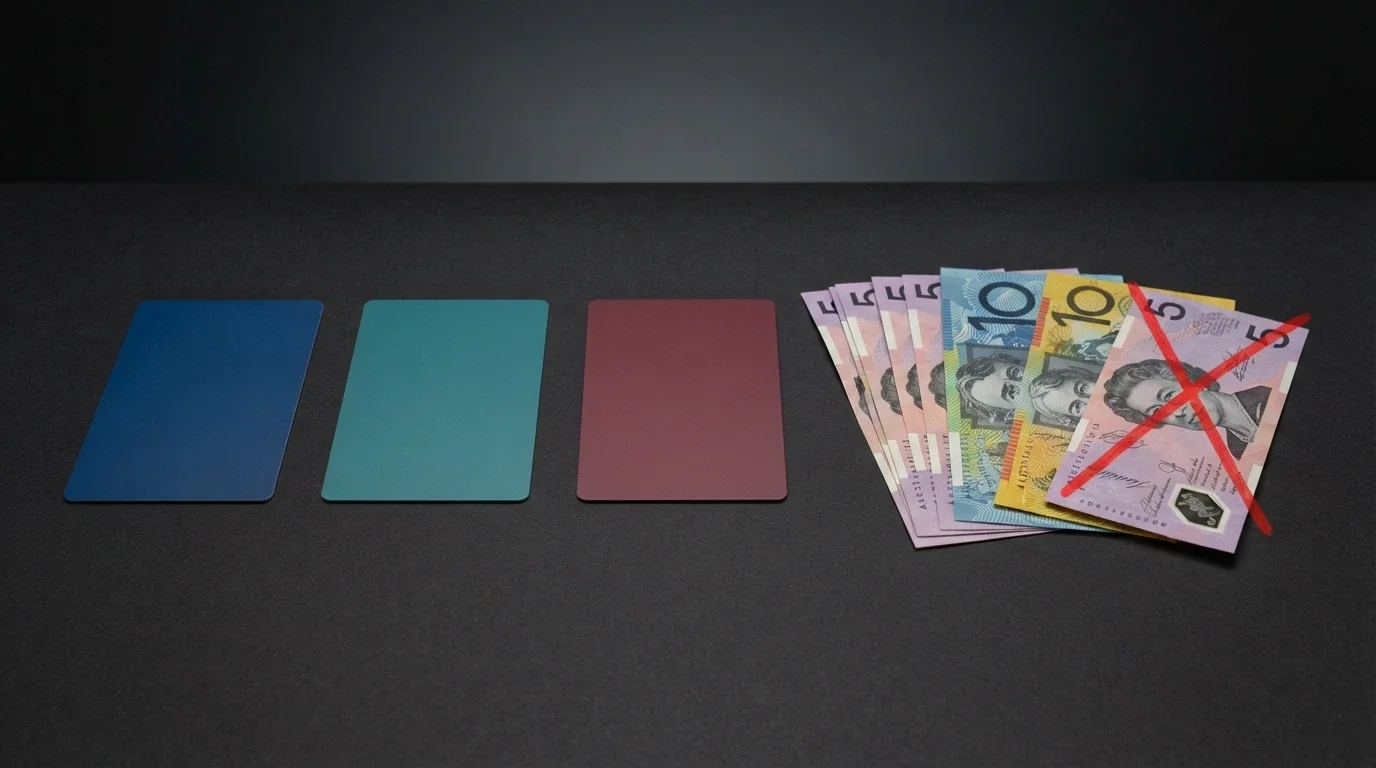
The methods look different on a payment screen, but they are constrained by the same economic problem. A very small payment carries a processing cost and creates more anti-fraud work than it may return. Operators respond with minimums. That is why the A$5 claim fails before any welcome offer, withdrawal rule or game catalogue gets a chance to matter.
| Deposit Method | Typical Minimum (AUD) | Processing Speed | Withdrawal Possible | Key Limitation |
|---|---|---|---|---|
| Neosurf | A$10 | — | No | A$5 is an EU-only denomination; vouchers are deposit-only. |
| PayID | A$10 at Wild Pokies; A$20 where the casino-side minimum applies | Instant at Wild Pokies | — | Microdeposits may be flagged as testing or laundering. |
| Visa/Mastercard | A$20 | — | — | Some Australian banks decline direct transactions to offshore casinos. |
| Crypto | ~A$0.10–~A$1 at crypto-only brands; A$20 at Playzilla | — | — | Available through offshore crypto routes, outside Australian licensed-wagering protections. |
The dash is deliberate. It marks a figure that the evidence does not establish, not a promise that the method is unavailable. Payment speed and withdrawal eligibility can also differ between operators even when the deposit minimum looks similar. The table is a floor map, not a promise of the same experience at every brand.
The Three Barriers That Kill the A$5 Deposit
Neosurf provides the cleanest barrier. Vouchers sold in Australia start at A$10, in denominations of A$10, A$50 and A$100. The A$5 version is an EU-only denomination. A comparison page can copy the smaller number from another market, but an Australian player cannot turn an EU voucher into an Australian deposit product simply because a casino page displays it.
Card processors add a second constraint. The practical floor for card transactions at AU-facing casinos is A$10–A$20 because of the per-transaction economics. A casino may want the customer, but the processor still has to make a small payment worthwhile. The result is a minimum that sits above the A$5 proposition even when the operator would otherwise accept a lower amount.
PayID introduces a different objection. The cited casino-side standard is A$20 because anti-fraud rules flag microdeposits as possible testing or laundering activity. A fast rail does not eliminate the need for a meaningful minimum; it only makes the transfer arrive quickly once the transaction clears.
These barriers are structural, so changing the brand will not necessarily change the floor. A different casino can advertise a different A$10 bonus, but it cannot make a A$5 Neosurf voucher appear in Australia, make a card processor ignore its transaction economics, or remove a PayID anti-fraud threshold with a new logo.
The honest conclusion is straightforward. A$5 is a search-result artefact in the Australian fiat market, not a working entry point. Anyone comparing A$1, A$5 and A$10 casinos should begin with the payment rail, not the advertised casino tier.
PayID and Bank Cards: The A$10–A$20 Reality
PayID is fast, but fast does not mean universally cheap. Wild Pokies is reported as accepting a A$10 PayID deposit instantly. Other AU-facing casinos enforce a A$20 casino-side minimum because of the same anti-fraud concern. The range in the table therefore reflects operator policy rather than a contradiction in the rail itself.
Cards sit at a higher and less predictable point. Visa and Mastercard deposits carry a A$20 minimum in the cited AU-facing example, and some Australian banks decline direct card transactions to offshore casinos. A decline is not a small inconvenience that changes the casino ranking on its own. It can change the practical payment method before a player has deposited anything.
When a card is declined, the available alternatives are crypto, an e-wallet or Neosurf. That choice still has a cost. Crypto can lower the deposit floor but removes Australian licensed-wagering protections. An e-wallet changes the rail. Neosurf can fund an A$10 account but cannot receive the withdrawal. The payment method that gets money in is not automatically the method that gets money out.
The practical sequence is to check the casino’s deposit screen, check the bank’s treatment of offshore transactions, and then check the withdrawal method before entering card details. A fast PayID deposit can be the right rail for a A$20 bankroll. It is not a reason to ignore a A$20 minimum, and it is not a promise of a fast PayID cashout at every operator.
Neosurf and Prepaid Vouchers: A$10 In, No Way Out
Neosurf is the cheapest widely reported fiat entry point for Australian players. Its Australian denominations are A$10, A$50 and A$100, and a A$10 first-deposit minimum is cited for brands including Spin Samurai, 7Bit Casino, PlayAmo, HellSpin, National Casino and Asino. That is a real floor, not a nominal number carried over from a different market.
The limitation is written into the voucher model. Neosurf and other prepaid vouchers cannot be used for withdrawals. Money goes in through the voucher, but the winnings cannot be returned to that same voucher. A player who chooses Neosurf for the A$10 entry must be comfortable with a separate withdrawal rail and the operator’s rules for it.
That asymmetry matters most when the balance is small. An A$25–A$50 withdrawal minimum can consume a large part of a A$10 deposit before a cashout is even possible. The voucher is useful as a controlled entry payment, but it is not a complete banking solution.
The marketing phrase “low deposit” should therefore be read literally: it describes money entering the account. It does not describe money leaving it. For a player who cares about keeping the balance usable, the absence of voucher withdrawals is more important than the neatness of the A$10 minimum.
10 Low-Deposit Casinos Accepting Australian Players in 2026
Every operator in this table is offshore. None holds an Australian online-casino licence, because no such licence exists federally or in any state or territory. The comparison is not a claim that the brands are lawful Australian casinos. It is a look at the low-deposit terms that are actually associated with brands reaching Australian players in 2026.
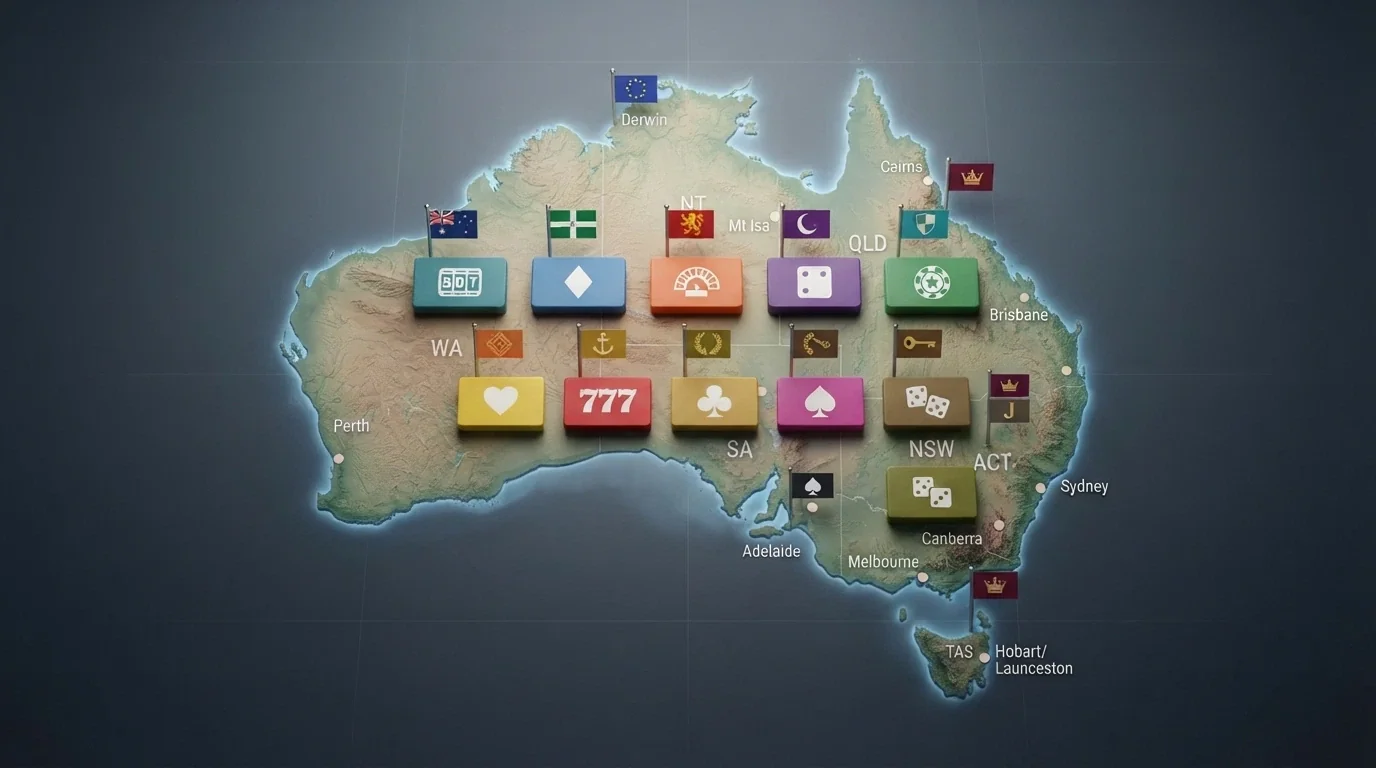
The rows split in two. Stake, Neospin, Goldenbet, Playzilla and King Billy have specific low-deposit or offer terms that can be stated. Rocket Play, Skycrown, FairGO, Royal Reels and Scream are known AU-facing offshore brands, but their minimum deposit and bonus terms were not verified in this review. A dash in the table does not mean no payment method exists; it means the available evidence did not establish a minimum or rail for that entry point.
| Operator | Minimum Deposit (AUD) | Deposit Methods at Minimum |
|---|---|---|
| Stake | ~A$0.10 BTC-equivalent | Crypto only (BTC) |
| Rocket Play | — | — |
| Skycrown | — | — |
| Neospin | A$1 via crypto/voucher; A$10 via PayID | Crypto/voucher; PayID |
| FairGO | — | — |
| Goldenbet | A$20 | — |
| Playzilla | A$20 | Bitcoin; Ethereum; USDT |
| King Billy | A$30 | Neosurf; Visa; crypto |
| Royal Reels | — | — |
| Scream Casino | — | — |
The order is a comparison order, not a quality score. A sourced minimum is more useful than a large market footprint when the decision concerns a small bankroll, and the five data-rich rows should not be mistaken for five low-risk rows. Offshore status remains the common denominator.
Stake
Stake is the lowest genuine real-money deposit in the comparison at approximately A$0.10 BTC-equivalent. It is a crypto-only operator, with no fiat deposit rail below A$10. That makes it the natural reference point for the phrase “lowest deposit,” but it does not make it a conventional A$10 casino or a locally regulated wagering account.
The brand is described as Curaçao-licensed, although the licence was not fully verified in this review. No traditional welcome bonus is stated in the available operator information. That absence does not prove that Stake offers no promotion at all; it means the low-deposit comparison should not attach a traditional bonus claim to the brand without checking its current terms.
Australian market data shows Stake with a meaningful local footprint, so its crypto acceptance is not an isolated technical footnote. The trade is direct: an exceptionally small BTC-equivalent entry, in exchange for crypto-only rails and the offshore protections discussed later. The balance still has to meet ordinary withdrawal rules, which are usually set well above a tiny crypto deposit.
The verdict is blunt: Stake is the low-floor specialist, not an A$10 fiat shortcut. Its technical minimum is the point, while the crypto-only nature of the brand and an unverified licence keep the rest of the proposition outside the Australian framework.
Rocket Play
Rocket Play has the strongest Australian traffic signal in the featured group, which makes it a familiar AU-facing name despite the thin deposit evidence. The market data indicates a substantial local audience, not that Rocket Play has a verified A$10 or A$20 entry route. The brand is offshore.
Its Curaçao licence was not confirmed in this run. The available information did not establish a specific minimum deposit, payment method at the minimum, or welcome-bonus condition. That leaves the important part of a low-deposit comparison unresolved, even though the brand’s Australian reach is easy to describe.
A large market footprint can make a site feel established. It cannot answer whether a A$10 payment clears, whether a bonus activates, or whether a small balance can be withdrawn. Those are the checks that matter once real money is involved, and they are precisely where the Rocket Play row remains data-thin.
Rocket Play is worth knowing as an AU-facing offshore quantity, not as a verified low-deposit choice. Scale is a reason to inspect the terms, never a substitute for them.
Skycrown
Skycrown is the second-largest operator in the featured group by Australian market share, giving it a substantial AU-facing presence. That position makes its absence from the low-deposit evidence more noticeable. The brand is offshore, but its specific deposit floor, payment rail and bonus terms were not verified in this review.
The Curaçao licence was not confirmed in this run. There is no sourced figure for a minimum deposit, no confirmed method at that minimum and no stated welcome-bonus condition to set beside it. The table therefore cannot honestly turn Skycrown into a A$10 proposition simply because its name is prominent in Australian market data.
That is not a minor editorial gap. A comparison that prints a confident number where the evidence is silent would be giving the reader a false precision. Skycrown’s scale may justify further checking by someone already considering an offshore brand, but it does not justify presenting an unverified floor as fact.
Its verdict is a boundary: Skycrown has reach, not a verified low-deposit specification here. Treat the market presence as context and the missing floor as the decision point.
Neospin
Neospin has the widest low-deposit spread in the featured set. A A$1 deposit is cited through crypto or voucher, while PayID begins at A$10. That is an unusually broad entry range, but the two amounts do different jobs. The A$1 route is not the threshold for the main welcome package, and A$10 PayID is not proof that a bonus will activate.
The welcome package is listed at up to A$10,000 plus 100 free spins across four deposits, with 40× wagering and a A$20 minimum deposit. The package is therefore a four-deposit offer with a substantial turnover requirement, not a A$10 headline. Neospin also lists daily cashback of up to 20% of net losses at 3× wagering. The cashback is a separate term; it is not the same thing as a low-risk return.
Neospin is licensed by the Curaçao Gaming Control Board. That is an offshore licence claim, not an Australian licence. Its very low crypto or voucher entry point is paired with a higher A$20 threshold for the advertised welcome offer, so the smallest amount and the most heavily advertised offer should not be discussed as one product.
Neospin’s low-floor value is real, but the bonus is a heavier commitment. It suits a comparison focused on entry price, not a reader who assumes that a A$10 payment unlocks the full package.
FairGO
FairGO is a known AU-facing offshore brand with a smaller presence in the market data used to identify the featured set. Its Curaçao licence was not confirmed in this run, and the available information did not verify a minimum deposit, a payment method at that minimum or a welcome-bonus condition.
That makes FairGO a useful reminder of how little a familiar name can prove. Australian-facing traffic can be established while the exact low-deposit path remains unknown. There is no sourced A$10, A$20 or crypto floor to place in the table, so the fair comparison is not a number at all.
The absence of a verified floor is not an accusation that the brand accepts no deposits. It is a limit on what can be concluded from the available evidence. A player should not infer a A$5, A$10 or A$20 route from the brand’s name or offshore status alone.
FairGO is an established offshore option in the market context, but not a verified low-deposit option in this comparison. Recognition is not a substitute for a deposit and withdrawal check.
Goldenbet
Goldenbet is the zero-wagering outlier among the offers with a stated low threshold. Its offer is described as A$100 real cash across three deposits with 0× wagering, meaning no playthrough is required before withdrawal under the stated terms. The welcome minimum is A$20, so the zero-wagering advantage still begins above a A$10 play budget.
A personally tested PayID withdrawal cleared in 28 minutes, the fastest PayID result reported in the comparison. That is a useful data point, not a universal payout promise. One tested transaction cannot establish how every account, payment window or verification request will behave, but it is materially different from an untested claim of “fast withdrawals.”
Goldenbet also has a 3,000-plus pokie library covering Pragmatic Play, Play’n GO, Betsoft, Hacksaw Gaming and BGaming. The licence was not confirmed in this run. The combination of a cash offer, 0× wagering and a tested PayID result is strong on bonus friction, but it does not turn an offshore casino into a locally protected account.
Goldenbet is the cleanest contrast for a player prioritising no playthrough, although the useful entry point is still A$20. It removes one layer of bonus liability without removing the offshore and withdrawal questions.
Playzilla
Playzilla is a high-volume low-deposit contender rather than a sub-A$20 floor. It offers a 100% match up to A$500 plus 200 free spins on selected Pragmatic Play titles at 35× wagering on the bonus only, with a A$20 minimum deposit. The wording matters: the requirement applies to the bonus portion, not automatically to the deposit and the free spins as a combined balance.
A PayID withdrawal cleared within 12 hours in testing. That is a slower result than Goldenbet’s tested 28 minutes, but it is still a stated observation rather than a promise. Playzilla’s game library exceeds 3,000 titles and its live casino is powered by Evolution and Ezugi. It is Curaçao-licensed and accepts Bitcoin, Ethereum and USDT at the A$20 minimum.
The A$20 crypto floor is useful for someone who wants digital payment and a large catalogue without pretending the crypto route is sub-A$10. It is also above the genuine A$10 Neosurf fiat entry. A larger game count and a named live-casino setup do not cancel that difference.
Playzilla’s value is breadth at A$20, not the smallest possible entry. It has a serious catalogue and tested PayID movement, but its bonus is still 35× on the bonus only and its minimum remains above the A$10 fiat floor.
King Billy
King Billy’s stated welcome package is A$2,500 plus 250 free spins across four deposits at 30× wagering on the bonus only. The minimum deposit is A$30, which places it well beyond a A$10 or A$20 low-deposit budget. The package has 30-day bonus validity, so the structure asks the player to commit across a longer period rather than test the account with a tiny first payment.
The operator is licensed by Tobique/Anjouan and accepts Neosurf, Visa and crypto. E-wallet payouts are reported at one to two hours. Those are useful distinctions, but the package and minimum need to be read together. A four-deposit welcome structure cannot be judged from the first deposit alone, and a one-to-two-hour e-wallet result does not make a A$30 entry cheap.
King Billy is therefore more relevant to a player comparing broader offshore packages than to someone seeking the lowest possible bankroll exposure. Its method range gives the reader some choice, yet the bonus validity and turnover sit on the other side of the decision.
The broad package is outweighed for a small bankroll by the A$30 floor and four-deposit structure. King Billy is transparent about its threshold, but transparency is not the same thing as low exposure.
Royal Reels
Royal Reels has a meaningful Australian footprint in the market data, which is why it belongs in the comparison even though the low-deposit specifics are absent. Its licence status was not confirmed in this review, and no minimum deposit, bonus condition or payment method at the minimum was verified.
That leaves Royal Reels as a known offshore quantity rather than a complete low-deposit row. The brand’s Australian presence can make it familiar, but familiarity cannot establish whether a A$10 or A$20 payment works, whether a welcome offer starts there, or how a small withdrawal is handled.
A table that filled those blanks with a generic “low deposit” label would be doing the reader a disservice. The right conclusion is narrower: Royal Reels is worth noting in the AU-facing market context, while its actual entry conditions remain an open check.
Royal Reels’ presence is established; its low-deposit value is not. That is the limit of the evidence, and it is a better guide than a guessed number.
Scream Casino
Scream Casino is a smaller but established AU-facing offshore brand in the market data used here. Its licence status was not confirmed in this review, and the comparison did not verify a deposit minimum, a payment method at the minimum or a bonus term. Nothing in the available evidence supports a specific A$5, A$10 or A$20 claim.
That absence is easy to overlook because a market presence can look like a product specification. It is not. Scream Casino’s inclusion reflects Australian reach, not a confirmed low-deposit route, and the row should not be used to imply either one.
For a player comparing operators, the practical consequence is simple: the name is known, but the relevant transaction data is not. Any deposit decision would need a fresh check of the cashier, withdrawal screen, bonus terms and licence statement before money changes hands.
Scream Casino is an offshore brand with a market presence, not a verified low-deposit offer. Its value in this ranking is context, and no more than that.
Why Your 2026 Low-Deposit Bonus Is Smaller Than It Looks
A small deposit is often used to sell a much larger bonus. The mechanism is simple: the operator advertises a match and free spins, then places the qualifying deposit above the amount needed to play. The player sees A$10, assumes the offer begins there, and discovers only after funding the account that the promotion required A$20 or A$30.

That activation gap is a pattern, not an isolated surprise. Eight of fifteen brands surveyed required more for welcome-bonus eligibility than for play, and most welcome offers need A$10–A$30 to activate. A$5 frequently triggers nothing. The lowest deposit is therefore not always the cheapest way to obtain the advertised promotion; sometimes it is only the price of admission to the real-money lobby.
The second deflation comes from turnover. A match percentage describes the amount credited, not the amount that must be wagered before the bonus can be withdrawn. Once a wagering multiple is attached, the headline number becomes a work requirement. The player can deposit small and still be asked to turn the bonus over many times.
Welcome Bonuses at A$10–A$30: What Actually Triggers
SpinPenny is the clearest A$10 exception in the stated set. Its 100% match plus 50 free spins requires a A$10 deposit, although its withdrawal minimum is A$20. That is a real low entry, but it also shows how play and exit can differ inside one offer.
Playzilla requires A$20 for its 100% match up to A$500 plus 200 free spins on selected Pragmatic Play titles. The same A$20 threshold applies to Goldenbet’s A$100 real-cash offer, which is notable because Goldenbet carries 0× wagering. Neospin’s up-to-A$10,000 package plus 100 free spins across four deposits begins at A$20 and carries 40× wagering. King Billy sits further away at A$30 for its A$2,500 plus 250 free spins package across four deposits, at 30× on the bonus only.
The comparison is not a choice between “bonus” and “no bonus.” It is a choice between different kinds of commitment. SpinPenny makes the promotion reachable at the smaller A$10 threshold but has a A$20 withdrawal minimum. Goldenbet removes wagering but requires A$20. Neospin and King Billy spread value over multiple deposits and add turnover requirements. Playzilla offers a large headline and free spins but also keeps the wagering condition on the bonus.
A player who only wants to sample real-money pokies should not pay A$30 merely because a four-deposit package is available. A player who does want the package should calculate the whole structure before accepting the first deposit. The correct question is not whether a bonus exists; it is what must happen after the qualifying payment for the bonus to become withdrawable.
What It Really Costs to Clear a Low-Deposit Bonus
Wagering requirements typically run from 30× to 40× of the bonus, with a 40× industry median on the bonus portion only. “Bonus only” is a crucial qualifier. It means the turnover calculation is attached to the credited bonus rather than automatically adding the deposit and bonus into a larger base.
A separate rule can matter even before the turnover is completed. A maximum bet of about A$5 is common while a bonus is active, and a single spin above that cap can void the entire bonus and its winnings retroactively. The player can therefore meet the amount required, choose a game that looks ordinary, and still lose the promotion because of one stake decision.
Goldenbet’s 0× wagering is the contrast that exposes how much friction the standard structure creates. Its offer requires no playthrough before withdrawal under the stated terms, although the welcome minimum is A$20. That makes Goldenbet materially easier to reason about than a 30× or 40× package, but it does not make the offshore status or withdrawal conditions disappear.
For a representative Playzilla scenario, a A$100 bonus earned from a 100% match, 35× wagering on the bonus only and Gates of Olympus at 96.50% RTP carries an estimated expected loss of A$122.50, assuming only the A$100 bonus is wagered. The implied required turnover is A$3,500, and the estimate exceeds the A$100 face value. It is a statistical estimate over many spins, not a guaranteed result for any player.
That estimate is the part a bonus banner cannot show. A A$100 face value becomes a larger expected cost when the house edge is applied across the required turnover. The house does not need to beat every player on every spin; it needs the mathematics of the wagering requirement to do its work across the session.
Pokies You Can Play From A$0.10 a Spin in 2026
At the minimum stake, a A$10 balance supports 100 A$0.10 spins. That is the practical meaning of a low-stake pokie for a small bankroll, but the RTP still matters. The cited range for good online pokies is 96% to 97.5%; figures below 95% are treated as operator-skewed mathematics in that comparison.

RTP describes the long-run mathematical return, not the result of a single session. It should be read beside volatility. A low-volatility title may make smaller movements feel more frequent, while a high or extreme-volatility game can stretch the distance between notable outcomes. Neither changes the fact that the house retains an edge.
Low-Stake Pokies: Titles, RTPs and Volatility Worth Your Spin
The following titles are listed at A$0.10 minimum play in the featured-operator context. The max-win column is left blank where the available figures did not provide one; it is not a claim that the game has no ceiling.
| Slot Title | Provider | RTP | Volatility | Max Win |
|---|---|---|---|---|
| Gates of Olympus | Pragmatic Play | 96.50% | High | 5,000× |
| Sweet Bonanza | Pragmatic Play | 96.51% | Medium-high | 21,175× |
| Wolf Gold | Pragmatic Play | 96.01% | Medium | 2,500× |
| Big Bass Bonanza | Pragmatic Play | 96.71% | High | 2,100× |
| Starburst | NetEnt | 96.09% | Low | — |
| Book of Dead | Play’n GO | 96.21% | High | — |
| Wanted Dead or a Wild | Hacksaw Gaming | 96.38% | Very high | — |
| San Quentin xWays | Nolimit City | 96.03% | Extreme | 150,000× |
| Elvis Frog in Vegas | BGaming | 96.00% | Medium-high | — |
| Razor Shark | Push Gaming | 96.70% (highest published) | High | — |
| Jammin’ Jars | Push Gaming | n/a | n/a | — |
| The Dog House Megaways | Pragmatic Play | 96.55% | High | 12,305× |
Every listed RTP sits within the cited 96%–97.5% range, from Elvis Frog in Vegas at 96.00% to Jammin’ Jars at 96.83%. That does not make the group one uniform experience. San Quentin xWays is marked extreme volatility and carries a 150,000× max win, while Starburst is marked low volatility and has no max-win figure in the available data. The numerical ceiling is not a forecast.
A small bankroll is not automatically best served by the highest advertised maximum. Extreme and very-high volatility can make a A$0.10 session feel sparse even when the title is mathematically reputable. A lower-volatility pokie with a 96% RTP is not a winning proposition, but its risk pattern may be easier to understand for a player who wants the stake to remain modest.
Table Games and Live Dealer at Minimum Stakes
A large game count does not mean every game opens at the deposit minimum. Table limits are set at the individual game level, and the available figures do not establish a universal A$0.10 or A$0.20 minimum for tables or live rooms. The deposit page can therefore look generous while the actual game requires a different stake.
Playzilla illustrates the other side of the catalogue question. Its library exceeds 3,000 titles and its live casino is powered by Evolution and Ezugi. That gives a low-deposit account access to a broader type of product than pokies alone, but it does not supply a verified per-title minimum for every live table.
A player moving from pokies to live dealer should treat the bankroll as a separate decision. The presence of Evolution or Ezugi says something about the studio and product range. It does not say the cheapest table, the time required to complete a round, or the withdrawal method. Those details still belong to the operator’s live-casino rules.
The useful comparison is narrow: a A$10–A$20 deposit can be enough to open an account and a pokie lobby, while table play must be checked title by title. A minimum deposit is not a universal table limit. Anyone who assumes otherwise is confusing account access with game access.
Crypto Casinos: The Only Route Below A$10 for Australian Players
Crypto is the only genuine route below A$10 for Australian players, and it comes with a different legal status from fiat payment. Credit cards, credit-related products and digital currency have been banned as payment for online wagering in Australia since 11 June 2024 under the Interactive Gambling Amendment (Credit and Other Measures) Act 2023. A crypto deposit therefore belongs to an offshore operator outside the licensed Australian-wagering framework.

That distinction makes crypto a low-floor payment method, not a low-regulation one. The same amount that looks attractive in a deposit field can carry the risks described in the offshore and self-exclusion sections. The player is trading a smaller entry requirement for a payment rail that Australian rules do not cover.
Bitcoin and Crypto Casino Minimums: What A$0.10 Actually Buys
Stake accepts approximately A$0.10 BTC-equivalent, the lowest genuine real-money deposit in the comparison. BC Game is reported at roughly A$1 USDT, and Bitcasino is near zero. These are useful market reference points, not extra rows in the ten-operator ranking, and all three are crypto-only operators.
The spread shows how far “minimum” can move once fiat processing disappears. Playzilla accepts Bitcoin, Ethereum and USDT at a A$20 minimum, while Stake, BC Game and Bitcasino accept much smaller crypto amounts. The latter may offer a technically lower entry, but the comparison does not establish that they offer the same game catalogue, support or withdrawal experience as a larger offshore brand.
For a player choosing between the two ends of the spread, the decision is not just cents. The A$0.10 route is a crypto payment with offshore protections. The A$20 route buys a named catalogue and a higher floor, but it remains outside the Australian licensed-wagering framework. A larger number does not make the legal position safer, and a smaller number does not make the operator more trustworthy.
The Trade-Off: What You Give Up When You Deposit With Crypto
Crypto removes the A$10 fiat floor but removes the protections attached to Australian licensed wagering as well. BetStop does not cover offshore casinos, so self-exclusion from Australian wagering services does not stop an offshore site accepting money. A player can believe a block is in place and still find that the offshore account remains reachable.
There is no Australian consumer-law recourse in the same sense that a local regulated transaction might provide. If an offshore operator refuses a withdrawal, voids a win or closes an account, the player has no BetStop coverage and no local path through the Australian system. ACMA can direct Australian internet service providers to block illegal sites, and DNS-level blocking can make a balance inaccessible. The player bears the practical consequence of that enforcement.
The trade is easy to miss because the deposit screen presents only the upside. It shows the amount and perhaps a coin symbol. It does not show the self-exclusion gap, the offshore dispute problem or the possibility that a site will become unreachable with a balance attached. Those are not reasons to treat every crypto deposit as automatically lost, but they are the cost of the route.
The lowest crypto minimum is therefore the clearest example of a small number carrying a large structural trade. Lower the payment, lower the entry. The protection does not rise with it; it falls away.
No, Online Casino Is Not Legal in Australia — What That Means for Your Deposit
Online casino is not legal in Australia. The Interactive Gambling Act 2001, strengthened by the Interactive Gambling Amendment Act 2017, prohibits online casino games and online pokies to people in Australia. No online-casino licence exists anywhere in the country, federally or in any state or territory. The individual player is not prosecuted under the IGA; the Act targets the provider offering the prohibited service.

That distinction should not be softened into “unregulated” or “grey.” The brands in this comparison are offshore operators offering a prohibited product to Australian players. An offshore licence may describe the company’s jurisdiction, but it does not turn the product into an Australian licensed casino. The local legal anchor is wagering on races and sport before the event, lotteries and keno, not an online-casino licence.
Australia has no federal deposit, loss or stake ceiling for online gambling because the casino product is prohibited. What is constrained is how licensed wagering can be paid. The player can understand an A$10 minimum without mistaking it for a statutory cap or a local consumer guarantee.
The IGA, ACMA and the 1,564 Blocked Sites: How Enforcement Works
The Australian Communications and Media Authority is the federal regulator for the online-gambling prohibition. It investigates complaints, issues formal warnings, brings civil penalty proceedings, refers operators for enforcement and directs internet service providers to block illegal services. The regime is aimed at the provider, which is why the player is not the person prosecuted under the IGA.
The scale is substantial. Since November 2019, ACMA had 1,564 illegal gambling and affiliate websites blocked by Australian internet service providers as at March 2026. More than 225 illegal services had withdrawn from the Australian market since enforcement was strengthened in 2017. Blocking can occur at the DNS level, making an illegal site difficult for Australian customers to reach; it is enforcement, not a guide to bypassing the block.
The Interactive Gambling Amendment (Gambling Reform) Bill 2026 passed Parliament on 19 August 2026 and its measures commence on 1 January 2027. The new framework does not make offshore casino legal. It adds tools aimed at illegal transactions, inducements and wagering advertising. A site’s acceptance of a A$10 deposit therefore needs to be understood in the context of a product the provider is already prohibited from supplying.
What the 2026 Gambling Reform Changes for Australian Players
From 1 January 2027, banks and payment providers gain express authority to block transactions to illegal gambling operators. That is a meaningful change for payment rails that may currently appear to work. A deposit accepted today is not a promise that the same rail will remain open after the reform begins.
The federal advertising restrictions also become more explicit. Wagering advertising on television is capped at three ads per hour between 5:00 am and 8:30 pm. Wagering advertising is banned from 15 minutes before until five minutes after a live sporting event on broadcast and online content services between 5:00 am and 8:30 pm. Athletes, celebrities and influencers are barred from promoting wagering products.
Direct marketing of inducements is prohibited for 14 days after a customer signs up with a wagering company, for three months after a person deregisters from BetStop, and indefinitely for customers identified as being at risk of gambling-related harm. The new rules sit in Part 7C on wagering advertising, Part 7D on inducements and commissions, and Part 7E on the Wagering Advertising Opt-out Register, known as AdStop.
These restrictions are directed at the regulated wagering framework and illegal-operator transactions. They do not create an Australian casino licence, and they do not turn a crypto deposit into a permitted payment. Their practical message for a small-deposit player is harsher than an advertising change: the payment system is being given more ways to stop money reaching an illegal operator, while the offshore casino still offers no BetStop coverage or Australian consumer-law recourse.
When a A$10 Deposit Isn’t Just a A$10 Deposit
A$10 can reduce the amount exposed in one session without reducing the underlying risk of gambling harm. About 2.1% of Australian adults, roughly 430,000 people, experience problem gambling; the Australian Institute of Health and Welfare put high-risk gambling at 1.8% in 2022. The deposit amount does not place anyone outside those figures.
The protection gap is as important as the harm statistic. BetStop covers Australian-licensed wagering providers, but offshore casinos are not connected to it. Only 33.5% of wagerers know BetStop exists, according to the Australian Gambling Research Centre at the Australian Institute of Family Studies. A small deposit can look controlled while the self-exclusion tool a player assumes is universal has no reach over the account taking the money.
The numbers should change the tone of the comparison. A$10 is a useful financial limit only when the player can stop at it, and a responsible-gambling tool only works when it covers the product in question. Neither condition is guaranteed by the word “low.”
BetStop: What It Protects — and What It Cannot Reach
BetStop, the National Self-Exclusion Register, launched on 21 August 2023. It covers approximately 150 licensed wagering providers in Australia, and its exclusion periods range from three months to a lifetime. By 31 March 2026, the register had 59,830 registrations and 37,247 active exclusions.
An Australian Gambling Research Centre estimate put the number of high-risk gamblers at about 400,000, with approximately 30,000 people holding active exclusions at the time of that report. Dr Kei Sakata of the Australian Gambling Research Centre described the gap between the estimated population at risk and the number protected by BetStop. The later ACMA total of 37,247 active exclusions shows the register growing, but it does not close the gap or extend its reach offshore.
BetStop’s boundary is absolute. An offshore casino is not connected to the register and is not an Australian-licensed wagering service. A person who has self-excluded can still reach an offshore site, and the site can keep taking money. That is the section’s central warning: a register that covers Australian providers cannot enforce an exclusion on a product the Australian framework prohibits.
The equity dimension is serious. Aboriginal and Torres Strait Islander Australians are at risk of gambling harm at a rate of 27.1%, compared with 14.6% of non-Indigenous Australians. A tool’s coverage and a community’s exposure cannot be reduced to a marketing line about responsible play. The absence of offshore coverage makes personal limits more important, not less.
The Tools You Actually Have: Help Resources That Work Regardless of Where You Play
The tools that follow the player are the ones that do not depend on an offshore operator accepting an exclusion. A low-deposit account can still be part of a harmful pattern, so the practical safeguards are external to the casino.
- National Gambling Helpline: call 1800 858 858. It is free, confidential and staffed 24 hours a day, seven days a week.
- Gambling Help Online: use its online chat, email support and self-help resources for counselling and practical assistance.
- Set a self-imposed deposit limit and a separate bankroll ceiling before playing, then treat either limit as a hard stop rather than a suggestion.
- Do not treat an offshore operator’s voluntary limit as a substitute for Australian protection; if gambling is causing harm, contact a support service rather than trying to solve the problem through another small deposit.
A hard limit is not a promise of safety, and a helpline is not a condition of using an offshore site. They are tools for controlling the player’s next action when the casino’s own safeguards stop at the border.
Frequently Asked Questions
Are A$1 and A$5 Deposit Casinos Actually Available to Australian Players?
The practical floor depends on the payment rail. Stake accepts about A$0.10 in BTC-equivalent, BC Game about A$1 in USDT and Bitcasino is near zero, but each is a crypto-only offshore route. For fiat, Neosurf starts at A$10. No genuine A$5 fiat deposit exists for Australian players.
What Wagering Requirements Apply to Low-Deposit Casino Bonuses?
Low-deposit bonuses usually carry x30–x40 wagering on the bonus, with a 40× median. The requirement is turnover, not a second deposit: a A$100 bonus at 35× needs A$3,500 in qualifying turnover. Goldenbet is the stated exception at 0×, although its welcome minimum is A$20.
Can I Withdraw a Small Amount From a Low-Deposit Casino?
Most AU-facing offshore casinos set minimum withdrawals at A$25–A$50, and some at A$50–A$100, well above a A$5–A$10 deposit. Neosurf and Paysafecard cannot receive withdrawals at all. A small deposit can therefore be playable without being withdrawable; check the withdrawal screen before paying in.
Do Low-Deposit Casinos Offer Welcome Bonuses in Australia?
Yes, but the activation threshold often exceeds the playable floor. SpinPenny starts its 100% match and 50 spins at A$10, while Playzilla requires A$20, Goldenbet A$20, Neospin A$20 and King Billy A$30. The offer is not the same thing as the minimum play amount.
What Is BetStop and Does It Cover Offshore Casino Sites?
BetStop is Australia’s National Self-Exclusion Register. It launched in August 2023 and covers about 150 licensed wagering providers, with exclusions from three months to lifetime. As the BetStop section explains, offshore casinos are outside its coverage, so registration does not stop them accepting an Australian player’s money. The gap is absolute, not a delay in processing.
What Are the Risks of Playing at an Offshore Casino From Australia?
The main risks are offshore status, no BetStop coverage, possible DNS blocking and no Australian consumer-law recourse if a withdrawal is refused or a balance becomes inaccessible. Credit cards and crypto are banned for licensed Australian wagering since 11 June 2024. The provider is the legal target; the player carries the practical loss.
How We Picked and Ranked These Low-Deposit Casinos
The ranking is based on the ACMA regulatory framework, the stated licensing positions and the operator information available for the comparison. Neospin is identified with the Curaçao Gaming Control Board, Playzilla with Curaçao, and King Billy with Tobique/Anjouan. The other licence descriptions are either described as Curaçao in the available material or left unconfirmed when the operator-level claim was not verified. No Australian casino licence is available to use as an anchor.
No invented weighting was assigned. Deposit minimum comes first because a floor that cannot be used is not a real low-deposit option. Bonus terms are checked at that threshold, followed by payment-method range, withdrawal performance where a result was tested, and the game catalogue at low stakes. Licence status is not treated as a bonus score; it is a plain statement of where the operator sits.
The comparison deliberately separates data-rich and data-thin entries. Stake, Neospin, Goldenbet, Playzilla and King Billy have specific low-deposit or offer details. Rocket Play, Skycrown, FairGO, Royal Reels and Scream Casino are included because they surface in Australian market data, while their specific low-deposit terms remain unverified. Market presence is used to identify a known AU-facing brand, not to manufacture a missing deposit number.
The payment evidence comes from the stated AU-facing casino and payment-method terms, including the A$10 Neosurf denominations, the A$10 instant PayID example, the A$20 card floor and the crypto minimums. The game table uses the supplied per-title RTP, volatility and max-win figures. Dashes identify gaps rather than zero values. Where a measure was not tested or not supplied, the page does not turn it into a precise claim.
The regulatory backbone comes from ACMA, the Australian Institute of Health and Welfare, the Australian Gambling Research Centre and the Australian Institute of Family Studies. The conclusion is consequently asymmetric: the brands with verified terms can be compared more closely, while the others remain visible as offshore names without a verified low-deposit specification.
Your Low-Deposit Playbook: What A$20 Actually Buys You in 2026
The genuine entry path depends on the rail. A$10 Neosurf is the practical fiat floor. PayID can begin at A$10 at Wild Pokies, but a casino-side minimum of A$20 is also in use. Crypto is the only route below A$10, with Stake at about A$0.10 BTC-equivalent, BC Game at roughly A$1 USDT and Bitcasino near zero. The lowest number is not the same product as the safest or most complete one.

A$20 buys access to a broader set of offers, but it does not buy a free withdrawal. The bonus calculation in the wagering section is the reminder: a representative A$100 Playzilla bonus at 35× on the bonus only, using Gates of Olympus at 96.50% RTP, produces an estimated expected loss of A$122.50 under the stated assumption. The estimated cost exceeds the bonus face value before free spins or any extra deposits are considered.
The consumer-protection gap survives every deposit amount. These operators are offshore, BetStop does not cover them, ACMA can block them and Australian consumer-law recourse is not the safety net it would be for a locally regulated service. A low balance can still become inaccessible, and a bonus can still be voided by a term such as the A$5 maximum-bet cap. The payment method does not remove those risks.
If a player decides to proceed, check the withdrawal minimum before depositing. Read the wagering terms on the bonus page rather than relying on the banner, including whether the requirement is bonus only and what happens after an over-limit spin. Confirm the operator’s actual licence jurisdiction rather than treating a Curaçao or Tobique/Anjouan statement as an Australian approval. Set a loss limit before the first spin and keep the deposit separate from money needed for ordinary life.
The final call is deliberately plain: A$10 can be a small exposure, but it cannot turn an offshore casino into a locally protected product. Choose the method that makes the transaction work, read the terms that apply after the money lands, and treat the lowest deposit as one limit among several—not as proof that the offer or the operator is low-risk.