
Fast Withdrawal Casinos in Australia: The Offshore Speed Test for 2026
The promise is straightforward. Deposit tonight, withdraw by morning, with PayID clearing in minutes and crypto in less than half an hour. The promise is also incomplete. Every casino delivering that speed to an Australian player runs offshore, on a Curaçao licence, outside the Interactive Gambling Act 2001 — and the law that prohibits the product does not stop the speed. What it removes is the protection that sits beside a withdrawal at a licensed Australian bookmaker. This page ranks the offshore operators Australian players actually reach, tests the withdrawal rails against the marketing, and works through what is given up when the payout clears on a site the regulator cannot reach.
Current as of 25 November 2026 and cross-checked against the ACMA’s published blocking register and Curaçao licensing records.
- The Offshore Reality Behind Every “Fast Withdrawal Casino” in Australia
- The Fastest-Paying Offshore Casinos Australians Actually Use
- Why Fast-Withdrawal Bonuses Rarely Work Out as Promised
- Payment Methods That Actually Deliver Same-Day Withdrawals
- Crypto Withdrawals: Fastest Rail, Biggest Trade-Off
- Mobile Cashouts: Speed Fits in Your Pocket
- The Pokies and Tables That Pay Out Quickest
- What Australian Law Actually Says About Online Casinos
- The Responsible Gambling Protections You Lose Offshore
- How We Selected and Tested These Operators
- Fast Withdrawals Exist — Here Is What They Actually Cost You
- Frequently Asked Questions
The Offshore Reality Behind Every “Fast Withdrawal Casino” in Australia
Online casino games and online pokies are prohibited under the Interactive Gambling Act 2001. The prohibition is structural: no online casino licence exists anywhere in Australia — not federally, not in any state or territory. The Northern Territory Racing and Wagering Commission licenses pre-event sports and racing wagering, plus lotteries and keno. Casino games and slots were never licensable, and the 2017 amendments to the IGA gave the Australian Communications and Media Authority the power to block the offshore sites that serve Australian customers regardless.
No online casino is licenced in Australia, so every Australian online casino here runs on an offshore licence. That sentence, drawn from the affiliate pages that also rank these brands, is the cleanest statement of the situation. The product the reader is searching for cannot be legally supplied to them inside Australia. The fastest payouts in the world do not change that, because the law targets the provider, not the user — an Australian player is not personally prosecuted under the IGA, but the operator is.
Every Casino on This Page Is Offshore — Here Is Why That Matters
Curaçao is the licence that dominates the featured set, and it dominates because it is the cheapest jurisdiction for an operator to stand up in and the loosest in terms of consumer recourse. A Curaçao licence confirms the operator filed paperwork and paid a fee. It does not confirm the operator will pay out a disputed withdrawal, will not vanish overnight, or will respond to a complaint from an Australian customer. None of the ten operators on this page is licensed by an Australian regulator. All ten are reachable from an Australian IP address because the ACMA has not yet blocked them, and that status can change on any given Tuesday.
Since the ACMA issued its first blocking request in November 2019, 1,564 illegal gambling and affiliate websites have been blocked by Australian ISPs (as at March 2026). More than 225 illegal services have withdrawn from the Australian market entirely since enforcement was strengthened in 2017. The blocklist is active, it is growing, and the casino on this page that is not blocked today can be blocked tomorrow — with player balances still on deposit, and with no Australian complaints body to call.
What “Fast Withdrawal” Actually Means — and What It Does Not
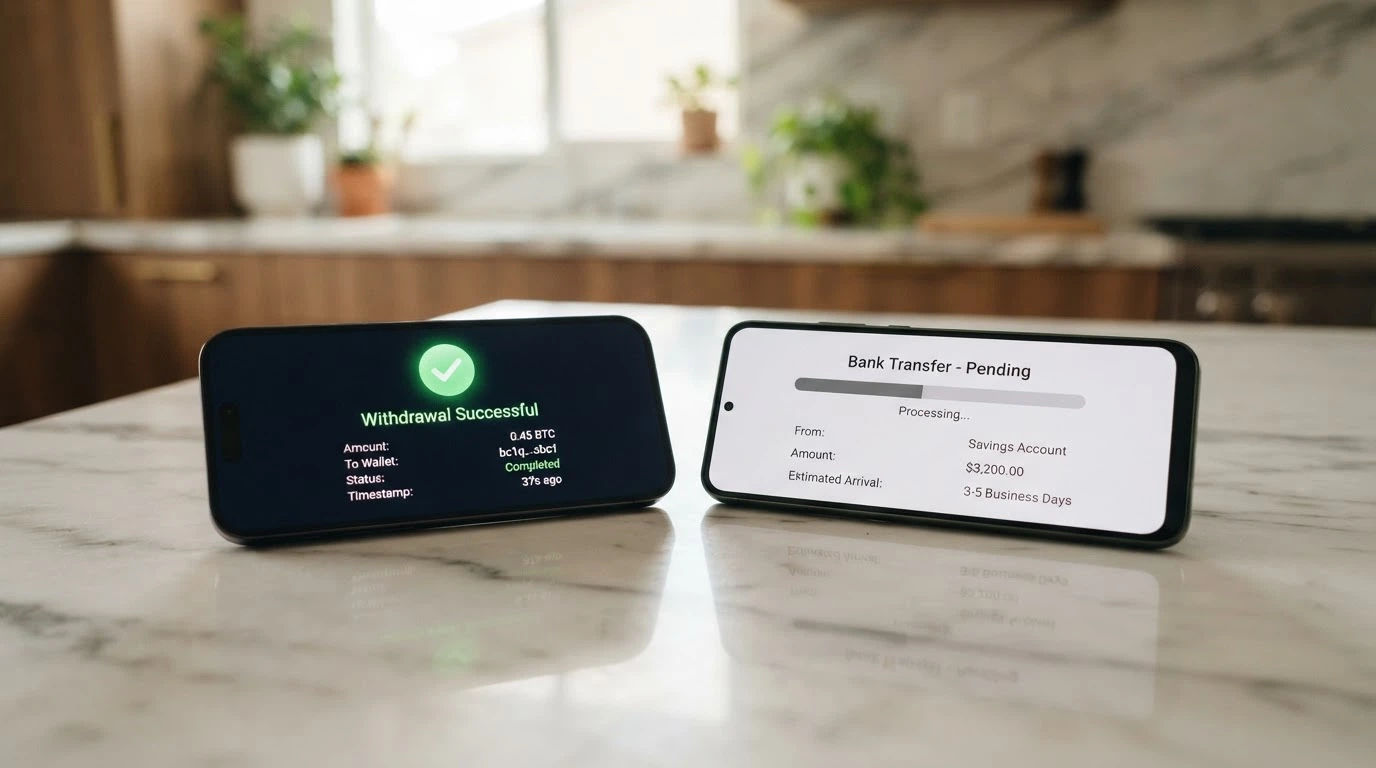
Two clocks run on every withdrawal, and they are different clocks. The first is the operator’s approval clock — the time between the player clicking “withdraw” and the casino’s payments team releasing the funds. The second is the transfer clock — the time between release and the money arriving in a bank account, e-wallet, or crypto wallet. Affiliate pages conflate the two. The casino’s marketing nearly always confuses them. A casino that “approves in 10 minutes” can still take five business days to deliver the cash through a card rail, because the operator has handed the transfer off to a slower network.
Incomplete KYC verification is the number one cause of withdrawal delays at online casinos. KYC — Know Your Customer — is the identity check that licensed operators must run before releasing funds, and offshore casinos replicate it because their payment processors require it. A player who has deposited without uploading a driving licence and a recent utility bill will have their first withdrawal held while the documents are reviewed, regardless of how fast the operator approves payouts. That delay is then attributed to the casino by the player, when it is actually the gap between deposit-time laxity and withdrawal-time rigour.
The third gap sits between the operator’s stated time and an independently measured one. Casino-stated times are taken from the operator’s own marketing pages. Independently tested times — the figures used on this page where research carries them — come from services that actually queued a withdrawal and timed the receipt. The difference is not subtle.
Pokies, Live Tables and Everything Between
Pokies dominate the Australian-facing market. Pragmatic Play pokies typically run at 96% to 96.5% RTP, with Nolimit City focused on high-volatility titles where the maximum win ceiling often exceeds 100,000x the stake. Live casino is widely available — Evolution and Pragmatic Play Live are the dominant providers — and most featured operators carry both verticals. Game choice does not directly change withdrawal speed, but it shapes what survives in the balance to be withdrawn: a 96% RTP pokie returns about four cents of every five back to the player over the long run, and a high-volatility title returns it in fewer, larger hits. The withdrawal clock does not care which game produced the balance.
The Fastest-Paying Offshore Casinos Australians Actually Use
Ranking is by independently tested withdrawal speed and method breadth. The Australian reader looking at this table should read it as the offshore market in miniature: Curaçao licences across the board, withdrawal times ranging from minutes to days, and bonus terms that range from ordinary to punishing. No operator in the table holds an Australian casino licence, because none can.
| Casino | Licence | Welcome Bonus (headline) | Wagering | Fastest Withdrawal (tested) | Number of Pokies |
|---|---|---|---|---|---|
| SkyCrown | Curaçao (offshore) | Up to A$8,000 + 400 free spins | 40x | PayID, under 15 minutes (avg 10 min processing) | 5,000+ |
| RocketPlay | Curaçao (offshore) | 100% up to AU$200 + 50 free spins | 30x (bonus only) | PayID, under 1 hour | 3,000+ |
| Royal Reels | Curaçao (offshore) | 3-tier up to A$2,500 | 35x (bonus only) | Crypto and PayID, instant | 5,400+ |
| Fair Go | Curaçao (offshore) | 5× 100% up to $200 (total $1,000) | 30x (deposit + bonus) | Crypto, 15–60 minutes after approval | 280 |
| Bizzo Casino | Curaçao (offshore) | Up to A$7,250 + 175 free spins + 1 bonus game | 40x | PayID or crypto | 8,000+ |
| WinSpirit | Curaçao (offshore) | Up to 400 EUR + 100 free spins | — | Crypto and e-wallet, within hours after approval | — |
| Stake | Curaçao (offshore) | — | — | Crypto, 1–2 hours | — |
| Rainbet | Curaçao (offshore) | 250% bonus package | 40x | Crypto (fee-free, uncapped) | 6,500 |
| Neospin | Curaçao (offshore) | — | — | Crypto, instant | — |
| BitStarz | Curaçao (offshore) | — | — | Crypto, 12–30 minutes | — |
The em-dash cells are not gaps in operator quality. They are gaps in research coverage for this run, and the per-operator write-ups below carry what is confirmed and route the reader to the operator’s own terms for what is not. The wagering column tells a story on its own: 30x sits at the floor of the set, 40x is the ceiling, and a player who reads the headline bonus without reading the multiplier is reading the wrong number.
SkyCrown
SkyCrown leads the set on headline package size: up to A$8,000 plus 400 free spins across four deposits, with 40x wagering on every stage. The first qualifying deposit is A$30, rising to A$50 by the fourth deposit tier. The library is the larger end of the offshore market — 5,000+ pokies from Pragmatic Play, Play’n GO, NetEnt and others — and the payout processing averages 10 minutes across 23 withdrawal methods, including PayID, MuchBetter, Skrill and multiple cryptocurrencies. PayID has been independently tested at under 15 minutes end-to-end at SkyCrown, which places it at the top of the fiat rail for Australian customers.
The 40x wagering is the price of the headline. A A$8,000 bonus cleared at 40x means A$320,000 in turnover before any withdrawal is possible, and at pokies contribution rates (100%) that is real money put through real spins. The speed advantage is real, but it only matters once the bonus is cleared — and clearing a A$8,000 bonus is a multi-week commitment at any stake level.
RocketPlay
RocketPlay runs the loosest welcome in the featured set. The headline is modest — 100% up to AU$200 plus 50 free spins — but the wagering is 30x on the bonus amount only (not bonus plus deposit), and the maximum cashout from the bonus is capped at AU$500. That trio of numbers is unusual: most offshore welcome packages in this market run higher in headline, heavier in wagering, and tighter in cashout cap. RocketPlay runs the opposite direction.
PayID withdrawals have been tested at under one hour for most Australian banks, with a AU$5,000 daily limit for standard-verification accounts. The library runs 3,000+ games on a Curaçao licence held by Dama N.V. RocketPlay offers the most efficient bonus-per-dollar in the set for those prioritizing speed, and the PayID performance holds its own against operators running far larger libraries.
Royal Reels
Royal Reels carries the most generous no-deposit offer in the featured set: AU$10 in bonus cash after phone verification, before any deposit is made. The deposit welcome runs in three tiers — 100% up to A$500, then 75% up to A$750, then 100% up to A$1,250 — with 35x wagering on the bonus only and an A$5 per-spin cap during the clear-down window. The library is 5,400+ pokies drawn from 40+ providers, and crypto and PayID withdrawals process instantly.
The per-spin cap is the structural limitation. A A$2,500 bonus cleared at 35x is A$87,500 in turnover, and the A$5 ceiling on each spin means the fastest path through that turnover is 17,500 spins — a number that is mechanically achievable but not realistic at a single session. The no-deposit AU$10 is genuinely free, but its cashout cap sits inside the same tight range as the broader no-deposit market: small enough that the offer reads as a foot-in-the-door, not as a bankroll.
Fair Go
Fair Go runs a RealTime Gaming library — 280 games, the smallest in the set — but compensates with a 5-deposit welcome package that totals up to $1,000 in bonus funds (100% match up to $200 on each of the first five deposits). The wagering is 30x on the combined deposit plus bonus amount, with no maximum cashout limit on deposit bonuses. The minimum deposit is $20 and the minimum withdrawal is $100.
Crypto withdrawals process within 15–60 minutes after approval. Bank transfers take up to 15 business days, which is the slowest rail on the page. Fair Go’s structural pitch is consistency over size: a smaller library, a longer welcome structure, a fairer no-cashout-cap rule on the bonus itself. Fair Go represents a consistent choice for players seeking to spread deposits across multiple sessions, particularly since it imposes no cashout ceiling on deposit bonuses.
Bizzo Casino
Bizzo carries the largest game library in the featured set at 8,000+ titles, and the welcome package is up to A$7,250 plus 175 free spins and a bonus game across four deposits. The wagering is 40x, the bonus validity is 14 days, and the maximum bet with an active bonus is A$8. Payment methods cover PayID, cards, Apple Pay, Google Pay and crypto — but e-wallets are not accepted, which is unusual for a market that typically routes through Skrill or Neteller.
The 14-day bonus validity is the structural squeeze. A A$7,250 bonus at 40x wagering is A$290,000 in turnover across 14 days, which works out to roughly A$20,700 in daily turnover before the clock runs out. At pokies contribution rates and the A$8 max bet, that is feasible for a high-volume player and impractical for anyone else. The library is genuinely the biggest, but the bonus clock is the tightest in the set.
WinSpirit
WinSpirit launched in 2022 and markets cashout speed as a core product feature — the position is that speed is the reason to play there, not the bonus size. Sixty-plus game providers sit behind the library, and crypto and e-wallet withdrawals typically complete within hours of approval. The welcome offer runs up to 400 EUR plus 100 free spins, with detailed bonus terms best checked on the operator’s own promotional page since this run did not confirm the wagering multiplier or validity window.
The pitch is honest. WinSpirit is one of the newer entrants in the Curaçao offshore market, and the marketing copy points at the withdrawal experience rather than the bonus headline. For a player who has been frustrated by long pending periods elsewhere, that positioning is meaningful — but the bonus specifics should be verified directly before committing a deposit.
Stake
Stake runs crypto-native: the platform was built around crypto deposits and crypto withdrawals, and the Curaçao licence sits behind a brand that is well-known in the crypto-gambling space. Crypto withdrawals have been independently tested at 1–2 hours, which places Stake in the middle of the crypto speed tier — slower than BitStarz at the top end, faster than card and bank rails at the bottom. The library is large and the AUD support exists through crypto conversion rather than a fiat wallet.
Welcome bonus specifics were not confirmed in this research run, and Stake’s promotional terms change frequently. The platform is best understood as a crypto operator that does not prioritise traditional welcome packages, and the right entry point is the operator’s current promotions page rather than a fixed headline from this article.
Rainbet
Rainbet supports ten cryptocurrencies (Bitcoin, DAI, Dogecoin, Ethereum, Litecoin, Ripple, Solana, Tether, Tron) plus bank transfer and USD fiat — the broadest crypto roster in the featured set. The library runs 6,500 games, the welcome is a 250% bonus package with 40x wagering, and crypto withdrawals are fee-free and uncapped, with no upfront KYC. That combination — broad crypto support, no withdrawal cap, no KYC at the withdrawal stage — is rare, and it makes Rainbet one of the more technically convenient operators for an experienced crypto user.
Rainbet’s own terms list Australia as a fully restricted territory. That is a contradiction the reader cannot ignore: an operator whose terms explicitly say “do not serve Australian customers” still appears in Australian search results and affiliate rankings. The speed and the breadth are real, but the Australian player opening an account is doing so against the operator’s own stated position, which removes any expectation of formal recourse if a dispute arises.
Neospin
Neospin runs the highest monthly withdrawal ceiling in the featured set at $80,000, with seven cryptocurrencies supported (including Bitcoin and Tether). Crypto processing is instant; fiat through bank transfer takes a couple of days. The monthly cap matters for a player withdrawing a large balance: a $10,000 weekly withdrawal at an operator with a $5,000 daily cap would stretch across two weeks, while Neospin’s monthly ceiling allows the same withdrawal to clear in days.
Welcome bonus specifics were not confirmed in this research run. The market position is high-volume-friendly: large withdrawal ceilings, instant crypto, multiple coin support. A player moving a meaningful balance should check the operator’s current promotional terms directly before depositing.
BitStarz
BitStarz sits at the top of the tested crypto speed tier: withdrawals have been independently measured at 12–30 minutes, the fastest in the featured set. The platform supports AUD through a combination of crypto conversion and fiat rails, and the Curaçao licence sits behind a brand that has been in the market longer than most of the set. The library is large, and the welcome bonus specifics were not confirmed in this run — BitStarz’s promotional terms rotate, and the operator’s own page is the right place to check the current package.
For an Australian player prioritising crypto speed above everything else, BitStarz is the answer the testing turned up. The trade-off is the usual one: an offshore Curaçao licence, no Australian regulator behind it, and the same ACMA blocking exposure as the rest of the set.
Why Fast-Withdrawal Bonuses Rarely Work Out as Promised
The speed of a payout and the cost of a bonus are not separate questions. They are the same question, viewed from different ends. A 40x wagering requirement means the player must turn over 40 times the bonus amount before any withdrawal is possible. At SkyCrown’s A$8,000 headline, that is A$320,000 in turnover before a cent of the bonus is withdrawable. The faster the casino pays out, the more starkly the bonus terms reveal themselves — because the player is not waiting on the operator, they are waiting on the wagering.
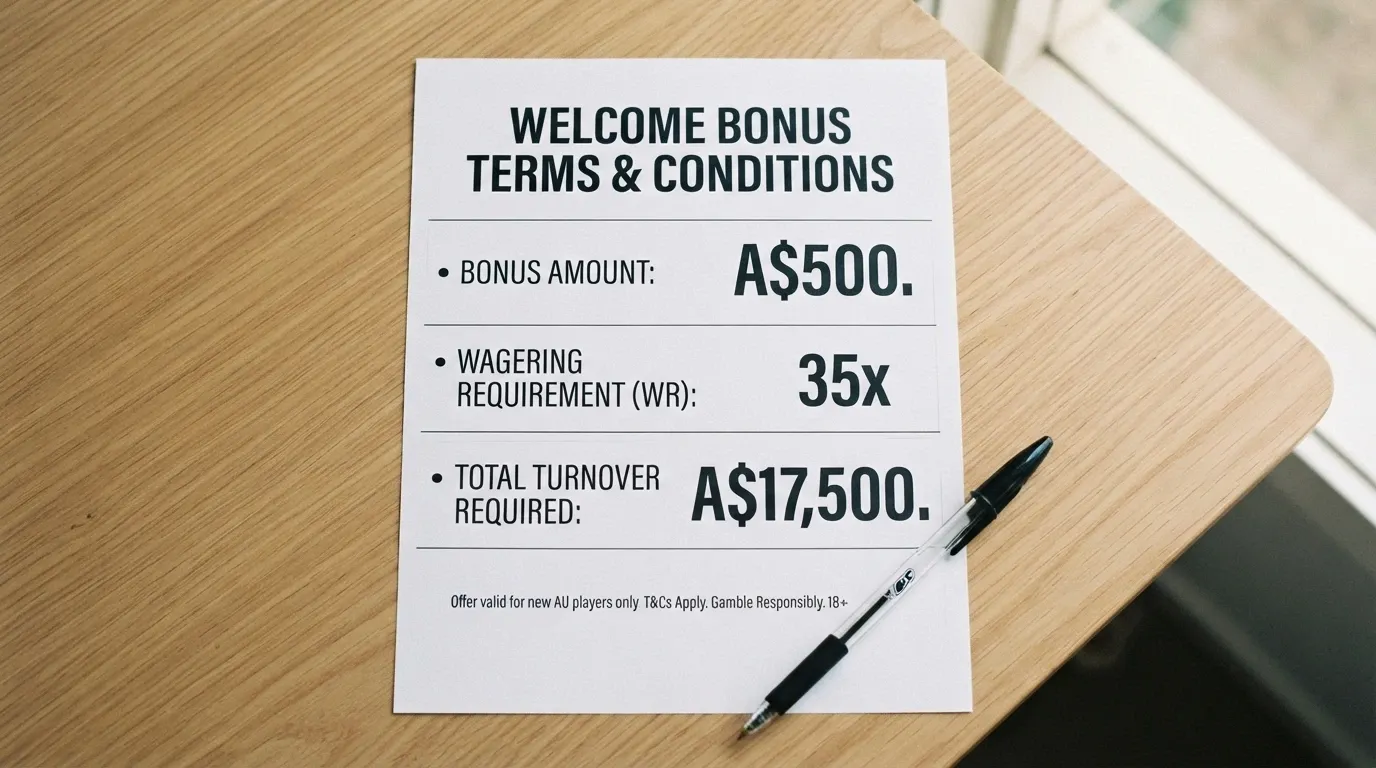
The illustrative cost of that bonus, in real terms, is the calculation that makes the page useful. Assume the player wagers only the bonus amount through Pragmatic Play pokies at 96% RTP. The expected loss across A$320,000 in turnover is A$320,000 multiplied by the 4% house edge, which is A$12,800. That is the real price of the headline bonus — the number that sits behind the A$8,000 figure once the wagering requirement is done. The deposit used to clear it is returned; the bonus itself is returned only after A$12,800 of expected loss. The casino’s speed advantage is irrelevant until the wagering is complete, and the wagering is the expensive part.
No-Deposit Offers Tied to Fast-Payout Strings
No-deposit bonuses at Australian-facing casinos typically offer AU$50 in bonus cash or 20–100 free spins, with wagering requirements sitting between 30x and 60x — anything below 30x is considered a solid deal. Maximum cashout from these offers typically ranges from AU$50 to AU$150. Free spins no-deposit expiry windows are 48–72 hours; free chips run 7–14 days. Royal Reels’ AU$10 no-deposit after phone verification sits inside this range: a small bonus, with the cashout cap that the broader market applies.
The structure is the same across operators. The bonus is genuinely free — the player does not deposit to receive it. But the wagering, the cashout cap and the expiry window together ensure that the free money does not become meaningful bankroll. A AU$50 no-deposit at 50x wagering is AU$2,500 in turnover, with a AU$150 cap on whatever survives. The player is being paid a small amount to go through a withdrawal test.
Wagering Requirements That Cancel Out Withdrawal Speed
The numbers run hot. SkyCrown at 40x wagering, RocketPlay at 30x, Royal Reels at 35x with an A$5 per-spin cap, Fair Go at 30x on deposit plus bonus. Each multiplier turns the headline bonus into a turnover figure that ranges from tens of thousands to hundreds of thousands of dollars. The contribution weighting is consistent across the market: pokies contribute 100%, table games contribute 0–20%, and live casino games typically contribute nothing.
A player with an active bonus who switches to live casino to clear it faster is locking their withdrawal behind the slot-only clear-down, because the live tables are not counting toward the requirement. The same player who tries to speed-clear a bonus at higher stakes will run into the per-spin cap (Royal Reels’ A$5, Bizzo’s A$8) and invalidate part of the wagering. The bonus terms are designed to make speed irrelevant until the requirement is done — and the requirement is the expensive part.
Payment Methods That Actually Deliver Same-Day Withdrawals
Not all rails are equal. Crypto is the fastest method at Australian-facing online casinos, with most transactions settling in under 30 minutes after operator approval. USDT on the TRC-20 network confirms in under one minute, with network fees under AU$2. E-wallets deliver casino-to-wallet transfers within 1–6 hours of approval. Card withdrawals take 1–5 business days. Bank transfers take 3–5 business days. The method the player picks determines whether the money lands same-day or next week — and the method is a bigger lever than the operator’s processing speed.
POLi shut down on 30 September 2023 after BPAY withdrew support. Any operator still listing POLi as a payment method is running outdated documentation, and the reader should treat that as a signal about the operator’s attention to its payment page.
PayID: Australia’s Own Instant Payment Rail
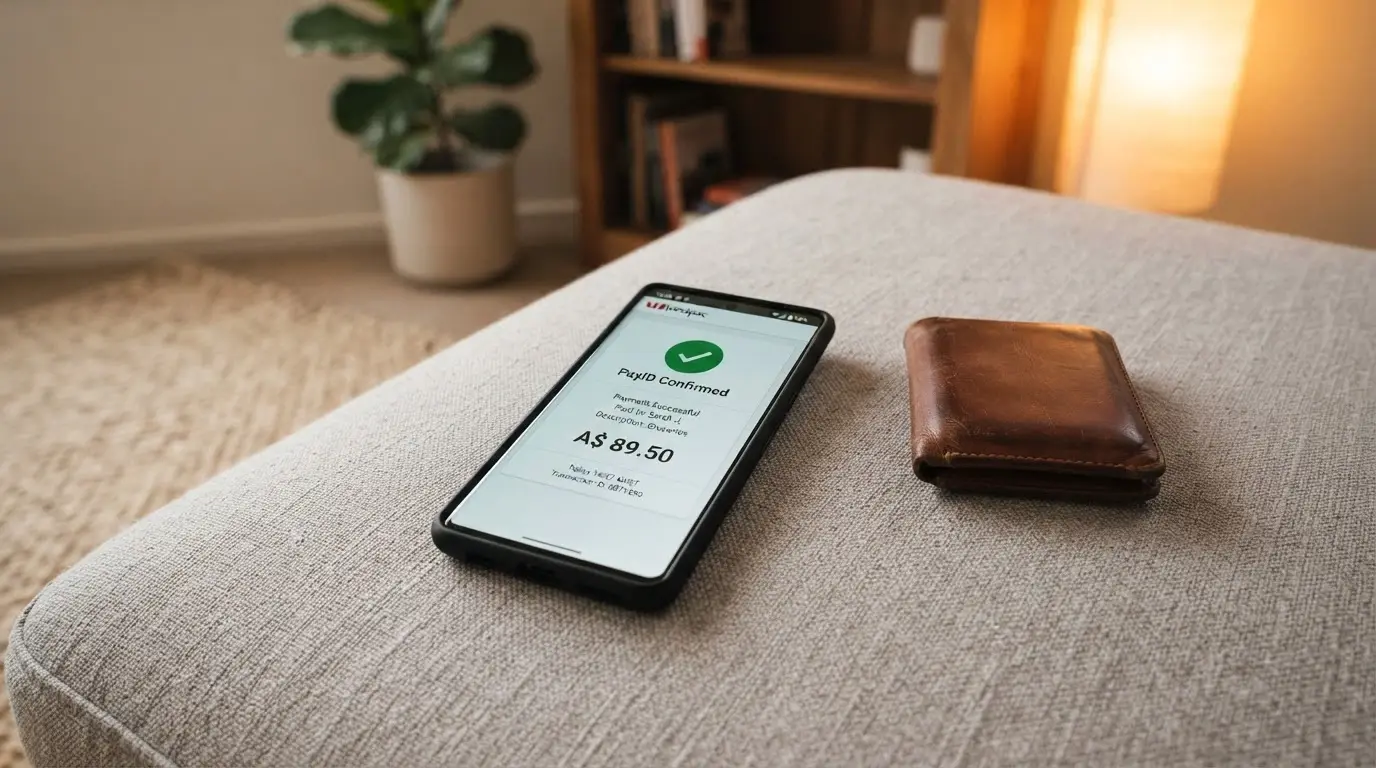
PayID operates through Australia’s New Payments Platform, which processes transactions in real time, 24 hours a day, 365 days a year, with no batch processing windows. The rail is Australian-built and Australian-controlled, and it is the fastest fiat settlement network available to a domestic customer. For an Australian player at an offshore casino, PayID is the closest thing to a crypto-speed payout without the volatility exposure.
Tested speeds at the featured operators place PayID at under 15 minutes at SkyCrown, under one hour at RocketPlay (with a AU$5,000 daily limit for standard-verification accounts). The constraint is operator-side processing, not the rail itself: the NPP delivers in real time, but the casino’s payments team still has to approve the withdrawal before the funds are released. PayID is the fastest fiat option, and the gap between PayID and bank transfer is measured in days, not minutes.
Crypto vs E-Wallets vs Cards: The Speed Hierarchy
| Method | Typical Settlement Time | Availability at Featured Operators |
|---|---|---|
| Crypto (USDT TRC-20) | Under 1 minute after approval | Stake, BitStarz, Rainbet, Neospin, SkyCrown, Bizzo, RocketPlay |
| Crypto (other) | Under 30 minutes after approval | Most featured operators |
| PayID | Under 15 minutes to under 1 hour | SkyCrown, RocketPlay, Royal Reels, Bizzo |
| E-wallets (Skrill, Neteller, MuchBetter) | 1–6 hours of approval | SkyCrown, WinSpirit, others (Bizzo does not accept e-wallets) |
| Card withdrawals | 1–5 business days | Most featured operators |
| Bank transfer | 3–5 business days (Fair Go: up to 15 business days) | Most featured operators |
The table is read top-to-bottom by speed, and the gap between the top rail and the bottom is the difference between a withdrawal cleared inside half an hour and a withdrawal that takes the better part of a fortnight. The middle of the table — PayID and e-wallets — is the practical sweet spot for fiat-based Australian players: real-time or near-real-time settlement, no crypto exposure, no credit-card or crypto payment-method flag for an operator asking the player to deposit through a rail the IGA prohibits.
Withdrawal Limits That Cap Your Cashout Speed
Even the fastest method cannot help if the operator caps daily or monthly withdrawals below what the player wants to move. RocketPlay’s AU$5,000 daily limit for standard-verification accounts is a structural constraint: a player withdrawing a A$20,000 balance stretches across four days at the daily cap, regardless of how fast each individual PayID transfer settles. Neospin’s $80,000 monthly ceiling is the highest in the featured set, and it is the ceiling a high-volume player should anchor on.
Verification tier matters. Standard-verification accounts sit at lower caps; enhanced-verification accounts (full KYC, source-of-funds documentation) unlock higher limits at most operators. The relationship runs in one direction: the more thoroughly the player is verified, the more they can withdraw, and the faster the larger withdrawals clear. That structure is reasonable on its face, but it sits against the KYC delay fact above: the same documents that unlock the higher limit are the documents the casino will hold the first withdrawal for if they are not already on file.
Crypto Withdrawals: Fastest Rail, Biggest Trade-Off
Crypto delivers the fastest settlement time of any method at Australian-facing offshore casinos. The trade-off runs in three directions: price volatility, wrong-network loss risk, and the legal status of crypto as a wagering payment method. Credit cards, credit-related products and digital currency are banned as payment for online wagering under the Interactive Gambling Amendment (Credit and Other Measures) Act 2023, which commenced on 11 June 2024. An operator that asks an Australian player for a crypto deposit is operating outside Australian rules — the payment method itself is the tell.
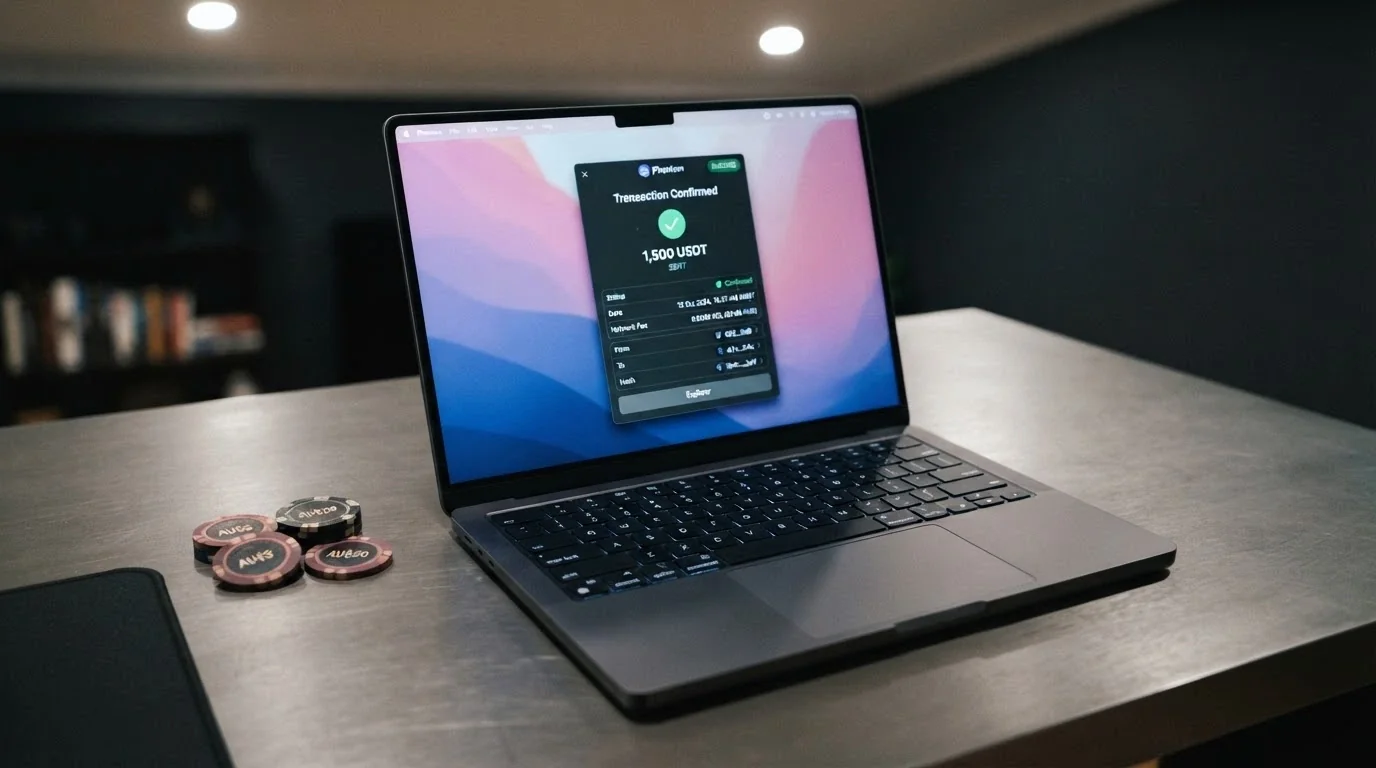
An Australian who is asked for a credit card or a crypto deposit by a gambling site is being served by someone outside the Australian rules. The payment method is itself a tell. That line is the cleanest framing of the structural situation: the payment method the operator accepts is a signal about where the operator sits, and a crypto-accepting casino sits outside the regime the IGA established.
Bitcoin, USDT and the Networks That Clear Fastest
Not all crypto rails are equal. USDT on the TRC-20 network confirms in under one minute, with network fees under AU$2. Bitcoin on-chain confirmation varies with network congestion and can lag in fee spikes. The network the player picks determines both speed and cost — and the player picks the network at the withdrawal screen, often without realising the choice matters. A USDT withdrawal requested on the ERC-20 network rather than TRC-20 will confirm, but it will cost more in gas fees and take longer to settle.
Rainbet supports ten cryptocurrencies (Bitcoin, DAI, Dogecoin, Ethereum, Litecoin, Ripple, Solana, Tether, Tron) plus bank transfer and USD fiat. Neospin supports seven (including Bitcoin and Tether). BitStarz and Stake sit at the crypto-native end of the set, with audited 12–30 minute (BitStarz) and 1–2 hour (Stake) processing times. The breadth of the crypto roster varies — and the Australian player should match the network to the speed they need.
What Crypto Bettors Give Up for Speed
Three trade-offs stack up. First, price volatility: a Bitcoin withdrawal requested at one AUD-equivalent figure can land in the player’s wallet at a lower figure by the time it converts back to fiat, and the casino is not making up the difference. Second, wrong-network loss: an address error — sending USDT to a Bitcoin address, or ERC-20 USDT to a TRC-20 wallet — is irreversible, and the player bears the loss. Third, the legal status: crypto has been banned as a payment method for online wagering under Australian law since 11 June 2024, and an operator that accepts it faces penalties of up to $247,500 for failing to enforce the ban. The payment method signals that the operator is outside Australian rules.
The tax position is not as clean as the marketing suggests. Gambling winnings are not assessable income under section 6-5 of the ITAA 1997, and gambling losses are not deductible under section 8-1 — unless the person is carrying on a business of betting or gambling. The crypto-to-AUD conversion at the point of cashout is a separate question, and one where the Australian Taxation Office’s position on crypto-asset disposals interacts with the gambling-proceeds exclusion. The reader should not assume the simplicity of the gambling-tax rule extends to the crypto-conversion step.
Mobile Cashouts: Speed Fits in Your Pocket
Mobile access is universal across the featured operators. Most operate as mobile-web platforms rather than native apps, because the major app stores restrict real-money gambling applications — particularly in the Australian market, where the IGA and platform-store policies both push operators toward browser-based mobile play. The sign-up-to-cashout flow is designed to be completed on a phone: deposit through PayID or crypto, upload KYC documents through the mobile camera, request a withdrawal from the same browser session.
The speed does not change between desktop and mobile. The withdrawal is method-dependent, not device-dependent — the operator’s approval clock and the transfer rail run on the same networks regardless of how the player accesses the site. The friction point is KYC: uploading documents through a phone camera can produce blurry images that the payments team rejects, which sends the verification back to the start. A player cashing out from a phone should photograph documents in good light, capture all four corners, and check the upload before requesting the withdrawal.
The Pokies and Tables That Pay Out Quickest
Game choice does not change withdrawal speed directly. What it changes is how much of the balance survives to the withdrawal stage. A 96% RTP pokie returns, on average, 96 cents of every dollar wagered across enough spins for the math to settle. A 95% RTP pokie returns 95 cents. The one-percentage-point difference is small per spin, and it compounds across the turnover a bonus requires. The Pragmatic Play pokies this market runs on typically carry 96% to 96.5% RTP, with Nolimit City at the high-volatility end of the spectrum.
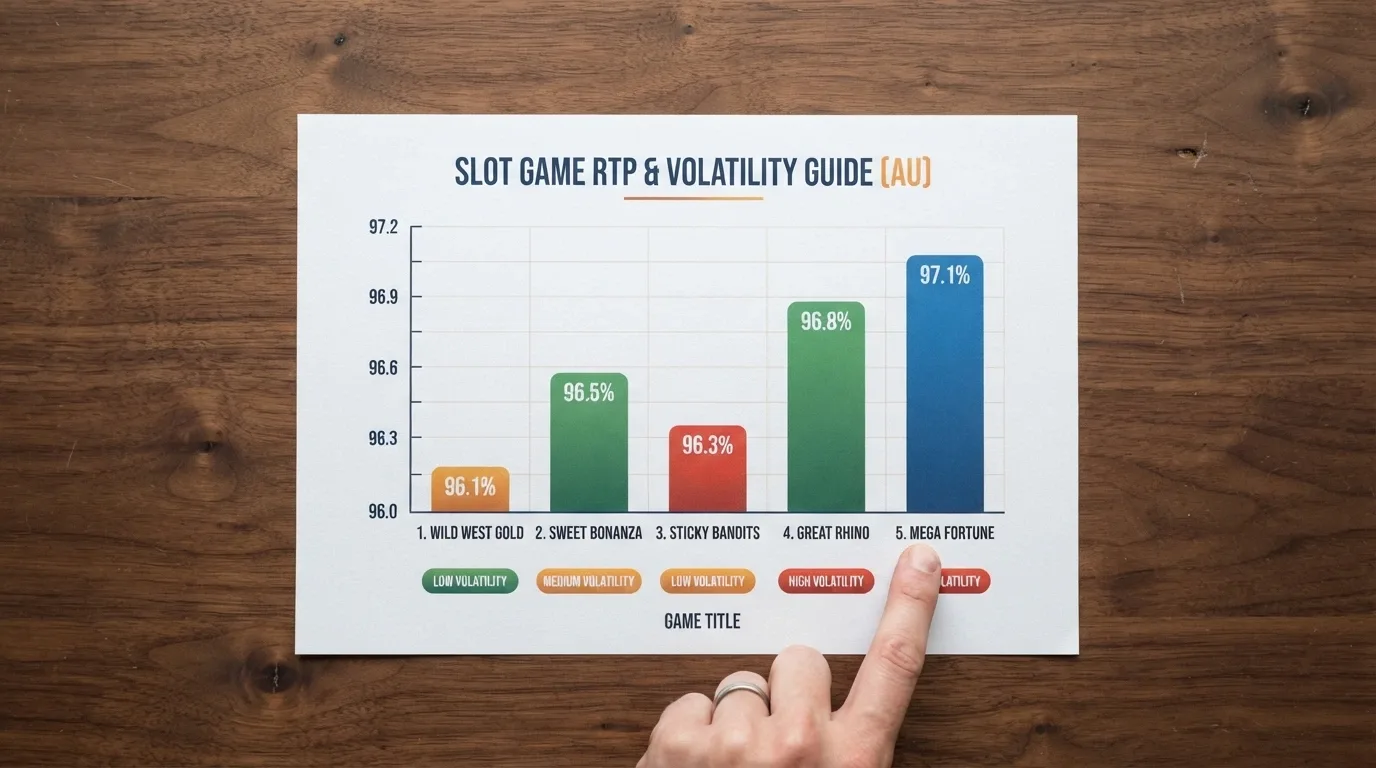
Live casino is widely available — Evolution and Pragmatic Play Live are the dominant providers — and most featured operators carry both verticals. Live tables do not contribute toward wagering requirements at most operators. A player with an active bonus who plays live roulette or live blackjack is locking their clear-down behind the slot-only contribution, even if the live table feels like a faster way to run through the turnover.
Pokies with Verified RTP at Fast-Paying Casinos
| Slot Title | Provider | RTP | Volatility |
|---|---|---|---|
| Big Bass Bonanza | Pragmatic Play | 96.71% | Medium/high |
| Sweet Bonanza | Pragmatic Play | 96.48–96.51% | High |
| Gates of Olympus | Pragmatic Play | 96.50% | High |
| Wolf Gold | Pragmatic Play | 96.01% | Medium |
| Book of Dead | Play’n GO | 96.21% | High |
| Starburst | NetEnt | 96.09% | Low/medium |
| Immortal Romance | Games Global / Microgaming | 96.86% | High |
| The Dog House | Pragmatic Play | 96.51% | High |
| Dead or Alive 2 | NetEnt | 95.92% | High |
A warning sits on top of this table. Many Pragmatic Play titles release in multiple certified RTP configurations — Gates of Olympus, for instance, is available at 96.50% or at a reduced configuration of 84.08%. The version running at any casino depends on which configuration the operator licensed, not on the player’s choice. The reader cannot assume the table RTP is the RTP running at the offshore casino they are using; the operator picked the configuration when it licensed the game.
Live Casino Tables and the Withdrawal Clock
Live casino games typically contribute nothing toward wagering requirements. The rule is consistent across the offshore market: pokies count at 100%, table games at 0–20%, live casino at 0%. A player clearing a welcome bonus cannot speed the process by switching to live tables — the live play is entertainment spend, not wagering-requirement progress. Once the bonus is cleared, live casino plays on its own economics (lower house edge on blackjack, higher on specialty games) without the contribution penalty.
The practical effect is that a live-casino player clearing a bonus is running two clocks at once: the wagering clock (which only slot play moves) and the balance clock (which live play is steadily draining through the house edge). The first withdrawal is gated by the wagering clock, and the wagering clock is gated by slot play. A live-casino-heavy player at a bonus-carrying casino should expect the bonus to take longer to clear than the slot-heavy player’s intuition suggests.
What Australian Law Actually Says About Online Casinos
Online casino games, online pokies and in-play sports betting are prohibited under the Interactive Gambling Act 2001. It is an offence to provide these services to a person in Australia. The Act was strengthened by the Interactive Gambling Amendment Act 2017, which closed loopholes used by offshore operators and gave the ACMA enforcement and site-blocking powers. The individual player is not prosecuted under the IGA — the Act targets the provider of the prohibited service, not the person using it.
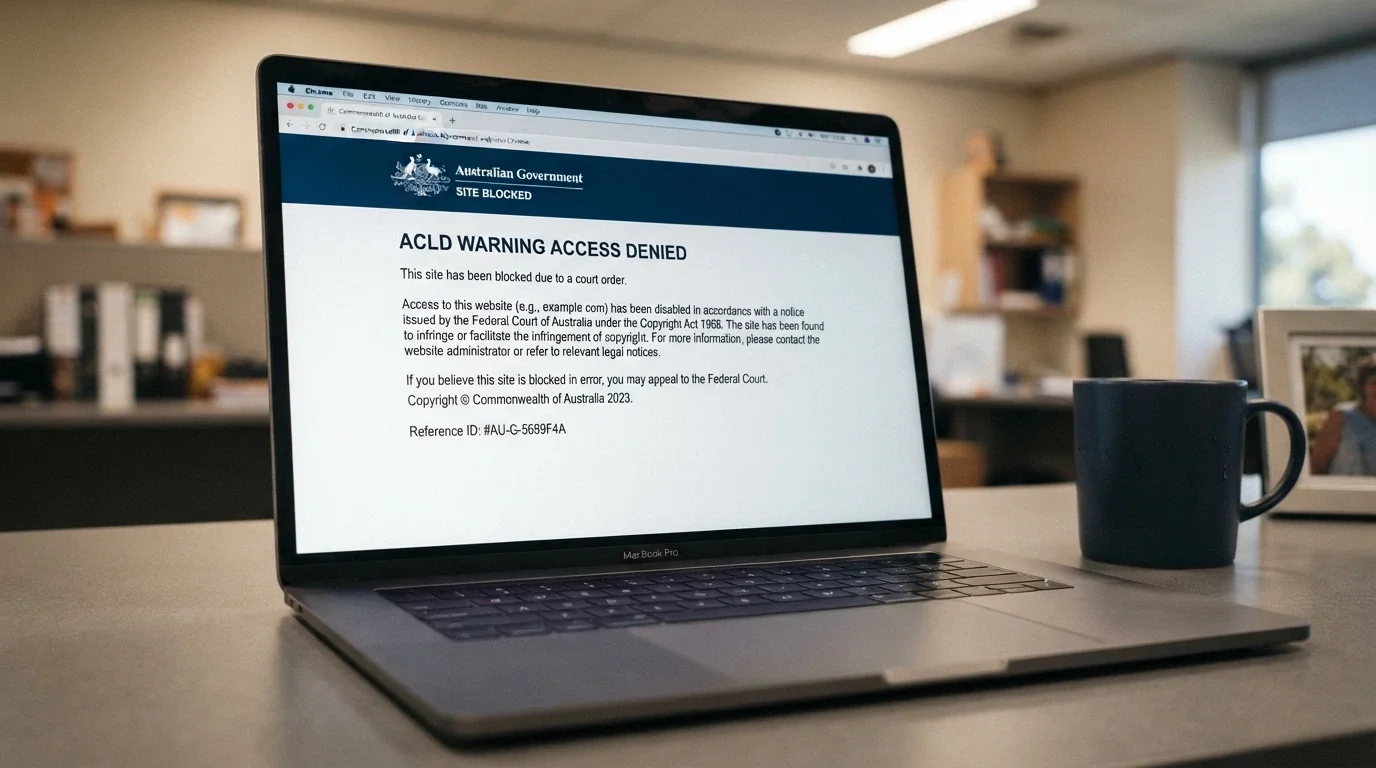
No online casino licence exists anywhere in Australia — not federally, not in any state or territory. What is licensed is wagering on races and sport placed before the event begins, plus lotteries and keno, through operators licensed by state and territory regulators. The Northern Territory Racing and Wagering Commission licenses the major online bookmakers (Sportsbet, bet365, Ladbrokes and roughly fifty others) for terms of up to twenty years. None of those licenses covers casino games or pokies.
The Interactive Gambling Act: What It Bans and What It Allows
The IGA 2001 prohibits online casino games, online pokies and in-play sports betting. The 2017 amendments gave the ACMA enforcement and site-blocking powers, and the agency has used them: 1,564 illegal gambling and affiliate websites have been blocked by Australian ISPs as at March 2026, and more than 225 illegal services have withdrawn from the Australian market since enforcement was strengthened. What is licensed is pre-event wagering, lotteries and keno — through operators holding state or territory wagering licences, which the Northern Territory regulator dominates.
The line between licensed and prohibited is structural, not grey. A bookmaker licensed in the Northern Territory cannot offer online casino games, even to its existing Australian customer base. An offshore casino offering casino games to Australian customers is operating outside the regime the IGA established, and the ACMA can — and does — block it at the ISP level.
The 2026 Gambling Reform: What Changes on 1 January 2027
The Interactive Gambling Amendment (Gambling Reform) Bill 2026 passed both Houses of Parliament on 19 August 2026, with commencement on 1 January 2027. The reform package creates AdStop — a national wagering advertising opt-out register administered by the ACMA — and introduces direct marketing restrictions: inducements are prohibited for 14 days after a customer signs up and for 90 days after a person deregisters from BetStop. Banks and payment providers gain express authority to block transactions to illegal gambling operators from the same date.
The reform does not legalise online casino. It tightens the existing prohibition, gives the banks a tool to enforce it at the payment rail, and creates a parallel advertising-control regime for the licensed wagering market. For an Australian player at an offshore casino, the bank-blocking authority is the most consequential change: the player’s own bank can decline to process a transfer to an illegal operator, and the operator’s withdrawal request can stall at the payment-processor stage for reasons that have nothing to do with KYC or approval time.
What You Forfeit When You Play at an Offshore Casino
- No consumer protection under Australian law: a dispute with an offshore Curaçao-licensed operator has no Australian complaints body to escalate to, and the ACMA’s jurisdiction does not extend to private disputes between an Australian customer and a foreign operator.
- No BetStop coverage: BetStop binds Australian-licensed wagering services only, and an offshore casino will continue to accept a self-excluded person’s deposits and process their withdrawals without reference to the register.
- ACMA blocking risk: the casino can be added to the ACMA blocklist at any time, and an Australian ISP can be ordered to block access — leaving balances on deposit with no Australian recourse.
- Payment-method signals: an operator asking for credit card or crypto deposits is operating outside Australian rules, and the payment method itself is a tell about where the operator sits.
The Responsible Gambling Protections You Lose Offshore
Australian players have access to one of the world’s strongest responsible-gambling infrastructures. BetStop, the National Self-Exclusion Register, went live in August 2023. As at 31 July 2026, BetStop had 67,480 registrations, of which 41,290 exclusions were still active. Seventy-eight per cent of registrants were under 40, and 38% chose lifetime exclusion. One registration excludes a person from every Australian-licensed online and phone wagering service.

None of this infrastructure covers offshore casinos. BetStop binds Australian-licensed wagering services only — an offshore casino is not connected to the register and will keep accepting a self-excluded person’s money. The register is the strongest single tool available to an Australian who wants to stop, and the offshore route renders it inert.
BetStop Does Not Cover Offshore Casinos — Here Is What That Means
The gap is concrete. A person who has registered with BetStop, selected a minimum exclusion period, and confirmed the exclusion cannot open an account or place a bet with any Australian-licensed bookmaker for the duration of their registration. That same person can open an account at any offshore casino on this page, deposit funds, play, and withdraw — and the register will not know, and the casino will not check. The exclusion is real; its scope is narrower than the player who registered for it expected.
For a self-excluded person reading this page in the hope that an offshore casino sits outside the Australian rules they have agreed to observe — the page is not an alternative to the commitment they have made. The BetStop registration is a personal commitment the offshore route does not honour.
Practical Help That Does Exist
- National Gambling Helpline: 1800 858 858 — free, confidential, staffed 24/7. The line is the single most direct route to a counsellor, regardless of where the gambling takes place.
- Gambling Help Online: gamblinghelponline.org.au — online chat and counselling resources, available around the clock, with self-help tools and structured programs.
- About 2.1% of Australian adults — roughly 430,000 people — experience problem gambling, with high-risk gambling at 1.8% (Australian Institute of Health and Welfare, 2022). The reader is not alone in the experience; the help lines are staffed by people who work with this every day.
How We Selected and Tested These Operators
Operators were identified from Australian-facing search results and affiliate rankings, cross-checked against ACMA enforcement records, and ordered by independently tested withdrawal speed where available, with method breadth and game library as secondary criteria. Sources drawn on include StageandCinema, PayoutVerdict and Gambling Insider, with operator-level claims verified against the ACMA’s blocking register and the Curaçao licensing records where those records were available.
No operator on this page holds an Australian casino licence, because no Australian casino licence exists. The ranking does not constitute a recommendation. The page describes what these operators offer and how fast they pay, and it lays out what an Australian player gives up by using them. The decision to deposit sits with the reader, and the decision should be made with the legal and consumer-protection gaps in plain view.
Where research did not confirm a specific figure this run — welcome bonus terms for some operators, wagering multipliers for others — the per-operator write-up carries what is confirmed and directs the reader to the operator’s own terms page for the rest. The em-dash cells in the comparison table are not gaps in operator quality; they are gaps in research coverage, and the page is honest about the difference.
Fast Withdrawals Exist — Here Is What They Actually Cost You
The speed is real. PayID under fifteen minutes, crypto under thirty, e-wallets within hours — these are tested figures at operators Australian players actually reach. The bonus headlines are large and the libraries are wide and the marketing pages read well. None of that is in dispute.
What the speed does not close is the gap. Online casino is prohibited under the Interactive Gambling Act 2001, and no online casino licence exists in Australia. Every casino on this page is offshore, Curaçao-licensed, and outside the ACMA’s effective jurisdiction. The player is not prosecuted under the IGA — but the player is also not protected. No Australian consumer recourse. No BetStop coverage. No complaints body. The casino can be blocked at the ISP level at any time, and the player’s own bank may, from 1 January 2027, decline to process the transfer that funds the deposit or returns the withdrawal.
The bonus terms are designed to make the speed advantage academic until the wagering is cleared. A 40x bonus on a A$8,000 headline is A$320,000 in turnover — at an illustrative 4% house edge across that turnover, the expected cost is A$12,800 to the player. The free spins expire in 48–72 hours. The no-deposit cashout caps at AU$50 to AU$150. The math is what the math is, and the math is the reason the speed promise is not the whole story.
A player reading this page should weigh two things. First, whether the speed of a PayID or crypto withdrawal is worth the loss of Australian consumer protection and responsible-gambling infrastructure. Second, whether the bonus terms at any individual operator are a fair exchange for the deposit the bonus requires. The page documents what these operators offer and how fast they pay. The decision to use them sits with the reader, and the decision should be made with the legal and consumer-protection gaps fully in view.
Frequently Asked Questions
Are fast withdrawal casinos legal in Australia?
No. Online casino games and online pokies are prohibited under the Interactive Gambling Act 2001. Every casino reaching Australian players is offshore, typically Curaçao-licensed, and outside Australian regulatory reach. The player is not prosecuted under the IGA, but no Australian consumer protection or responsible-gambling infrastructure (including BetStop) covers offshore casinos.
What is the fastest withdrawal method at an Australian online casino?
Crypto is the fastest at most offshore casinos, with USDT on TRC-20 confirming in under one minute and most crypto withdrawals settling in under thirty minutes after operator approval. PayID is the fastest fiat rail, settling in real time on Australia’s NPP once the operator releases the funds — typically under fifteen minutes at SkyCrown and under one hour at RocketPlay.
How long does a PayID casino withdrawal take in Australia?
PayID processes in real time on the New Payments Platform — twenty-four hours a day, no batch windows. End-to-end time depends on the operator’s approval clock. At SkyCrown, PayID has been independently tested at under fifteen minutes; at RocketPlay, under one hour. The rail itself is instant; the operator’s payments team is the gate.
Can I use crypto to withdraw from an online casino in Australia?
Crypto settles the fastest of any method at offshore casinos, but credit cards and digital currency (including crypto) have been banned as payment methods for online wagering under Australian law since 11 June 2024. An operator accepting crypto is operating outside Australian rules. The penalty for failing to enforce the ban is up to A$247,500 per operator.
Why do some casino withdrawals take days when the casino says “instant”?
Two clocks run on every withdrawal: the operator’s approval clock and the transfer rail’s settlement clock. “Instant” usually refers to the approval clock. Card withdrawals take one to five business days on the transfer rail, and bank transfers take three to five — regardless of how fast the casino approves the payout. Incomplete KYC verification is the most common cause of approval-clock delays.
What is KYC verification and why does it delay my payout?
KYC — Know Your Customer — is the identity check that licensed operators and payment processors require before releasing funds. An offshore casino that skipped KYC at deposit will run it at the first withdrawal. Driving licence, recent utility bill, proof of address — the documents take a day or two to review, and the first withdrawal is held until the review completes. Depositing with full KYC in place removes the delay.
Do Australian fast-payout casinos charge withdrawal fees?
Most featured operators do not charge withdrawal fees on PayID, e-wallet or bank transfers, though the player’s bank or e-wallet provider may apply its own fee. Crypto network fees apply on the blockchain side: USDT on TRC-20 costs under AU$2 per transaction, while ERC-20 fees vary with Ethereum network congestion. Rainbet advertises fee-free, uncapped crypto withdrawals; other operators’ fee policies vary and should be checked before requesting a payout.
What happens if an offshore casino refuses my withdrawal?
There is no Australian complaints body with jurisdiction over a Curaçao-licensed offshore operator. The ACMA enforces the IGA against the provider, not in private disputes between the provider and an Australian customer. A player whose withdrawal is refused at an offshore casino has, in practical terms, no formal recourse — which is one of the consumer protections Australian law provides to users of licensed wagering services and does not extend to users of offshore casinos.
Is my money safe at a casino without an Australian licence?
“Curaçao-licensed” means the operator filed paperwork with a foreign regulator; it does not mean the operator is required to keep player funds segregated, respond to complaints, or maintain a dispute-resolution process accessible to Australian customers. The operator can be blocked by the ACMA at any time. The protections that Australian law provides to users of licensed wagering services — segregated funds, dispute resolution, BetStop — do not extend to offshore casinos.