Live blackjack from Australia: the game, the offshore market, and the prohibition that defines it
Online casino games are prohibited to people in Australia under the Interactive Gambling Act 2001, strengthened by the Interactive Gambling Amendment Act 2017. There is no licence for an online casino anywhere in the country — not federally, not in any state or territory. Every site an Australian plays live blackjack on in 2026 is offshore, unlicensed locally, and sitting outside the protections that licensed operators are required to provide. That is the defining fact of this market, and it is the one this page opens with rather than burying at the bottom of a footnote.
What follows is the rest of the picture. The game itself: how live dealer blackjack works, what makes a hand win or lose, and why the variant you sit at matters more than the strategy chart you memorise. The operators Australians actually use, ranked by what they offer rather than what a local licence would guarantee. The bonus headline versus the bonus reality, with the arithmetic that turns a 450% match into a turnover target and an expected loss. The deposit method as a tell of who you are really dealing with. The law that shapes the space around all of it. And the responsible-gambling tools that exist — and the gap between those tools and the offshore sites this page describes.
Data current as of 25 November 2026 and verified against the Australian Communications and Media Authority’s register of illegal online gambling services and the regulator’s quarterly action reports.
- Why your 2026 online blackjack game sits outside Australian law
- Live blackjack: why the dealer, not the software, changes everything
- Where Australians actually play live blackjack in 2026
- Blackjack bonuses: what the welcome offer is really worth
- Why your deposit method tells you who you are really dealing with
- The law: what the Interactive Gambling Act means for your blackjack game
- Staying in control: the tools that work — and the ones offshore sites skip
- How we chose these live blackjack sites
- Your blackjack game, on your terms
- Frequently asked questions about live blackjack online in Australia
Why your 2026 online blackjack game sits outside Australian law
The Interactive Gambling Act 2001 prohibits the provision of online casino games, online pokies and in-play sports betting to people in Australia. The 2017 amendment closed most of the loopholes the original statute left open. The IGA does not prosecute the player who uses an offshore service; it targets the provider, with civil penalties reaching A$2,475,000 per day for an individual and A$12,375,000 per day for a corporation. But it leaves the Australian player on a service that is, by definition, illegal to offer — and outside every protection that legal status would normally attract.
Australia’s iGaming market is forecast to grow from USD 5.2 billion in 2024 to USD 8.9 billion by 2033, driven by sports betting, esports and multiplayer games. None of that growth is online casino, because the online casino product itself is banned. What an Australian who searches for live blackjack online finds is a parallel market run by offshore operators, served by Curaçao-licensed platforms, advertised through affiliate sites, and paid for in AUD at the cashier if the player is lucky or in cryptocurrency if they are not. This page describes that market honestly because pretending it does not exist serves no reader.
What online blackjack actually is
Blackjack is a card game played against the dealer. The aim is to assemble a hand closer to 21 than the dealer’s without going over. Number cards are worth their face value, picture cards are worth ten and the ace counts as either one or eleven at the player’s election. Two cards are dealt to each position, one face up and one face down for the dealer, and from there the player decides whether to take another card (hit), stop (stand), double the bet for one more card (double down) or split a matching pair into two separate hands. The dealer resolves the round last under fixed rules: stand on 17 or higher, hit on 16 or lower.
Online blackjack replaces the felt table with a digital interface and, in the live-dealer format that this page focuses on, a video stream of a real dealer running a real shoe of cards from a studio. The game has the lowest house edge of any casino offering once basic strategy is applied, which is why it survives on casino floors where every other table carries a fatter margin for the house. It survives online for the same reason. What changes online is the surroundings: the table is a browser tab, the shoe is whatever the provider runs, and the player decides what to do with a click instead of a gesture.
Real-money blackjack and the Australian player
Every blackjack site that serves an Australian IP address is taking real money from that Australian at a service no Australian authority licenses. AUD deposits are common at the cashier — most operators in the set route through PayID, POLi, Visa debit, Bitcoin or a bank transfer — and the wins are paid back in AUD on the same rails, with crypto the default for the offshore operators that have moved furthest from the Australian banking system. The player is not prosecuted for any of this. The IGA’s enforcement weight falls on the provider.
What an Australian forfeits by playing offshore is the subject of the section on unregulated sites. Briefly: no Australian consumer protection, no ACMA dispute resolution, no BetStop coverage, and the site itself can be blocked at any time by an ISP acting on an ACMA referral. The game still plays. The arithmetic of the house edge still applies. The legal and protective architecture that an Australian might assume covers their play simply does not reach offshore.
Live blackjack: why the dealer, not the software, changes everything
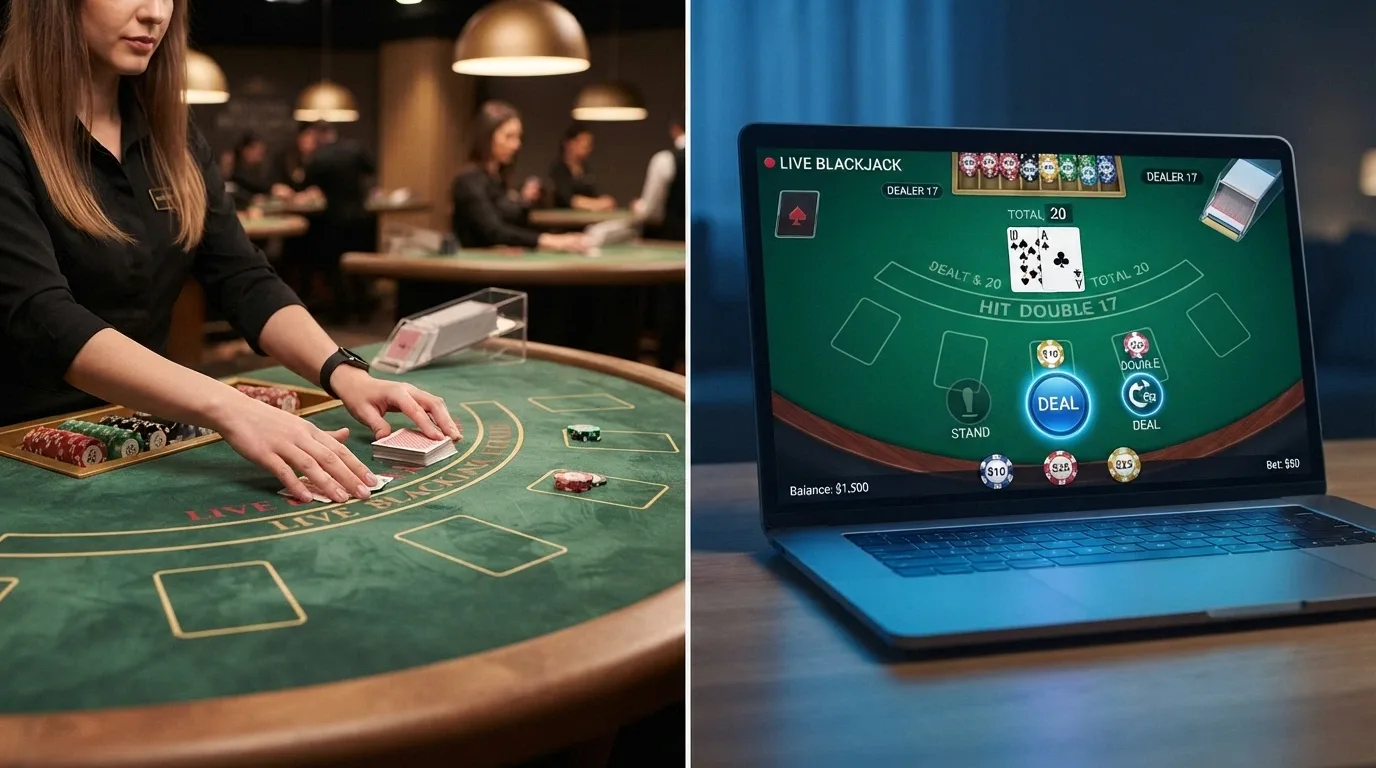
Live-dealer blackjack is the same game as RNG blackjack with one structural difference: a human dealer runs a real shoe of cards and a camera streams the table to the player’s screen. Everything that follows from that — the pace, the trust, the optics of fairness — is downstream of a single decision by the operator about what kind of product they want to sell.
The pace is roughly 50 hands per hour at a live table, against 200 hands per hour at an RNG table. The dealer has to shuffle, deal, collect and pay in physical space, and players take turns to act. The slower pace cuts both ways: a player loses less per hour at a 0.6% edge because they wager less, but a bonus playthrough with a turnover target takes longer to clear. The trade-off is mechanical, and the rest of this section works through its parts.
Live dealer versus RNG blackjack
Live dealer blackjack streams a real shoe. A human being shuffles the cards, deals them, takes the hits and pays the winners. RNG blackjack runs a software shuffle and a software resolution — the cards are virtual, the dealer is a graphic, and the round resolves in the time it takes to press Deal.
The trust difference is the whole reason live dealer exists as a category. Players who doubt an RNG’s randomness can watch a card come out of a shoe and trust their eyes. Players who care about the social texture of a casino can hear a dealer say “good luck” through the chat. Players who want to card-count or read the table have a real table to read. None of that applies to an RNG.
The pace difference is what most affects a player’s bankroll. An RNG table deals 200 hands an hour; a live table deals 50. At a A$10 hand and a 0.6% edge, an hour of RNG play costs about A$12 on average; a live table costs about A$3. The slower game looks cheap until a bonus is involved, at which point a 40x wagering target that would clear in two hours of RNG play stretches to eight hours of live play. This is why live-dealer blackjack contributes less than slots to bonus wagering at most offshore sites, and why a player chasing a bonus is often steered toward the faster product.
The transparency argument the live format carries is real. The ACMA itself, in its public warnings about illegal services, has noted that offshore providers are unlikely to carry the customer protections an Australian might expect — and the live format is, for many players, the visible reassurance that the cards are honest. It is not a substitute for regulation. It is a different kind of comfort.
The table, the shoe, and the dealer
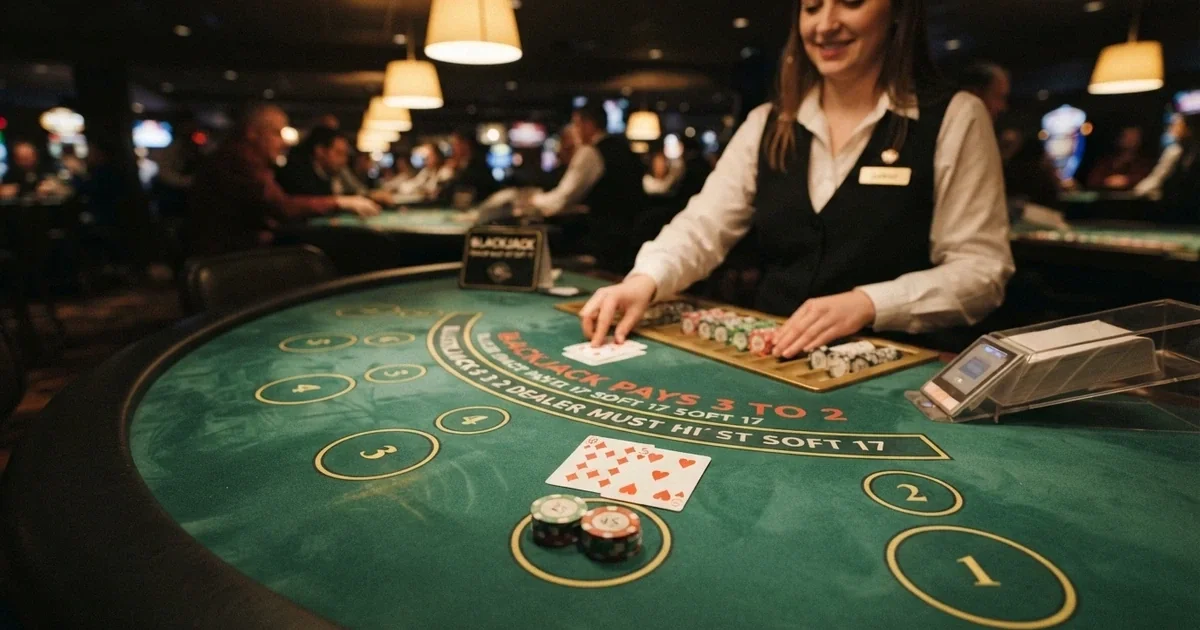
What the player sees on a live-dealer blackjack screen is a fixed-angle shot of a curved table with seven numbered seats, a chip tray in front of the dealer, the shoe to the dealer’s left and a card-reading sensor above the table that converts physical cards into the data the platform needs to settle bets. The stream is HD, the camera changes angles at key moments (the deal, the dealer’s hole-card turn, a peek at the shoe), and the dealer runs the round by the same fixed rules a land casino would post.
In Australian land-based venues, the common configuration is six to eight decks in the shoe, the dealer stands on soft 17, doubling after a split is allowed, double-down is restricted to a hard nine, ten or eleven, and surrender is not offered. That produces a house margin near 0.6% at optimal play. Online, the configuration depends on the studio: Evolution’s standard live blackjack sits at 99.29% RTP against a 99.5%-ish optimum, Pragmatic Play’s standard table at 99.28%. The small gap between these is the live-format premium for the streaming overhead and the side bets on offer.
Side bets are where the house edge lives. Perfect Pairs pays 25:1 for a perfect pair, 12:1 for coloured and 6:1 for mixed — a marketing payout that masks a house edge well above 10%. 21+3 pays up to 100:1 for a suited trips and as little as 5:1 for a flush — same story. Insurance, the side bet that the dealer has a ten-value card in the hole, pays 2:1 on a dealer blackjack and carries a house edge of approximately 7.4%. Every side bet at a live table is the operator’s profit centre; the main hand is the player-friendly product they advertise around it.
How to play your first hand
- The player chooses a chip value and clicks a betting circle. The minimum at a Pragmatic Play table can be as low as A$0.10; at an Evolution table, A$0.50 is the more common floor. SkyCrown’s Gravity Blackjack tables run from AU$5 to AU$20,000, which puts the floor where high-roller tables normally sit.
- The dealer deals two cards face up to each betting circle and two to themselves, one up and one down. A natural 21 (an ace plus a ten-value card) ends the round immediately unless the dealer matches it.
- The player acts in order, deciding whether to hit (take another card), stand (keep the hand as it is), double down (double the bet for exactly one more card) or split (turn a matching pair into two hands at the cost of a second stake). Surrender is not offered at Australian-configured tables.
- The dealer reveals the hole card and resolves according to the table’s fixed rule: stand on 17 or higher, hit on 16 or lower. A 6:5 table pays a natural 21 at six units to five; a 3:2 table pays three to two. The variant determines the rest.
- A winning hand pays even money on a non-blackjack; a natural pays 3:2 (or 6:5, depending on the table); a losing hand is collected; a tie pushes the bet back. A round at a live table takes about 70 seconds end to end.
Basic strategy: how to shrink the house edge
Basic strategy is a mathematically derived chart that tells the player the single correct play for every combination of their hand and the dealer’s upcard. The chart has been computed by simulation over billions of hands; it is not a hunch, a feel or a tip from a casino forum. Applied perfectly, it cuts the house edge to between 0.50% and 0.71% — the lowest margin of any casino game on the floor. At a A$10 hand and 50 hands an hour, an hour of perfect-play live blackjack costs about A$3 on average.
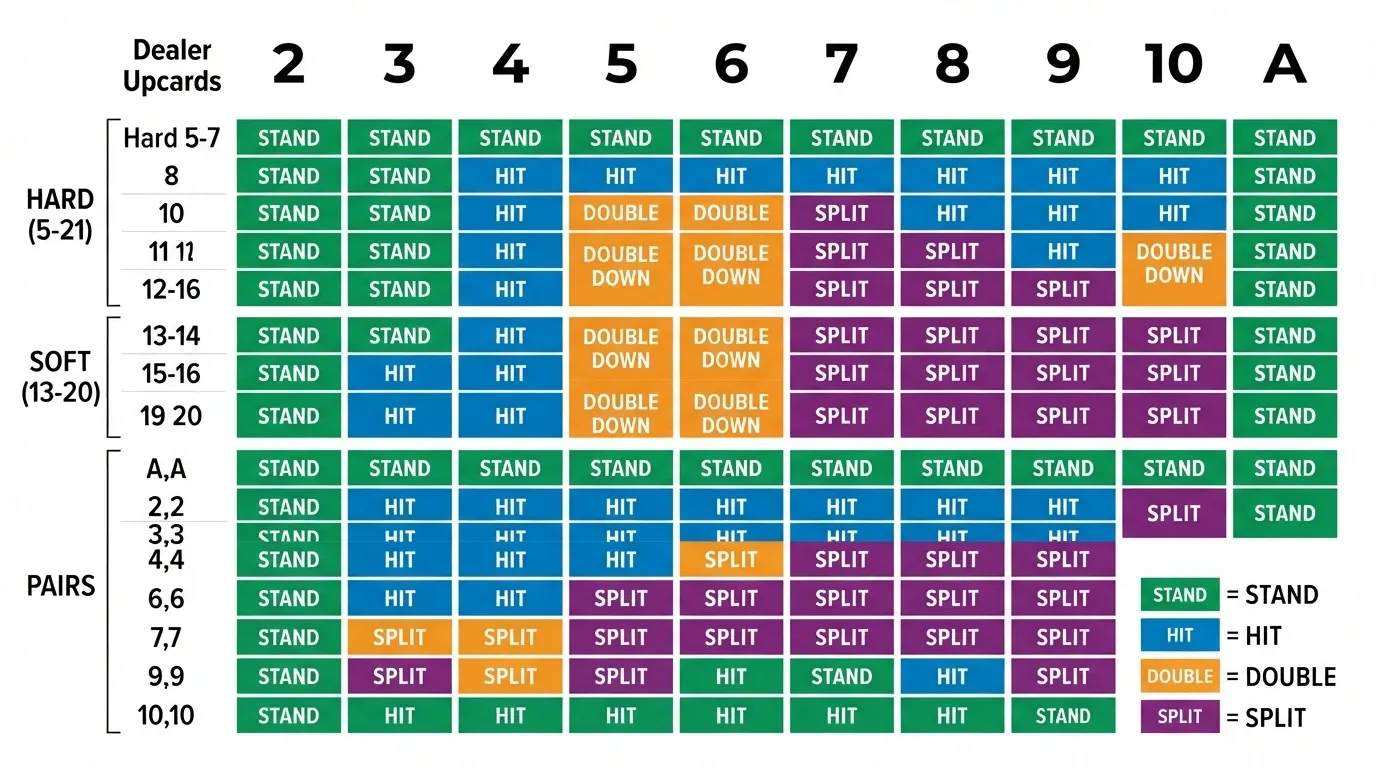
The shape of the chart is not complicated. Hard 11 and below: hit against everything except a dealer low card on a hard 11 or 10. Hard 12 to 16: stand against a dealer six or lower, hit against a dealer seven or higher — this is the most counter-intuitive block on the chart and the one players most often get wrong. Soft 17 and below: hit. Soft 18: stand against a dealer nine or ten, hit against an ace. Pair of eights or aces: always split. Pair of fives or tens: never split. Doubling down follows a parallel set of rules keyed to the dealer’s weakness: double on a hard ten or eleven against any dealer upcard below an ace; double on a hard nine against a dealer three through six.
Deviating from the chart costs money, and the cost compounds. Hitting a hard 16 against a dealer ten looks safe; it loses in 62% of cases. Standing on a soft 18 against an ace looks cautious; it loses in 78% of cases. The chart is not generous because the dealer is generous. The chart is generous because it is exactly the play that minimises the player’s expected loss, and any deviation pushes the player away from that minimum.
Odds, edge, and why the payout matters
The house edge is the percentage of every dollar wagered that the casino expects to keep over the long run. Live blackjack with basic strategy runs at 0.50–0.71% — a number that sounds small until it is multiplied across a session. For every A$1,000 wagered, the player loses A$5 to A$7 on average. The number is fixed by the math; what changes it is the rules the table posts.
A natural blackjack paying 6:5 instead of 3:2 is the single most expensive rule change a casino can make. A 3:2 table pays A$15 profit on a A$10 hand; a 6:5 table pays A$12. Across a session, that one difference is worth about 1.4% of every dollar wagered — more than any other rule. The dealer hitting a soft 17 instead of standing adds another 0.22%. The combination of 6:5 payout and H17 turns a sub-1% game into a game the house wins at 1.8% or more. Most live-dealer studios post 3:2 by default, but the player’s job is to verify it before sitting.
The insurance bet, advertised as “protection” when the dealer shows an ace, is a side bet that the dealer’s hole card is a ten-value card. It pays 2:1 when it wins. The math: the dealer has a ten in the hole about 30.8% of the time when showing an ace, and the bet pays 2:1. That produces a house edge of approximately 7.4% — a wagering proposition the player should refuse on principle, regardless of how the dealer frames it.
Variants: Lightning, Free Bet, and the rest
The variant is the most important decision a live blackjack player makes. The RTP, the side bets, the dealer rule and the bonus mechanics all flow from which table the player sits at. The set worth knowing about in 2026:
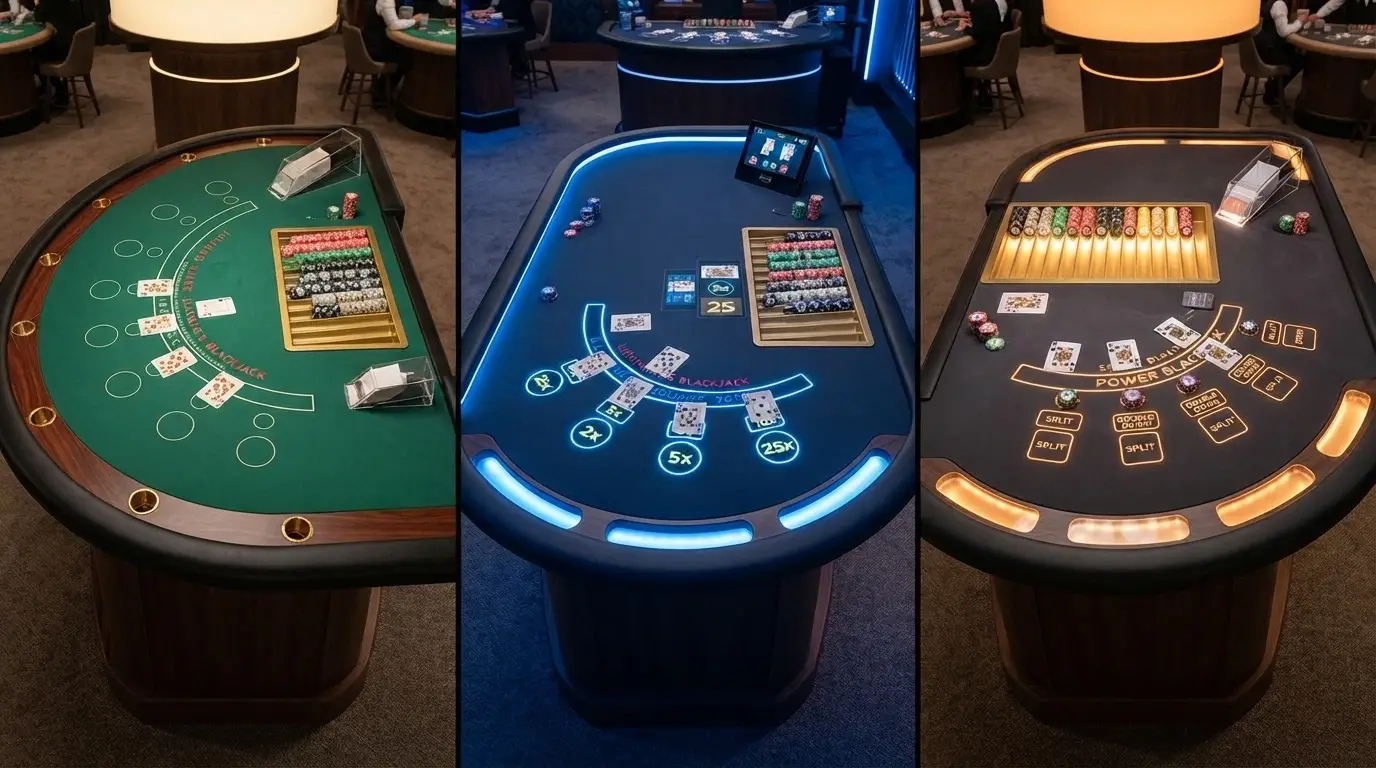
| Variant | RTP | Provider | Notable Rule |
|---|---|---|---|
| Evolution Live Blackjack (Standard) | n/a | Evolution | Classic seven-seat, optional 21+3 and Perfect Pairs |
| Lightning Blackjack | 99.56% | Evolution | 100% Lightning fee per initial bet; 2x–25x multiplier on next-round wins |
| Pragmatic Play Live Blackjack | 99.28% | Pragmatic Play | A$0.10 minimum, optional side bets |
| Free Bet Blackjack | 99.41% | Pragmatic Play | Casino funds double on hard 9/10/11 and most splits; dealer 22 pushes |
| Topaz Blackjack | 99.9% | SlotsGem studio | High-RTP configuration; availability limited |
| Aquamarine Blackjack | 97.9% | SlotsGem studio | Low-RTP configuration; avoid |
| Pontoon (Australian variant) | — (0.34–0.42% edge) | Land-based primarily | Both dealer cards hidden; 2:1 on two-card 21; five-card trick pays 2:1 |
| Dealer-22-push variant | — (>2.8% edge) | Various | Push when dealer makes 22; avoid |
Lightning Blackjack looks like a marketing dream until the fee is understood. The game charges 100% of the initial bet as a Lightning fee and applies a 2x–25x multiplier to any winning hand on the next round. The fee is the operator’s recovery for the multiplier; the multiplier is the player’s recovery for the fee. Net of both, the variant carries a slightly higher RTP than Evolution’s standard game, but only because the multiplier mechanic rewards players who win — losing hands are unaffected and the fee still applies. Free Bet Blackjack is the more interesting product for a budget-conscious player: the casino funds the double-down on hard nine, ten and eleven and the split on most pairs, while introducing a dealer-22-push rule that softens one of the harder outcomes. Topaz and Aquamarine are slotsgem-specific configurations of the same studio game with different RTP settings — the 2 percentage-point gap between them is the difference between a session that costs A$6 per A$1,000 wagered and one that costs A$21. Pontoon is the Australian land tradition of blackjack with both dealer cards hidden and a 2:1 payout on a two-card 21, sitting at the favourable end of the edge spectrum. The dealer-22-push variant at the bottom of the table is a reminder that not every “blackjack” the studio names is the same game; the dealer 22 rule lifts the edge past 2.8%, which is closer to a side bet than a main game.
Where Australians actually play live blackjack in 2026
Every brand on the table below is an offshore operator serving Australian players without an Australian licence. None offers ACMA dispute resolution, Australian consumer protection or BetStop coverage. The comparison that follows rates them on what they actually offer — the size of the live-dealer lobby, the providers powering the tables, the welcome bonus and its wagering — rather than on the regulatory standing none of them has. That standing is the same for all of them: Curaçao, Anjouan, or a comparable offshore framework, and the prohibition on the Australian side of the wire.
What separates a strong blackjack site from the rest
The criteria that matter for a live blackjack player are narrower than the criteria a casino affiliate site usually lists. A wide game lobby is not the same as a wide live-dealer lobby; a generous welcome bonus is not the same as a bonus a blackjack player can clear; a fast payout is not the same as a fast payout that survives a wagering requirement. The four metrics worth weighing are the live-dealer table count and the providers behind it, the table limit range (the gap between minimum and maximum tells the player what kind of bankroll the lobby was built for), the welcome bonus terms (wagering multiple, validity window, maximum cashout, game weighting for live blackjack), and the deposit and withdrawal methods that match an Australian banking reality rather than a Canadian or European one.
The trade-off between a big bonus and fair terms is the structural choice every offshore brand makes. A 450% match across four deposits is a marketing headline; a 40x wagering requirement with a 14-day validity and a A$5,000 max cashout is the reality that headline turns into. A live-dealer player who picks the largest bonus without reading the weighting rule — typically 5–10% contribution from live blackjack, against 100% from slots — will end up grinding through ten times the turnover the bonus terms imply. That arithmetic is the subject of the next major section.
Operator comparison at a glance
| Operator | Licence | Welcome Bonus | Game Providers |
|---|---|---|---|
| SkyCrown | Curaçao OGL/2023/176/0095 (Hollycorn N.V.) | 450% up to A$8,000 + 400 FS across four deposits | Pragmatic Play, Evolution, BGaming |
| Rocket Play | Curaçao | 100% up to A$1,000 + 100 FS (1st deposit); 200% up to A$1,000 (2nd) | BGaming, Pragmatic Play |
| Royal Reels | Curaçao | A$10 no-deposit on sign-up | Unconfirmed |
| Bizzo Casino | Curaçao 8048/JAZ2017-067 (Antillephone N.V., TechSolutions Group N.V.) | Up to A$7,250 + 175 FS across four deposits | 70+ studios (incl. Pragmatic Play) |
| Fair Go | Curaçao (CGA); operator DeckMedia N.V. in liquidation since Dec 2018 | Five-tier package totalling A$1,000 | RTG (RNG-only — no live dealer) |
| Stake | Curaçao (Medium Rare N.V.) | Rakeback / VIP model (no traditional deposit match) | Evolution, Pragmatic Play |
| WinSpirit | Curaçao | Unconfirmed | Unconfirmed |
| Rainbet | Curaçao | Unconfirmed | Unconfirmed |
| Scream Casino | Curaçao | Unconfirmed | Unconfirmed |
| Neospin | Curaçao | AU$11,000 + 300 spins | Winfinity, LiveVegas |
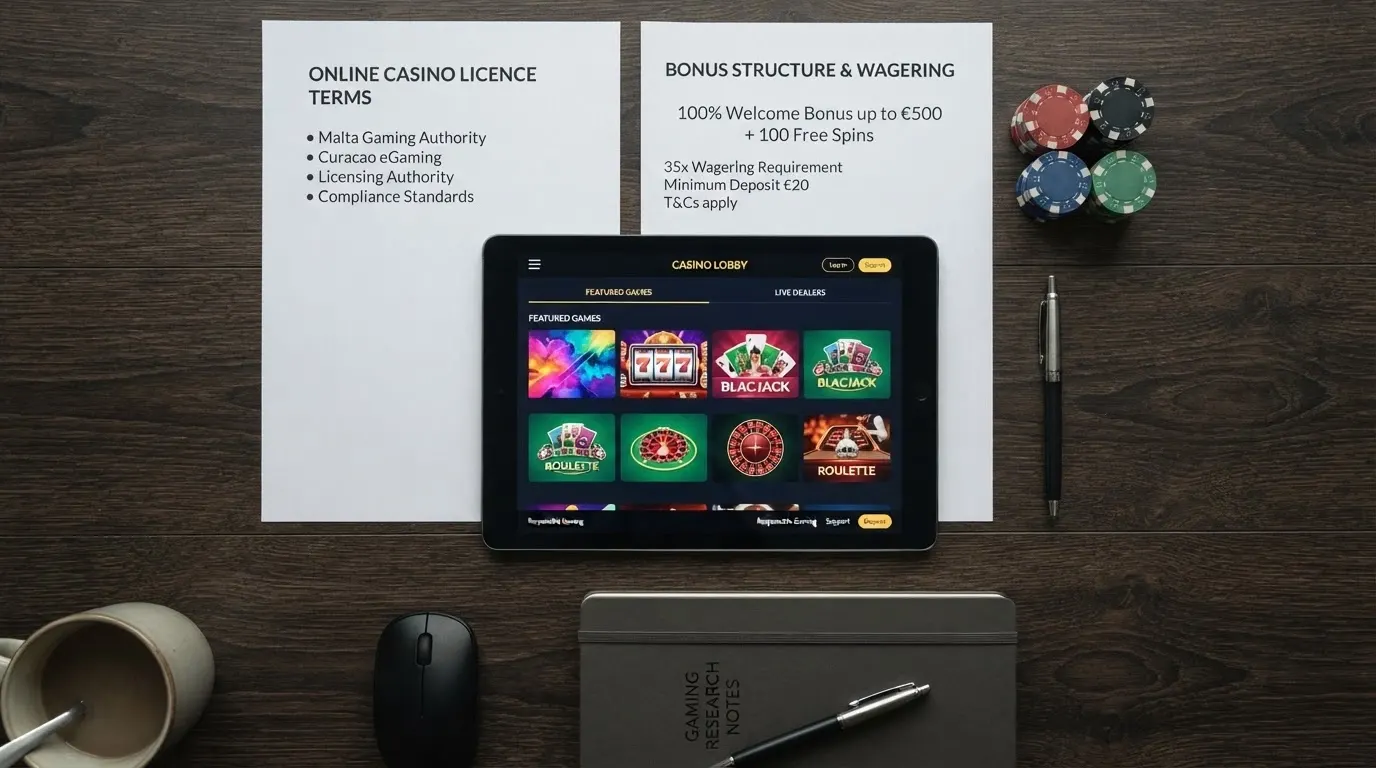
SkyCrown: 90+ live blackjack tables and a 450% welcome package
SkyCrown runs the largest live blackjack lobby in the featured set, with 90-plus tables powered primarily by Pragmatic Play and supplemented by Evolution and BGaming. The Gravity Blackjack variant runs from AU$5 to AU$20,000, putting both the recreational player and the high roller inside the same platform. The welcome package is the headline: a 450% deposit match to A$8,000 plus 400 free spins spread across the first four deposits, gated by 40x wagering, a 14-day validity window and a A$5,000 maximum conversion from bonus to real money. The licence is Curaçao eGaming OGL/2023/176/0095 under Hollycorn N.V., and the minimum live-dealer bet is AU$1.
For a player who plans to play slots to clear the wagering — and most players do, because live blackjack typically contributes 5–10% — SkyCrown is the most generous headline number in the set with a usable set of providers behind it. For a player who plans to play live blackjack specifically, the same package becomes a grinding exercise at 10% weighting: a A$8,000 bonus at 40x is A$320,000 in slot turnover, or A$3.2 million in live blackjack turnover. That is the arithmetic the bonus terms do not print. The verdict: best for the high-volume slots player, expensive for the live-only player.
Rocket Play: a fast 100% match with a tight 5-day clock
Rocket Play’s first-deposit offer is a 100% match to A$1,000 plus 100 free spins on Aztec Magic, with a minimum deposit of A$30, 40x wagering and a 5-day bonus validity. The second deposit carries a 200% match to A$1,000. The maximum bet during wagering is A$7.50, and free-spin winnings are capped at A$300. Providers confirmed from the bonus terms are BGaming and Pragmatic Play; the live-dealer table count was not confirmed this run. The licence is Curaçao.
The 5-day validity window is the constraint that defines this offer. Most Curaçao-licensed brands set validity at 14 or 30 days; Rocket Play’s 5 days is the shortest in the set. A player who can deposit and grind through the wagering in five days gets the full value of the package. A player who can’t leaves the bonus balance behind. For someone who plays daily, the tightness is an asset: the bonus cannot be drained slowly, so it forces a focused clearing session. For someone who plays weekly, it is a tax on the days they don’t. The verdict: a clean, well-priced match for a frequent player; unsuitable for a casual one.
Royal Reels: a no-deposit bonus with a A$200 ceiling
Royal Reels is the only operator in the featured set offering a no-deposit cash bonus: A$10 credited on sign-up, with 40x wagering, a 7-day validity window and a A$200 maximum cashout. No deposit is required to claim, which is the entire point of the offer. The licence is Curaçao; live-dealer blackjack availability was not confirmed this run.
The arithmetic of a no-deposit bonus is simple and unfavourable to the player. A$10 at 40x is A$400 in wagering; at a 0.6% house edge, the expected loss over that turnover is about A$2.40. The catch is the A$200 cap — even a player who runs the bonus up to A$400 of balance through a lucky streak will leave with A$200, not A$400. The offer is a trial tool, not a profit opportunity, and its real value is the chance to test the platform and the cashier before depositing. The verdict: worth claiming to evaluate the site, not worth treating as money.
Bizzo Casino: 70+ studios and a PayID-friendly cashier
Bizzo runs on the SoftSwiss platform with 70-plus game studios, including Pragmatic Play and Evolution. The welcome offer runs to A$7,250 plus 175 free spins across four deposits, with 40x wagering and an A$8 maximum bet during play. A no-deposit offer of 10 free spins is available for installing the PWA app, gated by 40x wagering and a A$75 win cap. PayID works for both deposits and withdrawals, which is rare in the set — most offshore brands route PayID only one way. The licence is Curaçao 8048/JAZ2017-067 under Antillephone N.V. and TechSolutions Group N.V.; Bizzo launched in 2021.
For an Australian player, PayID both ways is the differentiator. The deposit is instant; the withdrawal clears back to the player’s bank account through the same PayID handle, typically within hours rather than the days a bank transfer takes. The platform’s breadth — 70-plus studios — also makes Bizzo the most flexible live-dealer lobby in the set for players who want Evolution, Pragmatic Play and the smaller studios side by side. The verdict: the best cashier and the widest lobby in the set, with a bonus package that is solid rather than spectacular.
Fair Go: the first site the ACMA ever blocked, and it may not have live blackjack
Fair Go is historically significant as the first site the ACMA ever ordered blocked, in November 2019. Its operator, DeckMedia N.V., has been in liquidation since December 2018 — a fact that makes the operating entity behind the brand harder to track than a standard Curaçao licensee. The platform runs on RTG (RealTime Gaming), an RNG-focused software provider; live-dealer blackjack is unlikely to be available, and the brand is included here to be transparent about its limitations rather than to recommend it.
The bonus structure is a five-tier welcome package totalling A$1,000. The cashier imposes a A$100 minimum withdrawal and a A$2,500 per-transaction ceiling, with up to 48 hours of processing time on standard methods, instant Bitcoin and a bank transfer that can run up to 15 business days. The licence is Curaçao (CGA). For an Australian seeking live dealer blackjack, the platform is the wrong product: RTG does not run a live studio, and the brand’s longevity on the ACMA’s blocking list is not a positive signal. The verdict: a relic rather than a destination, included for the history it represents.
Stake: Evolution and Pragmatic Play tables, no traditional welcome bonus
Stake runs on a Curaçao licence under Medium Rare N.V., with Evolution and Pragmatic Play powering the live blackjack offering alongside Hacksaw Gaming and other providers. The brand does not advertise a traditional deposit-match welcome bonus; its reward model is rakeback and a VIP tier structure that pays a percentage of house edge back to active players. Specific bonus figures and live-dealer table counts were not confirmed this run.
The Stake model is structurally different from the deposit-match brands in the set. A player who wagers A$10,000 on live blackjack at a 0.6% edge loses A$60 on average; under a typical Stake rakeback, a percentage of that loss is returned as cash. For a high-volume player, the rakeback can outvalue a traditional welcome bonus over time. For a casual player who would deposit once and play once, there is no headline number to chase. The verdict: a viable platform for the high-volume player who understands the rakeback math; thin value for the casual one.
WinSpirit
WinSpirit runs on a Curaçao licence. Live blackjack table count, game providers, welcome bonus and bonus terms were not confirmed in this round. What an Australian player can verify on the live site: the licence number and the issuing authority, the live-dealer provider powering the blackjack lobby, the table limit range, the wagering terms attached to any sign-up offer, the maximum cashout rule, and the deposit and withdrawal methods available to an Australian account. A site that publishes all of those clearly is doing the minimum a player should expect. A site that buries any of them behind support chat is telling the player something they should hear.
Rainbet
Rainbet runs on a Curaçao licence. Specific live-dealer and bonus details were not confirmed in this round. The verification checklist for an operator without confirmed specifics is the same as for WinSpirit: licence number and authority, live-dealer provider and table count, table limits, wagering terms, maximum cashout, deposit and withdrawal methods, processing times, and any country restrictions that might surface after sign-up. A platform that handles the verification step cleanly is the one worth a deposit; a platform that makes the verification difficult is the one to walk away from.
Scream Casino
Scream Casino runs on a Curaçao licence. Specifics on live blackjack and bonuses were not confirmed in this round. The same checklist applies: confirm the licence, confirm the provider, confirm the table count and limits, confirm the bonus terms, confirm the cashier. The pattern across the three unconfirmed operators is the same — what is verifiable in advance is what is verifiable in advance, and the player who asks the questions before depositing is the player who avoids the surprises after.
Neospin: 80+ live blackjack tables and a 20% daily cashback
Neospin runs 80-plus live dealer blackjack tables powered by Winfinity and LiveVegas, with a minimum bet of AU$1 and table limits up to AU$10,000. The welcome package runs to AU$11,000 plus 300 spins; bonus terms and validity were not confirmed in this round. A 20% daily cashback applies to losses, which is a structurally different offer from a deposit match: it pays the player back a percentage of what they lose each day, regardless of bonus status. The licence is Curaçao.
For a player who plans to play regularly and is prepared to lose, a daily cashback reduces the effective house edge by 20% of the loss — at a 0.6% edge with 20% cashback, the effective edge becomes about 0.48%. For a player who plans to deposit once and chase the welcome bonus, the cashback is irrelevant. Neospin’s lobby sits second in size to SkyCrown in the featured set, and the two providers powering it — Winfinity and LiveVegas — are smaller studios than Evolution and Pragmatic Play but offer a comparable live-dealer product at limits that suit most bankrolls. The verdict: a strong live-dealer lobby with a softener on losses; the welcome bonus headline needs the terms page read alongside it.
Blackjack bonuses: what the welcome offer is really worth
A welcome bonus is two things. The first is the headline number — A$8,000, A$7,250, A$1,000 — that the operator’s marketing team put on the banner. The second is the wagering requirement, the validity window, the maximum bet, the game weighting, and the maximum cashout that determine what the player actually has to do to convert the headline into withdrawable cash. Every operator in the set carries a wagering multiple of 40x on bonus funds; the difference between them is the package size, the time the player has to clear it, and the rules the wagering is bound by.
The wagering multiple is the number that does the work. A A$1,000 bonus at 40x is A$40,000 in turnover — forty times the bonus amount, wagered before any of it converts to real money. A A$8,000 bonus at 40x is A$320,000 in turnover. The expected loss on that turnover, at a 0.71% house edge (the upper bound of optimal live blackjack play), is A$284 on the smaller bonus and A$2,272 on the larger one. At the lower edge of optimal play — 0.50% — the expected losses are A$200 and A$1,600 respectively. None of those figures appears on the bonus page. All of them are what the bonus costs.
The game weighting rule is where live blackjack players lose most of their bonus value. Live dealer tables typically contribute 5–10% to wagering, against 100% for slots. A player who tries to clear a A$1,000 bonus with 40x wagering on live blackjack at 10% weighting has to put A$400,000 through the tables, not A$40,000 — and the expected loss on that turnover, at a 0.6% edge, is A$2,400. The bonus paid out A$1,000 and cost A$2,400 to clear. That is the worst version of the math, and most operators steer players toward slots to avoid it. The audit is the same at every brand: read the weighting rule before claiming.
Welcome bonuses and their real cost
The worked example the page leads with is Rocket Play’s first-deposit offer: A$1,000 in bonus funds at 40x wagering. The required turnover, if cleared on slots at 100% weighting, is A$40,000. The expected loss on that turnover at a 99.29% RTP — Evolution’s standard live-dealer RTP, used here as the assumption because most players clear bonuses on slots but the page is about blackjack — is A$40,000 multiplied by (1 − 0.9929), which is A$40,000 multiplied by 0.0071. That is A$284 in expected loss to clear a A$1,000 bonus.
Two assumptions make the figure. The first is that the player wagers only the bonus amount — no deposit, no winnings. The second is that the wagering clears on a single game with a 99.29% RTP, which is a clean assumption for slot play and a stretched one for live blackjack given the 5–10% weighting. Under the stretched assumption, the player has to wager ten times more on live blackjack than on slots, multiplying the expected loss by ten to roughly A$2,840. That is the cost a live-only player pays for the same headline bonus. It is the trade-off the bonus terms describe in fine print and the marketing banner does not.
SkyCrown’s headline — A$8,000 across four deposits at 40x — produces A$320,000 in required turnover at the upper bonus. At the same 99.29% RTP, the expected loss is A$2,272. At a less favourable slot weighting where the RTP is closer to 96%, the expected loss rises to A$12,800. The bonus terms are the same number; the cost depends on what the player wagers on. The arithmetic rewards the player who understands the assumption before claiming.
The conclusion a reader can draw: a welcome bonus is worth claiming only when the expected loss on the wagering requirement is less than the bonus amount. At a A$1,000 bonus with a A$284 expected loss, the player comes out ahead on average by A$716. At a A$8,000 bonus with a A$2,272 expected loss on live blackjack weighting, the player still comes out ahead by A$5,728 in expected value. But the figure is an average — a statistical estimate across many spins, not a guaranteed outcome — and the player who hits a cold streak before the wagering clears pays the full expected loss without converting the bonus.
Why your deposit method tells you who you are really dealing with
The credit and cryptocurrency ban for licensed Australian wagering operators, in force since 11 June 2024, is the cleanest tell in this market. Any operator that asks an Australian for a credit card or a Bitcoin deposit is, by definition, not a licensed Australian wagering operator. It is an offshore brand accepting a payment method that the Australian rules prohibit the legal market from accepting. The penalty for non-compliance is A$247,500 per breach; by 30 June 2025 every one of the 50 licensed operators checked by the ACMA in a March 2025 review had removed credit and crypto language from their deposit pages, a 100% compliance rate. The legal market adapted. The illegal one kept accepting.
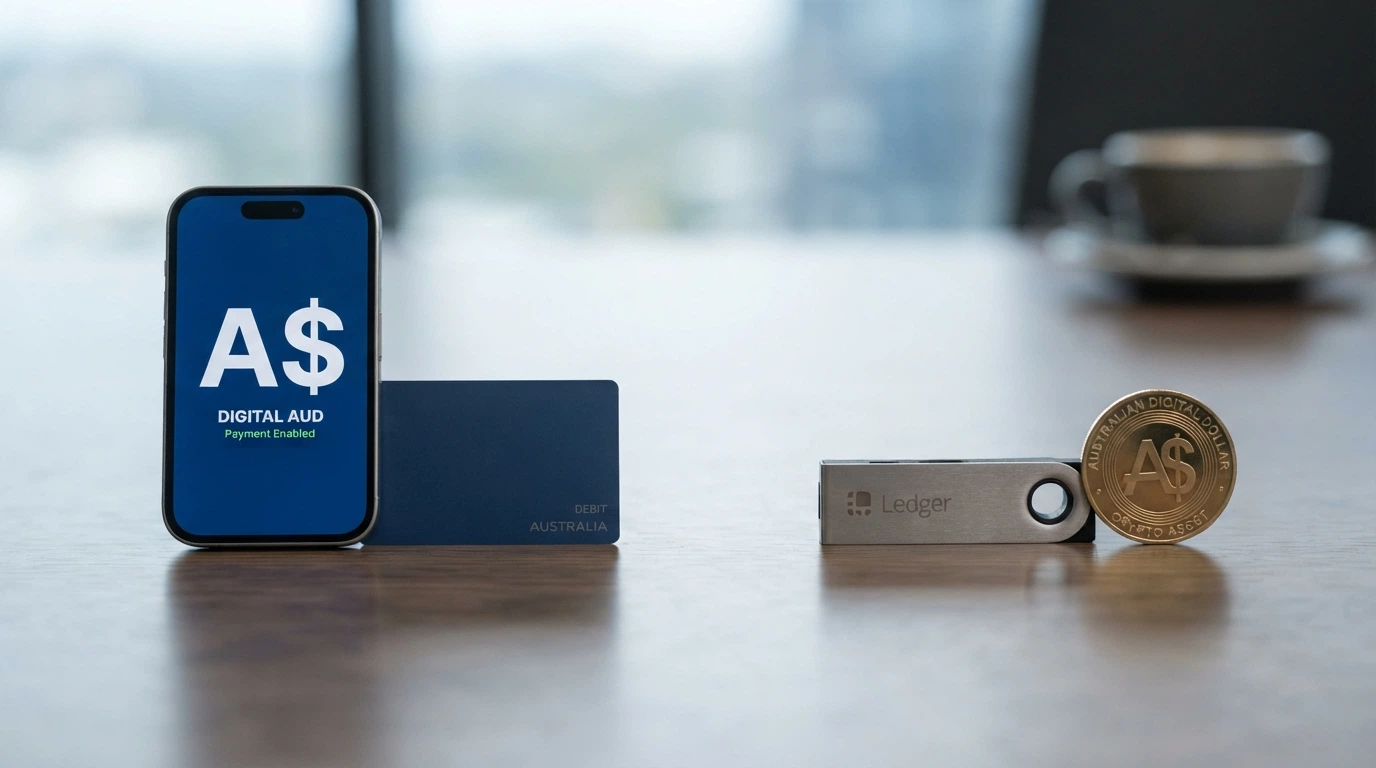
The legal deposit routes at a licensed Australian wagering operator are four: debit card, bank transfer, PayID or Osko, and BPAY. Each one routes through the Australian banking system under the ePayments Code and the Anti-Money Laundering and Counter-Terrorism Financing Act. Each one is subject to the operator’s customer-set deposit limit, the activity statement at the end of each month, and the BetStop exclusion if the customer has registered. An offshore casino accepting PayID is using one of those rails; an offshore casino accepting crypto is bypassing all of them. The deposit method tells the player which side of the line they are on.
Crypto: Bitcoin, Ethereum, and the rest
Cryptocurrency is the default deposit method at most offshore casinos serving Australian players. Bitcoin, Ethereum and Litecoin are standard at the cashier; withdrawals in the same currency clear to the player’s wallet inside an hour. Fair Go records Bitcoin withdrawals as instant; SlotsGem’s Ethereum withdrawal reached a wallet in 28 minutes. Speed and pseudonymity are the two reasons an offshore operator prefers crypto. The third reason — the one the operator does not advertise — is that crypto bypasses the Australian banking system entirely, which is the only way to avoid the ACMA’s transaction-blocking powers that begin on 1 January 2027 under the 2026 reform.
The trade-off a player makes for the speed is the loss of every protection the legal banking rails carry. A Bitcoin deposit is not reversible by the player’s bank; the operator’s wallet is the destination and the player’s wallet is the source. A dispute over a voided withdrawal or a confiscated bonus has no Australian path to resolution. The 36% presence of digital wallets among Australian gamers for payment methods is a market figure; it does not tell the reader anything about whether those wallets were used at licensed or offshore brands. The distinction is the one the law draws, and the law is the one a player ignores at their own cost.
PayID and Australian banking
PayID is the Australian real-time payments rail built on the New Payments Platform. It works through the player’s banking app: the player registers a PayID — typically a phone number or email — and any incoming payment to that identifier routes through Osko to the player’s account in seconds, 24/7, with no BSB or account number required. For licensed Australian wagering operators, PayID is one of the four legal deposit routes, alongside debit card, bank transfer and BPAY.
Bizzo is the only operator in the featured set confirmed to accept PayID for both deposits and withdrawals. For an Australian player, that means a deposit clears instantly through the player’s banking app and a withdrawal returns to the same account through the same rail, typically within a few hours. The transaction sits inside the Australian banking system; the operator’s PayID handle is recorded on the player’s statement. None of that changes the operator’s offshore status. Bizzo is still Curaçao-licensed, still outside Australian consumer protection, still not covered by BetStop. PayID does not change the law. It changes the speed and the audit trail.
The law: what the Interactive Gambling Act means for your blackjack game
The Interactive Gambling Act 2001, as amended in 2017, prohibits the provision of online casino games to people in Australia. The prohibition covers online blackjack, online pokies and in-play sports betting. It does not cover pre-event wagering on sport or races, lotteries or keno, all of which are licensed by state and territory regulators — predominantly the Northern Territory through the NTRWC and Licensing NT, which license the major online bookmakers. The distinction between “online casino” (prohibited) and “online wagering” (licensed) is the entire architecture of the Australian market, and it is the reason every brand on the comparison table above is an offshore operator.
The ACMA is the federal regulator that enforces the prohibition. It investigates complaints, issues formal warnings, runs civil penalty proceedings, refers operators for ISP blocking and publishes a quarterly action report on what it has done. The agency’s most recent quarterly figures — Q4 2025 — covered 483 enquiries and complaints, 23 investigations into 45 gambling sites, 69 breaches of the IGA found, 10 formal warnings issued and 133 websites referred to ISPs for blocking. Civil penalties reach A$2,475,000 per day for an individual and A$12,375,000 per day for a corporation. Since the ACMA’s first blocking request in November 2019, 1,788 illegal gambling and affiliate websites have been blocked. Over 230 illegal services have withdrawn from the Australian market entirely since 2017 enforcement strengthened.
The player is not prosecuted for using an offshore service. The IGA targets the provider. What the player forfeits — no Australian consumer protection, no ACMA dispute resolution, no BetStop coverage, no recourse if the operator refuses a withdrawal or voids a win, and the constant risk that the site can be blocked at any time with a balance still on it — is the subject of the next subsection.
The ACMA and its enforcement powers
The ACMA’s enforcement pipeline runs from complaint to investigation to blocking. A complaint from an Australian player, a referral from a state regulator, or the ACMA’s own monitoring triggers an enquiry. If the enquiry finds evidence the IGA has been breached, the ACMA opens an investigation, contacts the operator, issues a formal warning or starts civil penalty proceedings. Where the operator is offshore and ignores the proceedings, the ACMA asks Australian ISPs to block the operator’s domains. The blocking is what most Australians see, because most blocking is the only public action that produces a visible result — the site stops resolving, the player gets a “site blocked” page, the operator loses that Australian traffic.
The Q4 2025 figures illustrate the volume: 23 investigations into 45 sites, 69 breaches found, 10 formal warnings issued, 133 websites referred to ISPs. The Entain Group Pty Ltd case — an Australian-licensed operator that breached BetStop provisions by opening 4 accounts for registered individuals, providing services on 59 days to registered individuals, and failing to close 3 accounts as required — is the most prominent recent example of the ACMA’s reach into the licensed side of the market. A licensed Australian operator that breaches its conditions is subject to the same enforcement pipeline as an offshore operator that breaches the IGA. The ACMA does not distinguish based on the operator’s licence; it distinguishes based on whether the operator is complying.
The 2026 reform package — passed by Parliament on 19 August 2026 and commencing on 1 January 2027 — gives banks and payment providers express authority to block transactions to illegal gambling operators. That power does not exist in the current statute. Once it commences, an Australian depositing at an offshore casino via bank transfer or PayID may find the transaction declined, with the bank acting on an ACMA-supplied list of illegal operators rather than a discretionary compliance call. Crypto is the only rail that will route around the new power, which is the cleanest summary of why an offshore casino that bans crypto and accepts only bank rails is also the most exposed.
Licensed wagering versus offshore casinos
What is licensed and legal in Australia is pre-event wagering on sport and races, lotteries, and keno. What is prohibited is online casino, online pokies and in-play sports betting. The licensed market is run by operators authorised by state and territory regulators — predominantly the Northern Territory’s Racing and Wagering Commission (which licenses through Licensing NT) but also state regulators in Victoria, New South Wales and elsewhere. The licences run for terms of up to 20 years; the operators (Sportsbet, bet365, Ladbrokes, the TABs) carry customer-set deposit limits, time-out features, activity statements and BetStop coverage as conditions of their licence.
A licensed bookmaker cannot offer live blackjack. The product is prohibited, and offering it would breach the licence. The offshore brand offering live blackjack to Australians is offering a product no licensed Australian brand can sell, from a jurisdiction no Australian regulator oversees, under terms no Australian law governs. The distinction is the entire reason this page opens with the prohibition: the operator list that follows is a list of brands that exist because the licensed market does not include them.
What you forfeit at an unregulated site
The list of protections an offshore casino does not provide to an Australian player is the practical cost of the prohibition. Every item on it is something a licensed operator is required to provide.
- No Australian consumer protection. The ACMA cannot order an offshore operator to refund a player’s money, void a confiscated bonus or pay a voided win. The Australian Competition and Consumer Commission’s jurisdiction does not reach Curaçao-licensed platforms.
- No ACMA dispute resolution. A complaint to the ACMA about an offshore operator triggers an investigation into the IGA breach, not a recovery of the player’s funds. The investigation is a public enforcement action; the player’s money is the operator’s.
- No BetStop coverage. A BetStop registration excludes the player from every licensed Australian wagering service. It does not exclude them from an offshore casino. The 41,290 active exclusions on the register as at 31 July 2026 do not reach the brands in this article’s comparison table.
- No recourse for refused withdrawals or voided wins. The operator’s terms are the only contract; the player accepts them at sign-up. An arbitration clause typically routes disputes to the operator’s home jurisdiction, where the cost of recovery is prohibitive relative to the disputed amount.
- No guarantee the site stays online. An ACMA blocking request can arrive at any time. When it does, the player’s account, balance and bonus status become inaccessible until — if ever — the operator restores access through a new domain or mirror.
- No guarantee the RTP stays fixed. Some offshore operators run adjustable-RTP versions of their games, switching between a 99% configuration and a 94% configuration based on the player’s segment. The screen looks the same; the math does not.
Staying in control: the tools that work — and the ones offshore sites skip
Australian-licensed wagering operators are required to provide a set of responsible-gambling tools: customer-set deposit limits (daily, weekly or monthly), time-out and take-a-break features (24 hours to several months), activity statements at the end of each month showing deposits, withdrawals, net position and session time, and registration with BetStop on request. The offshore casinos on the comparison table above are not required to provide any of these. Some offer equivalents — a deposit limit field in the cashier, a self-exclusion button in the account settings — at their discretion. None of them offers BetStop, because none of them is connected to the Australian register.
The tools that work are the ones the licensed operators carry and the offshore operators cannot provide. The tools that do not reach an offshore casino are the BetStop registration and the ACMA complaint path. The gap between the two is the single most important thing for a player using self-exclusion as a safety tool to understand: BetStop is not a wall around the offshore market. It is a wall around the licensed one.
Deposit limits, time-outs, and activity statements
A customer-set deposit limit at a licensed operator is a hard ceiling enforced by the platform. The player sets the limit; the operator cannot raise it without a 7-day cooling-off period and the player’s explicit confirmation. A time-out locks the account for a chosen period (24 hours to six months) and is not reversible during the time-out window. An activity statement delivers a monthly summary of play, deposits, withdrawals and net position by email or in the account dashboard. All three are conditions of holding an Australian wagering licence, not features the operator chose to add.
At an offshore casino, none of these are guaranteed. A deposit limit may be available in the cashier, but the ceiling is set by the operator, not by the player, and the operator can change it. A self-exclusion button may be present, but the operator’s enforcement of it is the operator’s choice; there is no regulator checking the next quarter’s compliance. An activity statement is not a requirement, and most offshore brands do not produce one. The player who needs the structure is the player who needs the licensed operator.
BetStop, self-exclusion, and where to get help
BetStop — the National Self-Exclusion Register — went live in August 2023. One registration excludes the player from every Australian-licensed online and phone wagering service. As at 31 July 2026 the register carried 67,480 registrations in three years, of which 41,290 exclusions were still active; 78% of registrants were under 40, and 38% had chosen lifetime exclusion. The exclusions run from a minimum of three months to a maximum of lifetime; the longer the exclusion, the longer the deregistration cooling-off period.
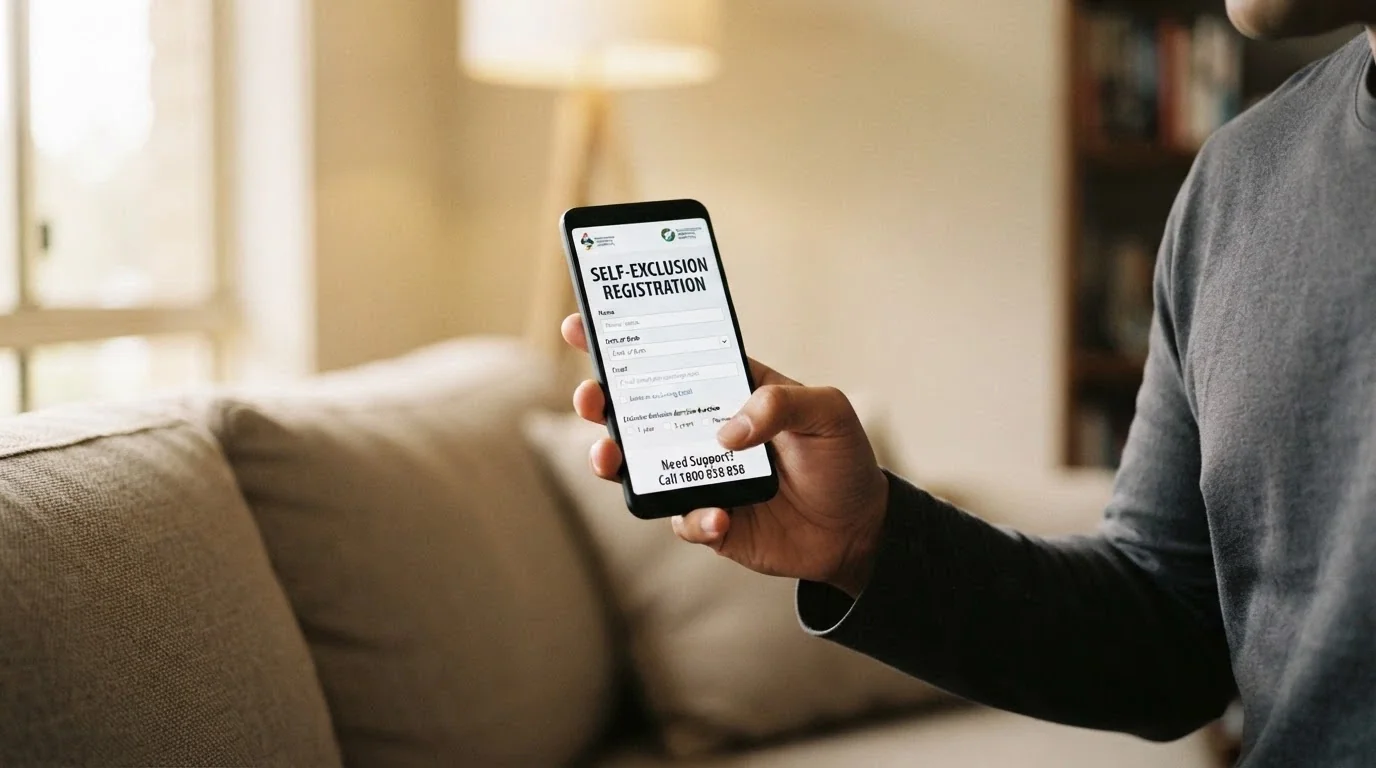
BetStop binds only Australian-licensed wagering services. An offshore casino is not connected to the register and will keep accepting a self-excluded person’s deposits if the player attempts them. This is the most important fact for someone using self-exclusion as a safety tool: BetStop closes the licensed doors and leaves the offshore ones open. The 2026 reform package strengthens BetStop’s operation from 1 January 2027, but it does not connect the register to offshore brands.
Help is available regardless of where the player plays. The National Gambling Helpline is 1800 858 858 — free, confidential, staffed 24 hours a day, every day. Gambling Help Online at gamblinghelponline.org.au provides live chat, email counselling and self-help tools. For anyone experiencing harm from gambling — theirs or someone else’s — the call is the place to start. Approximately 2.1% of Australian adults (roughly 430,000 people) experience problem gambling; the Australian Institute of Health and Welfare put high-risk gambling at 1.8% in 2022. The numbers describe a population the law does not fully reach.
How we chose these live blackjack sites
The operator set is drawn from the offshore brands that consistently serve Australian players and that offer live-dealer blackjack from recognised studios (Evolution, Pragmatic Play, BGaming, Winfinity, LiveVegas or RTG). Each operator was checked for its licence (Curaçao eGaming, Curaçao CGA or comparable offshore jurisdiction), the providers powering its live-dealer lobby, the welcome bonus terms (wagering multiple, validity, maximum cashout), the deposit and withdrawal methods available to an Australian account, and the maximum bet during wagering.
The ranking is qualitative. No single operator on the table dominates every criterion. SkyCrown wins on lobby size and headline bonus; Bizzo wins on cashier breadth and provider count; Rocket Play wins on package simplicity for high-frequency players; Neospin wins on cashback structure for the loss-tolerant player. Royal Reels wins on trial access through its no-deposit bonus. Stake wins on long-term value for the high-volume player willing to play the rakeback model. WinSpirit, Rainbet and Scream Casino are included for completeness with their specifics marked as unconfirmed; a player who chooses one of them should treat the absence of confirmed data as itself a data point and verify before depositing.
The foundational limitation is the one the page opens with. Every brand on the list is offshore. None holds an Australian licence. The page does not endorse any of them; it describes them. The decision to deposit is the player’s, and the player’s alone.
Your blackjack game, on your terms
The game is the lowest house edge in the casino, the variant is the most important decision at the table, and the strategy chart is the only thing standing between the player and a higher house edge. Live blackjack is the slow, transparent, social version of the game, and the operators serving Australian players in 2026 are the offshore brands that have built their live-dealer lobbies around the format. None of them is licensed in Australia. All of them sit outside BetStop, the ACMA’s dispute resolution and the customer-set deposit limits a licensed operator is required to provide. The prohibition that closes the licensed market is the prohibition that defines the offshore one.
The bonus headline is the marketing, and the wagering multiple is the reality. A 450% match at 40x is A$320,000 in turnover at the upper bonus; the expected loss on that turnover at a 99.29% RTP is A$2,272, which is the cost the player pays to convert the bonus into cash. The payment method tells the rest. A debit card, a PayID or a BPAY route is the legal market’s rail; a Bitcoin or Ethereum route is the offshore market’s default. The two are not interchangeable. The licensed operators cannot accept crypto; the offshore ones cannot be reached by BetStop.
Play informed, or do not play at all. Read the strategy chart and bring it to the table. Verify the RTP of the variant you sit at — Topaz at 99.9% is not the same game as Aquamarine at 97.9%. Confirm the licence and the provider before depositing. Set a deposit limit and stick to it, whether the operator enforces one or not. Use the tools that work: the National Gambling Helpline at 1800 858 858 and Gambling Help Online at gamblinghelponline.org.au are the first call if the play stops being fun. BetStop excludes from every licensed wagering service in one step; it does not exclude from the operators on the comparison table above. The offshore market is what it is. The decision to play in it is yours.
Frequently asked questions about live blackjack online in Australia
What is the house edge in live blackjack with basic strategy?
Live blackjack with basic strategy carries a house edge of 0.50–0.71%, the lowest of any casino game. For every A$1,000 wagered, the player loses about A$5–A$7 on average across a long session. Deviations from the basic strategy chart push the edge higher; the rule changes at the table (3:2 vs 6:5 payout, dealer hits or stands on soft 17) push the edge higher still.
Can I use PayID to deposit at an online blackjack casino in Australia?
PayID is a legal deposit route for licensed Australian wagering operators, alongside debit card, bank transfer and BPAY. At an offshore blackjack site, PayID may be available at the cashier (Bizzo is one such example), but the operator remains unlicensed in Australia and BetStop does not apply. The PayID rail changes the speed of the deposit and the audit trail on the player’s statement; it does not change the legal status of the operator.
Why are credit cards and cryptocurrency banned for online gambling deposits in Australia?
From 11 June 2024, credit cards, credit-related products and digital currency (cryptocurrency) have been banned for licensed interactive wagering services under the Interactive Gambling Amendment (Credit and Other Measures) Act 2023. Operators that fail to enforce the ban face penalties up to A$247,500 per breach. By 30 June 2025, all 50 licensed operators checked by the ACMA in a March 2025 review had removed credit and crypto language from their deposit pages — a 100% compliance rate. An Australian who is offered a credit card or crypto deposit is being served by an offshore brand, because no licensed Australian operator is permitted to offer one.
What happens if I play at an offshore casino — do I lose Australian consumer protections?
Yes. The ACMA cannot recover a player’s money from an offshore operator; BetStop does not reach offshore casinos; there is no Australian dispute resolution forum for an offshore gambling dispute; the site can be blocked at any time by an ISP acting on an ACMA referral, leaving the player’s balance inaccessible; and the operator’s terms are the only contract, enforced at the operator’s discretion. The same offshore site may run adjustable-RTP versions of its games, switching between favourable and unfavourable configurations without changing the on-screen game.
What is BetStop and does it cover offshore blackjack sites?
BetStop is the National Self-Exclusion Register, live since August 2023. One registration excludes the player from every Australian-licensed online and phone wagering service, with exclusion periods from three months to lifetime. As at 31 July 2026 the register carried 67,480 registrations, of which 41,290 were still active; 78% of registrants were under 40 and 38% chose lifetime exclusion. BetStop does not cover offshore casinos — an Australian using self-exclusion as a safety tool must understand the register closes the licensed doors and leaves the offshore ones open.
Which live blackjack variant has the highest RTP?
Among named live-dealer variants, Topaz Blackjack sits at 99.9% RTP, Lightning Blackjack at 99.56%, Pragmatic Play Free Bet Blackjack at 99.41%, Evolution standard live blackjack at 99.29%, and Pragmatic Play standard live blackjack at 99.28%. Aquamarine Blackjack is the low outlier at 97.9%. The Pontoon variant (an Australian land tradition with both dealer cards hidden and 2:1 on a two-card 21) carries a 0.34–0.42% house edge. The dealer-22-push variant, where every hand pushes when the dealer makes 22, lifts the edge past 2.8% and is the variant worth avoiding regardless of the studio running it.
What is the 3:2 versus 6:5 blackjack payout difference and why does it matter?
A natural blackjack paying 3:2 returns A$15 profit on a A$10 hand; a 6:5 table returns A$12 on the same hand. The 1.4 percentage-point swing on every winning blackjack is the most expensive rule change a casino can make — more than a soft-17 hit, more than a restricted double-down, more than the loss of surrender. A live-dealer studio that posts 3:2 by default is offering the player-friendly configuration; a studio that offers 6:5 is offering the marketing configuration. Verify the payout before sitting.
How does the ACMA block illegal gambling websites?
The ACMA investigates complaints and referrals, finds breaches of the Interactive Gambling Act, issues formal warnings and runs civil penalty proceedings, and asks Australian ISPs to block offending domains. Since November 2019 it has had 1,788 illegal gambling and affiliate websites blocked. In the October–December 2025 quarter alone the ACMA ran 23 investigations covering 45 sites, referred 133 websites to ISPs for blocking, found 69 breaches of the IGA, issued 10 formal warnings and completed 483 complaint enquiries. From 1 January 2027, under the 2026 reform package, banks and payment providers will also have authority to block transactions to illegal gambling operators.
No-deposit offers: free money or free risk?
Royal Reels and Bizzo both offer no-deposit promotions in the featured set: a A$10 cash bonus at Royal Reels (40x wagering, 7-day validity, A$200 maximum cashout) and 10 free spins for installing the Bizzo PWA app (40x wagering, A$75 win cap). Both offers cost nothing to claim and both carry the structural shape of every no-deposit bonus: a small headline, a wagering multiple high enough to make the expected loss meaningful, and a maximum cashout rule that bounds the upside.
A A$10 no-deposit bonus at 40x is A$400 in turnover. At a 99.29% RTP, the expected loss on that turnover is about A$2.84 — a fraction of the bonus value. The A$200 maximum cashout, however, bounds the upside to A$200 even if the player runs the bonus balance higher through a lucky streak. The expected value to the player is positive (A$10 − A$2.84 ≈ A$7.16), and the maximum value is A$200 minus the expected loss. The Bizzo offer runs the same logic at smaller numbers (10 free spins, 40x wagering, A$75 cap). Both offers are worth claiming as a way to test a platform’s cashier and game library; neither is worth treating as a profit opportunity. The honest reading: free trials, not free money.