
Dice at an Online Casino in Australia — What the Table Actually Looks Like in 2026
Two six-sided dice land on a green felt. A shooter calls the point. Across the room, a croupier lifts a shaker, three dice tumble, and a sea of betting chips moves at once. Dice games have a physical, communal quality that few other casino products can match — and that, more than any house-edge number, is what has kept them at the centre of the floor for two centuries.
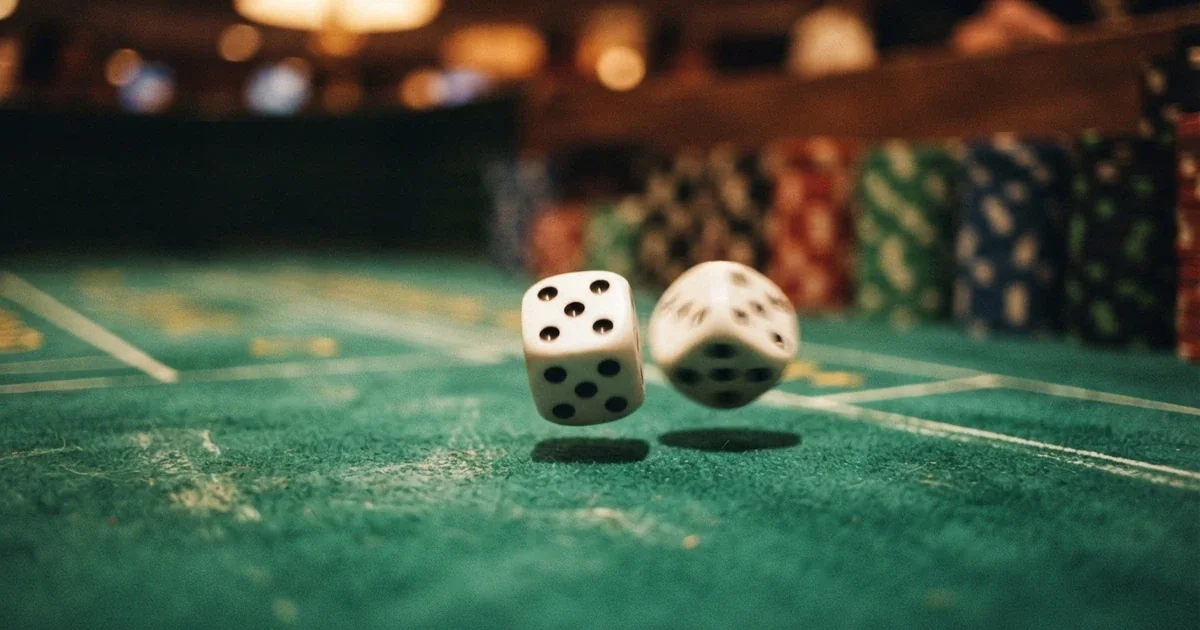
The wrinkle for an Australian reader is that the entire online casino category, dice included, is banned under federal law. No operator in this article holds an Australian casino licence, because no such licence exists. Every brand named below is an offshore operator serving Australian customers from Curaçao, the Seychelles or another jurisdiction outside the IGA’s reach. The page that follows describes the games, the bets and the operators on their own terms; it also names what that offshore status costs the player, because the price is real and it sits on top of every bet you place.
The data on this page is current as of 25 November 2026 and was checked against the Australian Communications and Media Authority’s published register of blocked services, the Interactive Gambling Act 2001 and its 2017 and 2024 amendments, and the operator terms pages of every brand named below.
- What a Casino Dice Game Actually Is — And Isn’t
- Every Dice Game Worth Knowing — Craps, Sic Bo and the Rest
- Why the Pass Line Is Your Friend — How Dice Games Actually Work
- The 10 Biggest Dice Game Casinos Open to Australia in 2026
- Playing Dice Games Online — What Changes
- Is It Legal? — The Real Status of Dice Games in Australia
- Playing Safe — What Australian Dice Players Need to Know
- How We Evaluated These Dice Game Casinos
- What This Means for an Australian Dice Player in 2026
- Frequently Asked Questions
What a Casino Dice Game Actually Is — And Isn’t
A casino dice game is any table product in which one or more dice determine the outcome, rather than cards, a wheel or a slot reel. Craps uses two dice. Sic bo uses three. A handful of variants push to twelve-sided dice or layer in random multipliers. The category is small but unusually sharp: the best bets at a dice table carry a lower house edge than almost anything else a casino offers, and the worst bets on the same table are steeper than most slot machines.
When a Game Uses Dice — The Core Definition
The distinction that matters is not whether dice appear on screen. Several online products use a die icon to dress up a slots-style outcome. A real dice game, in the sense this page is about, lets the player bet on the value the dice will show when they stop moving — and the dice are the entire outcome generator. The craps come-out roll, the sic bo triple, the Lightning Dice multiplier reveal: each is a pure translation of pip values into payout. Nothing else is hidden behind the roll.
That purity is what makes dice games analytically interesting. A card game has a memory — which cards have been dealt, what the shoe is showing. A dice game has none. Every roll is a fresh, independent event, and the mathematics are unusually clean. A bet either pays out at a fixed multiple of the stake or it does not, and the probability is what the table says it is, every time. Strategy in dice, such as it is, comes down to which bets a player is willing to make at which edge — not from reading the game or counting anything.
How Dice Games Differ from Card Tables and Slots
Slots are automated, single-player and paced by a spin button. Card games like blackjack and baccarat let the player make sequential decisions that move the house edge a fraction of a percentage point in either direction. Dice games sit between the two: the player chooses among bets of fixed mathematical value, but the pace is set by a physical event, not a button.
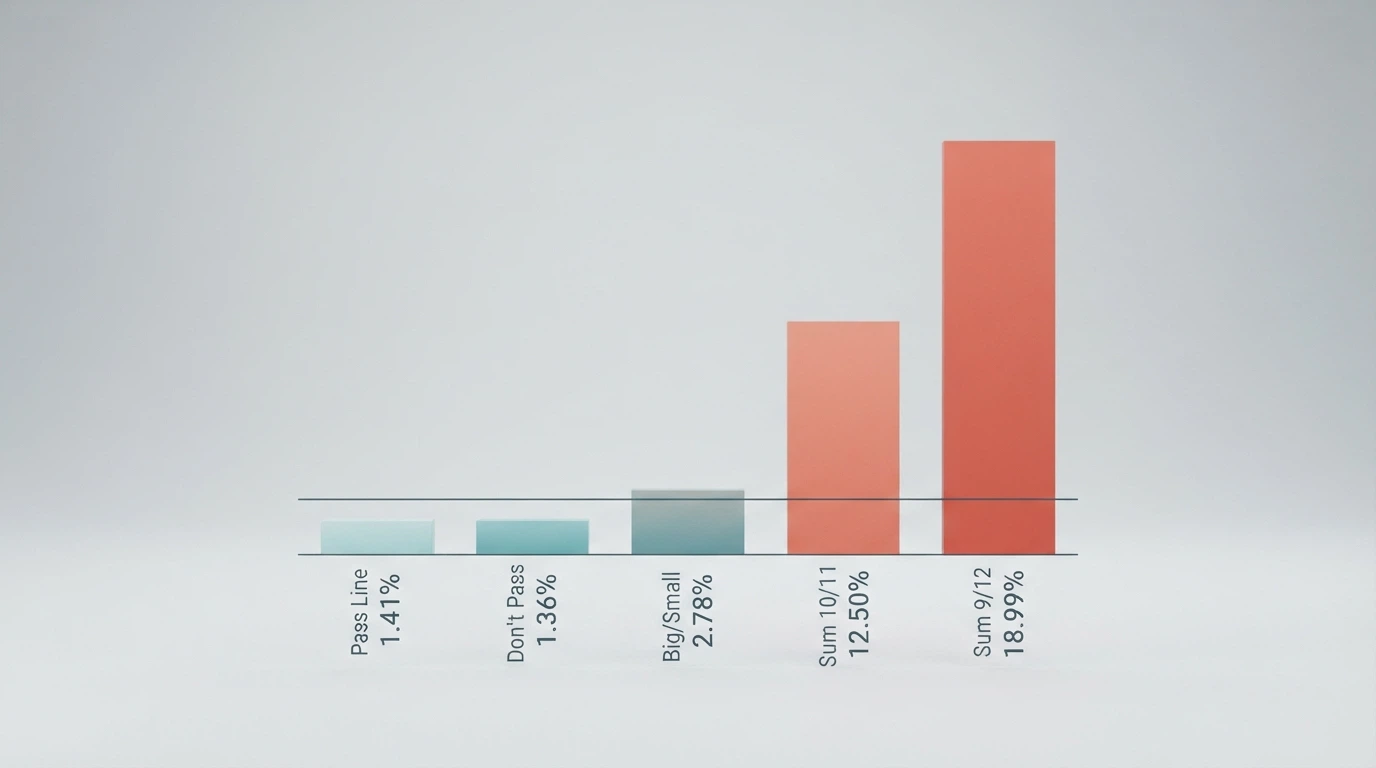
The house edges in dice sit on the lower end of the spectrum. The craps Pass Line bet holds a 1.41% edge and Don’t Pass sits just below at 1.36%, and the Odds Bet layered on top of either is one of the few wagers in any casino with effectively 0.00% house edge. Sic bo is higher: its overall RTP of 97.22% implies a 2.78% house edge, but the spread is wide. Big and Small sit close to the bottom of that range. The specific-triple bet pays 150-180:1 and looks like a gift, until you run the numbers and see the house edge is large enough to drain a bankroll in minutes.
Slots, by contrast, often run at 4-6% house edge or higher. Card games at a perfectly-played blackjack table can undercut 1%, but require sustained attention to strategy. Dice is the rare product where a near-optimal strategy is one line of rules: pick the low-edge bets, ignore the rest, and let the dice do what dice do.
Why Dice Games Still Pull a Crowd in 2026
The craps table is loud in a way no other casino product is. Players bet on each other’s rolls, the shooter takes responsibility for the table’s fortune, and the come-out roll is a shared moment of either release or collapse. Sic bo is quieter — a single roll resolves everything, the bets are placed and forgotten, and the dice are gone in a heartbeat — but it carries a similar weight, especially in live-dealer format where the dice-shake and reveal happen in real time on a stream.
Live craps, in particular, has had a quiet revival online. A decade ago, live craps was almost impossible to find outside a handful of providers; in 2026 the major live studios carry it, complete with multiple camera angles, a real stickman and a betting layout that looks like the felt version. The social texture of the craps table does not survive the migration intact — there is no crowd to high-five after a hard eight — but the betting floor does, and that is the part that matters to anyone deciding what to play.
Every Dice Game Worth Knowing — Craps, Sic Bo and the Rest
Two products dominate the dice category at any online casino. Craps is the Western standard; sic bo is the Asian-origin counterpart. A handful of variants — Lightning Dice, Super Sic Bo, Mega Sic Bo, the 12-sided-dice sic bo from Gameplay Interactive — sit on top of those two, but the bones (literally) are the same. If a player knows craps and sic bo, the rest of the category is a few minutes of new rules and a different payout grid.
Craps — Two Dice, Endless Bets
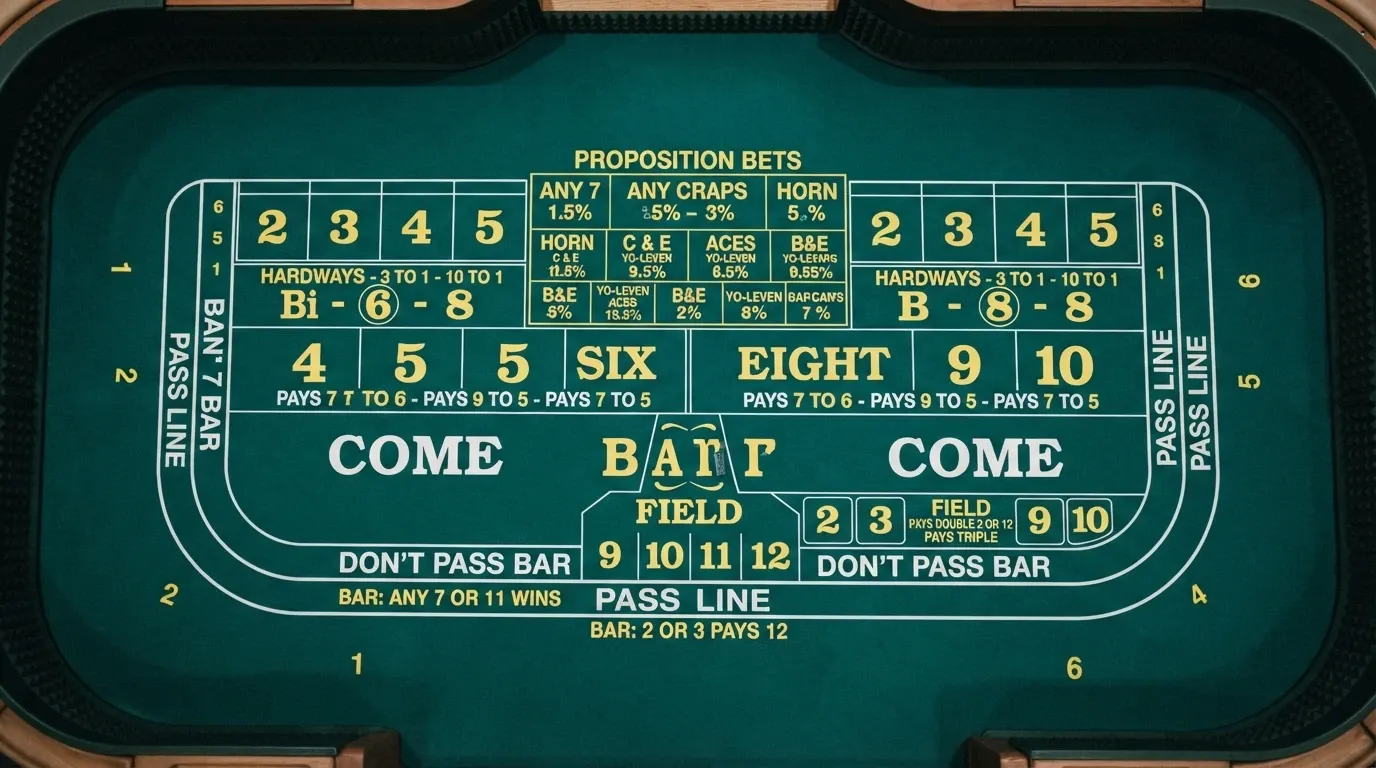
Craps is played with two six-sided dice. A shooter rolls a come-out roll: 7 or 11 wins for Pass Line bettors, 2, 3 or 12 “craps out” and the bet loses. Any other number — 4, 5, 6, 8, 9 or 10 — becomes the “point” and the shooter keeps rolling until either the point repeats (Pass Line wins) or a 7 appears first (“seven out” and the dice pass to the next shooter).
The come-out roll is a single-bet moment. Once a point is established, the same round can last several rolls, and a second set of bets called “Come” and “Don’t Come” behaves like a fresh Pass Line on each new point. The multi-roll structure is what differentiates craps from a single-roll dice game, and what gives the craps table its reputation as a strategic product — most of the dozens of bets printed on the felt are traps, but the right four or five are mathematical gifts.
The Pass Line’s house edge is 1.41%. Don’t Pass, the other side of the same bet, runs at 1.36%. The Odds Bet — a side bet on the point landing before a 7 — carries 0.00% house edge, meaning the casino pays true odds. A strategy that sticks to Pass Line plus Odds (or Don’t Pass plus Odds) is one of the cheapest ways to play in any casino. Everything else on the craps layout is a trade of more excitement for a worse mathematical position.
Sic Bo — Three Dice, One Roll
Sic bo uses three six-sided dice. Every bet resolves on a single roll, with no come-out, no point and no second chance. The dice are shaken in a mechanical or electronic cage, the result is revealed, and the table resets for the next wager.
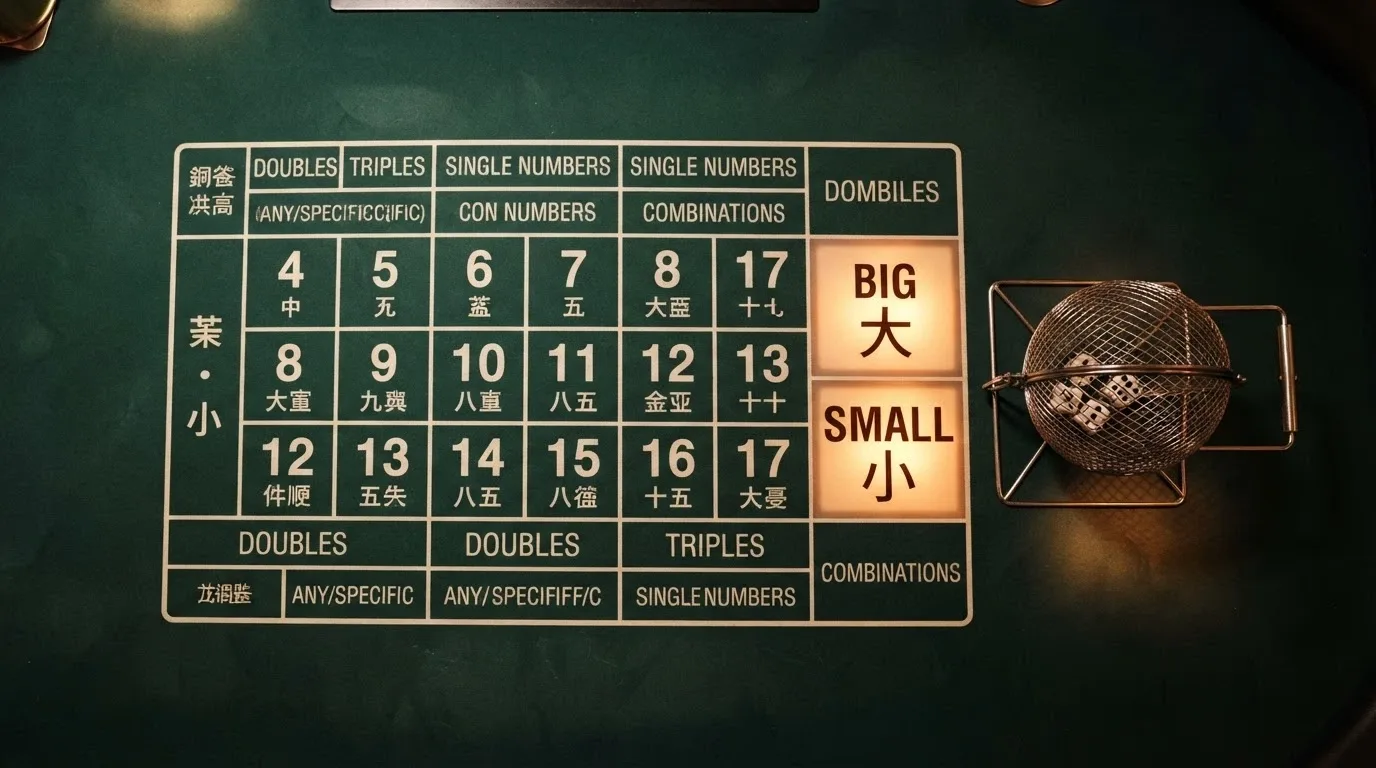
The total of three dice can range from 3 to 18, and the betting grid is a 16-cell array. Big and Small — bets that the total will be 11-17 or 4-10 respectively, with one exception each — pay even money and sit at the cheap end of the menu. Doubles (any two of the three dice showing the same value) pay around 10-11:1, Any Triple (all three dice the same) pays around 30:1, and a Specific Triple (the player names which value) pays 150-180:1. The sums 9 and 12 carry a house edge of 18.99% and sums 10 and 11 carry 12.50% — numbers that explain why the slicker bets on the grid should be left alone.
Live-dealer sic bo from Evolution, Pragmatic Play and Ezugi adds a layer of random multipliers. Before the roll, several spots on the betting grid are randomly boosted — a 2x, 5x, even up to 1000x. A winning bet on a boosted spot pays the listed multiplier instead of the standard payout. The base odds are unchanged; the variance is what moves, and a player who wants a calmer session can usually turn the multipliers off in the game’s interface.
Beyond Craps and Sic Bo — Other Dice Games You Might See
- Lightning Dice (Evolution). Three dice dropped down a vertical pegged board, the player bets on the total (3-18), random multipliers up to 1000x assigned to selected totals before the drop.
- Crapless craps. A craps variant that removes the 2, 3, 12 loss on the come-out by turning them into additional points. The 7 is no longer the dominant outcome, which sounds better; in practice the house edge on the never-lose Pass Line rises above 5%.
- 12-sided-dice sic bo (Gameplay Interactive). The same single-roll structure as standard sic bo, played with 12-sided dice. Totals range from 3 to 36, the grid is bigger and the RTP for Big/Small sits close to the standard 97.22%.
- Regional variants. Hazard (the 18th-century English dice game from which craps descends), chuck-a-luck (a carnival dice game with similar odds to Big/Small sic bo) and a handful of proprietary products from individual studios. None of these has a meaningful lobby presence at an AU-facing online casino.
These variants share a niche fate: they exist, they are playable, and almost no one outside the studios that produce them plays them. The lobby depth at every operator in this ranking is dominated by craps and sic bo, with the live versions accounting for most of the action.
Live Dealer vs RNG Dice — Which One Plays Fairer
Live-dealer dice streams from a real studio with a real croupier and physical dice. The player sees the dice shaken, the result revealed, and the bets settled on the same screen. RNG dice is algorithm-driven: a certified random number generator produces the outcome, the result is animated on the betting grid, and the round is over.
Both formats are fair in the technical sense — live dice uses real, physical randomness, and certified RNG is tested by independent laboratories — but the two feel different. Live dice is slower, more social (a chat box often sits beside the betting grid), and carries the closer feel of a real table. RNG dice is faster, anonymous, and available at any stake. For craps especially, live is closer to the experience most players want; for sic bo, either format works.
Why the Pass Line Is Your Friend — How Dice Games Actually Work
A craps table looks like a betting supermarket. Sic bo’s grid is worse. The real question is which bets to make, and the answer is short: the cheapest bets on the table, with a hard cap on what the rest are worth.
Craps Rules — The Come-Out Roll, the Point and Why Seven Stops Everything
The shooter — the player rolling the dice, and the only one whose actions matter for the round — establishes a point on the come-out. 7 and 11 win the Pass Line, 2, 3 and 12 lose it. The other six values become the point: 4, 5, 6, 8, 9 or 10. The shooter rolls again, and again, until either the point repeats (Pass Line bettors collect) or a 7 hits first (Pass Line loses, dice move to the next shooter). The Don’t Pass side does the opposite, with one wrinkle: 12 on the come-out is a push, not a loss, which is why Don’t Pass is 0.05% cheaper than Pass.
Once a point is established, the player can layer a Come bet. Come behaves like a fresh Pass Line on the next roll; if the next roll is a come-out result, the Come bet wins or loses immediately; if the next roll sets a new point, the Come bet rides that point instead. Don’t Come is the mirror. Together, Pass, Don’t Pass, Come, Don’t Come and the Odds Bet layered on any of them cover most of the meaningful action at a craps table. Everything else — proposition bets, the hardways, the field, the C and E — is more expensive.
Sic Bo Rules — Big, Small and Everything In Between
The three dice are rolled, the total is read, and every bet on the grid is settled in one motion. Big wins if the total is 11-17 (with the exception of any triple, which loses). Small wins if the total is 6-10 (with the same triple exception). Both pay even money and sit at the cheap end of the menu.
Above Big/Small sit the specific total bets. The mathematical centre of a three-dice roll is 10 or 11; totals at the edges (3, 18) are far rarer and pay far more. The Specific Triple bet is the longest shot: 150-180:1 for naming the value before the roll. It looks like the headline payout of the game; the house edge is large enough that no serious strategy touches it.
The live-dealer variants keep the same structure but layer random multipliers. A Super Sic Bo round might see 5x, 10x or even 100x multipliers on selected spots; the game rounds that started as a low-variance even-money bet become a high-variance bet with a chance of a fat payout. The expected value does not improve, but the variance does, and that is the trade the multipliers exist to make.
Dice Game Strategy — Which Bets Are Worth Making
The framework is short. On craps: Pass Line plus Odds, or Don’t Pass plus Odds. Anything else is a worse bet for the same money, and most of the rest of the layout is dramatically worse. The proposition bets in the middle of the table (any seven, any craps, the hardways, the hops) are sometimes called “sucker bets” for the speed at which they drain a bankroll.
On sic bo: Big and Small. Specific totals and triples pay more but cost more. The sum bets on 9 and 12 (18.99% house edge) and on 10 and 11 (12.50% house edge) are the worst mathematically, and a player who wants to put a small bet on a number for entertainment should at least pick a total that pays more than 6:1 to compensate.
What separates a strategy from a system is that a strategy accepts the house edge and chooses the cheapest one; a system claims to beat it. No dice system beats the math. The craps Odds Bet is 0.00% because the casino pays true odds; it is also limited in size, often to a multiple of the original Pass Line bet. The rest of the table is the rest of the table, and no progression, no pattern, no lucky shooter changes that.
How the House Edge Eats Your Stack — Slowly
A 1.41% house edge looks like a small number. Over time, it is not. On a single craps bet, the expected loss is 1.41 cents per dollar wagered. Over a session of a few hundred dollars in action, the loss is in the single digits — small enough to be invisible. The damage comes from volume: a 1.41% edge over A$10,000 of wagers is A$141 of expected loss, and A$100,000 of wagers is A$1,410.
A welcome bonus pushes the volume higher. A A$8,000 bonus at 40x wagering requires A$320,000 of turnover before withdrawal, even on the craps Pass Line. At a 1.41% house edge, the expected loss on that turnover is A$4,512 — more than half the headline value of the bonus. On sic bo, with a 2.78% house edge, the same A$320,000 of turnover costs A$8,896 in expected loss. The bonus, in both cases, is a fraction of what it costs to clear.
| Bet | Game | House Edge |
|---|---|---|
| Pass Line | Craps | 1.41% |
| Don’t Pass | Craps | 1.36% |
| Odds Bet (any point) | Craps | 0.00% |
| Big / Small | Sic Bo | 2.78% (RTP 97.22%) |
| Specific total 10 / 11 | Sic Bo | 12.50% |
| Specific total 9 / 12 | Sic Bo | 18.99% |
| Specific Triple | Sic Bo | Steep — avoid |
The table tells the same story as the prose: the spread between the cheapest and most expensive bets at a dice table is wider than in almost any other casino game. The gap is the casino’s profit margin, and it is widest on the bets that look most attractive.
The 10 Biggest Dice Game Casinos Open to Australia in 2026
The single most important fact about every operator on this list is that none holds, or can hold, an Australian online casino licence. Online casino games are prohibited under the Interactive Gambling Act 2001; the licences that do exist cover sports and racing wagering, not casino products. The brands below are offshore operators that choose to serve Australian customers from outside the country. The page describes what each one offers; the section that follows explains the consequences of that choice.
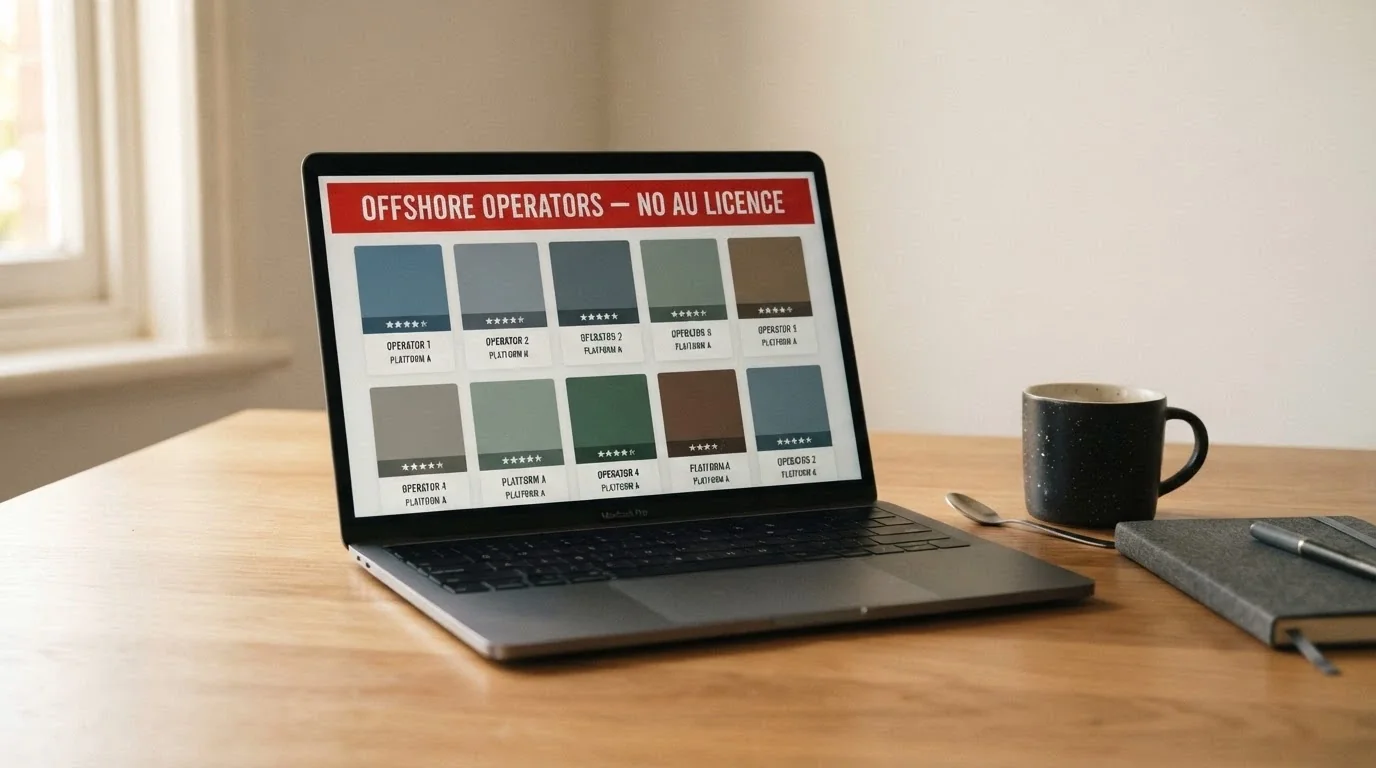
| Operator | Licence Jurisdiction | Welcome Bonus (AU) | Wagering Requirement | Game Library |
|---|---|---|---|---|
| SkyCrown | Offshore (Curaçao, likely) | A$8,000 + 400 FS | 40x | 7,200+ |
| Bizzo Casino | Offshore (Curaçao, likely) | A$7,250 + 175 FS | 40x (14-day validity, A$30 min, A$8 max bet) | 8,000+ |
| RocketPlay | Offshore (not confirmed) | AU$6,000 + 300 FS | Not confirmed | Not confirmed |
| Royal Reels | Offshore (not confirmed) | AU$10 no-deposit + welcome bonus | 30x (35x on no-deposit) | 5,400+ pokies, 40+ providers |
| Fair Go Casino | Curaçao 1668/JAZ | A$1,000 across 5 deposits | 30x (bonus + deposit) | 300+ (RTG only) |
| Rainbet | Offshore (Curaçao) | $2,100 + 60 FS | 40x (14-day validity) | 6,818 |
| WinSpirit | Offshore (not confirmed) | 400 EUR + 100 FS | 40x | 60+ providers |
| Stake | Offshore (Curaçao) | Not confirmed | Not confirmed | Not confirmed |
| Scream Casino | Offshore (not confirmed) | Not confirmed | Not confirmed | Not confirmed |
| Rocket Casino | Offshore (not confirmed) | AU$150 max | 30x | Not confirmed |
SkyCrown
SkyCrown’s A$8,000 + 400 free spins welcome package is the largest headline value in the set, spread across four deposits. The 40x wagering requirement applies to both the bonus and any free-spin winnings, and the total turnover required to clear the package sits at A$320,000 — a sum large enough to require several sessions at the dice tables, and one the craps Pass Line will, on average, cost A$4,512 to complete. The 7,200+ game lobby is among the largest in the offshore market, and the Curaçao-licensed operator accepts Australian players; SkyCrown does not publish a dice-specific count, so the depth of craps and sic bo variants is the kind of thing a player has to check on-site.
The value is genuine but the maths is not generous. A A$8,000 bonus that costs A$4,512 to clear is worth A$3,488 in expected return at the craps Pass Line; at the sic bo Big/Small bet, the same bonus costs A$8,896 to clear and is, on average, an A$896 loss. SkyCrown is the right operator for a player who plans to play craps at the cheapest bets and is willing to grind the volume, and the wrong one for anyone who treats the bonus as free money.
Bizzo Casino
Bizzo runs the largest library in the set — 8,000+ titles — and a tiered welcome package that climbs to A$7,250 + 175 free spins across four deposits. The 40x wagering requirement, 14-day bonus validity, A$30 minimum qualifying deposit and A$8 maximum bet with an active bonus are all clearly published, which puts Bizzo ahead of most of the set on terms transparency. Like SkyCrown, the operator is Curaçao-licensed (most likely under a SoftSwiss platform) and does not name its dice-specific count.
A 14-day bonus window is tight at 40x wagering. A A$7,250 bonus needs A$290,000 of turnover in two weeks, which works out to roughly A$20,700 of wagering per day — a pace that means dice play has to be a job, not a hobby, for the bonus to clear. For a player who can sustain that pace at the cheapest bets, the offer is workable. For anyone who treats the welcome package as a slow-burn exploration, the 14-day clock makes it punishing.
RocketPlay
RocketPlay’s A$6,000 + 300 free spins welcome offer is the third-largest headline in the set, and the structure is tiered: 100% up to A$1,000 + 100 free spins on the first deposit, with smaller matches on the next three. The A$30 minimum deposit kicks in from the second tier. The published terms are thinner than SkyCrown’s or Bizzo’s — the wagering requirement and bonus validity were not confirmed on the operator’s terms page at the time of writing, and the licence jurisdiction was not confirmed either. A player considering RocketPlay should check the current terms before depositing.
What RocketPlay does publish is a reasonable welcome offer, a tiered structure that does not punish a small first deposit, and a sufficient minimum that does not allow micro-stakes clearing. Without the wagering figure, however, the package is hard to value against SkyCrown or Bizzo, and the missing jurisdiction is the more important of the two gaps.
Royal Reels
Royal Reels is the rare operator in the offshore set that offers a no-deposit entry: A$10 of bonus funds after phone verification, with 35x wagering on the resulting winnings. The main welcome bonus carries 30x wagering, which is the lowest in this ranking and meaningfully cheaper than the 40x common to the rest of the set. The lobby includes 5,400+ pokies from 40+ software providers, and the 10-tier VIP program is the most elaborate in the set.
Dice-specific depth at Royal Reels is not published, and the 5,400+ figure covers pokies rather than the full table-game count. The 30x wagering and the A$10 no-deposit entry make Royal Reels the most player-friendly bonus terms in the ranking, even with the offshore jurisdiction. For a player who wants to test the platform with real money risk before committing, the no-deposit bonus is the right starting point; the welcome package that follows is the right next step.
Fair Go Casino
Fair Go is the most transparent operator in the ranking on bonus terms, and the only one with a confirmed Curaçao licence number on the page. The welcome package is the smallest headline in the set — A$1,000 across five deposits of 100% up to A$200 each — but the 30x wagering requirement applies to bonus and deposit combined, and the A$20 minimum qualifying deposit and A$10 maximum bet with an active bonus are clearly stated. The library is the smallest, at 300+ games from RTG only.
RTG-only is the trade. The RealTime Gaming catalogue is small but complete: it carries both craps and sic bo, and the studio’s table-game products have been around long enough that the rules, RTPs and bet menus are well-documented. Fair Go is the right choice for a player who values a published licence number and clear terms over a giant lobby, and the wrong choice for anyone chasing a long tail of new releases or live-dealer variants.
Rainbet
Rainbet is the most interesting of the set on terms structure, and the most restrictive in play. The welcome package is up to $2,100 + 60 free spins across three deposits, with 40x wagering and 14-day validity. The minimum deposit is $30 per tier, and the maximum bet during bonus play is 2% of the deposit amount — a low cap that limits how fast a player can grind the wagering requirement. The 6,818-game library is large and the Curaçao licence is confirmed. What separates Rainbet is the RTP restriction: games with an RTP above 97.4% are disabled during bonus play, which means the cheapest craps bets (Pass Line at 1.41% house edge, Don’t Pass at 1.36%) and the lower-edge sic bo bets may or may not be eligible, depending on the individual title’s published RTP.
The 97.4% RTP ceiling is unusual; it is also a quiet way for the operator to keep the high-edge games for the bonus clearing and reserve the cheap ones for the real-money play. For a player who values the licence confirmation and the published terms, Rainbet is a reasonable pick. For a player whose entire plan is to clear a welcome bonus at the craps Pass Line, Rainbet is the operator to check the eligible-games list on first.
WinSpirit
WinSpirit is the smallest published package in the set — 400 EUR + 100 free spins, 40x wagering — and the terms are thinner than most. The EUR denomination is unusual for an Australian-facing page and means the headline value moves with the exchange rate; on most days in 2026 it sits somewhere between A$650 and A$700. The 60+ software providers and 2022 launch are confirmed, but the bonus validity, minimum deposit and maximum cashout are not.
WinSpirit is the right pick for a player who has found a specific provider on the list whose titles they want and is happy to ignore the headline value. Because the welcome package is smaller than others in this ranking, it is less suited for users prioritized by pure headline value.
Stake
Stake is the largest crypto-led casino in the offshore market and one of the most public about what it does and does not do. The Curaçao licence is general knowledge but was not re-confirmed via a snippet in the research round, and Stake’s published welcome terms were not confirmed in this research run; the platform’s product includes proprietary games (such as Stake Originals’ dice product) and a live-casino lobby.
A reader who wants a comparison-friendly welcome offer is the wrong audience for Stake. A reader who values the brand, the platform, the live-casino depth and the crypto payment options is the right one. The dice product on Stake is the Stake Originals dice game, not craps or sic bo in the conventional sense, and a player who wants a live craps or sic bo experience should look elsewhere.
Scream Casino
Scream is the thinnest data set in the ranking. The operator is offshore; the licence jurisdiction was not confirmed, the welcome bonus was not confirmed, the game library was not confirmed. The brand exists, the site is reachable, and Australian players have access — but every meaningful term a player would want to check before depositing sits on a terms page that was not captured in the research round.
The honest read: a player considering Scream Casino should verify the licence, the current welcome offer, the wagering requirement and the games library directly on the operator’s site before depositing. The minimum check is a working licence number, a published wagering requirement, and a real-money version of at least one craps or sic bo title. If any of those is missing, walk.
Rocket Casino
Rocket is the compact end of the ranking. The A$150 maximum bonus and 30x wagering are confirmed, as is the A$20 minimum deposit — making Rocket the lowest entry point in the set for a player who wants a small first deposit and a short bonus term. The licence jurisdiction was not confirmed.
A$150 is a small bonus and a small target: the turnover required to clear at 30x is A$4,500, which is roughly a single session of craps at moderate stakes, and the cost of clearing at the Pass Line is around A$63 of expected loss. Rocket is the right pick for a player who values small deposits and short bonus terms, and the wrong pick for anyone chasing headline value.
Playing Dice Games Online — What Changes
Moving a dice game from a felt table to a screen changes the pace, the social texture and the bet limits, but does not change the rules or the mathematics. The online version of craps is the same craps; the online version of sic bo is the same sic bo. What changes is the wrapping.

Online vs the Casino Floor — What’s Different
The biggest difference is pace. An online craps round resolves in a few seconds, with no stickman, no crowd, no ceremony between rolls. A live craps table on a real floor can take a minute per round when a hot shooter is at the rail, with cheers and groans that slow the table to a social pace. Online, the round is mechanical and the pace is whatever the player makes it.
The second difference is bet limits. A real craps table typically runs from A$5 to A$5,000 or so at the main bets, and a wide range around that. Online, the floor and the ceiling stretch further: minimum bets of A$1 are common, and the maximum at the Pass Line can hit A$10,000 or more at the high-limit tables. Sic bo behaves the same way: even-money bets that cost a dollar, high-stakes single-roll bets that cost a thousand.
The third difference is the absence of the dice-throw ritual. Online, the dice are shaken in a cage, the result is shown on a screen, and the player sees the outcome as pixels. The effect is small, but it changes how the result feels — the random number generator is doing what a hand and a felt did before, and the result is identical, but the player has nothing to read.
Mobile Dice — Playing Craps and Sic Bo on Your Phone
A modern online casino is, in practice, a mobile casino: every operator in the ranking is reachable from a phone browser, and the dice products are built mobile-first. Craps adapts awkwardly — the betting layout is wide, the touch targets are small — but it works. Sic bo is built for mobile: the betting grid is square, the totals are visible at a glance, and live-dealer sic bo streams cleanly on a phone over a stable 4G connection.
Live streaming is the constraint. A live craps or sic bo round needs a stable connection; on a flaky mobile network the stream can drop, the bet can fail to register, and the round can resolve without the player seeing it. RNG dice does not have that problem: the round is local to the device, the result is generated and shown instantly, and the only bandwidth required is for the lobby.
RNG vs Live Dealer — Which Feels More Like the Real Thing
For most players, live dealer is closer to the casino floor. The dice are real, the croupier is real, the betting grid is the same betting grid. The pace is slower than RNG, the social element of the chat box is a thin version of the real crowd, and the perceived randomness is more visceral.
RNG is faster and cheaper to run. The dice are generated by a certified random number generator, tested by an independent laboratory, and the round is over before a real croupier would have finished the dice-shake. The trade is transparency: a live table is visibly random in a way an RNG is not, and a player who cannot see the dice has to trust the algorithm. The trust is reasonable — certified RNG is the industry standard — but it is trust, not observation.
Demo Mode — Playing for Free Before You Stake a Dollar
Demo mode is the smartest first move for any dice game, and every credible operator offers it. The player opens a craps or sic bo title, plays with virtual credits, and learns the betting grid, the round structure and the pace without risking real money. The rules are the same; the only difference is the absence of a real-money balance at the end.
The catch is that not every title is in demo mode. Some live-dealer dice products are real-money only, and some RNG games require registration before the demo is unlocked. A player who wants to learn should expect to register an account before playing craps or sic bo for free, and should expect the demo to be the same experience as the real-money version down to the last rule and the last payout.
Is It Legal? — The Real Status of Dice Games in Australia
The short version is the version that opens this article. Online casino games — dice included — are prohibited in Australia under the Interactive Gambling Act 2001. There is no online casino licence to be had in this country, and there is no operator anywhere in the world that can lawfully offer craps, sic bo, blackjack, roulette or slots to a person physically in Australia.
The rest of this section explains the law, the loophole and the consequences of using the loophole.
What the Interactive Gambling Act Actually Says
The Interactive Gambling Act 2001 makes it an offence to provide online casino games, online pokies or in-play betting to a person in Australia. The 2017 amendment closed the loopholes offshore operators had used — most notably, the legal fiction that a server based outside the country made the service a non-Australian one — and gave the ACMA the power to direct ISPs to block illegal sites. The 2024 credit-card and crypto ban removed the most common payment routes; the 2026 reform, which passed Parliament on 19 August 2026 and commences on 1 January 2027, layers further restrictions on advertising, inducements and payment-blocking.
The act targets the provider, not the player. There is no Australian law that punishes an individual for placing a bet at an offshore casino, but the IGA’s silence on the player is not the same as a right. The offshore operator is breaking the law by offering the product; the player is using a product that has no Australian licence, no Australian consumer protection, and no Australian dispute-resolution route.
The minimum age for any commercial gambling in Australia is 18. A licensed wagering operator verifies age at signup. An offshore casino may or may not verify, and a player who is asked to verify should expect to do so before any withdrawal is processed.
Offshore Casinos — What They Are and What They Aren’t
An offshore casino is not “an Australian operator based overseas” or “a licensed casino with a different address”. It is an unlicensed operator, period. A Curaçao licence makes the operator legal in Curaçao; it does not make the operator legal in Australia, and it does not give an Australian player any of the protections that come with an Australian licence. The headline phrase “licensed and regulated” on an offshore casino’s footer is true in the jurisdiction the licence is issued in, and irrelevant in the jurisdiction the player is sitting in.
The concrete consequences are several. The first is no BetStop coverage — the National Self-Exclusion Register binds only Australian-licensed wagering services, and an offshore casino is not on it. A self-excluded Australian who opens an offshore account has not self-excluded, and the offshore operator is not required to enforce any exclusion. The second is no ACMA recourse — there is no Australian complaints body, no ombudsman, no regulator the player can appeal to if the offshore operator refuses a withdrawal, changes a bonus term or closes the account. The third is no Australian consumer law — the Australian Consumer Law does not apply to a Curaçao-licensed service, and the terms on the operator’s site are the only terms that bind.
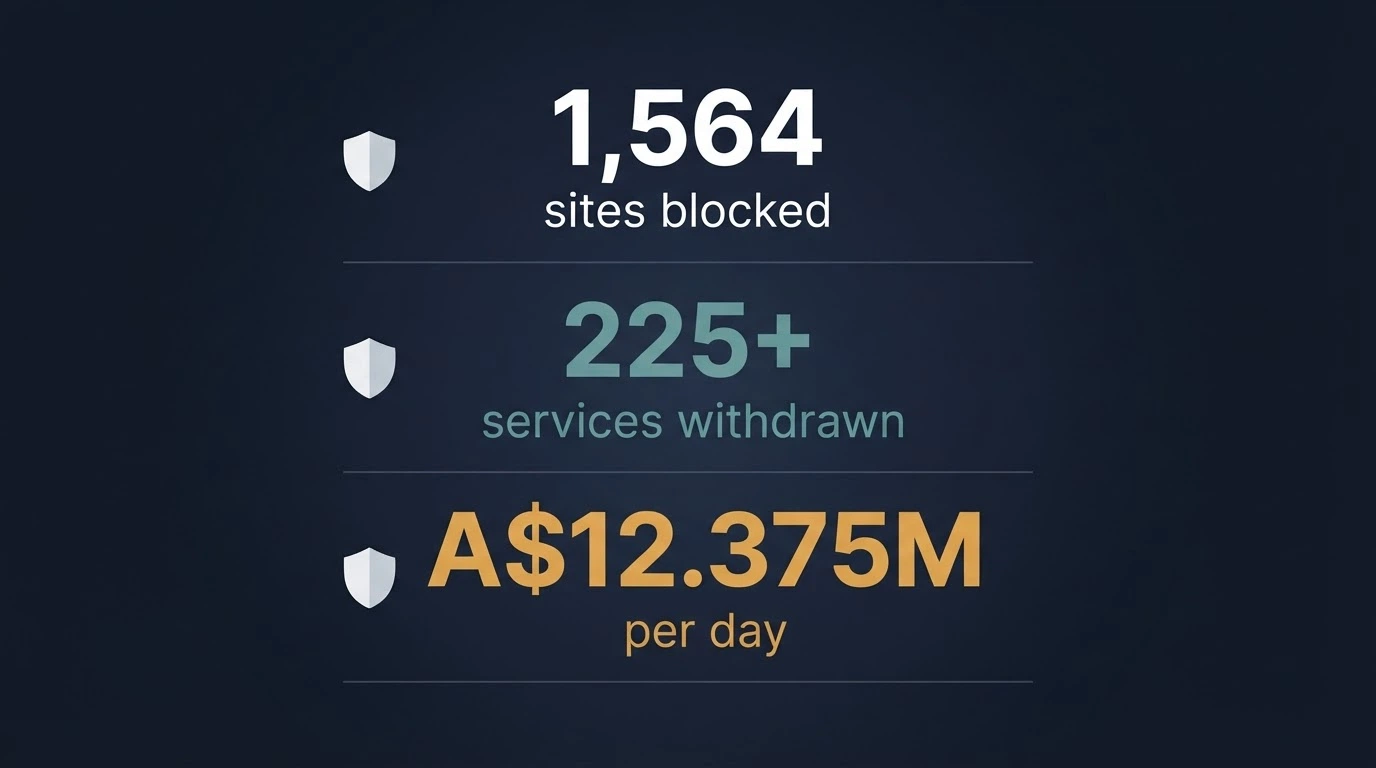
The fourth consequence is the consequence that arrives on 1 January 2027. From that date, banks and payment providers can block transactions to illegal gambling operators. The details of the new power are still being implemented, but the direction is clear: paying into an offshore casino is going to get harder. The ACMA’s enforcement record gives a sense of what to expect: 1,564 illegal gambling and affiliate websites blocked by Australian ISPs since November 2019, 225+ illegal services withdrawn from the Australian market since 2017, civil penalties of up to A$2,475,000 per day for individuals and A$12,375,000 per day for corporations. On 16 January 2026 the ACMA issued 8 infringement notices to Tabcorp totalling A$158,400 for in-play betting — a single operator, a single kind of breach, and the regulator moved.
The legal status of the offshore operator does not need to be a surprise. The home page of every operator in the ranking above says, in the fine print, what it is and where it is licensed. A player who has read the small print and decided to play has made a choice with eyes open; a player who has not read the small print is the one who is surprised by the consequences.
What Happens If Something Goes Wrong — Player Protection and Dispute Routes
The answer is uncomfortable. When an offshore casino refuses a withdrawal, voids a bonus, or closes an account, the Australian player has no regulator to call, no ombudsman to escalate to, and no Australian court that will reliably enforce a judgement against a Curaçao-licensed operator. The practical options are a chargeback through the payment provider (where the payment route allows it), a complaint to the offshore regulator (which has limited practical power), and a public review that may or may not move the operator.
The contrast with a licensed Australian wagering operator is sharp. A state-licensed wagering operator is bound by Australian consumer law, subject to an Australian complaints process, and answerable to a state or territory regulator. A customer dispute with a licensed operator has a defined escalation path. The same dispute with an offshore operator has none.
Playing Safe — What Australian Dice Players Need to Know
The pace of a dice game is what makes it dangerous. A single craps round takes a few seconds, and a single sic bo round is over in less. A player who is not paying close attention can place dozens of bets in a session without noticing the cumulative spend, and the visible randomness of the dice makes each loss feel like a unique event rather than the latest in a long series.

Setting Limits Before You Roll
The single most effective tool is a loss limit set before the first roll. A player who decides to lose no more than A$100 in a session and stops at A$100 has limited the worst case. A player who decides “I’ll play until I feel like stopping” has no limit at all, and the dice will run until the balance does.
Licensed Australian wagering operators offer customer-set deposit limits as a regulatory condition. An offshore casino may or may not offer deposit limits, and a player who wants one should set it in the account settings before the first deposit. A session timer — visible on most operator sites, ignored by most players — is the other tool that works. A 60-minute timer that locks the account for the rest of the day is the difference between a session and a binge.
The fast pace of online dice makes pre-commitment more important than it is on slower games. A blackjack hand takes 30 seconds; a craps round is over before the player can decide what the next bet should be. The tools that work on the slower game are necessary on the faster one.
Knowing When the Fun Stops
The behavioural red flags are not subtle in retrospect. Chasing losses — increasing the bet size to recover the last loss — is the classic sign. Playing longer than planned is the second. Concealing play from family or friends is the third. The fast pace of dice makes the first two easier to fall into, because each round feels like a fresh start.
The Australian numbers are stark. Roy Morgan’s August 2025 research found 622,000 Australians — 2.9% of the adult population — classified as problem gamblers, up 111,000 (22%) from a year prior. The ANU POLIS data shows risky gambling rising from 13.7% in 2024 to 19.4% in 2025. Less than 1% of NSW gamblers had sought help, which is the most important figure on this page: the help exists, and almost no one reaches for it.
A player who recognises any of the red flags in their own behaviour should stop, set a hard limit, and use the help infrastructure in the next section. The line between a session and a problem is not the size of the loss; it is the inability to stop.
Where to Get Help — BetStop, Helplines and Support
- BetStop (betstop.gov.au) is the National Self-Exclusion Register. 67,480 Australians had registered as at 31 July 2026, with 41,290 exclusions still active; 78% of registrants were under 40, and 38% chose lifetime exclusion. One registration excludes a person from every Australian-licensed wagering service.
- National Gambling Helpline: 1800 858 858. Free, confidential, staffed 24/7. The number routes to the state- or territory-appropriate service, which can refer to face-to-face counselling where needed.
- Gambling Help Online (gamblinghelponline.org.au) — live chat and email counselling, 24/7, run by Turning Point. The web entry point for players who would rather type than talk.
- Gambler’s Help — state-based face-to-face counselling, delivered by Turning Point in Victoria and by other providers in other states. The helpline can refer.
The critical caveat: BetStop only reaches Australian-licensed wagering services. A person who self-excludes and then opens an offshore casino account has not self-excluded in any practical sense. The offshore operator is not on the register, the offshore regulator has no enforcement arm in Australia, and the player is back at the table. Self-exclusion is a tool, not a guarantee; it works in combination with the rest of the help infrastructure, not as a stand-alone.
How We Evaluated These Dice Game Casinos
The operator set is the ten brands that reach Australian players for casino dice games. Wagering-only operators — SportsBet, Tab, Bet365, Ladbrokes, TABtouch, PointsBet, Neds, Betr, Picklebet, Betfair — are excluded because they offer sports and racing, not casino products. Within the casino set, the order is the ranking in this article: the largest welcome package, the clearest bonus terms, the largest game library, the most confirmed licence jurisdiction at the top, and the thinnest data sets at the bottom.
The sources consulted include the published operator terms pages, the ACMA’s register of blocked services, the Interactive Gambling Act 2001 and its 2017 and 2024 amendments, and a small set of affiliate and review sites — AustralianGamblers, BestAustralianCasinoSites, CasinoAudit, PlayCasino, Krypto-Casinos and Kasinoekspertti — used to confirm headline bonus values. The evaluation criteria were licence transparency (a confirmed jurisdiction is worth more than a likely one), bonus value and wagering burden (a smaller bonus at 30x beats a larger bonus at 40x, all else equal), game-library depth (more games is better, and live dice availability is the specific factor that matters here) and published-term clarity (a clearly stated wagering requirement is more useful than an unstated one).
Every operator in the ranking was checked against the official position that no online casino licence exists in Australia. None of the ten holds an Australian casino licence, because none can. The offshore status is not a footnote; it is the most important fact about each operator on the list, and the one a player should know before depositing a dollar.
What This Means for an Australian Dice Player in 2026
A casino dice game in 2026 is, for an Australian player, a product that cannot be lawfully offered to them, offered by operators that cannot be lawfully licensed to offer it, in a market where the consequences of using those operators are sharpening year on year. The Pass Line is 1.41% house edge and the Odds Bet is 0.00% — cheap bets, well-designed bets, and the kind of bets that would make a visit to a real craps table a reasonable evening out. The same bets at an offshore casino in 2026 are wrapped in a 40x wagering requirement, a 14-day bonus clock, a payment route that may or may not work in 2027, and a regulator that has blocked 1,564 of the operator’s peers.
The decision is the player’s, not the page’s. The framework for making it is short. If you choose to play, use demo mode first. Stick to the cheapest bets: Pass Line plus Odds on craps, Big or Small on sic bo. Set a loss cap before you open the table, and stop at the cap. Never deposit money you cannot afford to lose. Know that the operator is not bound by Australian consumer law, that BetStop does not reach it, and that the ACMA can direct the operator’s domain to be blocked with your balance still inside the account. If any of those conditions changes — if the terms on the operator’s site read differently than the headline, if the licence jurisdiction cannot be confirmed, if the bonus requires more wagering than the math justifies — close the account and find a different one.
The product is good. The Odds Bet is the only bet in any casino with 0.00% house edge, and that is a real achievement in a product category built on the opposite. The marketing, however, is the marketing: the welcome package is a number, the wagering requirement is what the number costs, and the cost on the craps Pass Line for the largest package in this ranking is A$4,512 of expected loss on A$320,000 of turnover. The same product on the same game at a real craps table, with no bonus and no wagering, costs A$14 of expected loss on A$1,000 of action. The arithmetic is the same in both cases. The framing is not.
Frequently Asked Questions
What is the house edge on craps pass line bets?
The Pass Line bet in craps carries a house edge of 1.41%, and the Don’t Pass bet on the other side runs at 1.36%. The Odds Bet layered on top of either is one of the few wagers in any casino with 0.00% house edge. The two bets together — Pass Line plus Odds — are the mathematically cheapest way to play craps.
What is the best bet in sic bo for beginners?
Big and Small are the entry-level bets on the sic bo grid, paying even money and sitting at the cheap end of the menu. The Specific Triple bet pays 150-180:1 and looks generous, but the house edge is steep enough to drain a bankroll in minutes. Beginners should stick to Big and Small, and treat everything else as entertainment rather than strategy.
Are online dice games fair and random?
Yes, in the technical sense. Live-dealer dice uses physical dice shaken by a real croupier, and the result is visible on a real-time stream. RNG dice uses a certified random number generator tested by an independent laboratory. The randomness of the outcome is not the issue; the issues are the offshore licence jurisdiction, the absence of an Australian regulator and the 1,564-site block record that comes with it.
What is the difference between craps and sic bo?
Craps is played with two six-sided dice, total range 2-12, and supports multi-roll rounds with a come-out phase and a point phase. Sic bo is played with three six-sided dice, total range 3-18, and every bet resolves on a single roll. Craps is the cheaper game to play well; sic bo is the faster game to learn.
What are the different types of bets in craps?
The craps table is divided into multi-roll bets (Pass Line, Don’t Pass, Come, Don’t Come and the Odds Bet on each) and single-roll bets (the field, any seven, any craps, the hardways, the hops, the proposition bets in the centre). The multi-roll bets are the cheap ones; the single-roll bets in the centre are the expensive ones. A strategy that sticks to the multi-roll bets is a strategy that plays at the lowest house edge available.
Can I play live dealer sic bo on my mobile phone in Australia?
Yes. Every credible operator in this ranking offers mobile-browser access to live-dealer sic bo, and the betting grid is built mobile-first. A stable 4G or Wi-Fi connection is the only requirement. The constraint is bandwidth: a flaky connection can drop the stream mid-roll, and the bet may resolve without the player seeing the result. RNG sic bo is the safer mobile option on a poor connection.