
No Minimum Deposit Reality for Australian Players in 2026
“Casino no minimum deposit” sounds like free entry, and the search results sell it that way. The cashier rarely agrees. An honest low-deposit casino in Australia in 2026 is a product with a floor somewhere between one Australian dollar and fifteen, with crypto the only route that genuinely drops below ten — and every site that lets you in is offshore, unlicensed in this country, and outside the reach of the consumer protections Australians expect from a gambling operator. This page is the read between the marketing claim and the deposit button.
The data below is current as of 25 November 2026 and the operator, regulator and cashier figures were checked against the ACMA’s BetStop and blocking statistics, the PayoutVerdict low-minimum-deposit round-up, the Betsquare A$1 cashier walkthroughs and the operators market-share tables for the AU-facing offshore segment.
- Why “No Minimum Deposit” Rarely Means Zero at an Australian Online Casino in 2026
- The Payment Routes That Actually Let You Deposit Less
- Crypto — The Only Genuine Sub-A$10 Deposit Route in 2026
- Pokies You Can Actually Play on a Minimum Deposit
- How to Pick a No-Minimum-Deposit Casino Without Getting Burned
- Top No-Minimum-Deposit Casinos Accessible from Australia in 2026
- No Online Casino Is Licensed in Australia — Here’s What That Means for Your Deposit
- Why a Low Deposit Still Needs a Budget — Responsible Gambling in 2026
- How We Evaluated These No-Minimum-Deposit Casinos
- Is a No-Minimum-Deposit Casino Worth Your Money from Australia?
- Frequently Asked Questions
Why “No Minimum Deposit” Rarely Means Zero at an Australian Online Casino in 2026
A$5 is the figure the search results keep returning. It is also a number that, in 2026, has no honest product behind it. PayoutVerdict’s review of the AU-facing low-deposit market put it plainly: there is no honest AU$5 fiat-deposit casino for Australian players this year — the figure is a search-result artefact, not a product. Neosurf vouchers sold in Australia start at AU$10, card processors impose a AU$10–AU$20 floor and PayID casinos enforce a AU$20 minimum because of anti-fraud rules. The A$5 slot in the comparison pages is being filled by operators whose actual cashier doesn’t back it.
That is not a small distinction. It changes what a low-deposit player is shopping for. The reader who takes the headline at face value expects to load A$5 and play; the cashier hands back an “amount too low” or simply declines the transaction. A$10 is the working floor for ordinary Australian payment methods in 2026 — Estelle Australia reached the same conclusion, that A$1 is not a reliable standard minimum for ordinary Australian payment methods. The cluster of “low minimum deposit casino” pages the reader meets at the top of Google has flattened those three realities into one tidy number.
What “no minimum deposit” actually promises — and what it doesn’t
“No minimum deposit” describes a low barrier to enter, not free money. The term covers casinos whose cashier accepts very small deposits — A$1 through A$15 in fiat, or fractions of a cent in crypto. It is not the same as a “no-deposit bonus”, which is credit the casino hands you without a deposit at all. The two get conflated because both promise something for nothing, and the affiliate pages use them interchangeably. A player who lands on a “no minimum deposit” page expecting bonus credit is reading the wrong brief — and on most AU-facing sites, the only way to trigger a welcome offer is to deposit an amount the bonus terms specify, which is often higher than the floor for play alone.
The small deposit still buys real-money play. It does not buy a free ride.
Real-money play vs demo mode — the deposit that separates them
Real-money pokies require a deposit of any size, however small. Demo or “fun” mode does not — and every AU-facing casino in this review runs a demo lobby where a player can spin without funding an account. The catch is the one that matters: demo-mode winnings cannot be cashed out. The reels behave the same, the RTP is the same, but the balance is play-money. A player who wants to feel a title out before committing a dollar has that option at zero cost; a player who wants to win real money has to put something into the cashier.
The Betsquare test of A$1 deposits at five AU-facing casinos in May 2026 is the cleanest illustration of what “small” looks like in practice. Time from the deposit button to first spin ranged from 39 to 56 seconds across the five brands tested. That is fast enough that the deposit is not really the barrier — the barrier is knowing which operator’s cashier will accept the small figure at all.
The deposit floor reality — why most AU-facing casinos draw a line
Three floors stack on top of each other, and the highest one wins. The casino’s own stated minimum is the lowest — sometimes A$1, often A$10 or A$15. The payment processor sits above that: card networks won’t process a transaction under their own floor (A$10–A$20 is typical), Neosurf vouchers in Australia start at A$10 and PayID casinos routinely enforce an A$20 minimum because smaller PayID transactions trip anti-fraud filters. The bonus terms sit above both: PayoutVerdict found that eight of fifteen AU-facing brands enforce a higher minimum for welcome-bonus eligibility than for plain play — a player deposits A$10 expecting a match and discovers the bonus needed A$20.
That last layer is the one that catches small-deposit players. The cashier happily accepts A$10; the bonus terms do not. The disappointment is built into the product.
The Payment Routes That Actually Let You Deposit Less
The deposit floor is set by the payment method, not by the casino. Choose PayID and the floor tends to sit at A$10–A$30 depending on the operator; choose Neosurf and it settles at A$10 for several brands in the PayoutVerdict round-up; choose a debit card and the processor’s own floor applies; choose crypto and the casino’s network-level minimum applies, which can be cents. Each route has its own fee structure and its own payout behaviour. The cheapest deposit is rarely the cheapest withdrawal, and that is where the choice gets interesting.
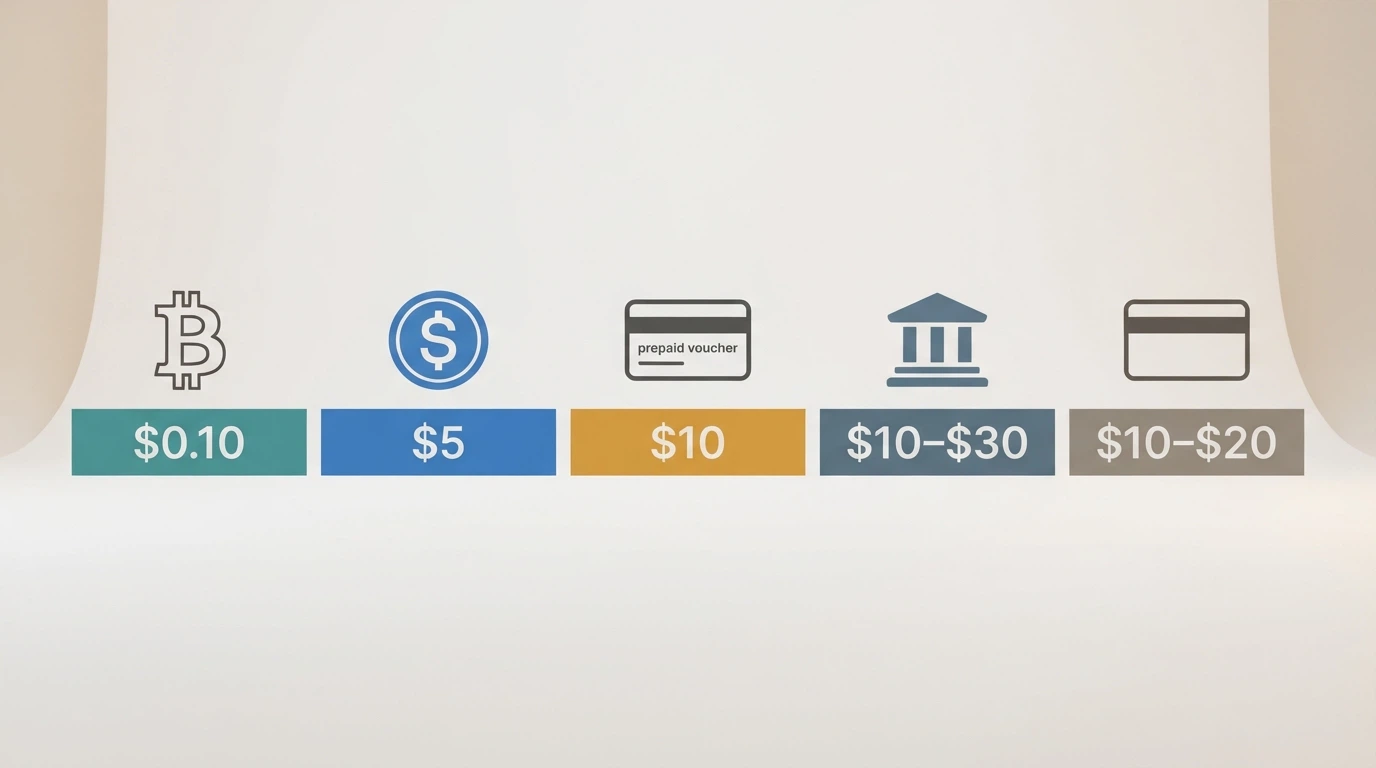
| Payment Method | Minimum Deposit (AUD) | Deposit Speed | Withdrawal Speed | Network Fee |
|---|---|---|---|---|
| USDT (TRC-20) | ~A$5 | Under 60 seconds | Under 5 minutes | Under A$0.50 |
| Bitcoin (BTC) | ~A$0.10 casino-side | 10–60 minutes | 15–60 minutes | A$5–A$20 |
| Neosurf voucher | A$10 | Instant (voucher code) | N/A — voucher is deposit-only | None at deposit |
| PayID | A$10–A$30 (casino-set) | Instant | 28–35 minutes (tested) | None |
| Debit card | A$10–A$20 (processor-set) | Instant | 1–3 business days | None |
The pattern is plain: crypto is fastest on both ends, PayID is the cheapest fiat option with the fastest payout, and the card route is where the player pays for familiarity in time. The reader who cares about a low floor and a quick payout has PayID and USDT as the practical options. The reader who cares about the absolute lowest entry has USDT or BTC, with the BTC choice carrying a fee that can eat a small deposit.
PayID deposits — the real minimums and why they vary
PayID is built as a person-to-person and biller-payment overlay on the New Payments Platform rail. It does not include a standardised push path for merchants, which is why casino payouts tend to fall back to a regular bank transfer even when the deposit came in via PayID. The deposit side, though, is fast and fee-free at both bank and casino end — and the casino’s own minimum is the only constraint. Esports.net’s 2026 round-up of Australian PayID casinos found minimum deposits ranging from A$10 at entry-level operators to A$30 at premium platforms, with the spread driven by the operator’s risk tolerance rather than the rail itself.
For a minimum-deposit player, PayID is the cleanest fiat answer. It is not the cheapest — Neosurf and crypto both beat it on raw floor — but it is the most predictable.
No-minimum withdrawal — what payout speed and floors to expect
A low deposit minimum does not guarantee a low withdrawal minimum, and payout speed varies by enough that the difference is worth caring about. PokiesAustralia’s 2026 test of PayID withdrawals put Goldenbet at 28 minutes and Lucky7 at 35 minutes. Crypto (USDT TRC-20) clears in 8–18 minutes at most sites. Bank transfers are the slowest of the standard routes and rarely offer a sub-A$100 withdrawal minimum.
For a small-deposit player, the practical answer is PayID for the deposit and PayID or USDT for the withdrawal — the same method, with a quick turnaround on both ends. The bank-transfer fallback exists but is not what the page is solving for.
Crypto — The Only Genuine Sub-A$10 Deposit Route in 2026
For an Australian player who wants to deposit less than ten dollars, cryptocurrency is the only route that does what the search results suggest the others do. The mechanism is simple: no card network or Australian banking rail sits between the wallet and the casino, so the processor-imposed A$10–A$20 minimums don’t apply. The casino sets its own network-level minimum. Stake accepts deposits from approximately A$0.10 in BTC-equivalent; BC.Game starts at around A$1 in USDT. The practical crypto floor across the major coins in 2026 is around A$5 in USDT-TRC20, with the limit set by what a sensible network fee looks like rather than by any rule the casino writes.

That floor comes with its own caveat, and the caveat is one the marketing rarely reaches. The Australian government banned credit cards and digital currency (crypto) as payment for licensed online wagering from 11 June 2024 under the Interactive Gambling Amendment (Credit and Other Measures) Act 2023. The ban targets the operator, not the punter — and because every casino on this page is offshore, the ban does not reach it directly. But the direction of travel is unmistakable, and a player who treats crypto as the low-friction default should know the regulatory view before relying on it.
Why crypto bypasses the fiat deposit floor
The fiat floor exists because a payment processor enforces it. Card networks charge interchange, so they impose their own minimums. PayID transactions under A$20 trip anti-fraud rules at most banks, so the casino sets its own floor above that to keep the deposits clearing. Crypto doesn’t pass through either layer. The transaction goes from the player’s wallet to the casino’s wallet, with the network fee as the only friction. The casino is free to set its own minimum in coin terms — and several do, with Stake’s ~A$0.10 BTC-equivalent being the extreme case.
The practical floor is set by the network fee, not by any rule the casino writes. A player who deposits A$1 in BTC and pays a A$5–A$20 network fee has paid A$6–A$21 to put A$1 in play. That is the point at which “low minimum deposit” stops being a saving.
Bitcoin vs USDT — which costs less to move in and out
The coin a player picks changes the effective minimum deposit more than the casino’s stated floor does. PokiesAustralia’s 2026 comparison put the two on opposite sides of the line. USDT on TRC-20 costs under A$0.50 in network fee, clears in under sixty seconds on deposit and under five minutes on withdrawal. BTC costs A$5–A$20 in network fee, takes ten to sixty minutes to deposit and fifteen to sixty minutes to withdraw.
For a minimum-deposit player, USDT is the working answer. BTC is the coin for players depositing tens of thousands, where the fee is a rounding error. For a A$5–A$10 deposit, the BTC fee is larger than the deposit.
Pokies You Can Actually Play on a Minimum Deposit
An A$1–A$10 balance opens the door to real-money pokies at the bottom end of the stakes range. Minimum bet per spin on most AU-facing pokies sits between A$0.01 and A$0.64, depending on the title and the coin configuration. A player who lands at the lowest stake on a title like Gladiator: Road to Rome (A$0.64 minimum) can run roughly fifteen spins on an A$10 deposit. A player who finds a title with a A$0.01 minimum can run a thousand.

RTP is the variable that decides how long the balance actually lasts. Most online pokies sit in the 94–97% RTP band. The expected loss per spin at A$0.10 stake on a 96% RTP pokie is four cents — small in absolute terms, large as a share of an A$10 balance over enough spins. A working illustration: a player running 200 spins at A$0.10 per spin on a pokie with a 96% RTP has turned over A$20 and lost on average A$0.80 to the house edge. That is an estimate of expected loss over many spins at the stated stake — no individual session delivers exactly that figure, and a single spin can return a multiple of the stake or zero. The point of the calculation is what the average cost looks like at this stake level: it is modest in absolute terms, but on an A$10 balance it represents 8% of the bankroll turned into expected house profit over 200 spins.
| Slot Title | Provider | RTP | Volatility |
|---|---|---|---|
| Ugga Bugga | Playtech | 99.07% | — |
| Blood Suckers | NetEnt | 98.00% | — |
| Immortal Romance | Microgaming | 96.86% | — |
| Thunderstruck II | Microgaming | 96.65% | — |
| Avalon | Microgaming | 96.01% | — |
| Gladiator: Road to Rome | Playtech | 95.05% | Medium |
| Mega Moolah | Microgaming | 88.12% (base) + 5.28% (jackpot contribution) | — |
The spread is wide. Ugga Bugga sits at 99.07% — almost break-even over the long run. Blood Suckers returns 98%. The Microgaming cluster (Immortal Romance, Thunderstruck II, Avalon) sits in the 96–97% range. Gladiator: Road to Rome returns 95.05% with medium volatility and a A$0.64 minimum bet. Mega Moolah is the outlier on the bottom end: an 88.12% base RTP, with a jackpot contribution adding 5.28% — a player chasing the progressive is paying for the chance through the base-game return.
The pokies that run on a A$1–A$10 balance
The titles that stretch a small deposit are the ones with the lowest per-spin minimums and the highest RTP. Gladiator: Road to Rome accepts a A$0.64 minimum — about fifteen spins on an A$10 deposit at base configuration. Most of the Microgaming catalogue sits at lower per-spin minimums in AU-facing lobbies, with the specific floor depending on how the casino configures its coin sizes. A player who finds a A$0.01 minimum on a 96% RTP title can run a thousand spins on a A$10 deposit before the balance hits zero in expectation.
The per-spin minimum varies by casino configuration as much as by the title itself. The reader shopping on a small balance should check the bet selector before depositing, not after.
RTP — which titles give your small deposit the longest run
The difference between 88% and 99% RTP on a A$10 deposit is roughly eleven dollars of expected loss per A$100 turned over. Ugga Bugga at 99.07% returns almost the full stake over the long run; Mega Moolah at 88.12% base keeps twelve cents of every dollar wagered on the base game alone. For a minimum-deposit player who wants their balance to last, the top of the RTP table is where the answer sits — Ugga Bugga, Blood Suckers, then the Microgaming cluster.
RTP matters more when the deposit is small. A 4% edge on a A$10,000 turnover is A$400; on a A$20 turnover, it’s A$0.80. The percentage is the same; the absolute cost is what the player feels.
Provider spotlight — Microgaming’s low-deposit workhorses
Microgaming supplies a large share of the pokies AU-facing casinos offer at low stakes, and several of its titles carry above-average RTP. Immortal Romance (96.86%), Thunderstruck II (96.65%) and Avalon (96.01%) form a cluster that sits comfortably above the 94–97% band most pokies occupy. Mega Moolah is the jackpot outlier — the base RTP is 88.12%, but the progressive jackpot adds 5.28% to the return for players chasing the top prize.
The provider concentration shapes the low-deposit pokies catalogue more than any single operator’s choice. A player walking into an AU-facing casino will find Microgaming first, with Playtech and NetEnt filling the gaps.
How to Pick a No-Minimum-Deposit Casino Without Getting Burned
Every operator on this page is offshore. Australia does not license online casinos, so any real-money pokies site an Australian player can reach is offshore, and the law restricts the operator rather than the individual. That puts the burden of trust on the player — and the signals that separate a functional offshore casino from a risky one are specific and testable, even without an Australian licence to check.
The first signal is payment-method transparency. A site that publishes its deposit and withdrawal minimums, fees and processing times in plain language has less to hide than one that buries the cashier specifics behind a sign-up wall. The second is independently tested withdrawal speed — the Betsquare May 2026 cashier walkthroughs are the cleanest single source for this. The third is KYC fairness: a casino that asks for identity documents at the first withdrawal, and not before, is following industry norms. The fourth is the operator’s payment-method mix — credit card and crypto deposit requests are themselves evidence of an offshore operator, because both are banned as payment methods for licensed Australian wagering from 11 June 2024.
Trust signals when every operator is offshore
- Payment-method transparency: published deposit and withdrawal minimums, fees and processing times before sign-up.
- Independently tested cashier data: Betsquare’s May 2026 A$1 deposit tests at five brands and PayoutVerdict’s deposit-floor round-up are the cleanest references.
- KYC at first payout only: Skycrown’s A$1 test triggered KYC at the first withdrawal (1 hour 44 minutes), not at sign-up — the expected pattern.
- Real-user deposit confirmation: forums and aggregator sites that record actual small-deposit experiences carry more weight than the marketing claims on the casino’s own homepage.
A player who can’t find any of these for a given operator is reading an ad, not a review.
Bonus traps — when the welcome offer needs more than your deposit
PayoutVerdict’s survey of fifteen AU-facing brands found that eight enforce a higher minimum for welcome-bonus eligibility than for plain play. The pattern is consistent: deposit A$10, attempt to claim the match bonus, discover the bonus terms specified A$20. The casino’s cashier didn’t lie — the bonus terms did, by burying the eligibility threshold in the small print.
The reading order matters. A player with a small budget should check the bonus terms page for the eligibility threshold before funding, not after. The deposit that triggers the bonus and the deposit that triggers the play are often two different numbers, and the second is the one that matters.
Top No-Minimum-Deposit Casinos Accessible from Australia in 2026
Ten offshore casinos, ranked by the deposit floor they actually deliver to Australian players. Independently tested minimums are listed where they exist; where the operator sweep couldn’t confirm specifics, the entry is qualitative. Every operator on this list is offshore — no Australian online casino licence exists, and the legal position is covered in the section below.

| Operator | Legal Status in Australia | Market Share (AU-facing offshore) |
|---|---|---|
| Skycrown | Offshore | 8.55% |
| Rocket Play | Offshore | 9.40% |
| Royal Reels | Offshore | 2.51% |
| WinSpirit | Offshore | 1.55% |
| Stake | Offshore (crypto-only) | 1.28% |
| FairGO | Offshore | 0.80% |
| Rainbet | Offshore | 1.28% |
| Scream Casino | Offshore | 0.99% |
| Bizzo Casino | Offshore | 0.57% |
| Rocket Casino | Offshore | 0.57% |
Skycrown
Skycrown is the A$1 outlier — independently tested and confirmed in May 2026. The Betsquare cashier walkthrough recorded a A$1 deposit clearing in 52 seconds, KYC triggered at the first payout (not at sign-up) and a withdrawal time of 1 hour 44 minutes. The free spins, though, sat behind a higher deposit threshold: a player who deposited A$1 expecting the welcome offer discovered it required more. Skycrown sits in the same offshore legal category as every other entry on this list — no Australian licence, no BetStop coverage, no AFCA recourse.
The verdict: Skycrown is the cleanest confirmed low-deposit option in 2026 for a player who wants to test the cashier before committing. The bonus terms need reading before the second deposit, not after.
Rocket Play
Rocket Play is a high-market-share offshore operator — 9.40% of the AU-facing offshore segment, the largest share on this list. The deposit and bonus specifics were not independently confirmed this run; the operator sweep queries returned errors and downstream phases should verify fresh. What is known: the brand is offshore, no Australian licence exists, and minimum-deposit terms at offshore operators change frequently without notice.
The verdict: the market share suggests the brand has traction with AU-facing players, but the absence of tested deposit specifics leaves the reader shopping on marketing claims. Verify the cashier before depositing.
Royal Reels
Royal Reels sits at 2.51% market share among AU-facing offshore casinos. Offshore status, no Australian licence. Verified deposit and bonus data for this brand remain unavailable following recent sweep failures. A smaller-share operator than the top of the list, but well above the long tail.
The verdict: a mid-tier offshore brand by share. This site operates without an Australian licence, so confirm all cashier details before funding.
WinSpirit
WinSpirit holds 1.55% market share — niche but not marginal. Offshore status, no Australian licence. Specifics regarding deposits and bonuses for this brand are unverified.
The verdict: a niche option. The legal status matches the rest of the list—no AU licence—so treat deposit terms as unconfirmed.
Stake
Stake is the crypto-only outlier — no fiat deposit route at all. The minimum deposit sits at approximately A$0.10 BTC-equivalent, the lowest confirmed floor on this list. The catch is the network fee: a BTC deposit of A$0.10 carries a A$5–A$20 transaction fee that dwarfs the deposit itself, so the practical entry point is high enough that the BTC fee stops being a rounding error. USDT on TRC-20 is the working answer — under A$0.50 in network fee, under five minutes to clear. Stake is offshore and crypto-only; the 11 June 2024 ban on crypto as payment for licensed Australian wagering does not reach it directly, but it signals the regulatory view.
The verdict: the lowest confirmed floor on this list, in BTC terms — and the highest practical floor in cost terms, because the BTC fee can exceed the deposit. A player with USDT-TRC20 has the cleanest path. A player who wants to deposit cents in BTC is paying more in fees than they’re depositing.
FairGO
FairGO is pitched at Australian players specifically — the name signals the intent. Offshore status, 0.80% market share, no Australian licence. Data on this operator’s current deposit floors and bonus offers could not be confirmed.
The verdict: an AU-focused offshore brand. Given the lack of a verified cashier audit, proceed with caution and verify specifics before funding.
Rainbet
Rainbet holds 1.28% market share — the same share as Stake, in fiat terms. Offshore status, no Australian licence. Deposit and bonus specifics were not confirmed this run.
The verdict: a small offshore brand with a mid-tier share position. Verify before depositing.
Scream Casino
Scream Casino sits at 0.99% market share. Offshore status, no Australian licence. Deposit and bonus specifics were not confirmed this run.
The verdict: a small-share site. As an offshore operator without Australian licensing, verify deposit terms directly at the cashier.
Bizzo Casino
Bizzo Casino holds 0.57% market share — at the long tail of the AU-facing offshore segment. Offshore status, no Australian licence. Deposit and bonus specifics were not confirmed this run.
The verdict: a long-tail offshore brand. Verify the cashier before committing any funds.
Rocket Casino
Rocket Casino is one of the few operators with a confirmed PayID deposit floor — AU$15 via PayID, recorded by PayoutVerdict in 2026. Offshore status, 0.57% market share, no Australian licence. Bonus specifics were not confirmed this run. The PayID floor puts Rocket Casino at the high end of the fiat range on this list, but the confirmation makes it the cleanest PayID option for a player who wants that rail specifically.
The verdict: the cleanest confirmed PayID floor on this list — A$15 via PayID. Higher than the crypto options, lower than the card processors’ typical floor. A reader who wants PayID has a confirmed entry here.
No Online Casino Is Licensed in Australia — Here’s What That Means for Your Deposit
Every casino on this page is offshore. Australia does not license online casino games, online pokies or in-play betting under the Interactive Gambling Act 2001 — not federally, not in any state or territory. The Act was strengthened by the Interactive Gambling Amendment Act 2017, which closed loopholes offshore operators had used and gave the ACMA its enforcement and blocking powers. As at March 2026, the ACMA has had 1,564 illegal gambling and affiliate websites blocked by Australian internet service providers, and more than 225 illegal services have withdrawn from the Australian market since 2017. The individual player is not prosecuted — the Act targets the provider, not the punter — but the player has no Australian consumer protection, no BetStop coverage and no recourse if the operator refuses a withdrawal or closes the account.
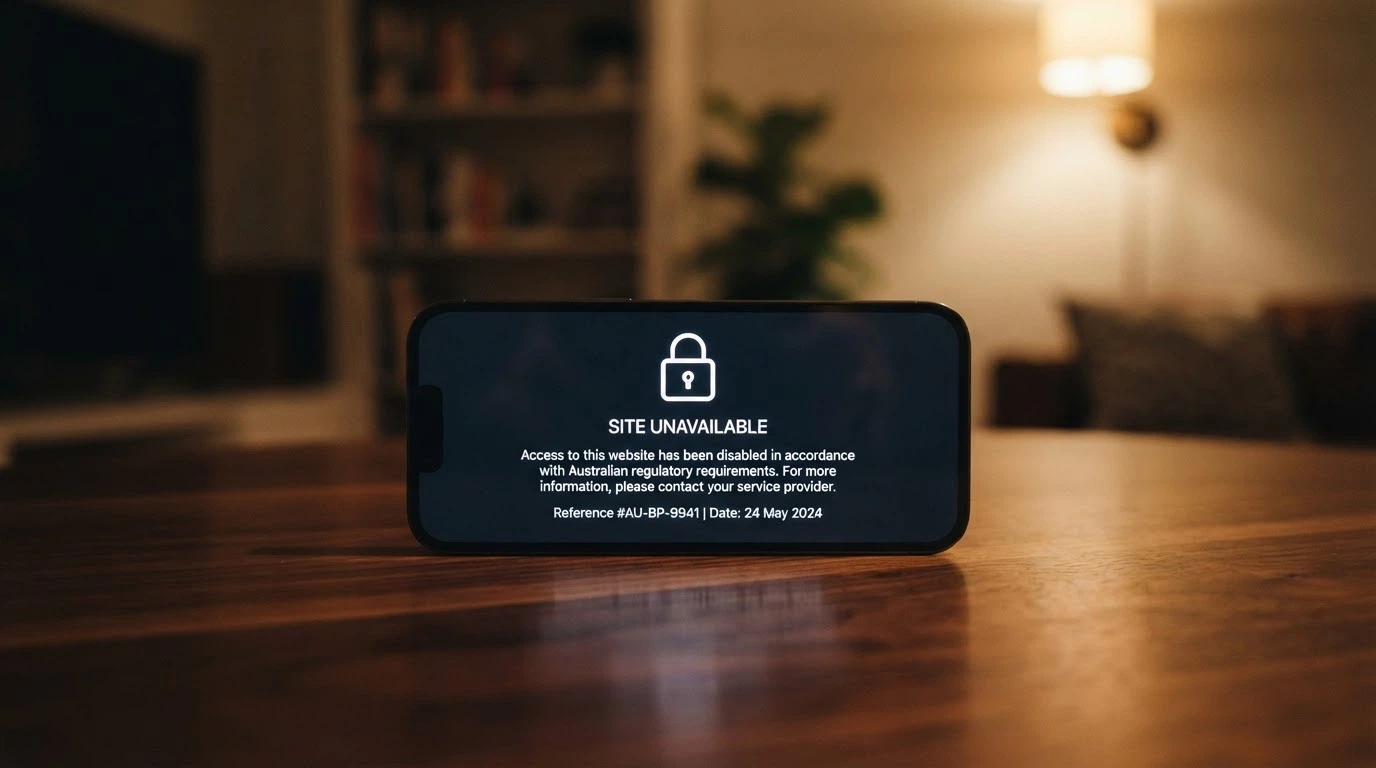
A player using an offshore casino is trading Australian consumer law, the BetStop self-exclusion register and payment protection for a lower deposit floor. The trade is the one the rest of this page is built around.
The IGA and ACMA enforcement — what the law actually bans
The Interactive Gambling Act 2001 prohibits the provision of online casino games, online pokies and in-play sports betting to people in Australia. There is no licence for these products anywhere in the country — not federally, not in any state or territory. The 2017 amendment closed loopholes offshore operators had been using and gave the ACMA the power to direct Australian ISPs to block illegal sites. Since November 2019, the ACMA has had 1,564 illegal gambling and affiliate websites blocked; more than 225 illegal services have withdrawn from the Australian market since 2017. Civil penalties for providing a prohibited service reach up to A$2,475,000 per day for an individual and A$12,375,000 per day for a corporation.
The individual player is not prosecuted under the IGA. The Act targets the provider, and the player’s legal exposure is to the operator’s house rules rather than to Australian law.
The 2026 reform — advertising and payment blocks arriving January 2027
The Interactive Gambling Amendment (Gambling Reform) Bill 2026 passed Parliament on 19 August 2026, with its measures commencing on 1 January 2027. It does not legalise online casino — the prohibition stays. What it adds is pressure on the offshore operators through three channels. Banks and payment providers gain express authority to block transactions to illegal gambling operators. Wagering advertising on broadcast is capped at three ads per hour between 5:00 am and 8:30 pm, with a live-sport blackout running from fifteen minutes before an event to five minutes after it ends. Direct marketing of inducements is prohibited for fourteen days after sign-up, for three months after a person deregisters from BetStop and indefinitely for customers identified as at risk of gambling harm. Athletes, celebrities and influencers are barred from promoting wagering products; the broadcasting of sporting odds is banned outright; online wagering ads are restricted to logged-in, age-confirmed users with an opt-out — the “triple lock”. A Wagering Advertising Opt-out Register (AdStop) will be administered by the ACMA.
The 2026 reform tightens the screws on offshore operators through the payment system and through advertising reach, not through product legalisation. The casino floor stays illegal.
Offshore vs licensed — what Australian players give up
- No Australian consumer protection: no AFCA, no state ombudsman, no Australian Consumer Law recourse if the operator voids a win or refuses a withdrawal.
- No BetStop coverage: self-exclusion through BetStop binds Australian-licensed wagering services only. An offshore casino is not connected to the register and will keep taking a self-excluded person’s money.
- No recourse at withdrawal: if the operator closes the account, voids a bonus win or refuses a payout, the player’s options are the operator’s own dispute process and whatever regulator holds the operator’s licence — neither of which is Australian.
- Site can be blocked overnight: the ACMA has had 1,564 illegal sites blocked since November 2019; the next blocking request can include a casino a player has a balance on.
- The payment method is a tell: a credit card or crypto deposit request is itself evidence the operator is outside Australian rules — both are banned as payment for licensed online wagering from 11 June 2024.
The offshore position is the legal reality of every site on this page. The reader should know what the trade looks like before clicking deposit.
Why a Low Deposit Still Needs a Budget — Responsible Gambling in 2026
A A$1 deposit floor does not make the product harmless. Australia’s gambling-harm data is stark: approximately 3.29 million Australians are affected annually by their own or another person’s gambling, including around 1.38 million adult affected others. An estimated 1.97 million Australian adults are classified as having at-risk or problem gambling. About 2.1% of adults — roughly 430,000 people — experience problem gambling. The annual health loss associated with gambling-related harm in Australian adults is estimated at over 400,000 Years Lived with Disability.
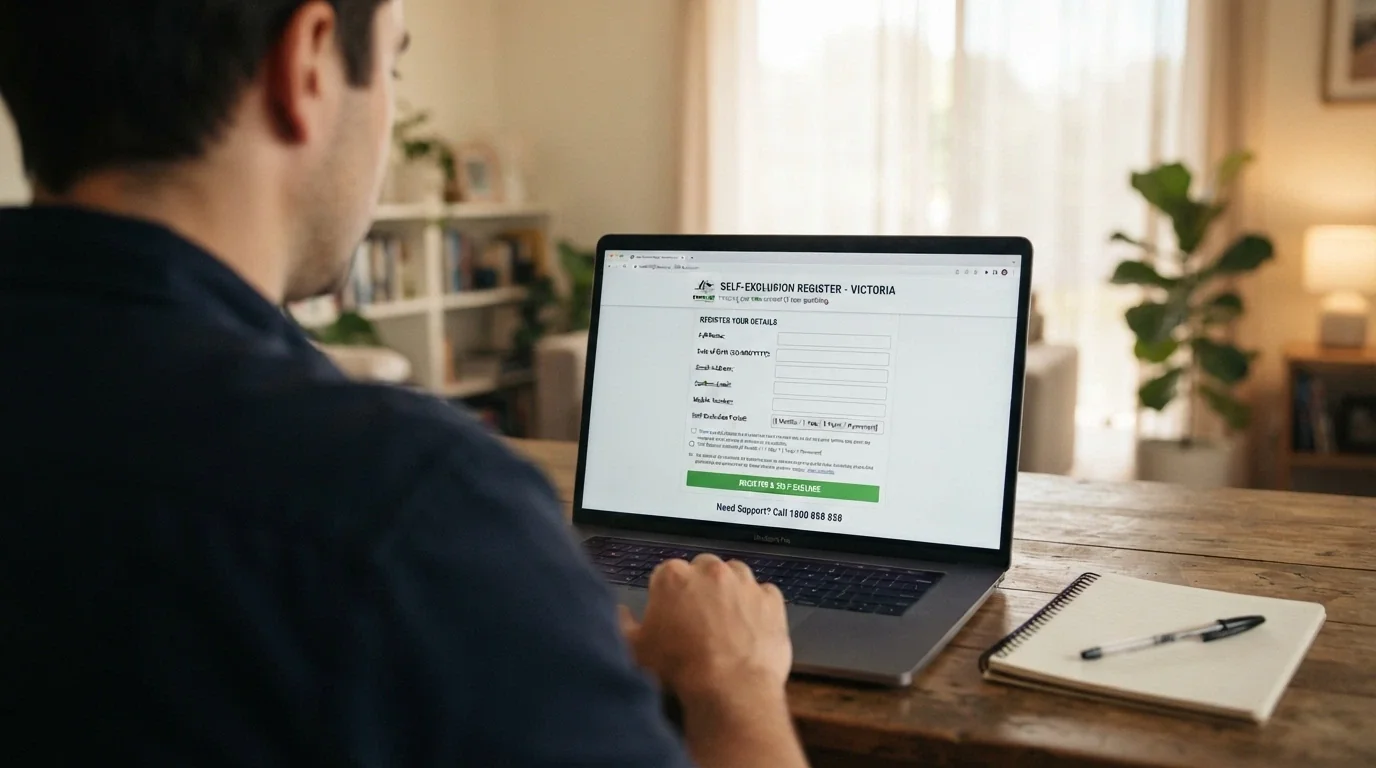
The tools that protect players on licensed Australian sites do not reach offshore casinos. BetStop — the National Self-Exclusion Register — binds Australian-licensed wagering services only; an offshore casino is not connected to the register and will keep taking a self-excluded person’s money. The player on an offshore site carries the full responsibility for their own limits.
BetStop and the self-exclusion gap — why offshore casinos stay out of reach
BetStop launched on 21 August 2023 and has recorded 59,830 registrations through to the end of Q3 FY 2025–2026, with 37,247 active exclusions as at 31 March 2026. An ACMA-commissioned survey found that 77% of registrants reported improved quality of life since registering; 96% either completely stopped betting online (81%) or reduced their gambling (15%). The register works — but only on Australian-licensed wagering services.
Dr Kei Sakata, Executive Manager of the Australian Gambling Research Centre, put the gap in numbers: despite an estimated five million wagerers nationwide, including 400,000 high-risk gamblers, just 30,000 individuals currently have active exclusions through BetStop. The register is a strong tool with a narrow reach, and the offshore casinos on this page sit outside it.
Deposit limits and tools you can set yourself
Even on an offshore site, a player can set their own deposit ceiling and stick to it. Bank-side gambling blocks can be arranged with most Australian banks and stop transactions to known gambling merchants at the account level. A separate bank account used only for gambling deposits, funded to a fixed weekly limit, is a low-tech alternative. Most casino clients offer session timers and reality-check pop-ups that log the player out after a set period; using them costs nothing.
The National Gambling Helpline — 1800 858 858 — is free, confidential and staffed 24/7. Gambling Help Online, at gamblinghelponline.org.au, offers live chat, email counselling and self-help tools. BetStop, at betstop.gov.au, is the self-exclusion register for Australian-licensed wagering. The resources are free and they reach anyone in Australia regardless of where they play.
The scale of gambling harm in Australia — what the numbers show
Australia’s per-capita gambling losses are among the highest in the world, and the harm reaches far beyond the person placing the bet. The 1.97 million adults at-risk or problem gambling, the 3.29 million Australians affected annually and the 400,000+ YLDs annual health loss put the cost in measurable terms. The prevalence is not even: 27.1% of Aboriginal and/or Torres Strait Islanders are at risk of gambling harm, compared with 14.6% of non-Indigenous Australians. Around one in four Australian adults (26.5%) know about BetStop, and the awareness gap correlates with the prevalence gap.
The numbers are not a reason to avoid a low-deposit casino. They are a reason to set a budget before opening the cashier.
How We Evaluated These No-Minimum-Deposit Casinos
The sources behind this ranking are four. Betsquare’s May 2026 cashier walkthroughs tested A$1 deposits at five AU-facing casinos (SpinBoss, WestAce, CrownGold, VegasNow and SkyCrown) and recorded time-to-play, KYC timing and withdrawal speed for each. PayoutVerdict’s 2026 round-up of low-minimum-deposit casinos produced the deposit-floor analysis that distinguishes the AU$10–A$15 fiat range from the crypto floor, and the eight-of-fifteen bonus-eligibility finding. The ACMA’s official statistics provide the BetStop registration and active-exclusion figures, the blocking count (1,564 sites as at March 2026) and the service-withdrawal figure (225+ since 2017). The operators skill AU market-share table provided the operator rankings and market-share percentages that drive the ranking order.
The criteria applied: independently tested minimum deposit (where available, the cashier data; where not, qualitative), geo-legal status (every operator offshore, with the IGA prohibition stated in plain terms), market share (the operator’s position in the AU-facing offshore segment) and payment-method transparency (PayID, Neosurf, crypto and card coverage).
The limits are worth stating. The operator sweep queries (two calls) both failed with network errors during this research run, which means welcome bonus amounts, wagering multipliers, free-spin values and bonus validity windows were not confirmed for any of the ten operators. The operator identities, minimum deposits where tested and geo-legal statuses are confirmed. The reader should treat bonus specifics as unconfirmed and verify fresh before claiming any offer.
Is a No-Minimum-Deposit Casino Worth Your Money from Australia?
The deposit floor is real. Skycrown’s A$1 was confirmed by independent testing; Rocket Casino’s AU$15 PayID floor is confirmed; Stake’s ~A$0.10 BTC-equivalent is confirmed. Crypto is the only route that genuinely drops below ten dollars in practice, and PayID is the cleanest fiat option. The barrier to entry is lower than the marketing has always suggested.

The trade is the same for every operator on this list. Every casino here is offshore; the IGA prohibits online casino in Australia; the ACMA has blocked 1,564 sites since 2019 and the next blocking request could include a site with a balance on it. BetStop doesn’t reach any of these operators. A credit card or crypto deposit request is evidence the operator is outside Australian rules. The player on an offshore site carries every risk the Australian regulatory system was built to remove.
A no-minimum-deposit casino lets an Australian player test real-money play for pocket change. That is what the low floor buys, and it is the only thing it buys. The offshore trade-off — no BetStop, no AFCA, no Australian consumer law, an ACMA block risk that can land overnight — sits on the other side of the deposit button. No operator on this list is endorsed as a place to play. No deposit is urged. The numbers, the floors and the legal position are on the page so the reader can make the call.
Frequently Asked Questions
Can I deposit A$1 at a real-money casino from Australia?
Yes, at a small number of offshore operators. Skycrown was independently tested with an A$1 deposit in May 2026 (52 seconds to first spin, 1 hour 44 minutes to first withdrawal). Other AU-facing brands accept small deposits in the A$1–A$10 range, though most AU-facing operators sit at A$10–A$15. Note that bonus eligibility often requires a higher deposit than play alone.
What is the lowest real-money deposit available with PayID at an Australian casino?
PayID casino minimums range from A$10 at entry-level sites to A$30 at premium platforms, all fee-free at bank and casino end. Rocket Casino’s A$15 PayID floor was confirmed by PayoutVerdict in 2026. PayID is fast on deposits but casinos fall back to bank transfers for withdrawals because PayID lacks a standardised merchant push path.
What happens to my money if an offshore casino blocks Australian players?
The casino isn’t obligated to return your balance under Australian law. The ACMA has blocked 1,564 illegal gambling sites since November 2019, and more than 225 illegal services have withdrawn from the Australian market since 2017. Players on blocked sites have no AFCA recourse and no state ombudsman — the dispute sits with the operator’s own licence regulator, which is not Australian.
Which payment methods let me deposit the smallest amount at an AU online casino?
Cryptocurrency. USDT on TRC-20 has a practical floor around A$5 with under A$0.50 in network fee. Bitcoin’s floor is lower in absolute terms (~A$0.10 BTC-equivalent at Stake) but the A$5–A$20 BTC network fee can exceed the deposit. PayID fiat minimums sit at A$10–A$30; Neosurf vouchers start at A$10; debit cards impose a A$10–A$20 processor floor.
Are crypto deposits truly without a minimum at Australian-facing casinos?
Effectively, yes — at crypto-only operators like Stake, the BTC-equivalent minimum is around A$0.10. The practical floor is set by the network fee: BTC’s A$5–A$20 fee makes very small BTC deposits uneconomic, while USDT-TRC20’s under-A$0.50 fee keeps small deposits viable. The 11 June 2024 ban on crypto as payment for licensed Australian wagering doesn’t reach offshore operators directly, but signals the regulatory view.
Can Australian punters spin the reels for real cash at an offshore casino before adding funds to their account?
No — real-money play requires a deposit of any size, however small. Demo or fun mode is available without a deposit at most AU-facing casinos, but demo winnings cannot be cashed out. The minimum deposit at offshore operators typically sits between A$1 (crypto or selected fiat sites like Skycrown) and A$15 (PayID at confirmed floors).